

Potato, boiled, NFS
Common food
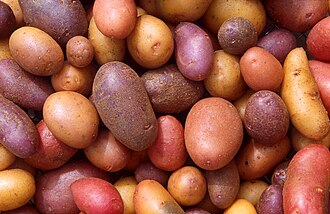
Photo: Wikipedia
A humble boiled potato is the ultimate blank canvas: its fluffy, creamy interior and subtly earthy, mild flavor make it a comforting staple. Nutritionally, it's a solid source of energy-dense carbohydrates and provides a decent amount of fiber, especially with the skin on.
Calorie split: 6% protein · 64% carbs · 30% fat
↓ Full nutrition💚 Why it's loved
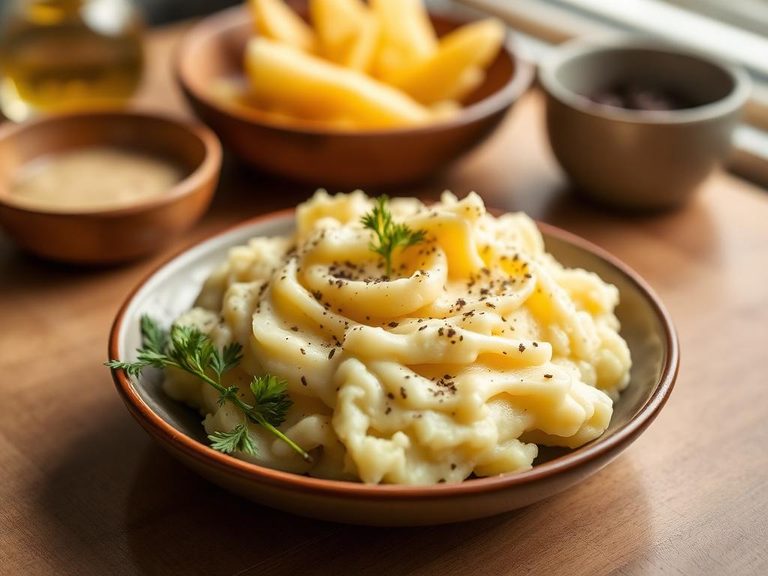
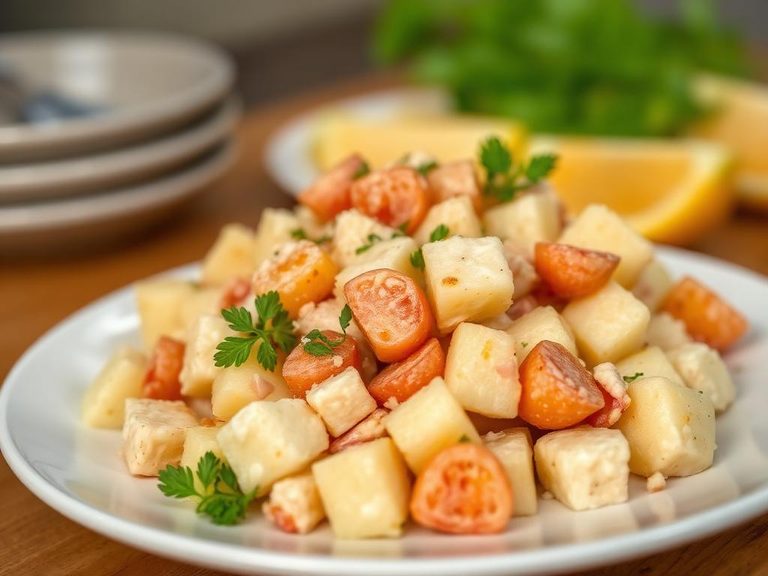
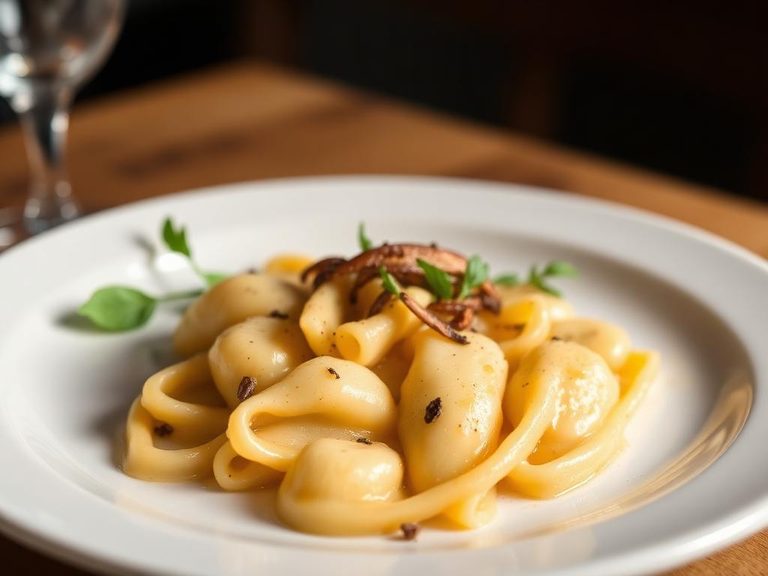
People adore its incredible versatility—it can be mashed, roasted, fried, or simply enjoyed as is, absorbing the flavors of any sauce or seasoning. It's a universal comfort food that forms the starchy backbone of countless cuisines worldwide.
⚠️ Watch-outs & how to enjoy it better
Boiled potatoes have a high glycemic index, which can cause rapid blood sugar spikes, making portion control important for those managing diabetes. To counteract this, pair them with a source of protein (like beans or meat) or healthy fat (like olive oil or avocado) to slow digestion and moderate the glycemic response.
Key benefits
- Good source of energy from complex carbohydrates
- Contains potassium, vitamin C, and vitamin B6
- Skin-on preparation boosts dietary fiber intake
- Naturally fat-free and cholesterol-free
- Gluten-free base for many meals
🍽️ Popular dishes
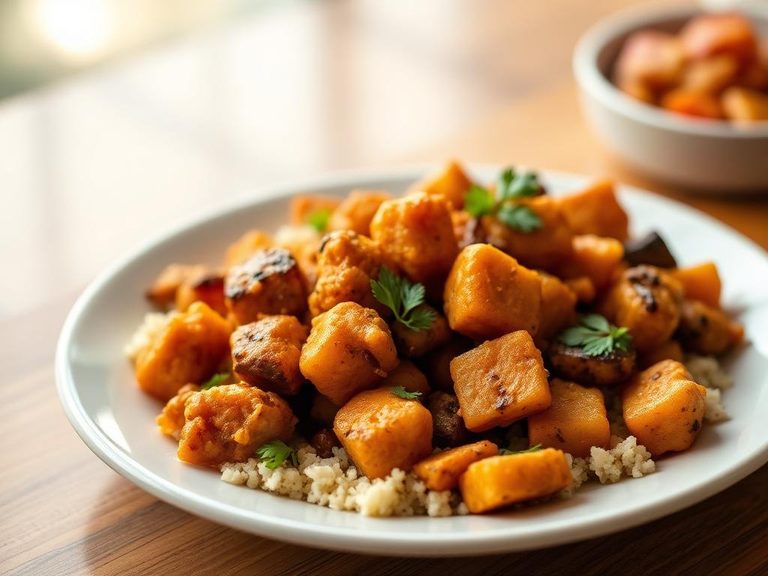
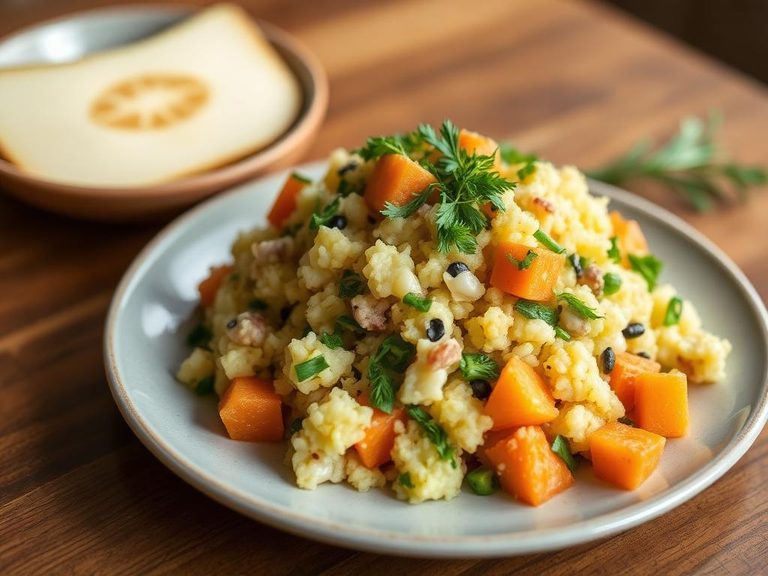
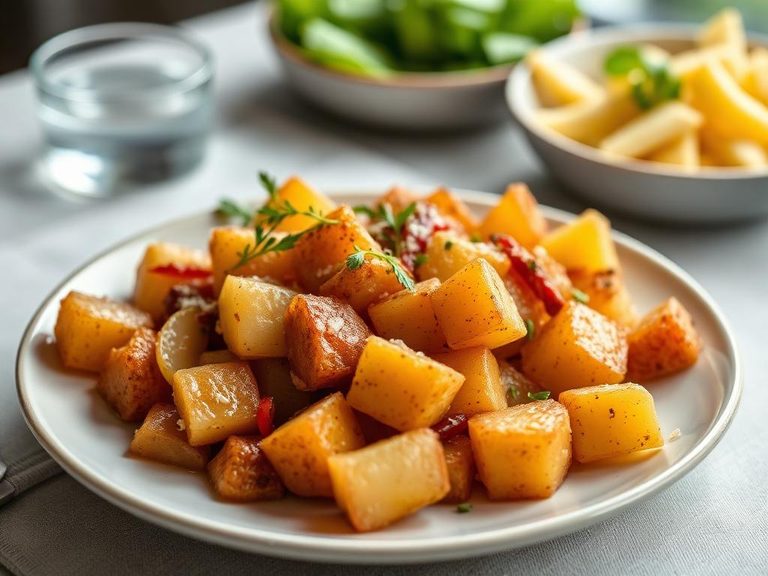
🌍 Where it's eaten
💡 Did you know?
The potato was the first food grown in space, aboard the Space Shuttle Columbia in 1995, as part of an experiment to see if it could sustain future long-term space missions.
Full nutrition (USDA data · scales with serving)
| Water | 72.1 g |
| Energy | 126 kcal |
| Protein | 1.9 g |
| Total lipid (fat) | 4.3 g |
| Carbohydrate, by difference | 20.4 g |
| Fiber, total dietary | 1.4 g |
| Total Sugars | 1.6 g |
| Calcium, Ca | 5.0 mg |
| Iron, Fe | 0.34 mg |
| Magnesium, Mg | 24.0 mg |
| Phosphorus, P | 48.0 mg |
| Potassium, K | 372 mg |
| Sodium, Na | 166 mg |
| Zinc, Zn | 0.28 mg |
| Copper, Cu | 0.20 mg |
| Selenium, Se | 0.30 ug |
| Vitamin C, total ascorbic acid | 12.1 mg |
| Thiamin | 0.10 mg |
| Riboflavin | 0.02 mg |
| Niacin | 1.3 mg |
| Vitamin B-6 | 0.31 mg |
| Folate, total | 9.0 ug |
| Folic acid | 0.00 ug |
| Folate, food | 9.0 ug |
| Folate, DFE | 9.0 ug |
| Choline, total | 14.1 mg |
| Vitamin B-12 | 0.00 ug |
| Vitamin B-12, added | 0.00 ug |
| Vitamin A, RAE | 19.0 ug |
| Retinol | 18.0 ug |
| Carotene, beta | 8.0 ug |
| Carotene, alpha | 0.00 ug |
| Cryptoxanthin, beta | 0.00 ug |
| Lycopene | 0.00 ug |
| Lutein + zeaxanthin | 0.00 ug |
| Vitamin E (alpha-tocopherol) | 0.66 mg |
| Vitamin E, added | 0.00 mg |
| Vitamin D (D2 + D3) | 0.00 ug |
| Vitamin K (phylloquinone) | 3.7 ug |
| Alcohol, ethyl | 0.00 g |
| Caffeine | 0.00 mg |
| Theobromine | 0.00 mg |
Fat & fatty acid profile (per 100g)
| Fatty acids, total saturated | 1.1 g |
| SFA 4:0 | 0.03 g |
| SFA 6:0 | 0.02 g |
| SFA 8:0 | 0.01 g |
| SFA 10:0 | 0.03 g |
| SFA 12:0 | 0.04 g |
| SFA 14:0 | 0.10 g |
| SFA 16:0 | 0.61 g |
| SFA 18:0 | 0.23 g |
| Fatty acids, total monounsaturated | 1.5 g |
| MUFA 16:1 | 0.02 g |
| MUFA 18:1 | 1.4 g |
| MUFA 20:1 | 0.02 g |
| MUFA 22:1 | 0.00 g |
| Fatty acids, total polyunsaturated | 1.2 g |
| PUFA 18:2 | 1.1 g |
| PUFA 18:3 | 0.14 g |
| PUFA 18:4 | 0.00 g |
| PUFA 20:4 | 0.00 g |
| PUFA 20:5 n-3 (EPA) | 0.00 g |
| PUFA 22:5 n-3 (DPA) | 0.00 g |
| PUFA 22:6 n-3 (DHA) | 0.00 g |
| Cholesterol | 3.0 mg |
Amino acid profile (per 100g)
Estimated from Snacks, potato chips, made from dried potatoes, reduced fat — USDA does not publish this profile for Potato.
| Tryptophan | 0.04 g |
| Threonine | 0.24 g |
| Isoleucine | 0.25 g |
| Leucine | 0.37 g |
| Lysine | 0.35 g |
| Methionine | 0.07 g |
| Cystine | 0.07 g |
| Phenylalanine | 0.26 g |
| Tyrosine | 0.22 g |
| Valine | 0.33 g |
| Arginine | 0.27 g |
| Histidine | 0.13 g |
| Alanine | 0.20 g |
| Aspartic acid | 1.1 g |
| Glutamic acid | 0.94 g |
| Glycine | 0.19 g |
| Proline | 0.20 g |
| Serine | 0.23 g |
FAQ
Why do boiled potatoes sometimes turn grey or black?
This is due to oxidation, similar to an apple browning. It's harmless. To prevent it, keep cut potatoes submerged in cold water until ready to cook, and avoid using aluminum or iron pots.
Are boiled potatoes healthier than baked potatoes?
Nutritionally, they are very similar. The main difference is in preparation: boiling can cause some water-soluble vitamins (like vitamin C) to leach into the cooking water, while baking retains more. However, boiling is often used with less added fat.
How can I make boiled potatoes more flavorful?
Salt the cooking water generously (like sea water). After boiling, toss them while hot with fresh herbs (parsley, chives), a drizzle of good olive oil, a squeeze of lemon, or a pat of butter for instant flavor.
Nutrient density (calculated · NRF9.3)
Nutrient Rich Foods index: beneficial nutrients (protein, fiber, vitamins, minerals) minus saturated fat, added sugar & sodium, per 100 kcal.
NRF9.3 index — Fulgoni, Keast & Drewnowski, 2009. Computed from USDA nutrients.
Weight-loss friendliness (composite index)
Energy density 1.26 kcal/g · 6% calories from protein · 1.4 g fiber · 1.6 g sugar per 100 g.
Composite of energy density (Rolls et al., 1999), protein & fiber satiety, minus sugar. A calculated heuristic — ranks satiety-per-calorie, not a clinical measure.
Dietary load (calculated from USDA values)
Potential renal acid load. Positive = acid-forming, negative = alkaline-forming.
Sodium-to-potassium ratio: 0.45 (lower is better — aim for ≤ 1)
Sodium:potassium per WHO potassium guidance. Computed from USDA nutrients.