

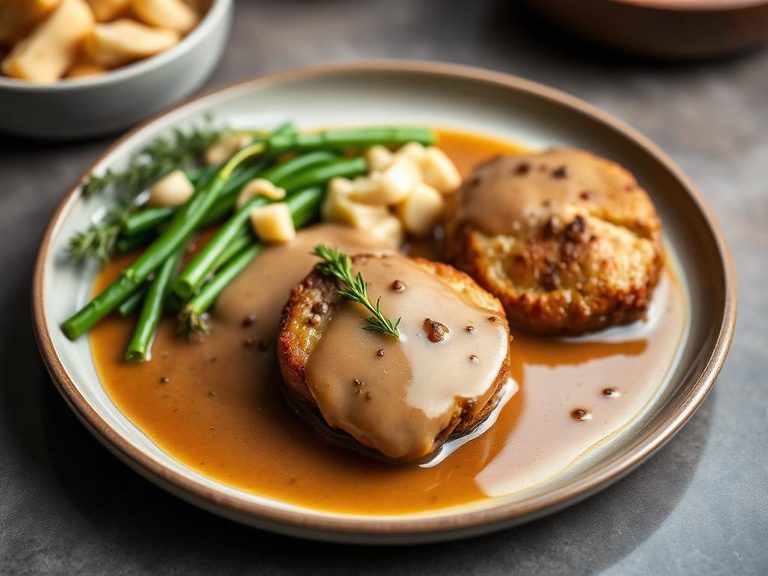
Pork, potatoes, and vegetables excluding carrots, broccoli, and dark-green leafy; gravy
Common food

Photo: Wikipedia
This is a classic, comforting one-plate meal featuring tender pork, soft potatoes, and a medley of vegetables (like peas, corn, or green beans), all united by a rich, savory gravy. The texture is a satisfying mix of tender meat, starchy vegetables, and a smooth, coating sauce. Nutritionally, it offers a balanced profile of protein, carbs, and fats, making it a substantial source of energy.
Calorie split: 16% protein · 39% carbs · 45% fat
↓ Full nutrition💚 Why it's loved
People adore this dish for its deep, savory umami flavor and the way the gravy ties all the comforting components together. It's a versatile, nostalgic staple in many home kitchens, often representing hearty, no-fuss family cooking.
⚠️ Watch-outs & how to enjoy it better
The gravy can be high in sodium, and the dish's glycemic load may cause blood-sugar spikes due to the potatoes and starchy vegetables. To counteract this, pair it with a vinegar-based side salad to slow carb absorption, use low-sodium broth for the gravy, and practice portion control by filling half the plate with non-starchy vegetables first.
Key benefits
- Provides a complete meal with protein, carbs, and fat in one serving.
- Pork is a good source of B vitamins, especially thiamine (B1).
- Potatoes offer potassium and vitamin C.
- Vegetables add dietary fiber and various micronutrients.
- Gravy can enhance the palatability of leaner meats.
🍽️ Popular dishes
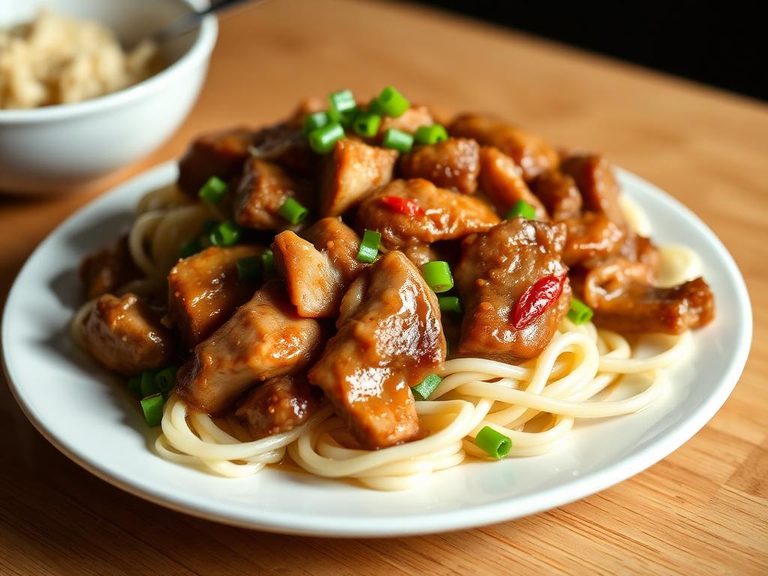
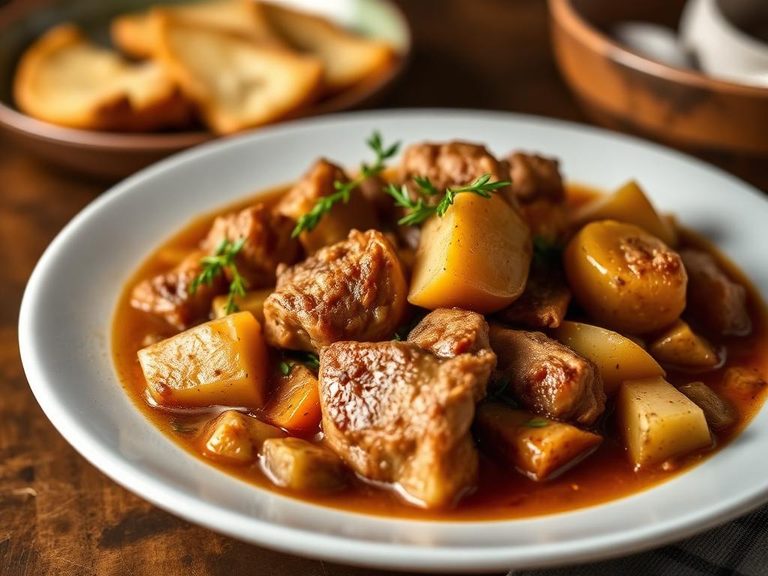
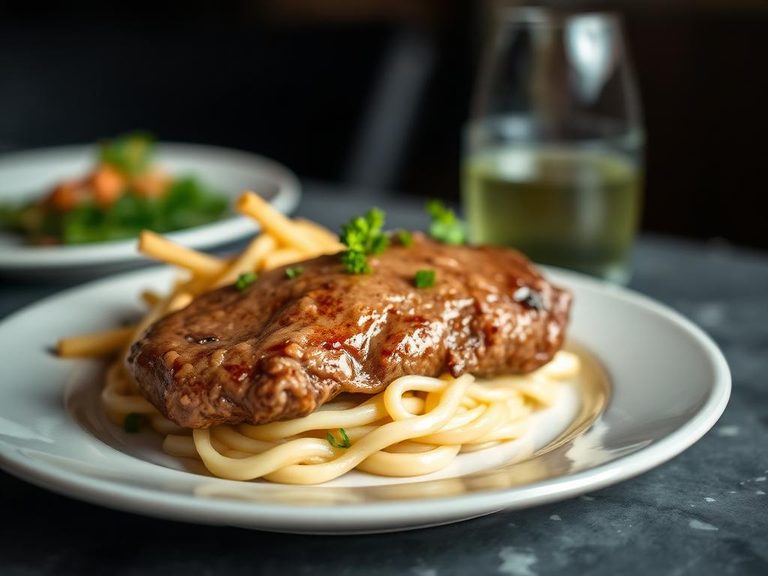
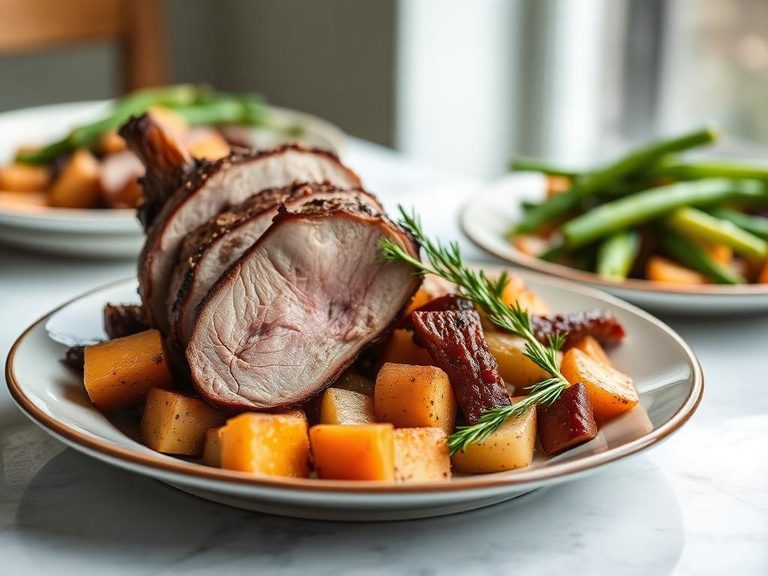
🌍 Where it's eaten
💡 Did you know?
The 'gravy' in many classic pork and potato dishes is often a roux-based sauce, where flour and fat are cooked together before liquid is added—a technique that dates back to 17th-century French cuisine.
Full nutrition (USDA data · scales with serving)
| Water | 74.9 g |
| Energy | 126 kcal |
| Protein | 5.0 g |
| Total lipid (fat) | 6.4 g |
| Carbohydrate, by difference | 12.4 g |
| Fiber, total dietary | 1.3 g |
| Total Sugars | 0.90 g |
| Calcium, Ca | 13.0 mg |
| Iron, Fe | 0.41 mg |
| Magnesium, Mg | 17.0 mg |
| Phosphorus, P | 65.0 mg |
| Potassium, K | 244 mg |
| Sodium, Na | 301 mg |
| Zinc, Zn | 0.55 mg |
| Copper, Cu | 0.10 mg |
| Selenium, Se | 4.9 ug |
| Vitamin C, total ascorbic acid | 4.0 mg |
| Thiamin | 0.19 mg |
| Riboflavin | 0.08 mg |
| Niacin | 1.6 mg |
| Vitamin B-6 | 0.21 mg |
| Folate, total | 10.0 ug |
| Folic acid | 0.00 ug |
| Folate, food | 10.0 ug |
| Folate, DFE | 10.0 ug |
| Choline, total | 22.7 mg |
| Vitamin B-12 | 0.10 ug |
| Vitamin B-12, added | 0.00 ug |
| Vitamin A, RAE | 3.0 ug |
| Retinol | 1.0 ug |
| Carotene, beta | 24.0 ug |
| Carotene, alpha | 6.0 ug |
| Cryptoxanthin, beta | 11.0 ug |
| Lycopene | 0.00 ug |
| Lutein + zeaxanthin | 108 ug |
| Vitamin E (alpha-tocopherol) | 0.90 mg |
| Vitamin E, added | 0.00 mg |
| Vitamin D (D2 + D3) | 0.10 ug |
| Vitamin K (phylloquinone) | 8.9 ug |
| Alcohol, ethyl | 0.00 g |
| Caffeine | 0.00 mg |
| Theobromine | 0.00 mg |
Fat & fatty acid profile (per 100g)
| Fatty acids, total saturated | 1.2 g |
| SFA 4:0 | 0.00 g |
| SFA 6:0 | 0.00 g |
| SFA 8:0 | 0.00 g |
| SFA 10:0 | 0.00 g |
| SFA 12:0 | 0.00 g |
| SFA 14:0 | 0.02 g |
| SFA 16:0 | 0.85 g |
| SFA 18:0 | 0.31 g |
| Fatty acids, total monounsaturated | 2.7 g |
| MUFA 16:1 | 0.09 g |
| MUFA 18:1 | 2.6 g |
| MUFA 20:1 | 0.04 g |
| MUFA 22:1 | 0.00 g |
| Fatty acids, total polyunsaturated | 1.9 g |
| PUFA 18:2 | 1.7 g |
| PUFA 18:3 | 0.21 g |
| PUFA 18:4 | 0.00 g |
| PUFA 20:4 | 0.01 g |
| PUFA 20:5 n-3 (EPA) | 0.00 g |
| PUFA 22:5 n-3 (DPA) | 0.00 g |
| PUFA 22:6 n-3 (DHA) | 0.00 g |
| Cholesterol | 12.0 mg |
Amino acid profile (per 100g)
Estimated from Pork, cured, salt pork, raw — USDA does not publish this profile for Pork.
| Tryptophan | 0.02 g |
| Threonine | 0.17 g |
| Isoleucine | 0.13 g |
| Leucine | 0.35 g |
| Lysine | 0.42 g |
| Methionine | 0.07 g |
| Cystine | 0.04 g |
| Phenylalanine | 0.19 g |
| Tyrosine | 0.08 g |
| Valine | 0.24 g |
| Arginine | 0.52 g |
| Histidine | 0.06 g |
| Alanine | 0.28 g |
| Aspartic acid | 0.42 g |
| Glutamic acid | 0.69 g |
| Glycine | 0.36 g |
| Proline | 0.27 g |
| Serine | 0.19 g |
FAQ
Can I make this dish with leaner pork?
Yes, using pork tenderloin or loin cuts will significantly reduce the fat content. Ensure you don't overcook these leaner cuts to keep them tender.
How can I make the gravy healthier?
Use a low-sodium broth, thicken with a small amount of cornstarch instead of a flour-fat roux, and skim any excess fat from the pan drippings before making the sauce.
Is this dish suitable for a gluten-free diet?
Not in its traditional form, as the gravy is typically thickened with wheat flour. You can make it gluten-free by using a gluten-free flour blend or cornstarch to thicken the gravy.
Nutrient density (calculated · NRF9.3)
Nutrient Rich Foods index: beneficial nutrients (protein, fiber, vitamins, minerals) minus saturated fat, added sugar & sodium, per 100 kcal.
NRF9.3 index — Fulgoni, Keast & Drewnowski, 2009. Computed from USDA nutrients.
Weight-loss friendliness (composite index)
Energy density 1.26 kcal/g · 16% calories from protein · 1.3 g fiber · 0.9 g sugar per 100 g.
Composite of energy density (Rolls et al., 1999), protein & fiber satiety, minus sugar. A calculated heuristic — ranks satiety-per-calorie, not a clinical measure.
Dietary load (calculated from USDA values)
Potential renal acid load. Positive = acid-forming, negative = alkaline-forming.
Sodium-to-potassium ratio: 1.23 (lower is better — aim for ≤ 1)
Sodium:potassium per WHO potassium guidance. Computed from USDA nutrients.