

Popcorn, microwave, plain
Common food
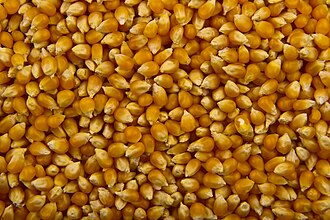
Photo: Wikipedia
Microwave popcorn is a convenient snack made from dried corn kernels that rapidly expand into a light, fluffy, and crispy treat when heated. Its taste is typically neutral or subtly buttery, with a satisfying crunch that can range from tender to slightly chewy depending on the brand and cooking time. Nutritionally, it's a whole-grain snack that provides a good source of dietary fiber, though it can be high in fat and calories, especially with added butter or oil.
Calorie split: 7% protein · 41% carbs · 52% fat
↓ Full nutrition💚 Why it's loved
People love it for its irresistible combination of salty, savory flavor and light, airy texture that makes it a perfect vehicle for seasonings. It's deeply tied to the cultural ritual of movie-watching and casual gatherings, offering a simple, shareable comfort food.
⚠️ Watch-outs & how to enjoy it better
The high fat content (30.57g per 100g) and potential for added sodium can be a concern for those monitoring heart health or blood pressure. Some microwave bags also contain chemicals like PFOA in the lining, which some consumers prefer to avoid. To mitigate, choose 'light' or 'no butter' varieties, use a small amount of heart-healthy oil (like olive oil) with plain kernels in a paper bag, and pair with a protein source like nuts to help manage blood sugar response.
Key benefits
- High in dietary fiber (10.2g per 100g)
- Good source of whole-grain carbohydrates
- Provides plant-based protein (9.13g per 100g)
- Quick and convenient to prepare
- Naturally low in sugar (0.61g per 100g)
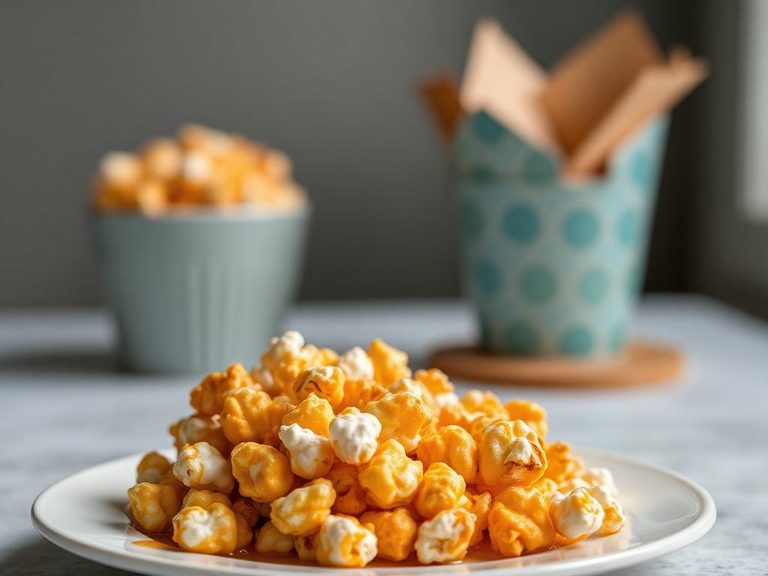
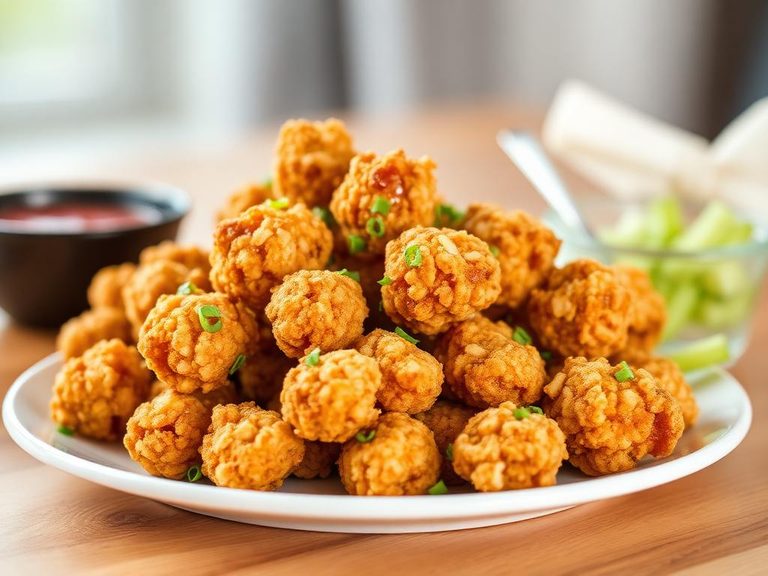
🍽️ Popular dishes
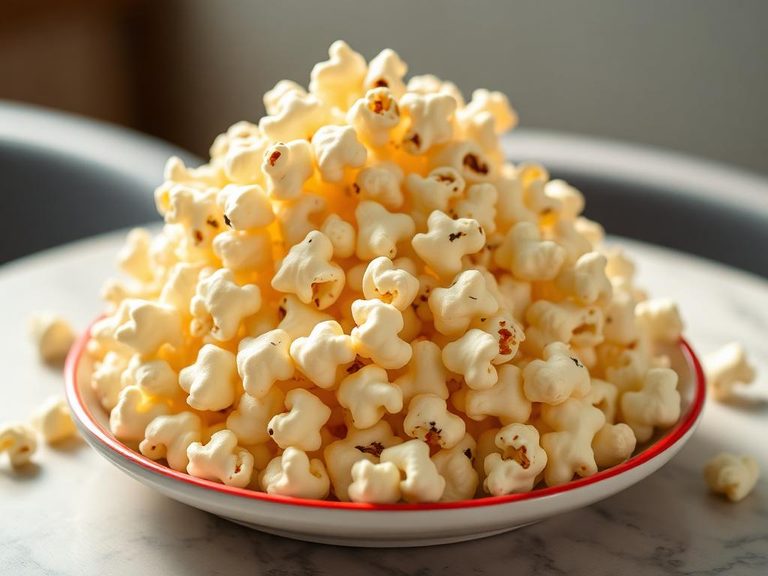
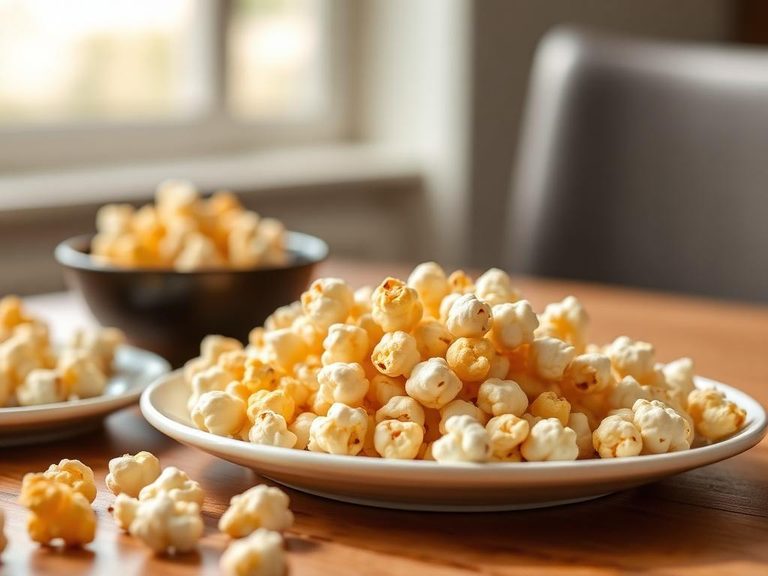
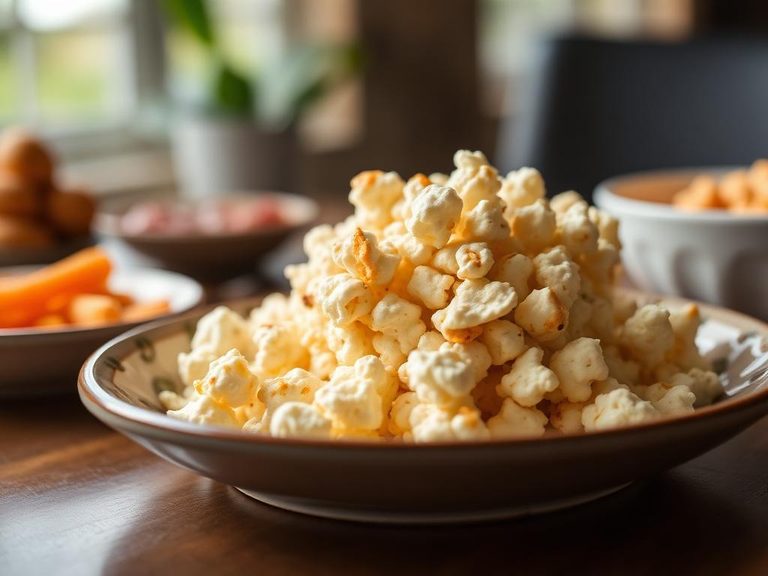

🌍 Where it's eaten
💡 Did you know?
The 'perfect' popcorn kernel pops because its hard hull contains a tiny drop of water that turns to steam, building pressure until the kernel explodes into a foam-like structure at around 356°F (180°C).
Full nutrition (USDA data · scales with serving)
| Water | 2.4 g |
| Energy | 518 kcal |
| Protein | 9.1 g |
| Total lipid (fat) | 30.6 g |
| Carbohydrate, by difference | 55.0 g |
| Fiber, total dietary | 10.2 g |
| Total Sugars | 0.61 g |
| Calcium, Ca | 6.0 mg |
| Iron, Fe | 2.3 mg |
| Magnesium, Mg | 102 mg |
| Phosphorus, P | 253 mg |
| Potassium, K | 232 mg |
| Sodium, Na | 764 mg |
| Zinc, Zn | 2.2 mg |
| Copper, Cu | 0.18 mg |
| Selenium, Se | 0.00 ug |
| Vitamin C, total ascorbic acid | 0.00 mg |
| Thiamin | 0.07 mg |
| Riboflavin | 0.06 mg |
| Niacin | 1.6 mg |
| Vitamin B-6 | 0.11 mg |
| Folate, total | 22.0 ug |
| Folic acid | 0.00 ug |
| Folate, food | 22.0 ug |
| Folate, DFE | 22.0 ug |
| Choline, total | 15.0 mg |
| Vitamin B-12 | 0.00 ug |
| Vitamin B-12, added | 0.00 ug |
| Vitamin A, RAE | 7.0 ug |
| Retinol | 0.00 ug |
| Carotene, beta | 63.0 ug |
| Carotene, alpha | 41.0 ug |
| Cryptoxanthin, beta | 0.00 ug |
| Lycopene | 0.00 ug |
| Lutein + zeaxanthin | 1024 ug |
| Vitamin E (alpha-tocopherol) | 2.1 mg |
| Vitamin E, added | 0.00 mg |
| Vitamin D (D2 + D3) | 0.00 ug |
| Vitamin K (phylloquinone) | 28.4 ug |
| Alcohol, ethyl | 0.00 g |
| Caffeine | 0.00 mg |
| Theobromine | 0.00 mg |
Fat & fatty acid profile (per 100g)
| Fatty acids, total saturated | 14.3 g |
| SFA 4:0 | 0.00 g |
| SFA 6:0 | 0.05 g |
| SFA 8:0 | 0.67 g |
| SFA 10:0 | 0.53 g |
| SFA 12:0 | 4.1 g |
| SFA 14:0 | 1.6 g |
| SFA 16:0 | 2.7 g |
| SFA 18:0 | 4.4 g |
| Fatty acids, total monounsaturated | 6.8 g |
| MUFA 16:1 | 0.02 g |
| MUFA 18:1 | 6.7 g |
| MUFA 20:1 | 0.07 g |
| MUFA 22:1 | 0.00 g |
| Fatty acids, total polyunsaturated | 7.4 g |
| PUFA 18:2 | 7.1 g |
| PUFA 18:3 | 0.34 g |
| PUFA 18:4 | 0.00 g |
| PUFA 20:4 | 0.00 g |
| PUFA 20:5 n-3 (EPA) | 0.00 g |
| PUFA 22:5 n-3 (DPA) | 0.00 g |
| PUFA 22:6 n-3 (DHA) | 0.00 g |
| Cholesterol | 0.00 mg |
Amino acid profile (per 100g)
Estimated from Snacks, popcorn, oil-popped, white popcorn, salt added — USDA does not publish this profile for Popcorn.
| Tryptophan | 0.06 g |
| Threonine | 0.34 g |
| Isoleucine | 0.32 g |
| Leucine | 1.1 g |
| Lysine | 0.25 g |
| Methionine | 0.19 g |
| Cystine | 0.16 g |
| Phenylalanine | 0.44 g |
| Tyrosine | 0.37 g |
| Valine | 0.46 g |
| Arginine | 0.45 g |
| Histidine | 0.28 g |
| Alanine | 0.67 g |
| Aspartic acid | 0.63 g |
| Glutamic acid | 1.7 g |
| Glycine | 0.37 g |
| Proline | 0.79 g |
| Serine | 0.43 g |
FAQ
Is microwave popcorn a whole grain?
Yes, popcorn is a whole grain because it retains all three parts of the kernel: the bran, germ, and endosperm. This makes it a good source of fiber and nutrients.
Why does some popcorn have a 'coconut oil' taste?
Many commercial brands use coconut oil or palm oil in their seasoning blends because these oils are solid at room temperature, which helps the butter-flavored seasoning adhere to the kernels and provides a rich mouthfeel.
Can I make plain popcorn healthier at home?
Absolutely. You can use plain kernels in a brown paper bag in the microwave or on the stovetop with a small amount of olive oil. Then, season with nutritional yeast, herbs, or a light sprinkle of salt to control fat and sodium.
Nutrient density (calculated · NRF9.3)
Nutrient Rich Foods index: beneficial nutrients (protein, fiber, vitamins, minerals) minus saturated fat, added sugar & sodium, per 100 kcal.
NRF9.3 index — Fulgoni, Keast & Drewnowski, 2009. Computed from USDA nutrients.
Weight-loss friendliness (composite index)
Energy density 5.18 kcal/g · 7% calories from protein · 10.2 g fiber · 0.6 g sugar per 100 g.
Composite of energy density (Rolls et al., 1999), protein & fiber satiety, minus sugar. A calculated heuristic — ranks satiety-per-calorie, not a clinical measure.
Dietary load (calculated from USDA values)
Potential renal acid load. Positive = acid-forming, negative = alkaline-forming.
Sodium-to-potassium ratio: 3.29 (lower is better — aim for ≤ 1)
Sodium:potassium per WHO potassium guidance. Computed from USDA nutrients.