

Popcorn, microwave, NFS
Common food
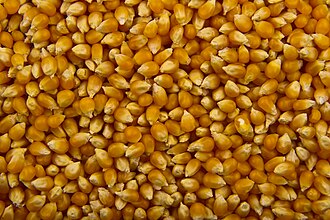
Photo: Wikipedia
Microwave popcorn is a convenient, pre-packaged snack that transforms dried corn kernels into a hot, fluffy, and often buttery treat in minutes. Its texture is uniquely light and airy, with a satisfying crunch that can be coated in various seasonings. Nutritionally, it is a high-fiber, high-carbohydrate food, with the fat content varying significantly depending on the preparation method and added oils or butter.
Calorie split: 7% protein · 41% carbs · 52% fat
↓ Full nutrition💚 Why it's loved
People love microwave popcorn for its unparalleled convenience and the comforting, nostalgic aroma that fills the home. It is a versatile snack that can be easily customized with sweet, savory, or spicy seasonings to suit any taste.
⚠️ Watch-outs & how to enjoy it better
Some microwave popcorn varieties can be high in sodium and saturated fats, which may concern those monitoring their intake. The artificial butter flavoring (diacetyl) in some brands has been linked to respiratory issues in factory workers, though it is generally considered safe for consumers. To mitigate these issues, opt for low-sodium, air-popped, or lightly seasoned versions, and pair the snack with a protein source like nuts or cheese to balance the blood sugar impact.
Key benefits
- High in dietary fiber (10.2g per 100g), supporting digestive health.
- Provides a quick source of energy from complex carbohydrates.
- Whole-grain snack that can be a healthier alternative to chips or crackers.
- Convenient and quick to prepare with minimal cleanup.
- Can be a low-calorie snack if prepared without added fats or sugars.
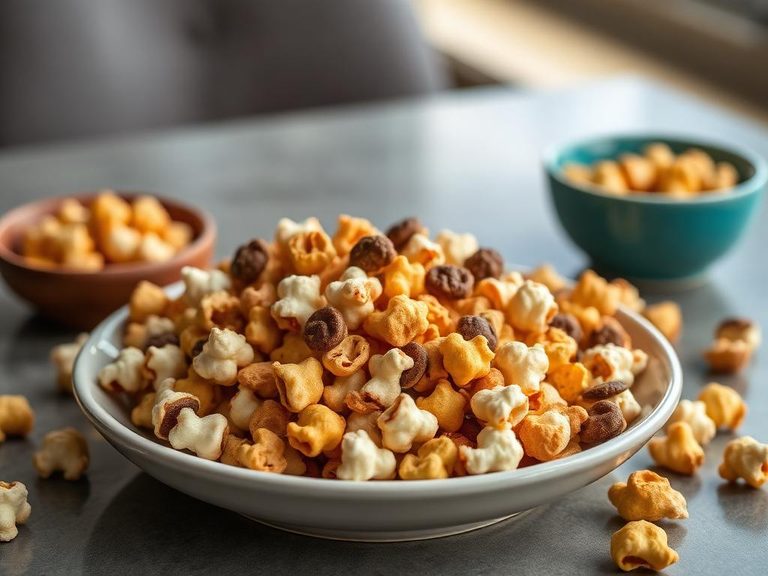
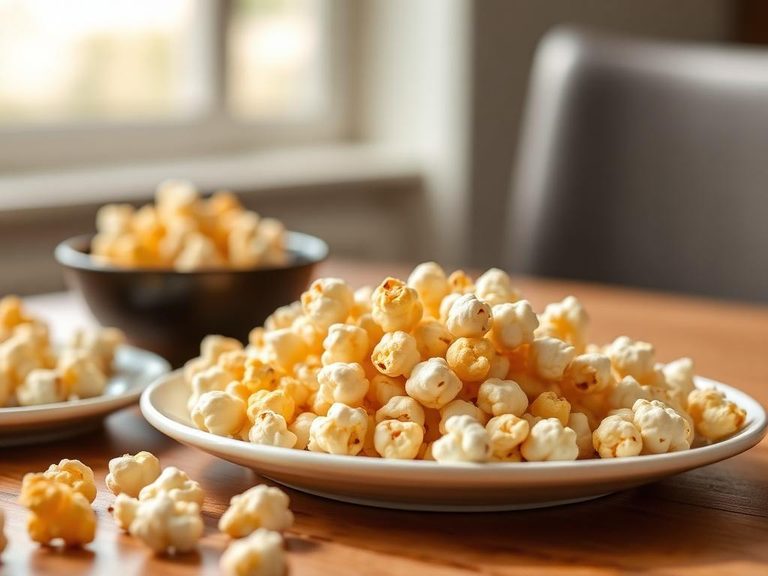
🍽️ Popular dishes




🌍 Where it's eaten
💡 Did you know?
The first microwave popcorn was introduced in 1981, and it quickly became the most popular food item cooked in microwave ovens, with over 70% of all microwave popcorn being consumed in the United States.
Full nutrition (USDA data · scales with serving)
| Water | 2.4 g |
| Energy | 518 kcal |
| Protein | 9.1 g |
| Total lipid (fat) | 30.6 g |
| Carbohydrate, by difference | 55.0 g |
| Fiber, total dietary | 10.2 g |
| Total Sugars | 0.61 g |
| Calcium, Ca | 6.0 mg |
| Iron, Fe | 2.3 mg |
| Magnesium, Mg | 102 mg |
| Phosphorus, P | 253 mg |
| Potassium, K | 232 mg |
| Sodium, Na | 764 mg |
| Zinc, Zn | 2.2 mg |
| Copper, Cu | 0.18 mg |
| Selenium, Se | 0.00 ug |
| Vitamin C, total ascorbic acid | 0.00 mg |
| Thiamin | 0.07 mg |
| Riboflavin | 0.06 mg |
| Niacin | 1.6 mg |
| Vitamin B-6 | 0.11 mg |
| Folate, total | 22.0 ug |
| Folic acid | 0.00 ug |
| Folate, food | 22.0 ug |
| Folate, DFE | 22.0 ug |
| Choline, total | 15.0 mg |
| Vitamin B-12 | 0.00 ug |
| Vitamin B-12, added | 0.00 ug |
| Vitamin A, RAE | 7.0 ug |
| Retinol | 0.00 ug |
| Carotene, beta | 63.0 ug |
| Carotene, alpha | 41.0 ug |
| Cryptoxanthin, beta | 0.00 ug |
| Lycopene | 0.00 ug |
| Lutein + zeaxanthin | 1024 ug |
| Vitamin E (alpha-tocopherol) | 2.1 mg |
| Vitamin E, added | 0.00 mg |
| Vitamin D (D2 + D3) | 0.00 ug |
| Vitamin K (phylloquinone) | 28.4 ug |
| Alcohol, ethyl | 0.00 g |
| Caffeine | 0.00 mg |
| Theobromine | 0.00 mg |
Fat & fatty acid profile (per 100g)
| Fatty acids, total saturated | 14.3 g |
| SFA 4:0 | 0.00 g |
| SFA 6:0 | 0.05 g |
| SFA 8:0 | 0.67 g |
| SFA 10:0 | 0.53 g |
| SFA 12:0 | 4.1 g |
| SFA 14:0 | 1.6 g |
| SFA 16:0 | 2.7 g |
| SFA 18:0 | 4.4 g |
| Fatty acids, total monounsaturated | 6.8 g |
| MUFA 16:1 | 0.02 g |
| MUFA 18:1 | 6.7 g |
| MUFA 20:1 | 0.07 g |
| MUFA 22:1 | 0.00 g |
| Fatty acids, total polyunsaturated | 7.4 g |
| PUFA 18:2 | 7.1 g |
| PUFA 18:3 | 0.34 g |
| PUFA 18:4 | 0.00 g |
| PUFA 20:4 | 0.00 g |
| PUFA 20:5 n-3 (EPA) | 0.00 g |
| PUFA 22:5 n-3 (DPA) | 0.00 g |
| PUFA 22:6 n-3 (DHA) | 0.00 g |
| Cholesterol | 0.00 mg |
Amino acid profile (per 100g)
Estimated from Snacks, popcorn, oil-popped, white popcorn, salt added — USDA does not publish this profile for Popcorn.
| Tryptophan | 0.06 g |
| Threonine | 0.34 g |
| Isoleucine | 0.32 g |
| Leucine | 1.1 g |
| Lysine | 0.25 g |
| Methionine | 0.19 g |
| Cystine | 0.16 g |
| Phenylalanine | 0.44 g |
| Tyrosine | 0.37 g |
| Valine | 0.46 g |
| Arginine | 0.45 g |
| Histidine | 0.28 g |
| Alanine | 0.67 g |
| Aspartic acid | 0.63 g |
| Glutamic acid | 1.7 g |
| Glycine | 0.37 g |
| Proline | 0.79 g |
| Serine | 0.43 g |
FAQ
Is microwave popcorn healthy?
Microwave popcorn can be a healthy snack if you choose varieties that are low in sodium and fat. It is a good source of fiber and whole grains, but some brands may contain added sugars and unhealthy fats. Always check the nutrition label and opt for air-popped or lightly seasoned options.
How many calories are in microwave popcorn?
The calorie content of microwave popcorn varies by brand and preparation method. On average, a 100g serving contains about 518 kcal, but a typical bag (about 30-40g) may have around 150-200 calories. Always refer to the packaging for accurate information.
Can I make microwave popcorn healthier at home?
Yes, you can make healthier microwave popcorn by using plain popcorn kernels in a microwave-safe bowl with a lid, or by using an air popper. You can then season it with herbs, spices, or a small amount of olive oil instead of butter or salt.
Nutrient density (calculated · NRF9.3)
Nutrient Rich Foods index: beneficial nutrients (protein, fiber, vitamins, minerals) minus saturated fat, added sugar & sodium, per 100 kcal.
NRF9.3 index — Fulgoni, Keast & Drewnowski, 2009. Computed from USDA nutrients.
Weight-loss friendliness (composite index)
Energy density 5.18 kcal/g · 7% calories from protein · 10.2 g fiber · 0.6 g sugar per 100 g.
Composite of energy density (Rolls et al., 1999), protein & fiber satiety, minus sugar. A calculated heuristic — ranks satiety-per-calorie, not a clinical measure.
Dietary load (calculated from USDA values)
Potential renal acid load. Positive = acid-forming, negative = alkaline-forming.
Sodium-to-potassium ratio: 3.29 (lower is better — aim for ≤ 1)
Sodium:potassium per WHO potassium guidance. Computed from USDA nutrients.