

Plums, dried (prunes), stewed, with added sugar
Whole food · Fruits and Fruit Juices

Photo: Wikipedia
Stewed prunes are plums that have been dried and then gently simmered in water, often with a touch of added sugar, until they become plump, glossy, and deeply sweet. The texture is uniquely soft and jammy, offering a concentrated burst of fruity, caramel-like flavor. Nutritionally, they are a standout source of dietary fiber and provide a quick, energy-dense carbohydrate boost.
Calorie split: 3% protein · 95% carbs · 1% fat
↓ Full nutrition💚 Why it's loved
People love stewed prunes for their intensely sweet, rich flavor and melt-in-your-mouth texture that feels like a comforting dessert. They are a versatile staple, enjoyed on their own, as a topping for porridge or yogurt, or as a classic ingredient in holiday baking.
⚠️ Watch-outs & how to enjoy it better
The high natural sugar content (concentrated from drying) can cause blood sugar spikes if eaten in large quantities, making portion control important for those managing glucose levels. To counteract this, pair them with a source of protein or healthy fat (like nuts or Greek yogurt) to slow sugar absorption. Also, be mindful of added sugar in pre-packaged versions; look for brands with no added sugar or stew your own.
Key benefits
- Excellent source of dietary fiber (3.8g per 100g)
- Provides a quick, natural energy source from carbohydrates
- Contains potassium and other essential minerals
- Naturally fat-free and cholesterol-free
- Can be a gentle digestive aid due to fiber and sorbitol content
🍽️ Popular dishes
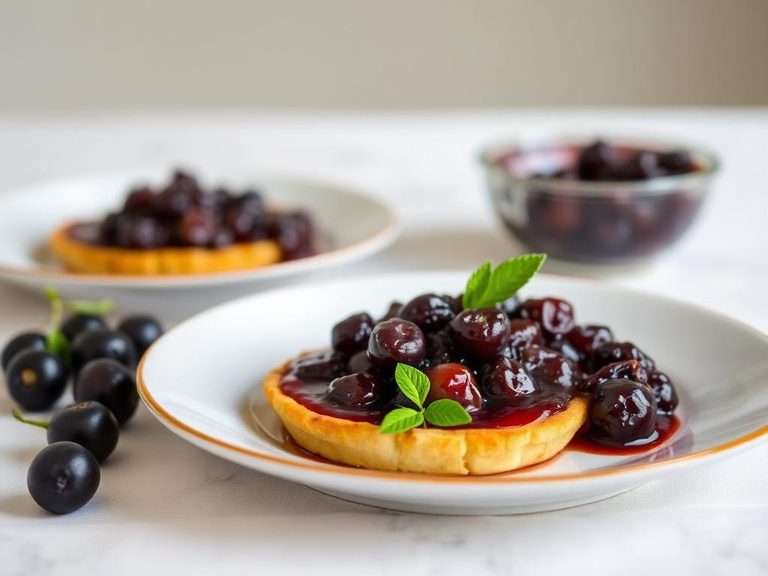
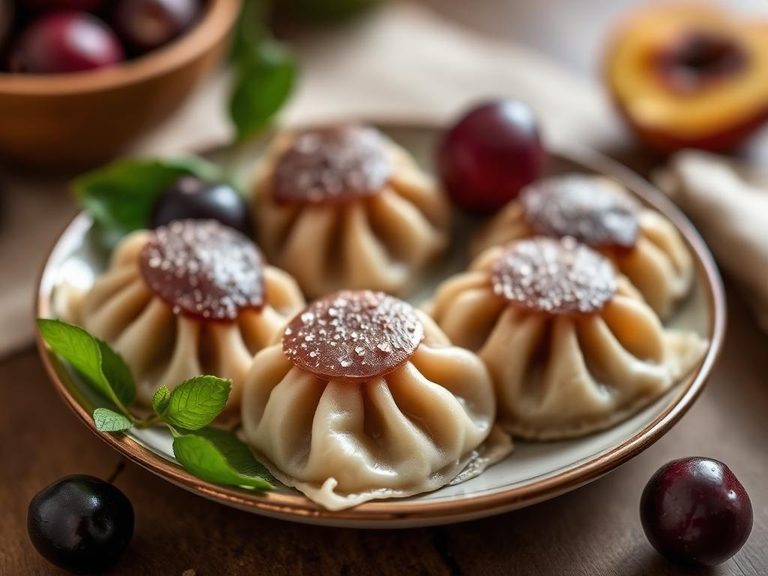

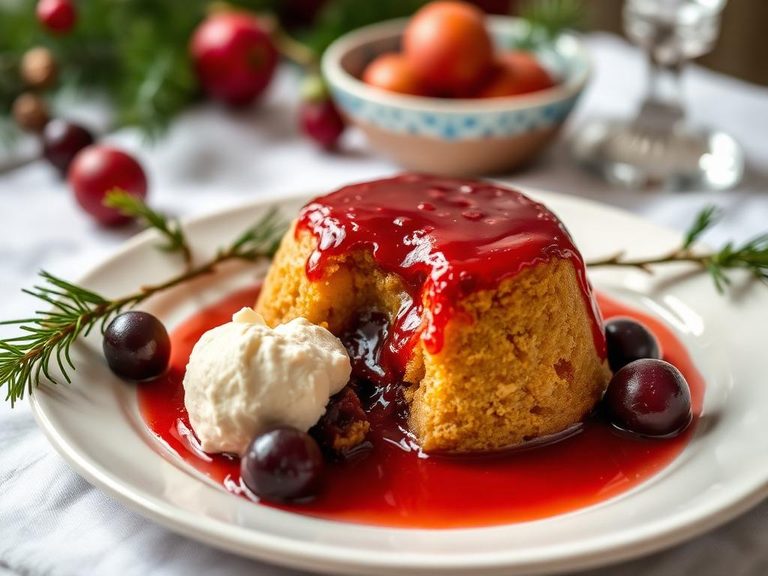

🌍 Where it's eaten
💡 Did you know?
The name 'prune' comes from the French word for 'plum,' and for decades, marketing in the U.S. avoided the word 'prune' in favor of 'dried plums' to appeal to younger consumers.
Full nutrition (USDA data · scales with serving)
| Water | 65.1 g |
| Energy | 124 kcal |
| Energy | 519 kj |
| Protein | 1.1 g |
| Total lipid (fat) | 0.22 g |
| Ash | 0.73 g |
| Carbohydrate, by difference | 32.9 g |
| Fiber, total dietary | 3.8 g |
| Calcium, Ca | 21.0 mg |
| Iron, Fe | 1.0 mg |
| Magnesium, Mg | 19.0 mg |
| Phosphorus, P | 33.0 mg |
| Potassium, K | 312 mg |
| Sodium, Na | 2.0 mg |
| Zinc, Zn | 0.22 mg |
| Copper, Cu | 0.18 mg |
| Manganese, Mn | 0.09 mg |
| Selenium, Se | 1.0 ug |
| Vitamin C, total ascorbic acid | 2.7 mg |
| Thiamin | 0.02 mg |
| Riboflavin | 0.09 mg |
| Niacin | 0.68 mg |
| Pantothenic acid | 0.10 mg |
| Vitamin B-6 | 0.20 mg |
| Folate, total | 0.00 ug |
| Folic acid | 0.00 ug |
| Folate, food | 0.00 ug |
| Folate, DFE | 0.00 ug |
| Vitamin B-12 | 0.00 ug |
| Vitamin A, RAE | 14.0 ug |
| Retinol | 0.00 ug |
| Vitamin A, IU | 285 iu |
| Vitamin D (D2 + D3), International Units | 0.00 iu |
| Vitamin D (D2 + D3) | 0.00 ug |
| Alcohol, ethyl | 0.00 g |
Fat & fatty acid profile (per 100g)
| Fatty acids, total saturated | 0.02 g |
| SFA 4:0 | 0.00 g |
| SFA 6:0 | 0.00 g |
| SFA 8:0 | 0.00 g |
| SFA 10:0 | 0.00 g |
| SFA 12:0 | 0.00 g |
| SFA 14:0 | 0.00 g |
| SFA 16:0 | 0.01 g |
| SFA 18:0 | 0.00 g |
| Fatty acids, total monounsaturated | 0.14 g |
| MUFA 16:1 | 0.00 g |
| MUFA 18:1 | 0.14 g |
| MUFA 20:1 | 0.00 g |
| MUFA 22:1 | 0.00 g |
| Fatty acids, total polyunsaturated | 0.05 g |
| PUFA 18:2 | 0.05 g |
| PUFA 18:3 | 0.00 g |
| PUFA 18:4 | 0.00 g |
| PUFA 20:4 | 0.00 g |
| PUFA 20:5 n-3 (EPA) | 0.00 g |
| PUFA 22:5 n-3 (DPA) | 0.00 g |
| PUFA 22:6 n-3 (DHA) | 0.00 g |
| Cholesterol | 0.00 mg |
Amino acid profile (per 100g)
Estimated from Plums, dried (prunes), uncooked — USDA does not publish this profile for Plums.
| Tryptophan | 0.03 g |
| Threonine | 0.05 g |
| Isoleucine | 0.04 g |
| Leucine | 0.07 g |
| Lysine | 0.05 g |
| Methionine | 0.02 g |
| Cystine | 0.01 g |
| Phenylalanine | 0.05 g |
| Tyrosine | 0.02 g |
| Valine | 0.06 g |
| Arginine | 0.04 g |
| Histidine | 0.03 g |
| Alanine | 0.07 g |
| Aspartic acid | 0.80 g |
| Glutamic acid | 0.11 g |
| Glycine | 0.05 g |
| Proline | 0.13 g |
| Serine | 0.06 g |
FAQ
What's the difference between stewed prunes and plain dried prunes?
Stewed prunes have been rehydrated by simmering in liquid (water, juice, or wine), which makes them plumper, softer, and often sweeter if sugar is added. Plain dried prunes are chewier and more concentrated.
Can I make stewed prunes without adding sugar?
Absolutely. Prunes are naturally very sweet. You can stew them in just water or unsweetened fruit juice. The natural sugars will caramelize slightly, creating a rich flavor without any added sugar.
How should I store leftover stewed prunes?
Store them in an airtight container in the refrigerator for up to a week. You can also freeze them in portions for longer storage, where they will keep for several months.
Nutrient density (calculated · NRF9.3)
Nutrient Rich Foods index: beneficial nutrients (protein, fiber, vitamins, minerals) minus saturated fat, added sugar & sodium, per 100 kcal.
NRF9.3 index — Fulgoni, Keast & Drewnowski, 2009. Computed from USDA nutrients.
Weight-loss friendliness (composite index)
Energy density 1.24 kcal/g · 4% calories from protein · 3.8 g fiber · 0.0 g sugar per 100 g.
Composite of energy density (Rolls et al., 1999), protein & fiber satiety, minus sugar. A calculated heuristic — ranks satiety-per-calorie, not a clinical measure.
Dietary load (calculated from USDA values)
Potential renal acid load. Positive = acid-forming, negative = alkaline-forming.
Sodium-to-potassium ratio: 0.01 (lower is better — aim for ≤ 1)
Sodium:potassium per WHO potassium guidance. Computed from USDA nutrients.