

Pinto beans, from canned, fat added
Common food

Photo: Wikipedia
Pinto beans from a can, with added fat, offer a creamy, earthy flavor and a soft, velvety texture that holds its shape well. They are a convenient, plant-based powerhouse, delivering a solid 7.4 grams of fiber and over 7 grams of protein per 100 grams to support sustained energy.
Calorie split: 15% protein · 51% carbs · 34% fat
↓ Full nutrition💚 Why it's loved
People adore their rich, slightly nutty flavor and creamy texture that absorbs seasonings beautifully. They are a beloved staple for their incredible versatility, forming the hearty base of countless comforting dishes from chili to refried beans.
⚠️ Watch-outs & how to enjoy it better
The added fat and potential high sodium in canned versions can be a concern for heart health. To counteract this, rinse the beans thoroughly under water to reduce sodium by up to 40%, and use them in dishes where other low-fat ingredients balance the added oil.
Key benefits
- Excellent source of dietary fiber for digestive health.
- Good plant-based protein source for muscle maintenance.
- Provides complex carbohydrates for steady energy.
- Contains iron, magnesium, and folate.
- Convenient canned option reduces cooking time.
🍽️ Popular dishes
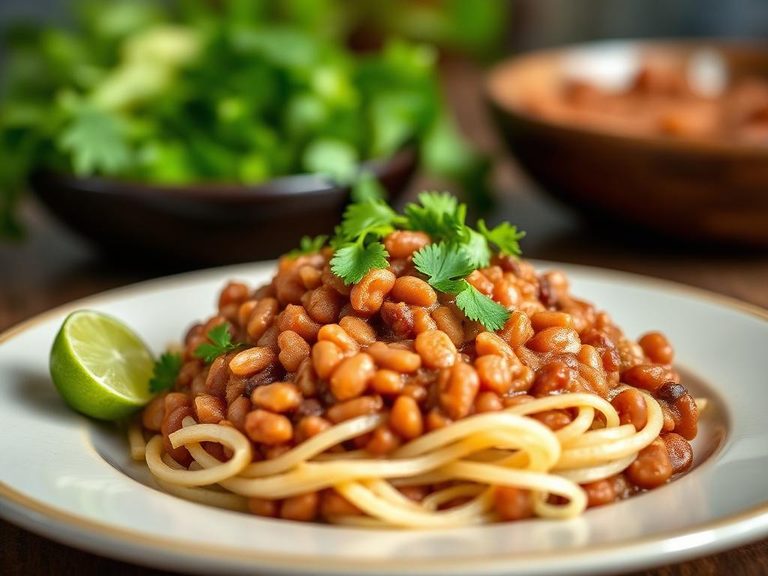
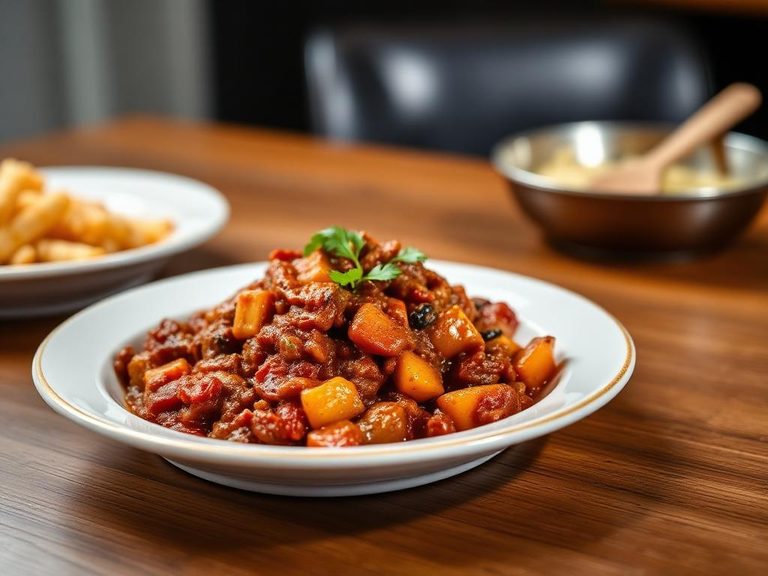
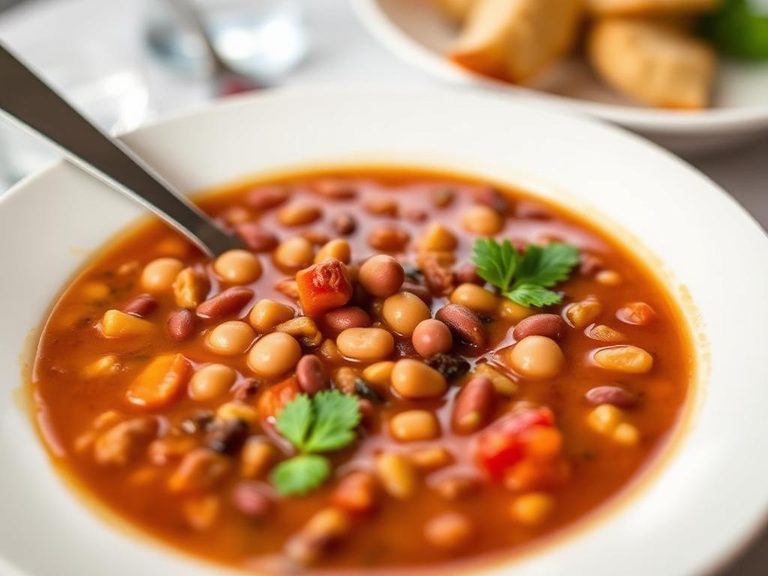
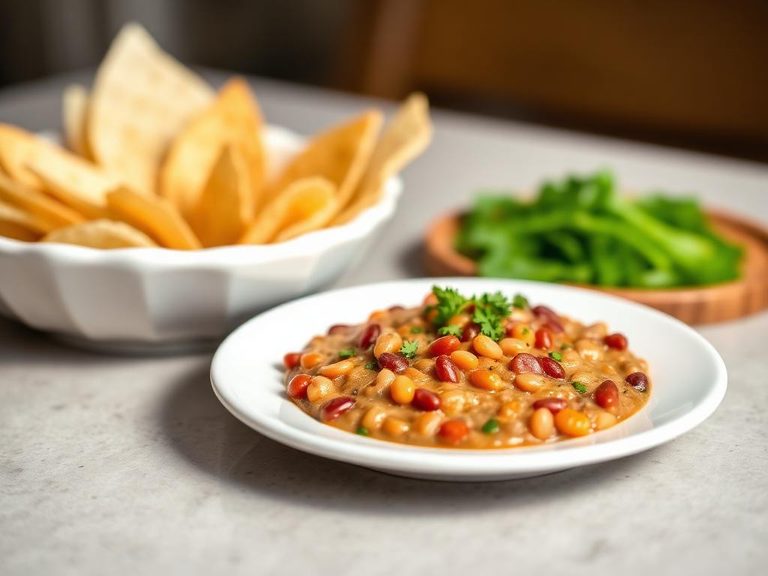
🌍 Where it's eaten
💡 Did you know?
Pinto beans are the most popular bean in the United States for home use, and their name comes from the Spanish word for 'painted,' referring to their speckled appearance when dried.
Full nutrition (USDA data · scales with serving)
| Water | 58.6 g |
| Energy | 188 kcal |
| Protein | 7.4 g |
| Total lipid (fat) | 7.1 g |
| Carbohydrate, by difference | 24.3 g |
| Fiber, total dietary | 7.4 g |
| Total Sugars | 1.6 g |
| Calcium, Ca | 75.0 mg |
| Iron, Fe | 2.4 mg |
| Magnesium, Mg | 53.0 mg |
| Phosphorus, P | 147 mg |
| Potassium, K | 442 mg |
| Sodium, Na | 303 mg |
| Zinc, Zn | 0.90 mg |
| Copper, Cu | 0.26 mg |
| Selenium, Se | 5.9 ug |
| Vitamin C, total ascorbic acid | 1.1 mg |
| Thiamin | 0.08 mg |
| Riboflavin | 0.02 mg |
| Niacin | 0.41 mg |
| Vitamin B-6 | 0.21 mg |
| Folate, total | 37.0 ug |
| Folic acid | 0.00 ug |
| Folate, food | 37.0 ug |
| Folate, DFE | 37.0 ug |
| Choline, total | 33.3 mg |
| Vitamin B-12 | 0.00 ug |
| Vitamin B-12, added | 0.00 ug |
| Vitamin A, RAE | 0.00 ug |
| Retinol | 0.00 ug |
| Carotene, beta | 0.00 ug |
| Carotene, alpha | 0.00 ug |
| Cryptoxanthin, beta | 0.00 ug |
| Lycopene | 0.00 ug |
| Lutein + zeaxanthin | 0.00 ug |
| Vitamin E (alpha-tocopherol) | 2.1 mg |
| Vitamin E, added | 0.00 mg |
| Vitamin D (D2 + D3) | 0.00 ug |
| Vitamin K (phylloquinone) | 9.6 ug |
| Alcohol, ethyl | 0.00 g |
| Caffeine | 0.00 mg |
| Theobromine | 0.00 mg |
Fat & fatty acid profile (per 100g)
| Fatty acids, total saturated | 1.0 g |
| SFA 4:0 | 0.00 g |
| SFA 6:0 | 0.00 g |
| SFA 8:0 | 0.00 g |
| SFA 10:0 | 0.00 g |
| SFA 12:0 | 0.00 g |
| SFA 14:0 | 0.00 g |
| SFA 16:0 | 0.78 g |
| SFA 18:0 | 0.18 g |
| Fatty acids, total monounsaturated | 2.8 g |
| MUFA 16:1 | 0.02 g |
| MUFA 18:1 | 2.8 g |
| MUFA 20:1 | 0.04 g |
| MUFA 22:1 | 0.00 g |
| Fatty acids, total polyunsaturated | 2.7 g |
| PUFA 18:2 | 2.3 g |
| PUFA 18:3 | 0.46 g |
| PUFA 18:4 | 0.00 g |
| PUFA 20:4 | 0.00 g |
| PUFA 20:5 n-3 (EPA) | 0.00 g |
| PUFA 22:5 n-3 (DPA) | 0.00 g |
| PUFA 22:6 n-3 (DHA) | 0.00 g |
| Cholesterol | 0.00 mg |
Amino acid profile (per 100g)
Estimated from Beans, pinto, mature seeds, sprouted, cooked, boiled, drained, with salt — USDA does not publish this profile for Pinto beans.
| Tryptophan | 0.02 g |
| Threonine | 0.08 g |
| Isoleucine | 0.08 g |
| Leucine | 0.13 g |
| Lysine | 0.11 g |
| Methionine | 0.02 g |
| Cystine | 0.02 g |
| Phenylalanine | 0.09 g |
| Tyrosine | 0.06 g |
| Valine | 0.10 g |
| Arginine | 0.10 g |
| Histidine | 0.05 g |
| Alanine | 0.08 g |
| Aspartic acid | 0.24 g |
| Glutamic acid | 0.23 g |
| Glycine | 0.06 g |
| Proline | 0.07 g |
| Serine | 0.10 g |
FAQ
Why are my canned pinto beans mushy?
Canned beans are already fully cooked. Overheating or vigorous stirring can break them down. Add them at the end of cooking and stir gently.
Do I need to soak canned pinto beans?
No, they are pre-cooked and ready to eat. Simply drain, rinse, and heat.
How can I reduce the sodium in canned pinto beans?
Rinse them thoroughly under cold running water in a colander for about a minute. This can remove a significant portion of the surface sodium.
Nutrient density (calculated · NRF9.3)
Nutrient Rich Foods index: beneficial nutrients (protein, fiber, vitamins, minerals) minus saturated fat, added sugar & sodium, per 100 kcal.
NRF9.3 index — Fulgoni, Keast & Drewnowski, 2009. Computed from USDA nutrients.
Weight-loss friendliness (composite index)
Energy density 1.88 kcal/g · 16% calories from protein · 7.4 g fiber · 1.6 g sugar per 100 g.
Composite of energy density (Rolls et al., 1999), protein & fiber satiety, minus sugar. A calculated heuristic — ranks satiety-per-calorie, not a clinical measure.
Dietary load (calculated from USDA values)
Potential renal acid load. Positive = acid-forming, negative = alkaline-forming.
Sodium-to-potassium ratio: 0.69 (lower is better — aim for ≤ 1)
Sodium:potassium per WHO potassium guidance. Computed from USDA nutrients.