

Peppers, hot, cooked
Common food

Photo: Wikipedia
Cooked hot peppers are tender, glossy morsels with a fiery, smoky kick that lingers on the palate. Their texture softens from crisp to silky, concentrating their sweet, pungent flavors. Nutritionally, they are a low-calorie source of fiber and capsaicin, the compound responsible for their heat.
Calorie split: 9% protein · 48% carbs · 43% fat
↓ Full nutrition💚 Why it's loved
People love cooked hot peppers for their ability to transform a dish with deep, complex heat and smoky sweetness. They are a cornerstone of global cuisines, offering both a flavor punch and a cultural connection to traditions of bold, spicy cooking.
⚠️ Watch-outs & how to enjoy it better
The primary downside is the intense heat from capsaicin, which can cause digestive discomfort or heartburn in sensitive individuals. To counteract this, pair with cooling dairy (like yogurt or cheese) or starchy carbs (like rice or bread) to buffer the burn, and start with smaller portions to assess tolerance.
Key benefits
- Rich in capsaicin, linked to metabolism support.
- Good source of dietary fiber for digestive health.
- Contains vitamins A and C, even when cooked.
- May promote satiety due to its pungent compounds.
- Adds intense flavor without significant calories.
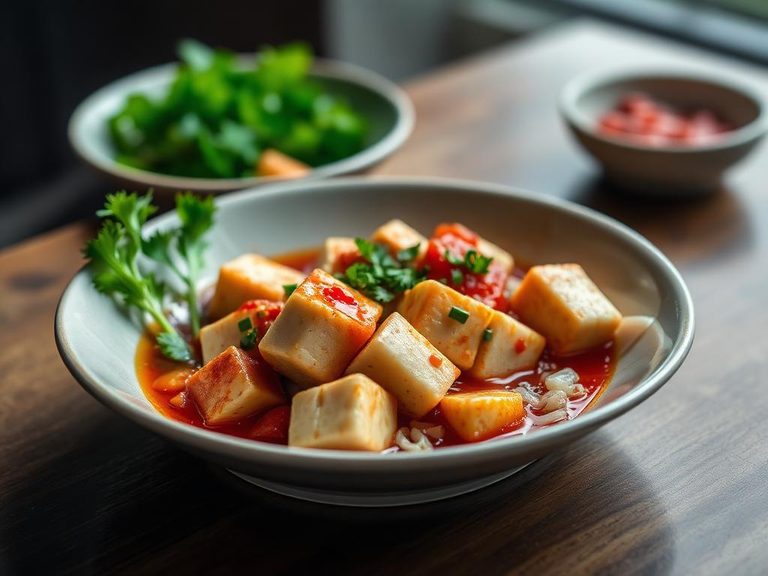
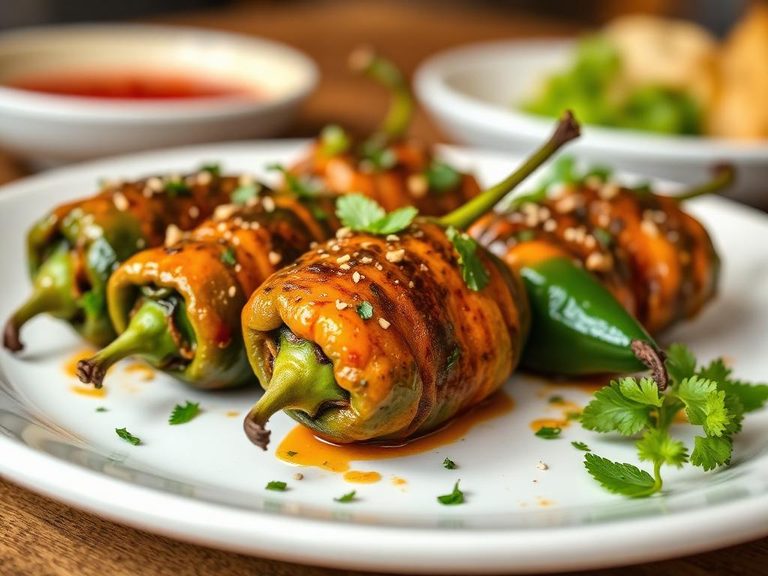
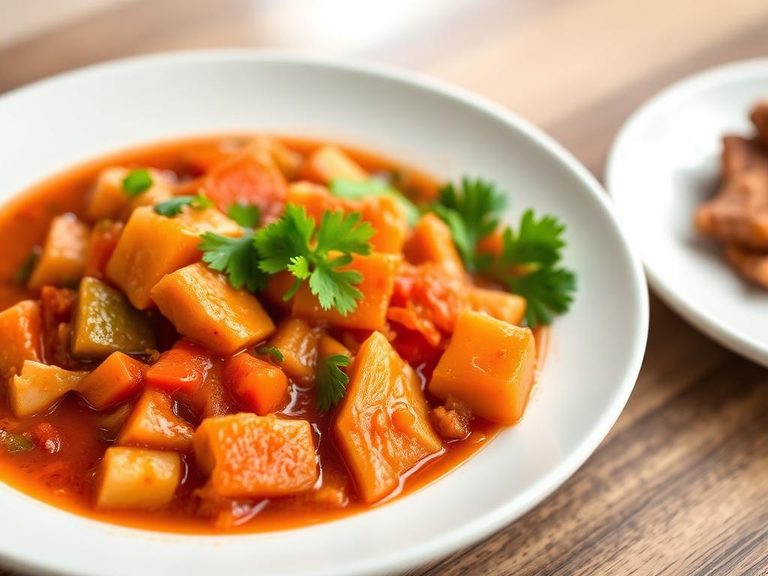
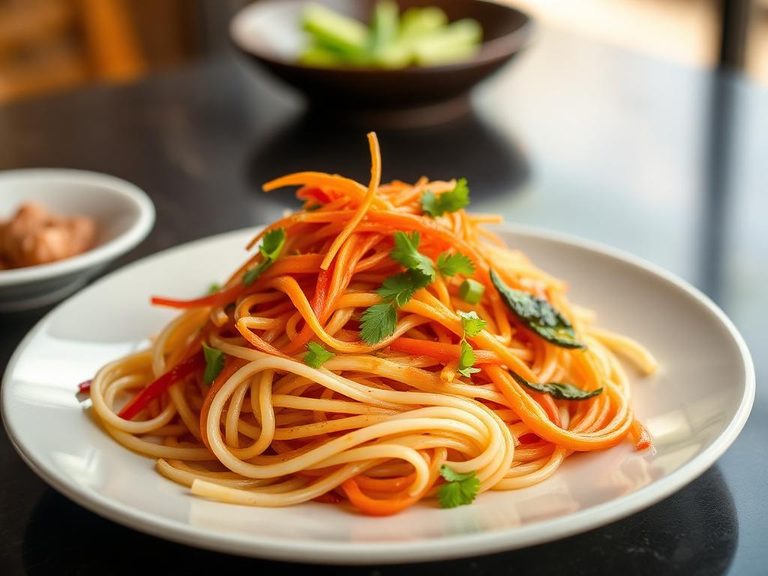
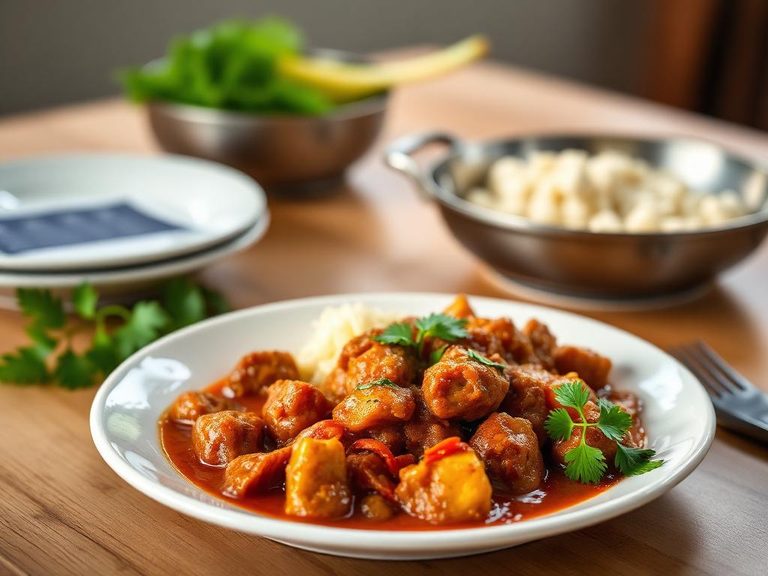
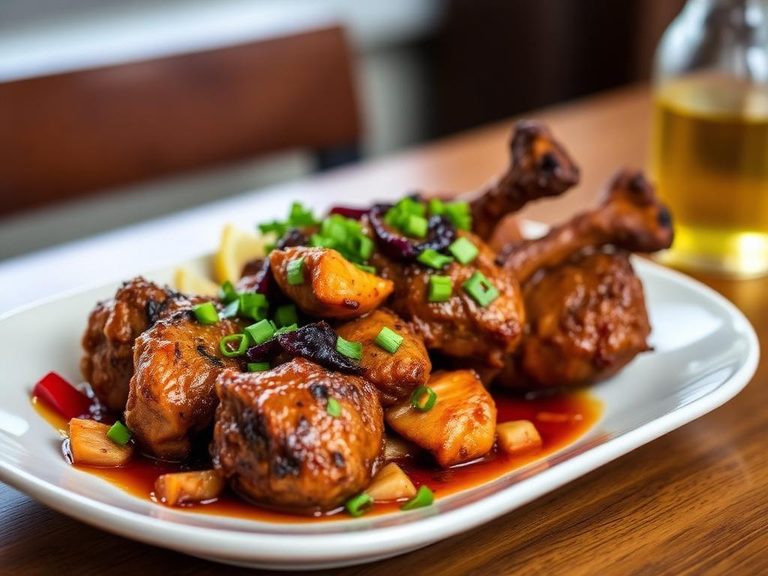
🍽️ Popular dishes
🌍 Where it's eaten
💡 Did you know?
The 'heat' in hot peppers is measured on the Scoville scale, and a single cooked habanero can pack over 300,000 Scoville Heat Units (SHU), making it hundreds of times spicier than a jalapeño.
Full nutrition (USDA data · scales with serving)
| Water | 86.8 g |
| Energy | 59.0 kcal |
| Protein | 1.4 g |
| Total lipid (fat) | 3.1 g |
| Carbohydrate, by difference | 7.7 g |
| Fiber, total dietary | 2.2 g |
| Total Sugars | 4.8 g |
| Calcium, Ca | 14.0 mg |
| Iron, Fe | 0.65 mg |
| Magnesium, Mg | 19.0 mg |
| Phosphorus, P | 35.0 mg |
| Potassium, K | 288 mg |
| Sodium, Na | 132 mg |
| Zinc, Zn | 0.20 mg |
| Copper, Cu | 0.09 mg |
| Selenium, Se | 0.50 ug |
| Vitamin C, total ascorbic acid | 112 mg |
| Thiamin | 0.05 mg |
| Riboflavin | 0.07 mg |
| Niacin | 1.2 mg |
| Vitamin B-6 | 0.44 mg |
| Folate, total | 21.0 ug |
| Folic acid | 0.00 ug |
| Folate, food | 21.0 ug |
| Folate, DFE | 21.0 ug |
| Choline, total | 9.5 mg |
| Vitamin B-12 | 0.00 ug |
| Vitamin B-12, added | 0.00 ug |
| Vitamin A, RAE | 61.0 ug |
| Retinol | 11.0 ug |
| Carotene, beta | 530 ug |
| Carotene, alpha | 49.0 ug |
| Cryptoxanthin, beta | 70.0 ug |
| Lycopene | 0.00 ug |
| Lutein + zeaxanthin | 752 ug |
| Vitamin E (alpha-tocopherol) | 2.5 mg |
| Vitamin E, added | 0.00 mg |
| Vitamin D (D2 + D3) | 0.00 ug |
| Vitamin K (phylloquinone) | 18.6 ug |
| Alcohol, ethyl | 0.00 g |
| Caffeine | 0.00 mg |
| Theobromine | 0.00 mg |
Fat & fatty acid profile (per 100g)
| Fatty acids, total saturated | 0.76 g |
| SFA 4:0 | 0.02 g |
| SFA 6:0 | 0.01 g |
| SFA 8:0 | 0.01 g |
| SFA 10:0 | 0.02 g |
| SFA 12:0 | 0.02 g |
| SFA 14:0 | 0.07 g |
| SFA 16:0 | 0.42 g |
| SFA 18:0 | 0.15 g |
| Fatty acids, total monounsaturated | 0.97 g |
| MUFA 16:1 | 0.02 g |
| MUFA 18:1 | 0.93 g |
| MUFA 20:1 | 0.01 g |
| MUFA 22:1 | 0.00 g |
| Fatty acids, total polyunsaturated | 0.94 g |
| PUFA 18:2 | 0.82 g |
| PUFA 18:3 | 0.12 g |
| PUFA 18:4 | 0.00 g |
| PUFA 20:4 | 0.00 g |
| PUFA 20:5 n-3 (EPA) | 0.00 g |
| PUFA 22:5 n-3 (DPA) | 0.00 g |
| PUFA 22:6 n-3 (DHA) | 0.00 g |
| Cholesterol | 2.0 mg |
Amino acid profile (per 100g)
Estimated from Peppers, sweet, green, raw — USDA does not publish this profile for Peppers.
| Tryptophan | 0.01 g |
| Threonine | 0.04 g |
| Isoleucine | 0.02 g |
| Leucine | 0.04 g |
| Lysine | 0.04 g |
| Methionine | 0.01 g |
| Cystine | 0.01 g |
| Phenylalanine | 0.09 g |
| Tyrosine | 0.01 g |
| Valine | 0.04 g |
| Arginine | 0.03 g |
| Histidine | 0.01 g |
| Alanine | 0.04 g |
| Aspartic acid | 0.21 g |
| Glutamic acid | 0.19 g |
| Glycine | 0.03 g |
| Proline | 0.02 g |
| Serine | 0.05 g |
FAQ
Does cooking make hot peppers less spicy?
Cooking can mellow the sharp, raw heat slightly and blend it with other flavors, but the capsaicin itself is heat-stable, so the peppers remain significantly spicy.
How can I reduce the heat level when cooking with them?
Remove the seeds and inner white membranes, which hold most of the capsaicin. You can also balance the heat with sweet, sour, or fatty ingredients like sugar, vinegar, or coconut milk.
Are cooked hot peppers a good source of vitamins?
Yes, they retain good amounts of vitamin A (as beta-carotene) and vitamin C, which are antioxidants important for immune function and skin health.
Nutrient density (calculated · NRF9.3)
Nutrient Rich Foods index: beneficial nutrients (protein, fiber, vitamins, minerals) minus saturated fat, added sugar & sodium, per 100 kcal.
NRF9.3 index — Fulgoni, Keast & Drewnowski, 2009. Computed from USDA nutrients.
Weight-loss friendliness (composite index)
Energy density 0.59 kcal/g · 10% calories from protein · 2.2 g fiber · 4.8 g sugar per 100 g.
Composite of energy density (Rolls et al., 1999), protein & fiber satiety, minus sugar. A calculated heuristic — ranks satiety-per-calorie, not a clinical measure.
Dietary load (calculated from USDA values)
Potential renal acid load. Positive = acid-forming, negative = alkaline-forming.
Sodium-to-potassium ratio: 0.46 (lower is better — aim for ≤ 1)
Sodium:potassium per WHO potassium guidance. Computed from USDA nutrients.