

Peppers, bell, red, raw
Whole food · Vegetables and Vegetable Products
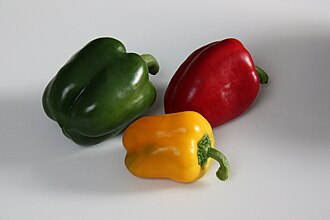
Photo: Wikipedia
The raw red bell pepper is a vibrant, glossy fruit with a crisp, juicy crunch and a sweet, mildly tangy flavor that lacks the heat of its chili relatives. Its thin, edible skin and hollow interior make it a refreshing, hydrating snack. Nutritionally, it's a standout source of vitamin C, with one medium pepper providing well over the daily recommended intake.
Calorie split: 11% protein · 85% carbs · 4% fat
↓ Full nutrition💚 Why it's loved
People adore red bell peppers for their natural sweetness and satisfying crunch, which makes them a perfect raw snack or a colorful, flavor-enhancing addition to countless dishes. Their versatility shines in cuisines worldwide, from being the star of a fresh crudité platter to a foundational ingredient in sauces and stir-fries.
⚠️ Watch-outs & how to enjoy it better
While nutritious, the natural sugars in red peppers can contribute to a noticeable blood sugar rise if eaten in very large quantities alone. For those with a sensitive digestive system, the fiber and certain compounds in raw peppers can cause gas or bloating. To counteract this, pair them with a protein or healthy fat (like hummus or cheese) to slow sugar absorption, and consider cooking them to break down some of the fiber if raw consumption is an issue.
Key benefits
- Exceptionally high in vitamin C, a potent antioxidant.
- Very low in calories and fat, making it ideal for weight management.
- Good source of dietary fiber for digestive health.
- Rich in carotenoids like beta-carotene, which the body converts to vitamin A.
- High water content aids in hydration.
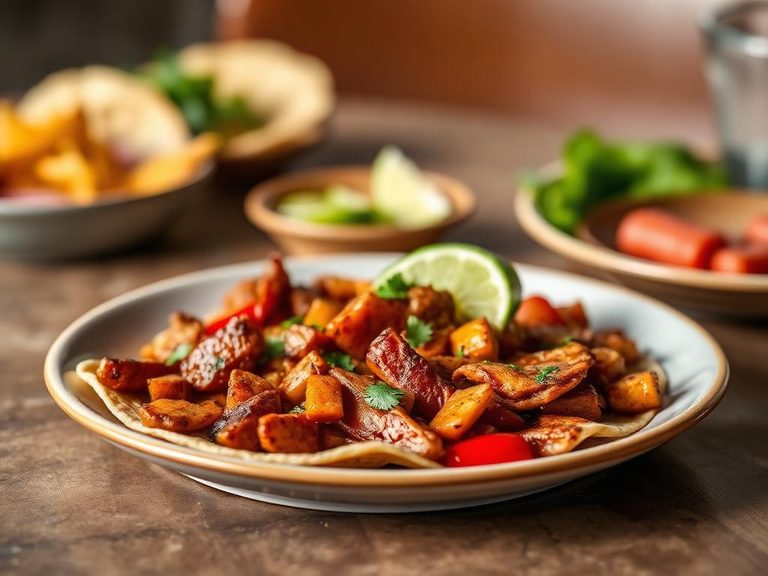
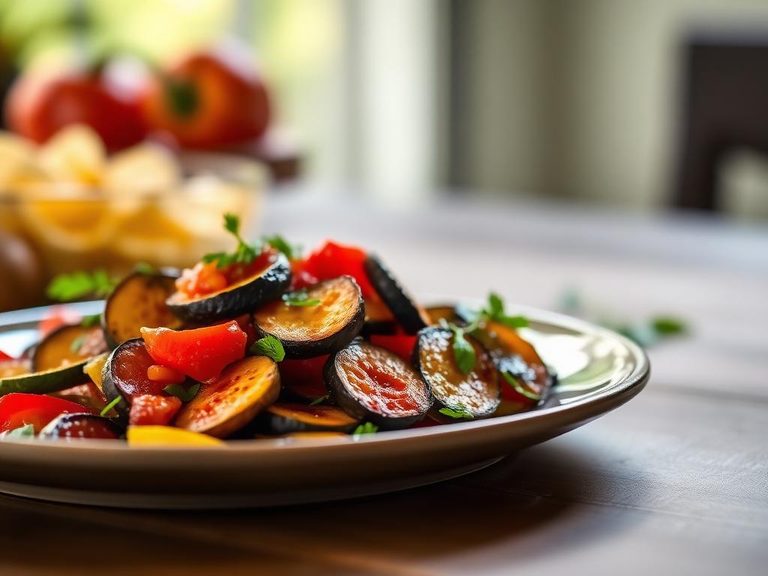
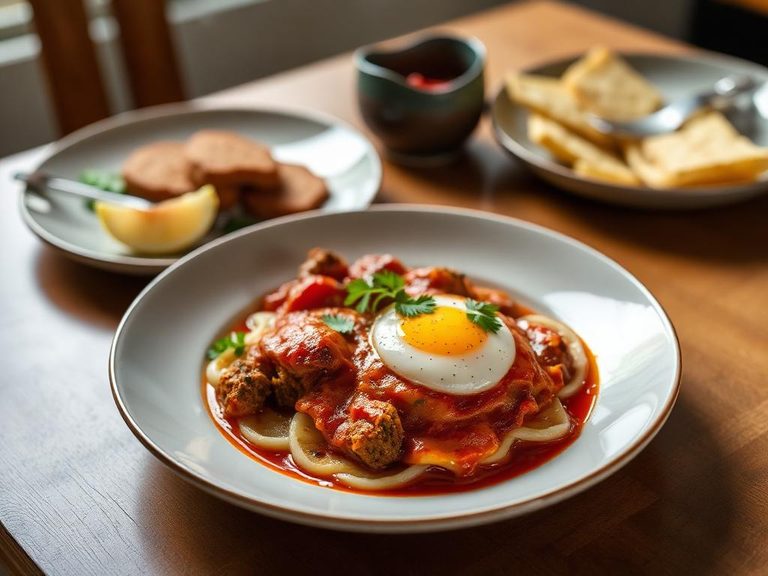
🍽️ Popular dishes
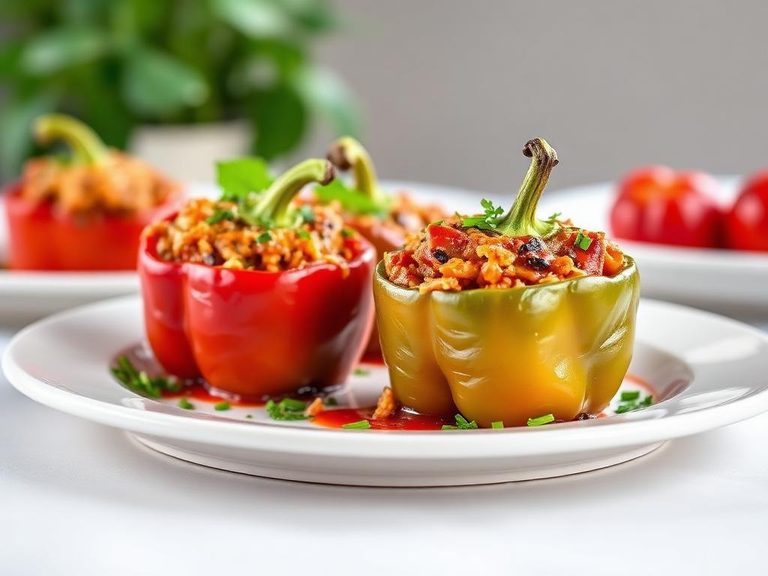
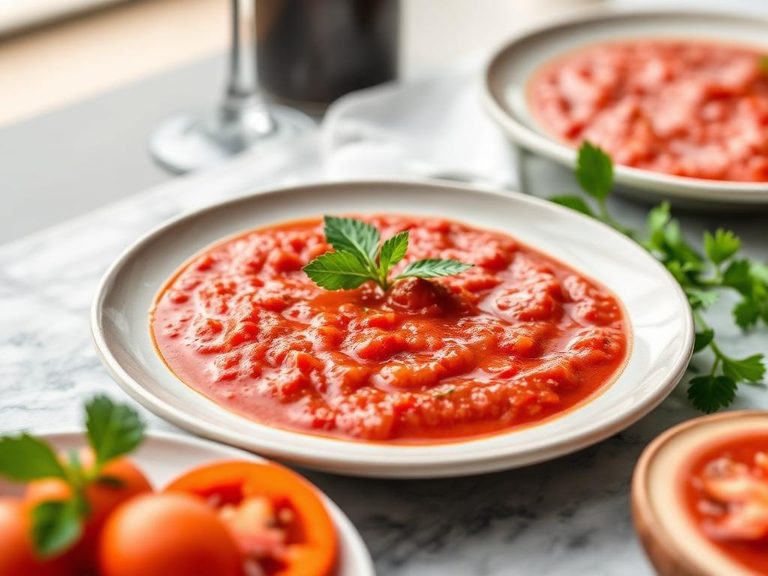
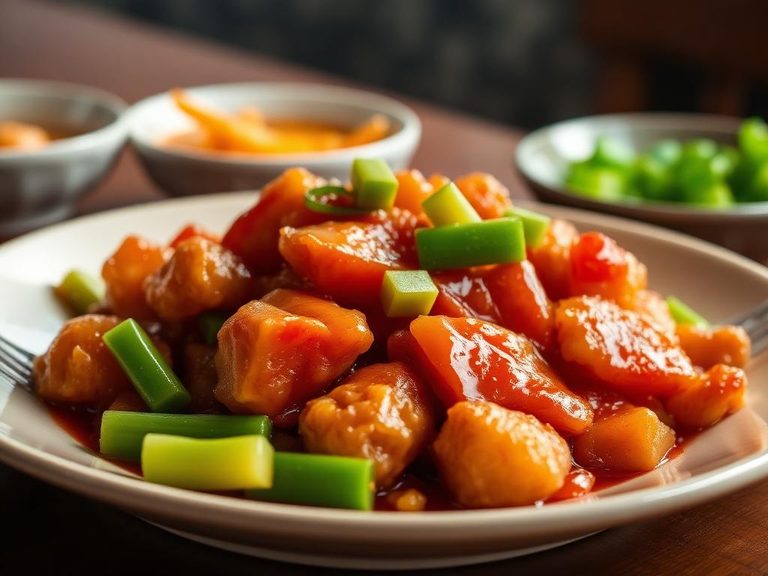
🌍 Where it's eaten
💡 Did you know?
Despite being botanically a fruit (a berry, specifically), red bell peppers are harvested at their peak ripeness from the same plant that produces green bell peppers; they are simply the fully mature version.
Full nutrition (USDA data · scales with serving)
| Water | 91.9 g |
| Energy (Atwater General Factors) | 31.3 kcal |
| Energy (Atwater Specific Factors) | 27.0 kcal |
| Nitrogen | 0.14 g |
| Protein | 0.90 g |
| Total lipid (fat) | 0.13 g |
| Ash | 0.40 g |
| Carbohydrate, by difference | 6.7 g |
| Fiber, total dietary | 1.2 g |
| Calcium, Ca | 6.4 mg |
| Iron, Fe | 0.35 mg |
| Magnesium, Mg | 11.0 mg |
| Phosphorus, P | 26.6 mg |
| Potassium, K | 213 mg |
| Sodium, Na | 0.00 mg |
| Zinc, Zn | 0.20 mg |
| Copper, Cu | 0.04 mg |
| Manganese, Mn | 0.13 mg |
| Selenium, Se | 0.00 ug |
| Vitamin C, total ascorbic acid | 142 mg |
| Thiamin | 0.05 mg |
| Riboflavin | 0.14 mg |
| Niacin | 1.0 mg |
| Vitamin B-6 | 0.30 mg |
| Biotin | 0.43 ug |
| Folate, total | 47.3 ug |
Fat & fatty acid profile (per 100g)
Estimated from Peppers, hot chili, green, canned, pods, excluding seeds, solids and liquids — USDA does not publish this profile for Peppers.
| Fatty acids, total saturated | 0.01 g |
| SFA 4:0 | 0.00 g |
| SFA 6:0 | 0.00 g |
| SFA 8:0 | 0.00 g |
| SFA 10:0 | 0.00 g |
| SFA 12:0 | 0.00 g |
| SFA 14:0 | 0.00 g |
| SFA 16:0 | 0.01 g |
| SFA 18:0 | 0.00 g |
| Fatty acids, total monounsaturated | 0.01 g |
| MUFA 16:1 | 0.00 g |
| MUFA 18:1 | 0.01 g |
| MUFA 20:1 | 0.00 g |
| MUFA 22:1 | 0.00 g |
| Fatty acids, total polyunsaturated | 0.06 g |
| PUFA 18:2 | 0.05 g |
| PUFA 18:3 | 0.00 g |
| PUFA 18:4 | 0.00 g |
| PUFA 20:4 | 0.00 g |
| PUFA 20:5 n-3 (EPA) | 0.00 g |
| PUFA 22:5 n-3 (DPA) | 0.00 g |
| PUFA 22:6 n-3 (DHA) | 0.00 g |
| Fatty acids, total trans | 0.00 g |
| Cholesterol | 0.00 mg |
Amino acid profile (per 100g)
Estimated from Peppers, hot chili, green, canned, pods, excluding seeds, solids and liquids — USDA does not publish this profile for Peppers.
| Tryptophan | 0.01 g |
| Threonine | 0.03 g |
| Isoleucine | 0.03 g |
| Leucine | 0.05 g |
| Lysine | 0.04 g |
| Methionine | 0.01 g |
| Cystine | 0.02 g |
| Phenylalanine | 0.03 g |
| Tyrosine | 0.02 g |
| Valine | 0.04 g |
| Arginine | 0.04 g |
| Histidine | 0.02 g |
| Alanine | 0.04 g |
| Aspartic acid | 0.13 g |
| Glutamic acid | 0.12 g |
| Glycine | 0.03 g |
| Proline | 0.04 g |
| Serine | 0.04 g |
FAQ
Are red, yellow, and orange bell peppers the same vegetable?
Yes, they are the same species (Capsicum annuum). The color difference is due to ripeness and variety; red peppers are the most mature, having developed their full sugar content and vitamin profile.
Is the skin of a red bell pepper edible?
Absolutely. The skin is thin, edible, and contains beneficial nutrients. It's a key part of the pepper's crisp texture when eaten raw.
How should I store red bell peppers to keep them fresh?
Store unwashed peppers whole in the crisper drawer of your refrigerator. They can last for 1-2 weeks. Once cut, wrap tightly and use within a few days.
Nutrient density (calculated · NRF9.3)
Nutrient Rich Foods index: beneficial nutrients (protein, fiber, vitamins, minerals) minus saturated fat, added sugar & sodium, per 100 kcal.
NRF9.3 index — Fulgoni, Keast & Drewnowski, 2009. Computed from USDA nutrients.
Weight-loss friendliness (composite index)
Energy density 0.31 kcal/g · 11% calories from protein · 1.2 g fiber · 0.0 g sugar per 100 g.
Composite of energy density (Rolls et al., 1999), protein & fiber satiety, minus sugar. A calculated heuristic — ranks satiety-per-calorie, not a clinical measure.
Dietary load (calculated from USDA values)
Potential renal acid load. Positive = acid-forming, negative = alkaline-forming.
Sodium-to-potassium ratio: 0.00 (lower is better — aim for ≤ 1)
Sodium:potassium per WHO potassium guidance. Computed from USDA nutrients.