

Pear, canned, juice pack
Common food

Photo: Wikipedia
This is a tender, pre-sliced pear preserved in its own juice, offering a soft, melt-in-the-mouth texture that is sweeter and more delicate than fresh fruit. With only 45 calories per 100g and a notable 1.5g of fiber, it serves as a light, convenient snack or dessert option. The natural sugars are more accessible here due to the canning process, making it a quick source of energy.
Calorie split: 2% protein · 97% carbs · 1% fat
↓ Full nutrition💚 Why it's loved
People love it for its consistent, gentle sweetness and the fact that it requires zero prep—just open and eat. Its soft texture makes it a nostalgic comfort food and a versatile ingredient in both sweet and savory dishes.
⚠️ Watch-outs & how to enjoy it better
The high sugar content (10.03g/100g) can cause blood sugar spikes, especially for those with insulin resistance or diabetes. To mitigate this, pair it with a source of protein or healthy fat (like Greek yogurt or nuts) to slow sugar absorption, and practice portion control by sticking to a half-cup serving.
Key benefits
- Low calorie density for weight management
- Good source of dietary fiber (1.5g/100g)
- Naturally fat-free and cholesterol-free
- Provides quick energy from natural sugars
- Convenient and shelf-stable without added syrup
🍽️ Popular dishes
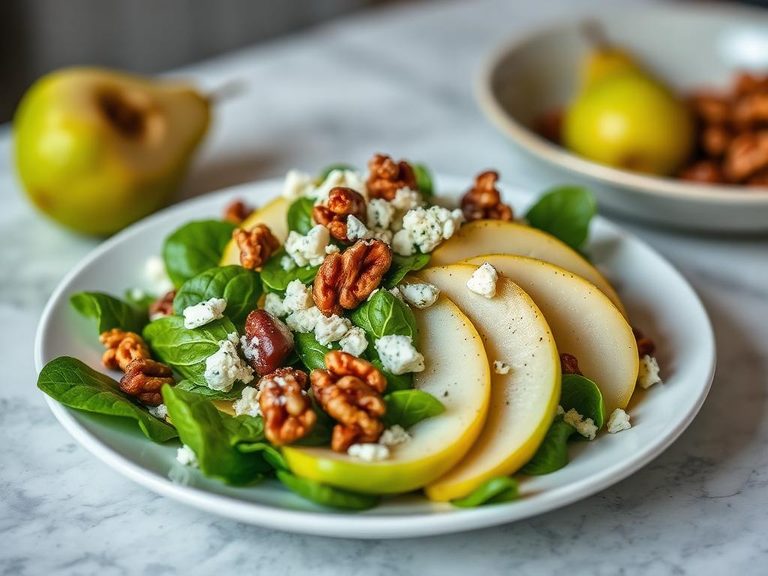
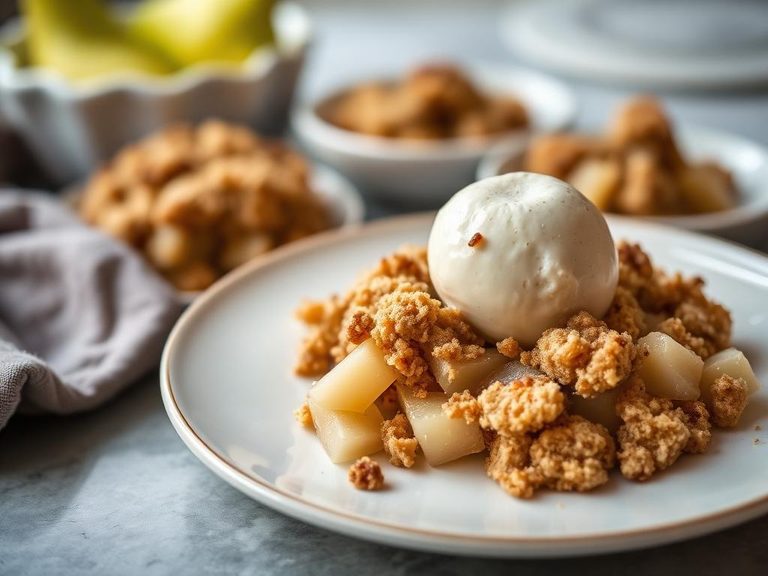
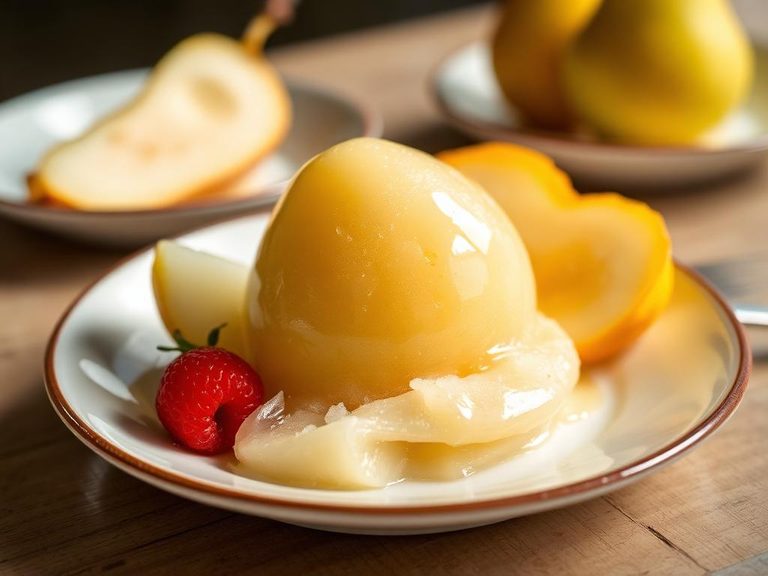
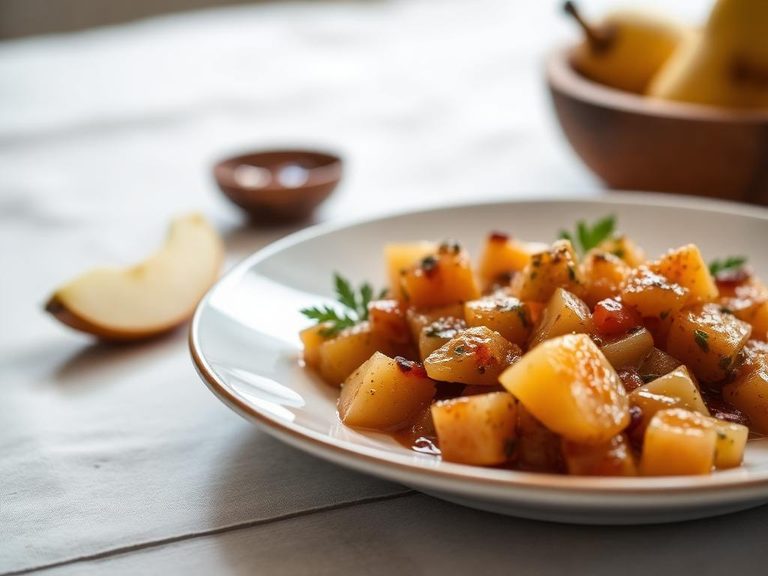
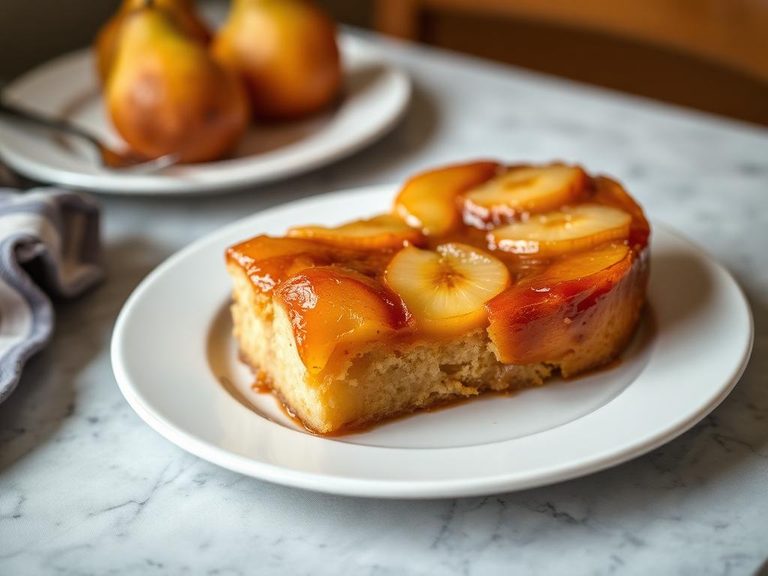
🌍 Where it's eaten
💡 Did you know?
Canned pears are one of the few fruits that actually become more tender and easier to digest after processing, making them a traditional 'first food' for babies in many cultures.
Full nutrition (USDA data · scales with serving)
| Water | 87.6 g |
| Energy | 45.0 kcal |
| Protein | 0.23 g |
| Total lipid (fat) | 0.07 g |
| Carbohydrate, by difference | 11.8 g |
| Fiber, total dietary | 1.5 g |
| Total Sugars | 10.0 g |
| Calcium, Ca | 6.0 mg |
| Iron, Fe | 0.29 mg |
| Magnesium, Mg | 6.0 mg |
| Phosphorus, P | 9.0 mg |
| Potassium, K | 100 mg |
| Sodium, Na | 5.0 mg |
| Zinc, Zn | 0.10 mg |
| Copper, Cu | 0.05 mg |
| Selenium, Se | 0.00 ug |
| Vitamin C, total ascorbic acid | 1.1 mg |
| Thiamin | 0.01 mg |
| Riboflavin | 0.01 mg |
| Niacin | 0.06 mg |
| Vitamin B-6 | 0.03 mg |
| Folate, total | 1.0 ug |
| Folic acid | 0.00 ug |
| Folate, food | 1.0 ug |
| Folate, DFE | 1.0 ug |
| Choline, total | 3.8 mg |
| Vitamin B-12 | 0.00 ug |
| Vitamin B-12, added | 0.00 ug |
| Vitamin A, RAE | 0.00 ug |
| Retinol | 0.00 ug |
| Carotene, beta | 0.00 ug |
| Carotene, alpha | 0.00 ug |
| Cryptoxanthin, beta | 0.00 ug |
| Lycopene | 0.00 ug |
| Lutein + zeaxanthin | 37.0 ug |
| Vitamin E (alpha-tocopherol) | 0.08 mg |
| Vitamin E, added | 0.00 mg |
| Vitamin D (D2 + D3) | 0.00 ug |
| Vitamin K (phylloquinone) | 0.30 ug |
| Alcohol, ethyl | 0.00 g |
| Caffeine | 0.00 mg |
| Theobromine | 0.00 mg |
Fat & fatty acid profile (per 100g)
| Fatty acids, total saturated | 0.01 g |
| SFA 4:0 | 0.00 g |
| SFA 6:0 | 0.00 g |
| SFA 8:0 | 0.00 g |
| SFA 10:0 | 0.00 g |
| SFA 12:0 | 0.00 g |
| SFA 14:0 | 0.00 g |
| SFA 16:0 | 0.01 g |
| SFA 18:0 | 0.00 g |
| Fatty acids, total monounsaturated | 0.01 g |
| MUFA 16:1 | 0.00 g |
| MUFA 18:1 | 0.01 g |
| MUFA 20:1 | 0.00 g |
| MUFA 22:1 | 0.00 g |
| Fatty acids, total polyunsaturated | 0.02 g |
| PUFA 18:2 | 0.02 g |
| PUFA 18:3 | 0.00 g |
| PUFA 18:4 | 0.00 g |
| PUFA 20:4 | 0.00 g |
| PUFA 20:5 n-3 (EPA) | 0.00 g |
| PUFA 22:5 n-3 (DPA) | 0.00 g |
| PUFA 22:6 n-3 (DHA) | 0.00 g |
| Cholesterol | 0.00 mg |
Amino acid profile (per 100g)
Estimated from Pears, canned, juice pack, solids and liquids — USDA does not publish this profile for Pear.
| Threonine | 0.01 g |
| Isoleucine | 0.01 g |
| Leucine | 0.02 g |
| Lysine | 0.01 g |
| Methionine | 0.00 g |
| Cystine | 0.00 g |
| Phenylalanine | 0.01 g |
| Tyrosine | 0.00 g |
| Valine | 0.01 g |
| Arginine | 0.01 g |
| Histidine | 0.00 g |
| Alanine | 0.01 g |
| Aspartic acid | 0.07 g |
| Glutamic acid | 0.03 g |
| Glycine | 0.01 g |
| Proline | 0.01 g |
| Serine | 0.01 g |
FAQ
Are canned pears as nutritious as fresh pears?
Yes, they retain most vitamins and minerals, though some vitamin C may be lost during processing. They are a great alternative when fresh pears are out of season.
What does 'juice pack' mean?
It means the pears are canned in their own natural juice rather than heavy syrup, resulting in lower added sugar and fewer calories.
Can I use canned pears in baking?
Absolutely! They work well in cakes, pies, and crumbles. Just drain them well to avoid excess moisture in your batter.
Nutrient density (calculated · NRF9.3)
Nutrient Rich Foods index: beneficial nutrients (protein, fiber, vitamins, minerals) minus saturated fat, added sugar & sodium, per 100 kcal.
NRF9.3 index — Fulgoni, Keast & Drewnowski, 2009. Computed from USDA nutrients.
Weight-loss friendliness (composite index)
Energy density 0.45 kcal/g · 2% calories from protein · 1.5 g fiber · 10.0 g sugar per 100 g.
Composite of energy density (Rolls et al., 1999), protein & fiber satiety, minus sugar. A calculated heuristic — ranks satiety-per-calorie, not a clinical measure.
Dietary load (calculated from USDA values)
Potential renal acid load. Positive = acid-forming, negative = alkaline-forming.
Sodium-to-potassium ratio: 0.05 (lower is better — aim for ≤ 1)
Sodium:potassium per WHO potassium guidance. Computed from USDA nutrients.