

Pasta, whole grain, 51% whole wheat, remaining enriched semolina, cooked (Includes foods for USDA's Food Distribution Program)
Whole food · Cereal Grains and Pasta

Photo: Wikipedia
This is a hybrid whole-grain pasta, blending the robust, nutty character of whole wheat with the familiar, smooth texture of enriched semolina. It offers a pleasantly chewy bite and a deeper, earthier flavor than standard white pasta, while its 4.5g of fiber per 100g provides a notable digestive boost.
Calorie split: 14% protein · 77% carbs · 8% fat
↓ Full nutrition💚 Why it's loved
People love it for its satisfying, hearty texture and the ability to get a significant whole-grain benefit without the sometimes gritty mouthfeel of 100% whole wheat pasta. It's a versatile canvas that holds up well to robust sauces and adds a nutritious backbone to countless classic and modern dishes.
⚠️ Watch-outs & how to enjoy it better
The blend can still cause blood-sugar spikes if eaten in large portions without balancing nutrients, and the enriched semolina contains gluten, a common allergen. To counteract this, pair it with a protein (like chicken or beans) and a healthy fat (like olive oil or cheese), and practice portion control by measuring dry pasta before cooking.
Key benefits
- Higher in dietary fiber than traditional white pasta
- Good source of plant-based protein (5.67g per 100g)
- Provides complex carbohydrates for sustained energy
- Enriched with iron and B vitamins like thiamin and folate
- Lower glycemic impact than fully refined pasta
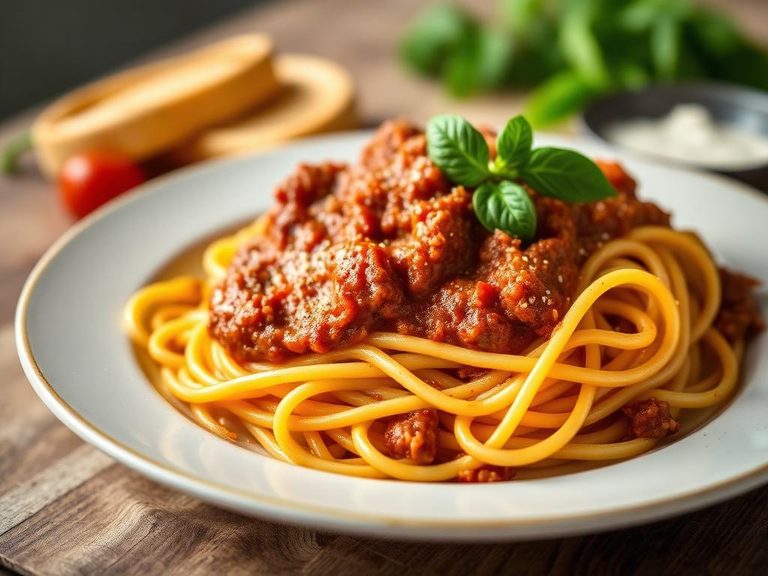
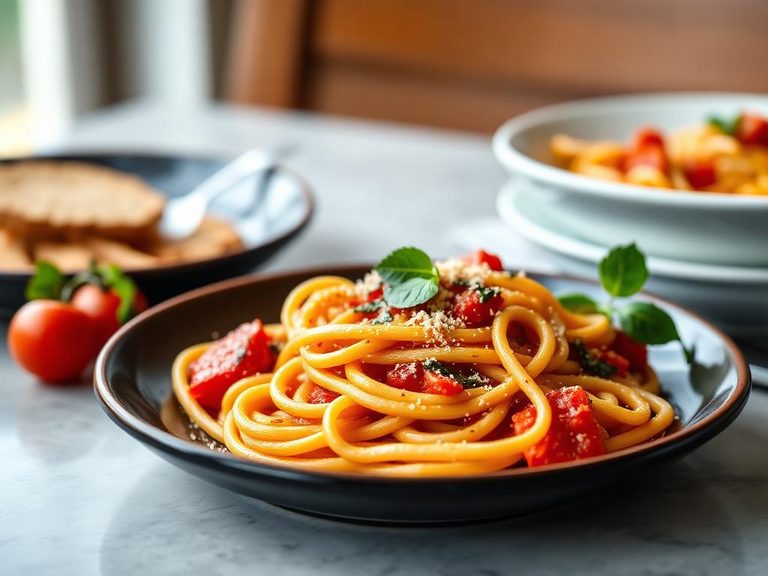
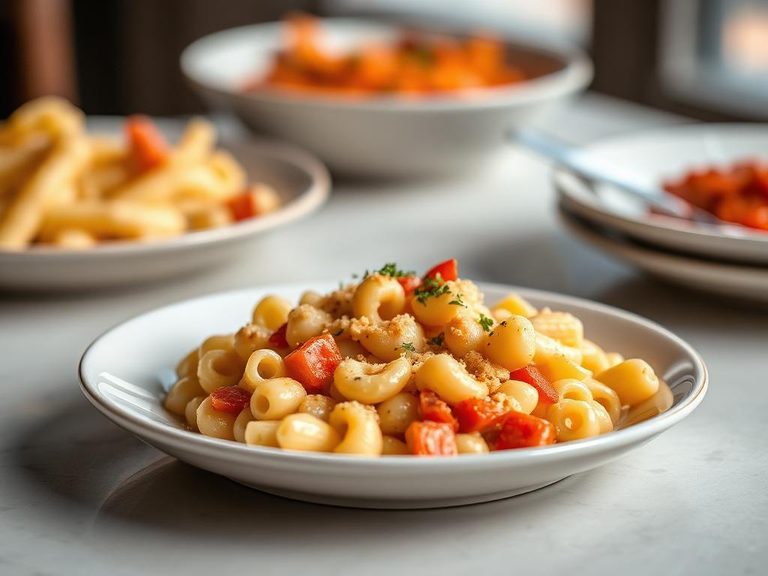
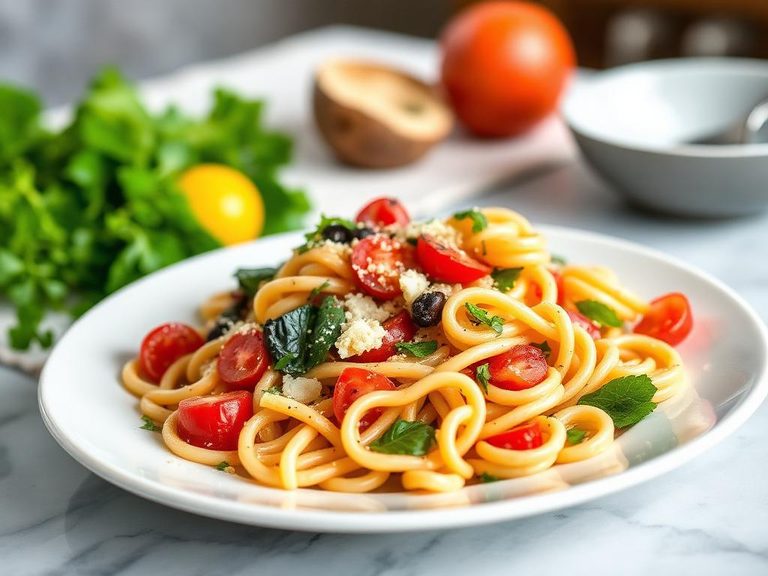
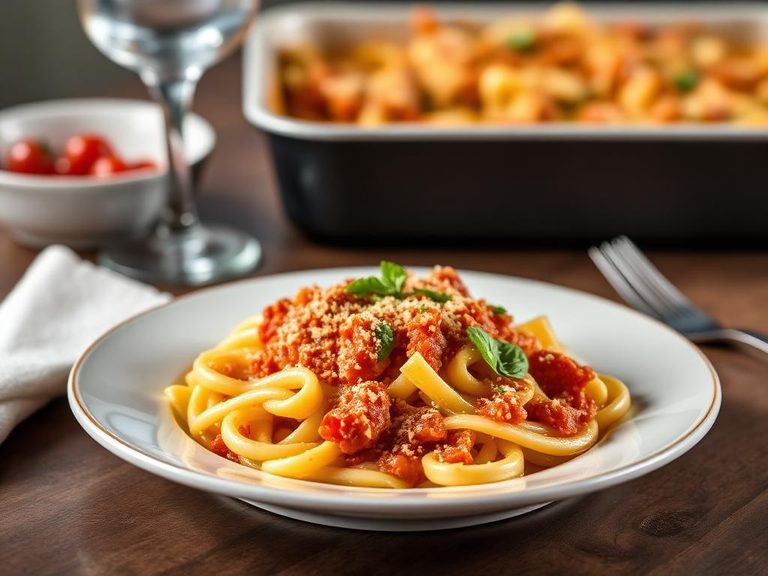
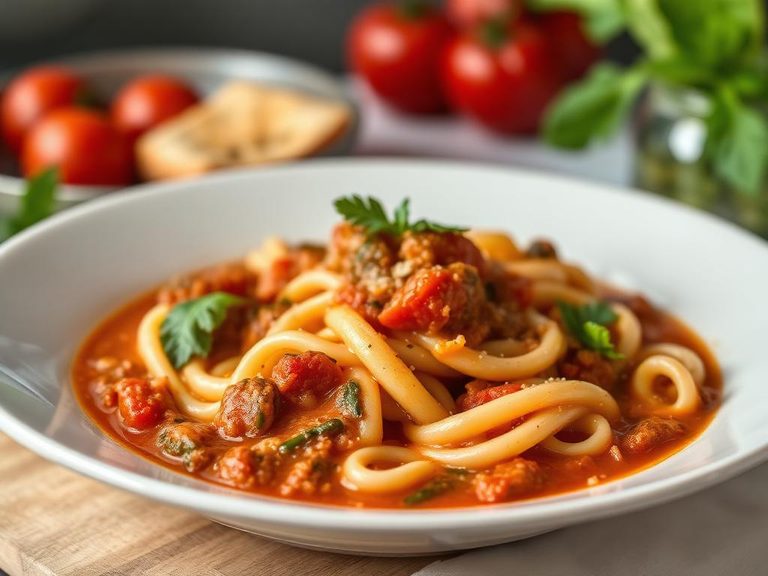
🍽️ Popular dishes
🌍 Where it's eaten
💡 Did you know?
The specific 51% whole wheat threshold is often used by food programs to qualify a product as a 'good source' of whole grains while maintaining a texture that appeals to a broader consumer base accustomed to refined pasta.
Full nutrition (USDA data · scales with serving)
| Water | 61.5 g |
| Energy | 156 kcal |
| Energy | 652 kj |
| Protein | 5.7 g |
| Total lipid (fat) | 1.5 g |
| Ash | 0.49 g |
| Carbohydrate, by difference | 30.9 g |
| Fiber, total dietary | 4.5 g |
| Total Sugars | 0.65 g |
| Sucrose | 0.10 g |
| Glucose | 0.07 g |
| Fructose | 0.07 g |
| Lactose | 0.00 g |
| Maltose | 0.40 g |
| Galactose | 0.00 g |
| Starch | 24.7 g |
| Calcium, Ca | 11.0 mg |
| Iron, Fe | 1.6 mg |
| Magnesium, Mg | 41.0 mg |
| Phosphorus, P | 97.0 mg |
| Potassium, K | 71.0 mg |
| Sodium, Na | 4.0 mg |
| Zinc, Zn | 1.0 mg |
| Copper, Cu | 0.18 mg |
| Manganese, Mn | 0.99 mg |
| Selenium, Se | 30.7 ug |
| Thiamin | 0.20 mg |
| Riboflavin | 0.13 mg |
| Niacin | 2.7 mg |
| Pantothenic acid | 0.26 mg |
| Vitamin B-6 | 0.07 mg |
| Folate, total | 38.0 ug |
| Folic acid | 18.0 ug |
| Folate, food | 20.0 ug |
| Folate, DFE | 51.0 ug |
| Choline, total | 13.0 mg |
| Vitamin K (phylloquinone) | 0.20 ug |
| Vitamin K (Dihydrophylloquinone) | 0.00 ug |
| Vitamin K (Menaquinone-4) | 0.00 ug |
Fat & fatty acid profile (per 100g)
Estimated from Pasta, gluten-free, corn, dry — USDA does not publish this profile for Pasta.
| Fatty acids, total saturated | 0.29 g |
| SFA 4:0 | 0.00 g |
| SFA 6:0 | 0.00 g |
| SFA 8:0 | 0.00 g |
| SFA 10:0 | 0.00 g |
| SFA 12:0 | 0.00 g |
| SFA 14:0 | 0.00 g |
| SFA 16:0 | 0.25 g |
| SFA 18:0 | 0.03 g |
| Fatty acids, total monounsaturated | 0.54 g |
| MUFA 16:1 | 0.00 g |
| MUFA 18:1 | 0.54 g |
| MUFA 20:1 | 0.00 g |
| MUFA 22:1 | 0.00 g |
| Fatty acids, total polyunsaturated | 0.92 g |
| PUFA 18:2 | 0.90 g |
| PUFA 18:3 | 0.03 g |
| PUFA 18:4 | 0.00 g |
| PUFA 20:4 | 0.00 g |
| PUFA 20:5 n-3 (EPA) | 0.00 g |
| PUFA 22:5 n-3 (DPA) | 0.00 g |
| PUFA 22:6 n-3 (DHA) | 0.00 g |
| Cholesterol | 0.00 mg |
Amino acid profile (per 100g)
Estimated from Pasta, gluten-free, corn, dry — USDA does not publish this profile for Pasta.
| Tryptophan | 0.05 g |
| Threonine | 0.28 g |
| Isoleucine | 0.27 g |
| Leucine | 0.92 g |
| Lysine | 0.21 g |
| Methionine | 0.16 g |
| Cystine | 0.13 g |
| Phenylalanine | 0.37 g |
| Tyrosine | 0.30 g |
| Valine | 0.38 g |
| Arginine | 0.37 g |
| Histidine | 0.23 g |
| Alanine | 0.56 g |
| Aspartic acid | 0.52 g |
| Glutamic acid | 1.4 g |
| Glycine | 0.31 g |
| Proline | 0.65 g |
| Serine | 0.35 g |
FAQ
How does the taste differ from 100% whole wheat pasta?
This 51% blend has a milder, less intensely nutty flavor and a smoother, less fibrous texture than 100% whole wheat pasta, making it a popular transitional choice for those new to whole grains.
Is the cooking time different?
Cooking time is generally similar to regular pasta, but it's best to check the package instructions. The denser whole-wheat portion may require an extra minute to reach the ideal al dente texture.
Why is it 'enriched'?
The refined semolina portion has nutrients lost during milling added back in, such as iron and B vitamins (thiamin, riboflavin, niacin, folic acid), which is a standard practice for enriched grain products in the US.
Nutrient density (calculated · NRF9.3)
Nutrient Rich Foods index: beneficial nutrients (protein, fiber, vitamins, minerals) minus saturated fat, added sugar & sodium, per 100 kcal.
NRF9.3 index — Fulgoni, Keast & Drewnowski, 2009. Computed from USDA nutrients.
Weight-loss friendliness (composite index)
Energy density 1.56 kcal/g · 15% calories from protein · 4.5 g fiber · 0.7 g sugar per 100 g.
Composite of energy density (Rolls et al., 1999), protein & fiber satiety, minus sugar. A calculated heuristic — ranks satiety-per-calorie, not a clinical measure.
Dietary load (calculated from USDA values)
Potential renal acid load. Positive = acid-forming, negative = alkaline-forming.
Sodium-to-potassium ratio: 0.06 (lower is better — aim for ≤ 1)
Sodium:potassium per WHO potassium guidance. Computed from USDA nutrients.