

Onions, cooked, fat added
Common food
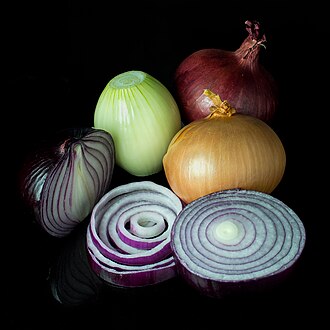
Photo: Wikipedia
Cooked onions with added fat are soft, sweet, and deeply savory, their sharp bite mellowed into a caramelized, golden-brown richness. The fat (like butter or oil) helps carry their flavor and adds a satisfying mouthfeel. Nutritionally, they provide a modest calorie boost (73 kcal/100g) primarily from carbs and fat, along with some fiber.
Calorie split: 7% protein · 56% carbs · 37% fat
↓ Full nutrition💚 Why it's loved
People love them for their transformative ability to build a deep, savory-sweet flavor base for countless dishes. They are the quintessential starting point for soups, stews, and sauces, offering versatility and comfort across global cuisines.
⚠️ Watch-outs & how to enjoy it better
The added fat increases calorie and saturated fat content compared to plain boiled onions. For those monitoring blood sugar, the combination of cooked carbs and sugar (4.84g/100g) can cause a quicker spike. Tip: Pair with a lean protein or non-starchy vegetable to balance the meal and slow digestion.
Key benefits
- Provides prebiotic fiber (inulin) to support gut health.
- Contains antioxidant quercetin, which may have anti-inflammatory properties.
- Adds significant flavor and depth to dishes without excessive calories.
- Source of vitamin B6 and manganese.
- Fat-soluble nutrients like quercetin are better absorbed with added fat.
🍽️ Popular dishes
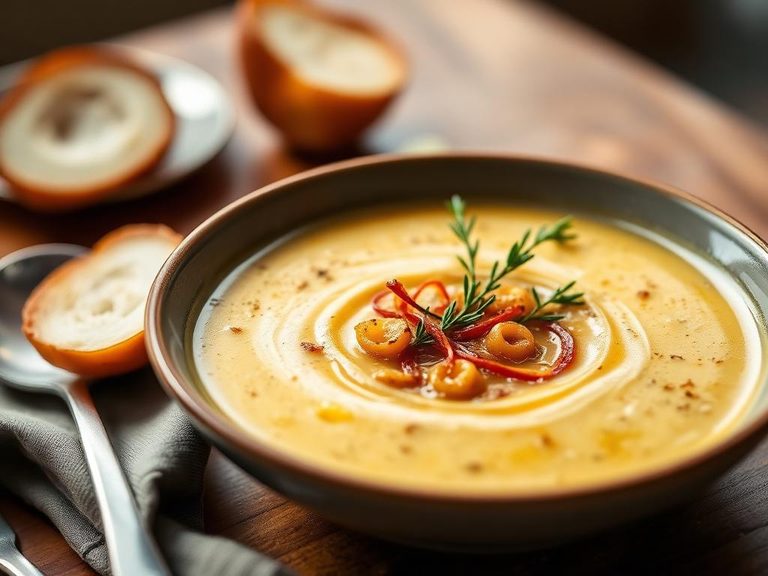

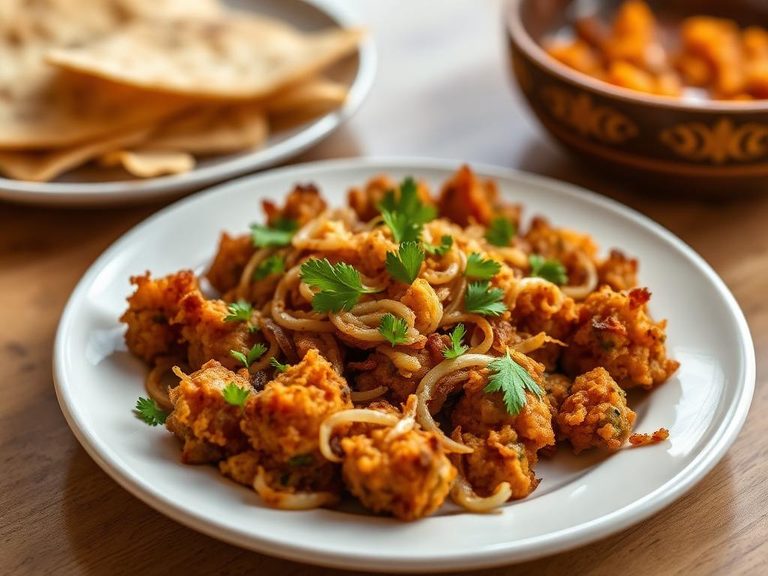
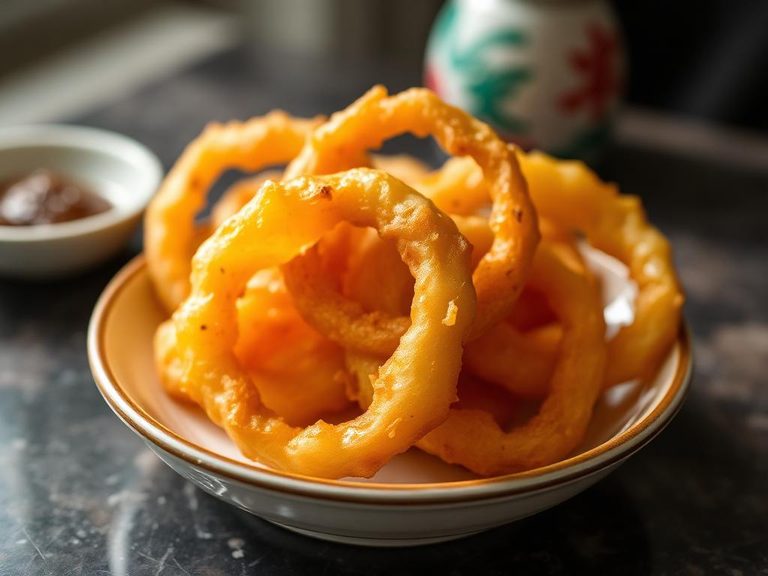
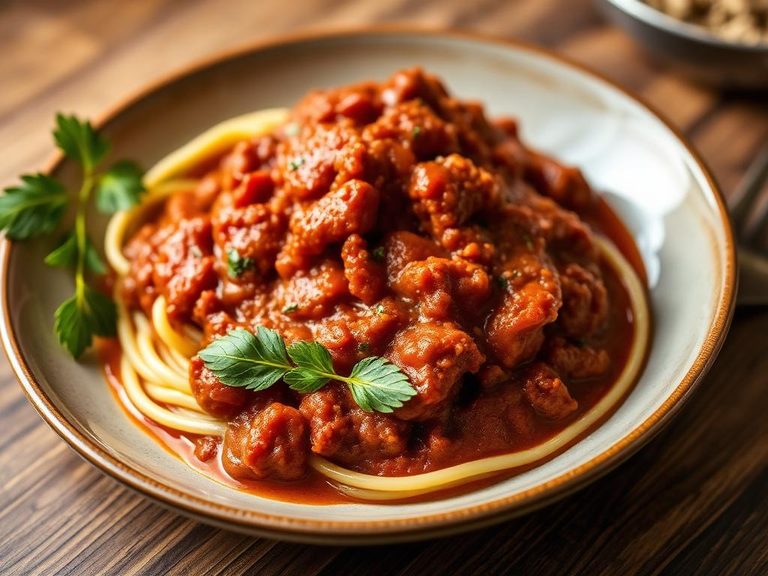
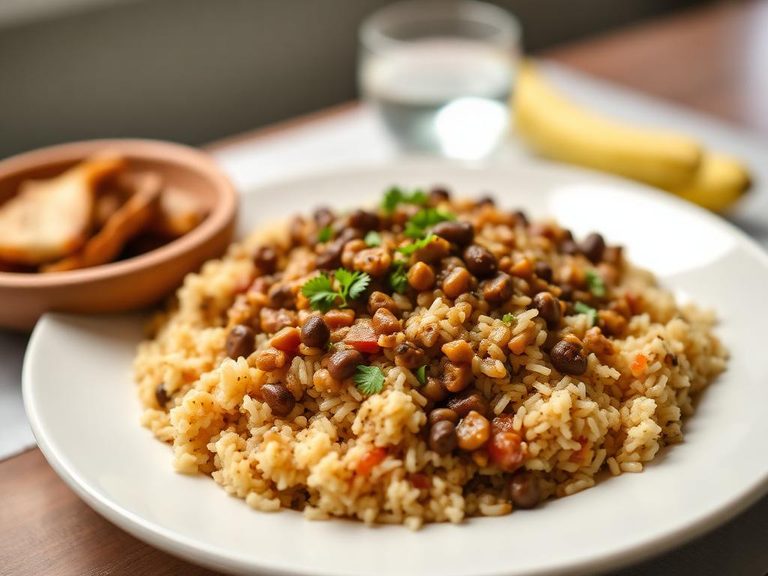
🌍 Where it's eaten
💡 Did you know?
Ancient Egyptian workers who built the pyramids were reportedly given onions as a source of strength, and onions were even placed in the tombs of pharaohs.
Full nutrition (USDA data · scales with serving)
| Water | 84.2 g |
| Energy | 73.0 kcal |
| Protein | 1.3 g |
| Total lipid (fat) | 3.1 g |
| Carbohydrate, by difference | 10.6 g |
| Fiber, total dietary | 1.9 g |
| Total Sugars | 4.8 g |
| Calcium, Ca | 27.0 mg |
| Iron, Fe | 0.24 mg |
| Magnesium, Mg | 11.0 mg |
| Phosphorus, P | 33.0 mg |
| Potassium, K | 167 mg |
| Sodium, Na | 147 mg |
| Zinc, Zn | 0.19 mg |
| Copper, Cu | 0.04 mg |
| Selenium, Se | 0.60 ug |
| Vitamin C, total ascorbic acid | 7.2 mg |
| Thiamin | 0.05 mg |
| Riboflavin | 0.03 mg |
| Niacin | 0.13 mg |
| Vitamin B-6 | 0.14 mg |
| Folate, total | 18.0 ug |
| Folic acid | 0.00 ug |
| Folate, food | 18.0 ug |
| Folate, DFE | 18.0 ug |
| Choline, total | 7.2 mg |
| Vitamin B-12 | 0.00 ug |
| Vitamin B-12, added | 0.00 ug |
| Vitamin A, RAE | 13.0 ug |
| Retinol | 13.0 ug |
| Carotene, beta | 7.0 ug |
| Carotene, alpha | 0.00 ug |
| Cryptoxanthin, beta | 0.00 ug |
| Lycopene | 0.00 ug |
| Lutein + zeaxanthin | 4.0 ug |
| Vitamin E (alpha-tocopherol) | 0.47 mg |
| Vitamin E, added | 0.00 mg |
| Vitamin D (D2 + D3) | 0.00 ug |
| Vitamin K (phylloquinone) | 2.9 ug |
| Alcohol, ethyl | 0.00 g |
| Caffeine | 0.00 mg |
| Theobromine | 0.00 mg |
Fat & fatty acid profile (per 100g)
| Fatty acids, total saturated | 0.83 g |
| SFA 4:0 | 0.02 g |
| SFA 6:0 | 0.01 g |
| SFA 8:0 | 0.01 g |
| SFA 10:0 | 0.02 g |
| SFA 12:0 | 0.02 g |
| SFA 14:0 | 0.08 g |
| SFA 16:0 | 0.47 g |
| SFA 18:0 | 0.17 g |
| Fatty acids, total monounsaturated | 1.1 g |
| MUFA 16:1 | 0.02 g |
| MUFA 18:1 | 1.0 g |
| MUFA 20:1 | 0.01 g |
| MUFA 22:1 | 0.00 g |
| Fatty acids, total polyunsaturated | 0.88 g |
| PUFA 18:2 | 0.78 g |
| PUFA 18:3 | 0.10 g |
| PUFA 18:4 | 0.00 g |
| PUFA 20:4 | 0.00 g |
| PUFA 20:5 n-3 (EPA) | 0.00 g |
| PUFA 22:5 n-3 (DPA) | 0.00 g |
| PUFA 22:6 n-3 (DHA) | 0.00 g |
| Cholesterol | 2.0 mg |
Amino acid profile (per 100g)
Estimated from Onions, dehydrated flakes — USDA does not publish this profile for Onions.
| Tryptophan | 0.13 g |
| Threonine | 0.22 g |
| Isoleucine | 0.32 g |
| Leucine | 0.31 g |
| Lysine | 0.43 g |
| Methionine | 0.07 g |
| Cystine | 0.16 g |
| Phenylalanine | 0.23 g |
| Tyrosine | 0.22 g |
| Valine | 0.21 g |
| Arginine | 1.2 g |
| Histidine | 0.15 g |
| Alanine | 0.25 g |
| Aspartic acid | 0.49 g |
| Glutamic acid | 1.4 g |
| Glycine | 0.37 g |
| Proline | 0.28 g |
| Serine | 0.26 g |
FAQ
How does cooking affect onion nutrition?
Cooking softens the fiber and makes some nutrients like quercetin more bioavailable, but it also reduces heat-sensitive vitamins like vitamin C. The added fat significantly increases the calorie and fat content.
Are cooked onions a good source of fiber?
They provide a decent amount (1.9g per 100g), primarily as soluble fiber like pectin and inulin, which can support gut health. However, they are not a high-fiber food compared to legumes or whole grains.
What's the best fat to cook onions in?
It depends on the dish and flavor goal. Butter adds richness for French cuisine, olive oil is great for Mediterranean dishes, and neutral oils like canola are versatile. Each will alter the final calorie and fat profile.
Nutrient density (calculated · NRF9.3)
Nutrient Rich Foods index: beneficial nutrients (protein, fiber, vitamins, minerals) minus saturated fat, added sugar & sodium, per 100 kcal.
NRF9.3 index — Fulgoni, Keast & Drewnowski, 2009. Computed from USDA nutrients.
Weight-loss friendliness (composite index)
Energy density 0.73 kcal/g · 7% calories from protein · 1.9 g fiber · 4.8 g sugar per 100 g.
Composite of energy density (Rolls et al., 1999), protein & fiber satiety, minus sugar. A calculated heuristic — ranks satiety-per-calorie, not a clinical measure.
Dietary load (calculated from USDA values)
Potential renal acid load. Positive = acid-forming, negative = alkaline-forming.
Sodium-to-potassium ratio: 0.88 (lower is better — aim for ≤ 1)
Sodium:potassium per WHO potassium guidance. Computed from USDA nutrients.