

Oatmeal, regular or quick, made with milk, no added fat
Common food

Photo: Wikipedia
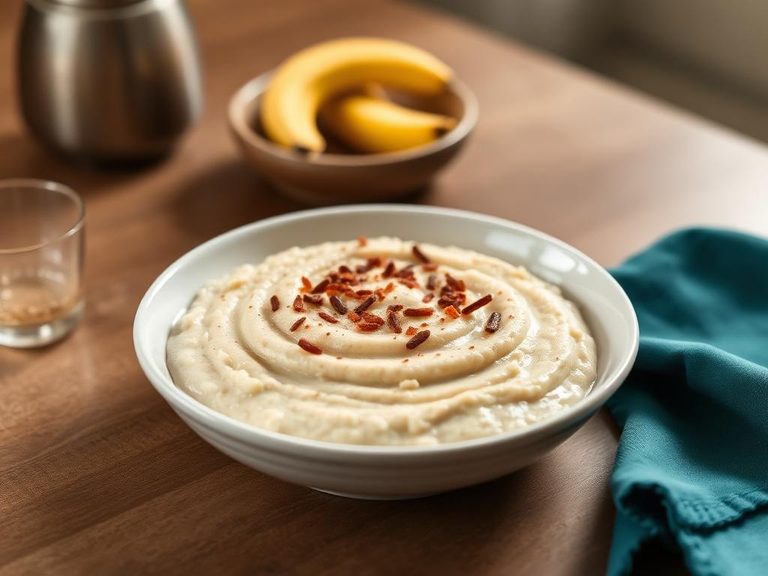
This is a comforting, creamy bowl of oats cooked in milk, offering a smooth, slightly chewy texture with a mild, nutty sweetness. It provides a balanced mix of protein and carbs for sustained energy, with the milk adding a richer mouthfeel than water. A warm, satisfying staple that feels both nourishing and simple.
Calorie split: 19% protein · 56% carbs · 25% fat
↓ Full nutrition💚 Why it's loved
People love it for its comforting warmth, mild flavor that acts as a blank canvas for toppings, and the creamy texture the milk provides. It's a nostalgic, versatile dish that can be sweet or savory and is deeply embedded in many breakfast traditions.
⚠️ Watch-outs & how to enjoy it better
The combination of refined oats and milk can cause a rapid blood-sugar spike for some, especially without added protein or fat. To counteract this, top with nuts, seeds, or a spoonful of nut butter, or stir in a scoop of protein powder. Those with lactose intolerance or a dairy allergy can use lactose-free milk or fortified plant-based alternatives.
Key benefits
- Provides a balanced source of complex carbohydrates and protein.
- The soluble fiber beta-glucan can support heart health.
- Milk adds calcium and vitamin D to the meal.
- A quick, no-cook or minimal-cook breakfast option.
- Naturally low in sodium and cholesterol.
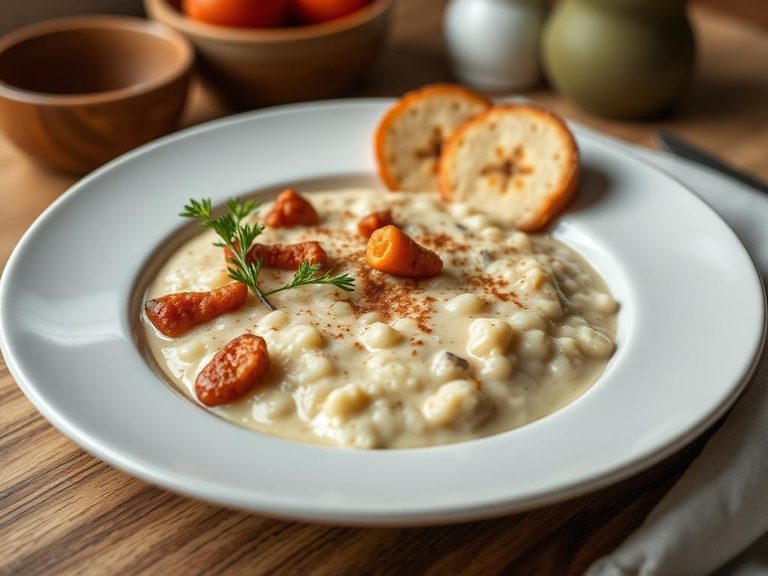
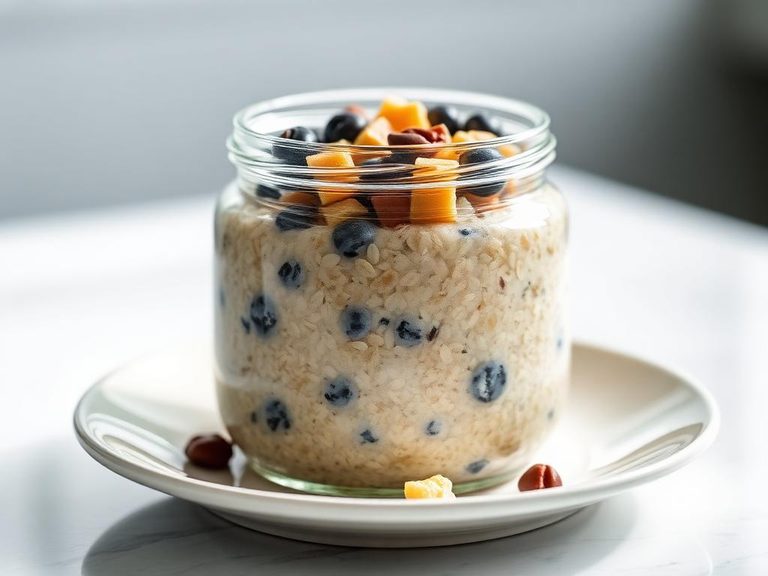
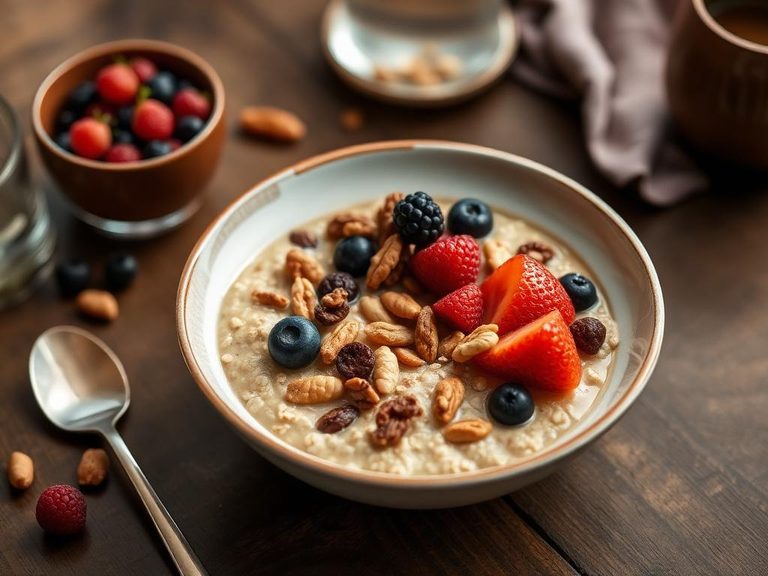
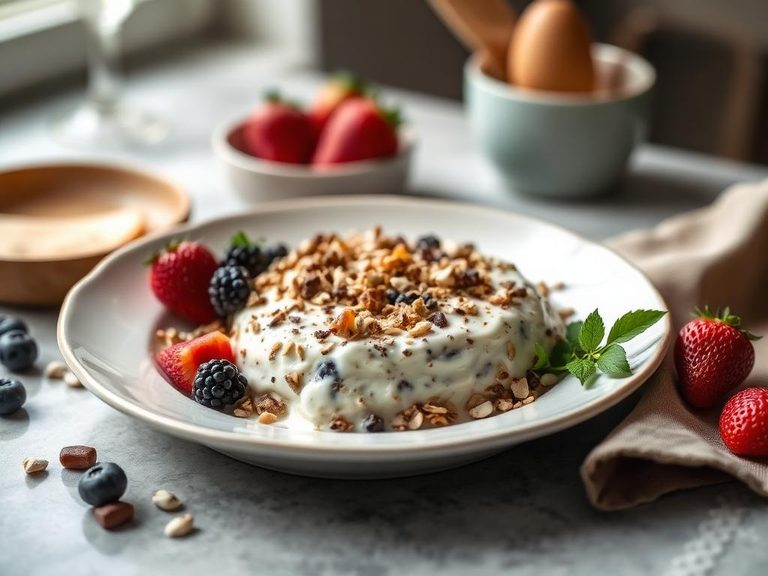
🍽️ Popular dishes
🌍 Where it's eaten
💡 Did you know?
The beta-glucan fiber in oats forms a gel-like substance when cooked, which is what gives milk-based oatmeal its characteristic thick, creamy consistency without any added thickeners.
Full nutrition (USDA data · scales with serving)
| Water | 73.7 g |
| Energy | 116 kcal |
| Protein | 5.6 g |
| Total lipid (fat) | 3.3 g |
| Carbohydrate, by difference | 16.2 g |
| Fiber, total dietary | 1.7 g |
| Total Sugars | 5.1 g |
| Calcium, Ca | 135 mg |
| Iron, Fe | 0.68 mg |
| Magnesium, Mg | 35.0 mg |
| Phosphorus, P | 169 mg |
| Potassium, K | 215 mg |
| Sodium, Na | 105 mg |
| Zinc, Zn | 1.0 mg |
| Copper, Cu | 0.06 mg |
| Selenium, Se | 6.8 ug |
| Vitamin C, total ascorbic acid | 0.10 mg |
| Thiamin | 0.12 mg |
| Riboflavin | 0.16 mg |
| Niacin | 0.28 mg |
| Vitamin B-6 | 0.07 mg |
| Folate, total | 5.0 ug |
| Folic acid | 0.00 ug |
| Folate, food | 5.0 ug |
| Folate, DFE | 5.0 ug |
| Choline, total | 23.9 mg |
| Vitamin B-12 | 0.53 ug |
| Vitamin B-12, added | 0.00 ug |
| Vitamin A, RAE | 58.0 ug |
| Retinol | 58.0 ug |
| Carotene, beta | 4.0 ug |
| Carotene, alpha | 0.00 ug |
| Cryptoxanthin, beta | 0.00 ug |
| Lycopene | 0.00 ug |
| Lutein + zeaxanthin | 27.0 ug |
| Vitamin E (alpha-tocopherol) | 0.10 mg |
| Vitamin E, added | 0.00 mg |
| Vitamin D (D2 + D3) | 1.1 ug |
| Vitamin K (phylloquinone) | 0.50 ug |
| Alcohol, ethyl | 0.00 g |
| Caffeine | 0.00 mg |
| Theobromine | 0.00 mg |
Fat & fatty acid profile (per 100g)
| Fatty acids, total saturated | 1.4 g |
| SFA 4:0 | 0.05 g |
| SFA 6:0 | 0.04 g |
| SFA 8:0 | 0.02 g |
| SFA 10:0 | 0.06 g |
| SFA 12:0 | 0.07 g |
| SFA 14:0 | 0.21 g |
| SFA 16:0 | 0.74 g |
| SFA 18:0 | 0.22 g |
| Fatty acids, total monounsaturated | 0.79 g |
| MUFA 16:1 | 0.03 g |
| MUFA 18:1 | 0.80 g |
| MUFA 20:1 | 0.00 g |
| MUFA 22:1 | 0.00 g |
| Fatty acids, total polyunsaturated | 0.46 g |
| PUFA 18:2 | 0.44 g |
| PUFA 18:3 | 0.03 g |
| PUFA 18:4 | 0.00 g |
| PUFA 20:4 | 0.00 g |
| PUFA 20:5 n-3 (EPA) | 0.00 g |
| PUFA 22:5 n-3 (DPA) | 0.00 g |
| PUFA 22:6 n-3 (DHA) | 0.00 g |
| Cholesterol | 9.0 mg |
Amino acid profile (per 100g)
Estimated from Cookies, oatmeal, refrigerated dough, baked — USDA does not publish this profile for Oatmeal.
| Tryptophan | 0.10 g |
| Threonine | 0.20 g |
| Isoleucine | 0.25 g |
| Leucine | 0.46 g |
| Lysine | 0.29 g |
| Methionine | 0.14 g |
| Cystine | 0.17 g |
| Phenylalanine | 0.31 g |
| Tyrosine | 0.22 g |
| Valine | 0.32 g |
| Arginine | 0.37 g |
| Histidine | 0.14 g |
| Alanine | 0.28 g |
| Aspartic acid | 0.50 g |
| Glutamic acid | 1.3 g |
| Glycine | 0.27 g |
| Proline | 0.39 g |
| Serine | 0.34 g |
FAQ
Is this the same as overnight oats?
Not exactly. This description is for cooked oatmeal. Overnight oats are raw oats soaked in liquid (which can be milk) in the fridge, resulting in a cold, pudding-like texture without cooking.
Why is the calorie count so specific (116 kcal per 100g)?
This is a standard USDA database value for the specific preparation: regular or quick oats cooked with milk, with no added fat (like butter or oil). The ratio of oats to milk and cooking method affects the final nutritional density.
Can I make this with water and add milk later?
Yes, you can cook the oats in water and stir in cold milk when serving. This will change the final texture and nutritional profile slightly, but is a common method.
Nutrient density (calculated · NRF9.3)
Nutrient Rich Foods index: beneficial nutrients (protein, fiber, vitamins, minerals) minus saturated fat, added sugar & sodium, per 100 kcal.
NRF9.3 index — Fulgoni, Keast & Drewnowski, 2009. Computed from USDA nutrients.
Weight-loss friendliness (composite index)
Energy density 1.16 kcal/g · 19% calories from protein · 1.7 g fiber · 5.1 g sugar per 100 g.
Composite of energy density (Rolls et al., 1999), protein & fiber satiety, minus sugar. A calculated heuristic — ranks satiety-per-calorie, not a clinical measure.
Dietary load (calculated from USDA values)
Potential renal acid load. Positive = acid-forming, negative = alkaline-forming.
Sodium-to-potassium ratio: 0.49 (lower is better — aim for ≤ 1)
Sodium:potassium per WHO potassium guidance. Computed from USDA nutrients.