

Oatmeal, regular or quick, made with non-dairy milk, fat added
Common food

Photo: Wikipedia
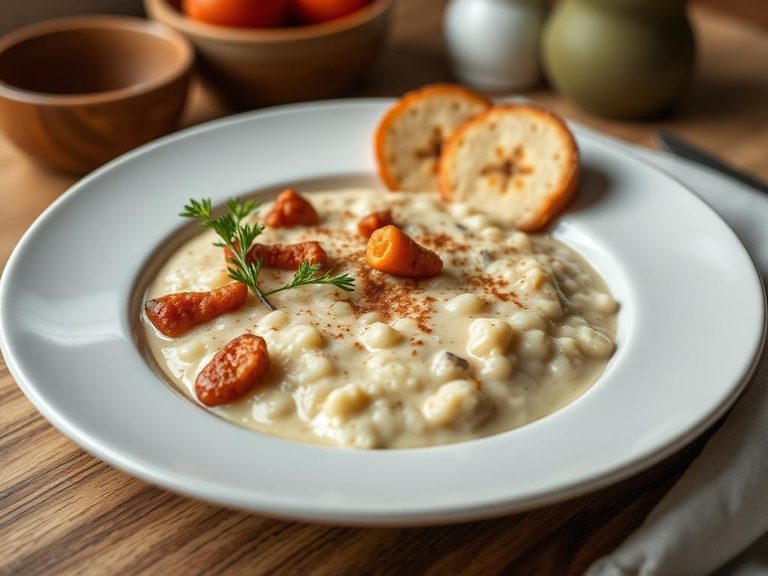
A creamy, comforting bowl of oats cooked in non-dairy milk, offering a mild, slightly nutty flavor with a soft, porridge-like texture. Each 100-gram serving provides a balanced mix of slow-release carbs and healthy fats, making it a satisfying start to the day. The added fat, likely from a plant-based oil or nut butter, enhances its richness and mouthfeel.
Calorie split: 12% protein · 53% carbs · 35% fat
↓ Full nutrition💚 Why it's loved
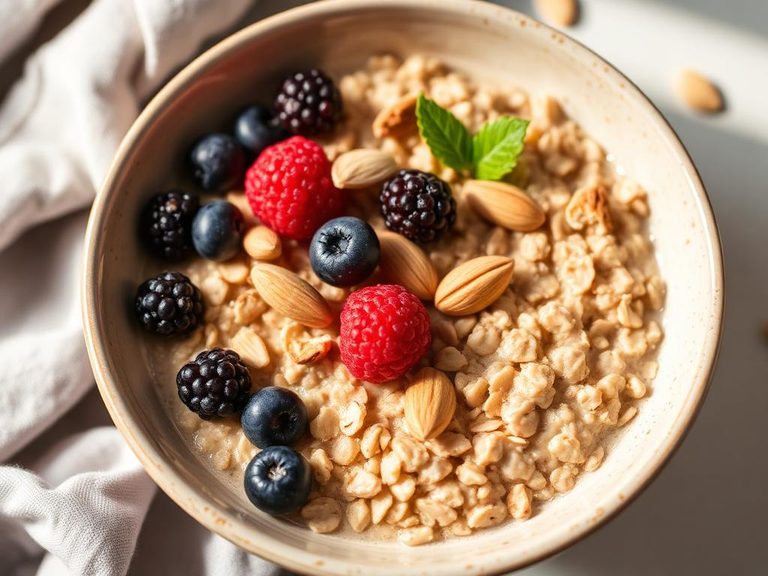
People adore it for its warm, comforting simplicity and the way it acts as a blank canvas for endless toppings like fresh fruit, nuts, or spices. It's a cultural staple for quick, nourishing breakfasts across many global cuisines.
⚠️ Watch-outs & how to enjoy it better
The added fat and potential sweeteners can increase calorie density, which may not suit strict low-fat diets. For those sensitive to blood sugar fluctuations, the refined quick oats can cause a faster spike. Counteract this by adding a scoop of protein powder, chia seeds, or a handful of nuts to slow digestion.
Key benefits
- Provides sustained energy from complex carbohydrates
- Contains soluble fiber (beta-glucan) for digestive health
- Dairy-free and suitable for vegan or lactose-intolerant diets
- Good source of plant-based protein when combined with milk
- Healthy fats support nutrient absorption and satiety
🍽️ Popular dishes
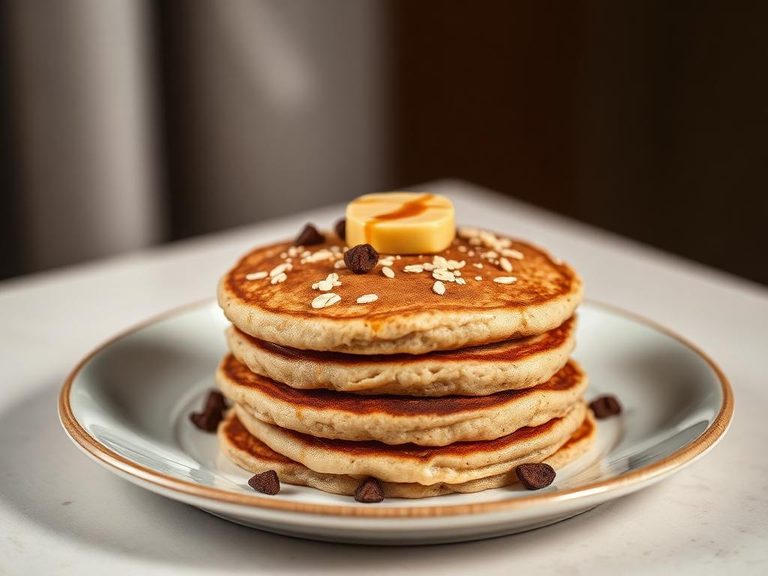
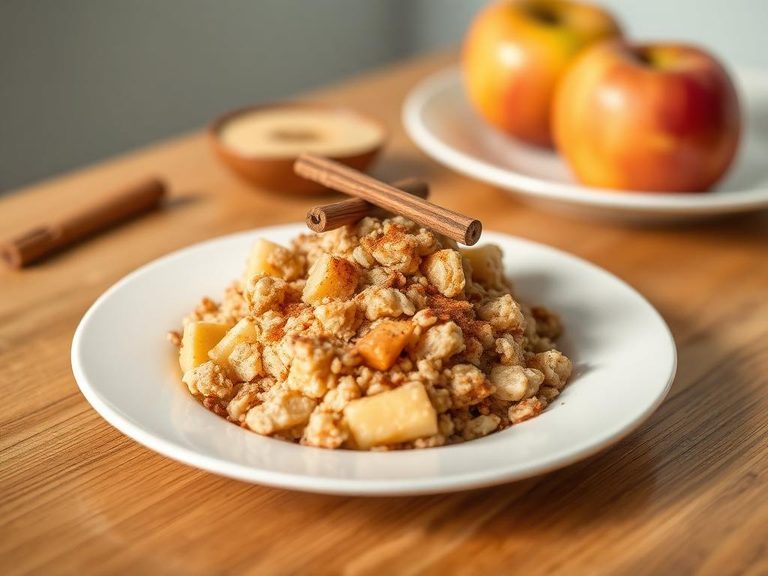
🌍 Where it's eaten
💡 Did you know?
The beta-glucan fiber in oats is so effective at forming a gel that it's used as a natural thickener in some food products and even in cosmetics.
Full nutrition (USDA data · scales with serving)
| Water | 77.3 g |
| Energy | 107 kcal |
| Protein | 3.3 g |
| Total lipid (fat) | 4.2 g |
| Carbohydrate, by difference | 14.2 g |
| Fiber, total dietary | 1.8 g |
| Total Sugars | 2.2 g |
| Calcium, Ca | 160 mg |
| Iron, Fe | 0.98 mg |
| Magnesium, Mg | 33.0 mg |
| Phosphorus, P | 99.0 mg |
| Potassium, K | 109 mg |
| Sodium, Na | 127 mg |
| Zinc, Zn | 0.80 mg |
| Copper, Cu | 0.10 mg |
| Selenium, Se | 5.4 ug |
| Vitamin C, total ascorbic acid | 0.00 mg |
| Thiamin | 0.08 mg |
| Riboflavin | 0.06 mg |
| Niacin | 0.27 mg |
| Vitamin B-6 | 0.05 mg |
| Folate, total | 8.0 ug |
| Folic acid | 0.00 ug |
| Folate, food | 8.0 ug |
| Folate, DFE | 8.0 ug |
| Choline, total | 13.3 mg |
| Vitamin B-12 | 0.35 ug |
| Vitamin B-12, added | 0.35 ug |
| Vitamin A, RAE | 51.0 ug |
| Retinol | 51.0 ug |
| Carotene, beta | 7.0 ug |
| Carotene, alpha | 0.00 ug |
| Cryptoxanthin, beta | 0.00 ug |
| Lycopene | 0.00 ug |
| Lutein + zeaxanthin | 30.0 ug |
| Vitamin E (alpha-tocopherol) | 2.3 mg |
| Vitamin E, added | 1.9 mg |
| Vitamin D (D2 + D3) | 1.0 ug |
| Vitamin K (phylloquinone) | 2.1 ug |
| Alcohol, ethyl | 0.00 g |
| Caffeine | 0.00 mg |
| Theobromine | 0.00 mg |
Fat & fatty acid profile (per 100g)
| Fatty acids, total saturated | 1.0 g |
| SFA 4:0 | 0.03 g |
| SFA 6:0 | 0.02 g |
| SFA 8:0 | 0.01 g |
| SFA 10:0 | 0.02 g |
| SFA 12:0 | 0.03 g |
| SFA 14:0 | 0.09 g |
| SFA 16:0 | 0.59 g |
| SFA 18:0 | 0.18 g |
| Fatty acids, total monounsaturated | 1.5 g |
| MUFA 16:1 | 0.02 g |
| MUFA 18:1 | 1.5 g |
| MUFA 20:1 | 0.01 g |
| MUFA 22:1 | 0.00 g |
| Fatty acids, total polyunsaturated | 1.1 g |
| PUFA 18:2 | 1.0 g |
| PUFA 18:3 | 0.10 g |
| PUFA 18:4 | 0.00 g |
| PUFA 20:4 | 0.00 g |
| PUFA 20:5 n-3 (EPA) | 0.00 g |
| PUFA 22:5 n-3 (DPA) | 0.00 g |
| PUFA 22:6 n-3 (DHA) | 0.00 g |
| Cholesterol | 3.0 mg |
Amino acid profile (per 100g)
Estimated from Cookies, oatmeal, refrigerated dough, baked — USDA does not publish this profile for Oatmeal.
| Tryptophan | 0.10 g |
| Threonine | 0.20 g |
| Isoleucine | 0.25 g |
| Leucine | 0.46 g |
| Lysine | 0.29 g |
| Methionine | 0.14 g |
| Cystine | 0.17 g |
| Phenylalanine | 0.31 g |
| Tyrosine | 0.22 g |
| Valine | 0.32 g |
| Arginine | 0.37 g |
| Histidine | 0.14 g |
| Alanine | 0.28 g |
| Aspartic acid | 0.50 g |
| Glutamic acid | 1.3 g |
| Glycine | 0.27 g |
| Proline | 0.39 g |
| Serine | 0.34 g |
FAQ
What's the difference between regular and quick oats in this context?
Regular oats are rolled thicker and take longer to cook, yielding a chewier texture. Quick oats are pre-cooked and rolled thinner, cooking in 1-3 minutes for a softer, more uniform porridge.
Is this a good post-workout meal?
Yes, it's an excellent choice. The carbs help replenish glycogen stores, the protein aids muscle repair, and the fats provide sustained energy. Adding a banana or berries can further enhance recovery.
Can I make this ahead of time?
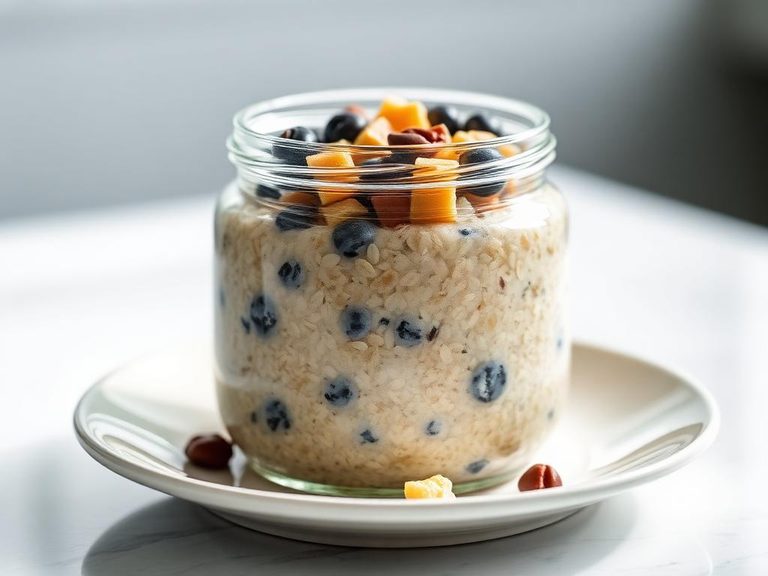
Absolutely. It's ideal for meal prep. Cook a batch, portion it out, and refrigerate for up to 4 days. Reheat with a splash of non-dairy milk to restore creaminess, or enjoy it cold as overnight oats.
Nutrient density (calculated · NRF9.3)
Nutrient Rich Foods index: beneficial nutrients (protein, fiber, vitamins, minerals) minus saturated fat, added sugar & sodium, per 100 kcal.
NRF9.3 index — Fulgoni, Keast & Drewnowski, 2009. Computed from USDA nutrients.
Weight-loss friendliness (composite index)
Energy density 1.07 kcal/g · 12% calories from protein · 1.8 g fiber · 2.2 g sugar per 100 g.
Composite of energy density (Rolls et al., 1999), protein & fiber satiety, minus sugar. A calculated heuristic — ranks satiety-per-calorie, not a clinical measure.
Dietary load (calculated from USDA values)
Potential renal acid load. Positive = acid-forming, negative = alkaline-forming.
Sodium-to-potassium ratio: 1.17 (lower is better — aim for ≤ 1)
Sodium:potassium per WHO potassium guidance. Computed from USDA nutrients.