

Lemonade, frozen concentrate, pink
Whole food · Beverages

Photo: Wikipedia
Frozen pink lemonade concentrate is a vibrant, icy base that transforms into a tart-sweet, refreshing beverage when diluted with water. Its signature rosy hue comes from added red dye or a touch of berry juice, offering a nostalgic, summertime flavor. Nutritionally, it's essentially a source of quick energy from its high sugar content, with negligible protein or fat.
Calorie split: 0% protein · 96% carbs · 3% fat
↓ Full nutrition💚 Why it's loved
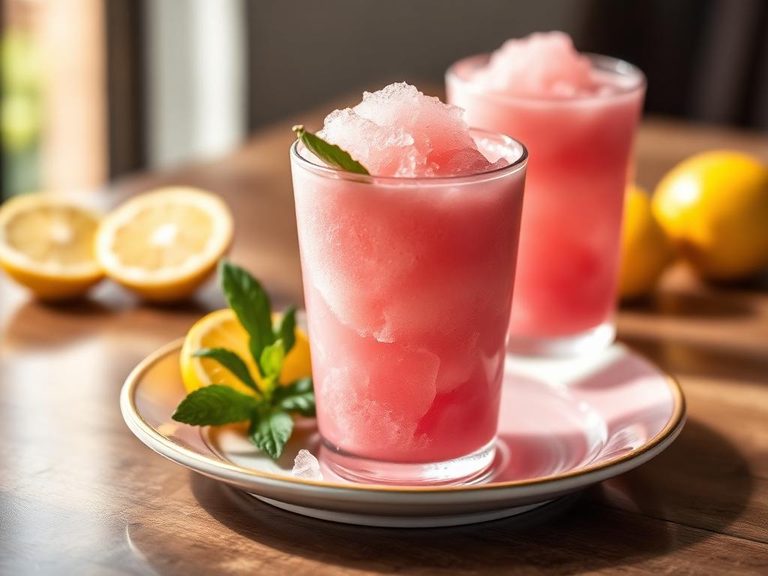
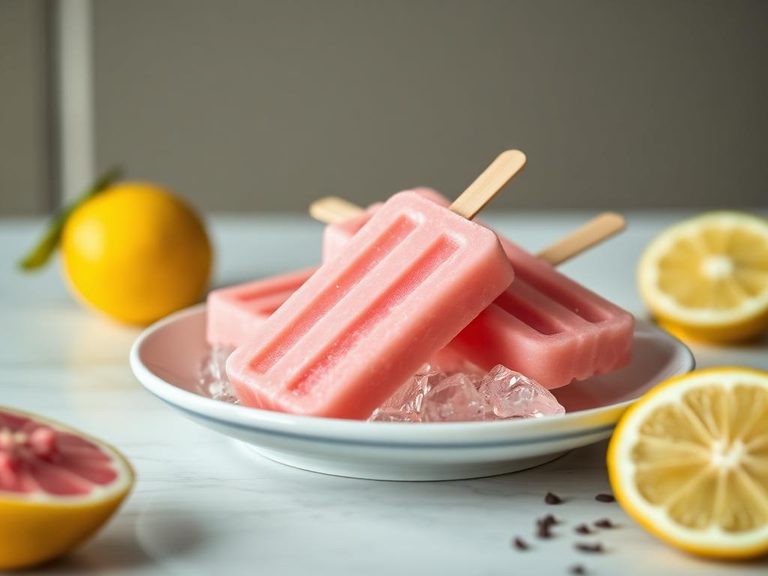
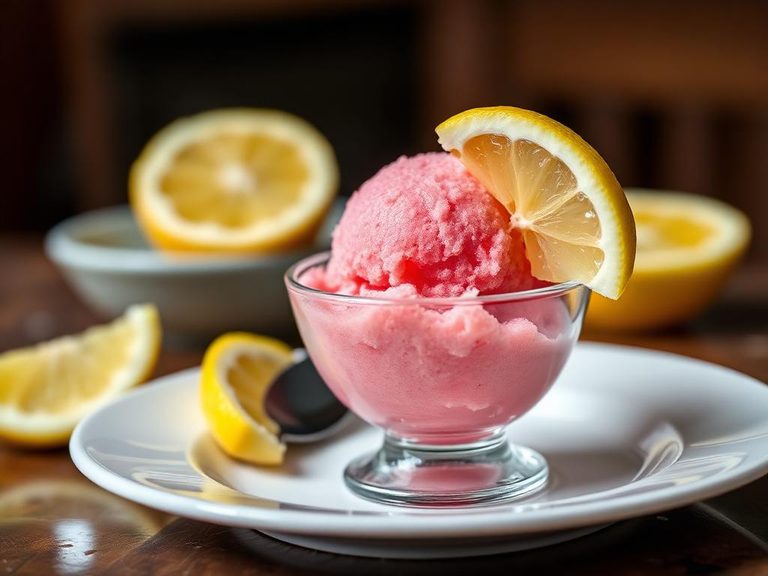
People love it for its intensely sweet and tangy flavor that perfectly evokes summer nostalgia and childhood memories. It's a versatile base, easily mixed to taste or used as a creative ingredient in slushies, popsicles, and cocktails.
⚠️ Watch-outs & how to enjoy it better
The primary downside is its extremely high sugar content (over 46g per 100g), which can lead to rapid blood-sugar spikes and is a concern for those managing diabetes or calorie intake. To counteract this, practice strict portion control by diluting it more than recommended, or pair a small serving with a source of protein or healthy fat (like nuts or yogurt) to slow sugar absorption.
Key benefits
- Provides a quick source of energy from carbohydrates.
- Offers a convenient, instant way to make a large volume of a cold beverage.
- Contains a small amount of Vitamin C if fortified.
- Its acidity can stimulate saliva production for hydration.
- A classic, affordable treat for hot weather.
🍽️ Popular dishes


🌍 Where it's eaten
💡 Did you know?
The 'pink' in pink lemonade is historically attributed to a happy accident in the 19th century, where circus promoter Pete Conklin allegedly used red-colored water (from washing circus wagon canvas) to make a batch of lemonade, creating the iconic color.
Full nutrition (USDA data · scales with serving)
| Water | 50.1 g |
| Energy | 192 kcal |
| Energy | 804 kj |
| Protein | 0.22 g |
| Total lipid (fat) | 0.69 g |
| Ash | 0.14 g |
| Carbohydrate, by difference | 48.9 g |
| Fiber, total dietary | 0.30 g |
| Total Sugars | 46.5 g |
| Sucrose | 7.4 g |
| Glucose | 18.6 g |
| Fructose | 20.1 g |
| Lactose | 0.00 g |
| Maltose | 0.44 g |
| Galactose | 0.00 g |
| Starch | 0.00 g |
| Calcium, Ca | 8.0 mg |
| Iron, Fe | 0.08 mg |
| Magnesium, Mg | 7.0 mg |
| Phosphorus, P | 7.0 mg |
| Potassium, K | 76.0 mg |
| Sodium, Na | 4.0 mg |
| Zinc, Zn | 0.03 mg |
| Copper, Cu | 0.01 mg |
| Manganese, Mn | 0.01 mg |
| Selenium, Se | 0.00 ug |
| Vitamin C, total ascorbic acid | 14.1 mg |
| Thiamin | 0.02 mg |
| Riboflavin | 0.00 mg |
| Niacin | 0.12 mg |
| Pantothenic acid | 0.10 mg |
| Vitamin B-6 | 0.01 mg |
| Folate, total | 11.0 ug |
| Folic acid | 0.00 ug |
| Folate, food | 11.0 ug |
| Folate, DFE | 11.0 ug |
| Choline, total | 2.0 mg |
| Betaine | 0.20 mg |
| Vitamin B-12 | 0.00 ug |
| Vitamin B-12, added | 0.00 ug |
| Vitamin A, RAE | 0.00 ug |
| Retinol | 0.00 ug |
| Carotene, beta | 0.00 ug |
| Carotene, alpha | 0.00 ug |
| Cryptoxanthin, beta | 0.00 ug |
| Vitamin A, IU | 0.00 iu |
| Lycopene | 0.00 ug |
| Vitamin E (alpha-tocopherol) | 0.07 mg |
| Vitamin E, added | 0.00 mg |
| Tocopherol, beta | 0.00 mg |
| Tocopherol, gamma | 0.00 mg |
| Tocopherol, delta | 0.00 mg |
| Tocotrienol, alpha | 0.02 mg |
| Tocotrienol, beta | 0.00 mg |
| Tocotrienol, gamma | 0.00 mg |
| Tocotrienol, delta | 0.00 mg |
| Vitamin K (phylloquinone) | 0.10 ug |
| Vitamin K (Dihydrophylloquinone) | 0.00 ug |
| Vitamin K (Menaquinone-4) | 0.00 ug |
| Alcohol, ethyl | 0.00 g |
| Caffeine | 0.00 mg |
| Theobromine | 0.00 mg |
Fat & fatty acid profile (per 100g)
| Fatty acids, total saturated | 0.03 g |
| SFA 4:0 | 0.00 g |
| SFA 6:0 | 0.00 g |
| SFA 8:0 | 0.00 g |
| SFA 10:0 | 0.00 g |
| SFA 12:0 | 0.00 g |
| SFA 14:0 | 0.00 g |
| SFA 16:0 | 0.02 g |
| SFA 18:0 | 0.00 g |
| Fatty acids, total monounsaturated | 0.01 g |
| MUFA 16:1 | 0.00 g |
| MUFA 18:1 | 0.01 g |
| MUFA 20:1 | 0.00 g |
| MUFA 22:1 | 0.00 g |
| Fatty acids, total polyunsaturated | 0.06 g |
| PUFA 18:2 | 0.04 g |
| PUFA 18:3 | 0.02 g |
| PUFA 18:4 | 0.00 g |
| PUFA 20:4 | 0.00 g |
| PUFA 20:5 n-3 (EPA) | 0.00 g |
| PUFA 22:5 n-3 (DPA) | 0.00 g |
| PUFA 22:6 n-3 (DHA) | 0.00 g |
| Fatty acids, total trans | 0.00 g |
| Cholesterol | 0.00 mg |
FAQ
Is frozen pink lemonade concentrate the same as pink lemonade?
No. The concentrate is a thick, frozen syrup that must be diluted with water (typically 3-4 cans of water per can of concentrate) to become the drinkable pink lemonade.
Why is it pink?
The pink color usually comes from added food coloring (like Red 40) or a small amount of fruit juice, such as cranberry, raspberry, or grapefruit, for flavor and hue.
Can I use it in baking?
Yes, it's a popular ingredient for adding citrus flavor and moisture to cakes, muffins, and glazes. Reduce other liquids in the recipe to account for the added concentrate.
Nutrient density (calculated · NRF9.3)
Nutrient Rich Foods index: beneficial nutrients (protein, fiber, vitamins, minerals) minus saturated fat, added sugar & sodium, per 100 kcal.
NRF9.3 index — Fulgoni, Keast & Drewnowski, 2009. Computed from USDA nutrients.
Weight-loss friendliness (composite index)
Energy density 1.92 kcal/g · 0% calories from protein · 0.3 g fiber · 46.5 g sugar per 100 g.
Composite of energy density (Rolls et al., 1999), protein & fiber satiety, minus sugar. A calculated heuristic — ranks satiety-per-calorie, not a clinical measure.
Dietary load (calculated from USDA values)
Potential renal acid load. Positive = acid-forming, negative = alkaline-forming.
Sodium-to-potassium ratio: 0.05 (lower is better — aim for ≤ 1)
Sodium:potassium per WHO potassium guidance. Computed from USDA nutrients.