

Kung pao chicken
Common food

Photo: Wikipedia
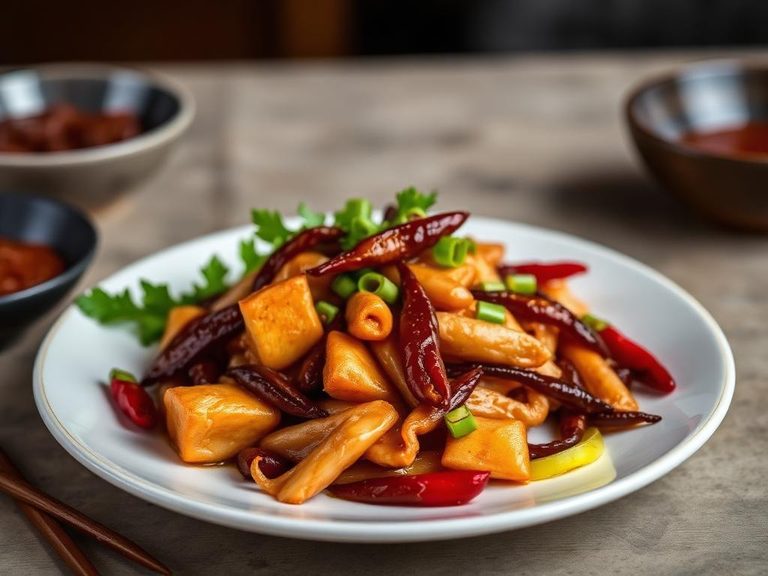
Kung pao chicken is a fiery Sichuan stir-fry of diced chicken, peanuts, and dried chilies, delivering a bold, savory-sweet-spicy flavor with a satisfying crunch. Nutritionally, it's a protein-rich dish with a moderate calorie count, making it a substantial yet balanced meal component. The signature numbing 'ma la' sensation from Sichuan peppercorns creates an unforgettable tingling heat.
Calorie split: 30% protein · 21% carbs · 49% fat
↓ Full nutrition💚 Why it's loved
People love it for its explosive flavor profile—the perfect harmony of savory, sweet, spicy, and numbing. It's a versatile dish that adapts well to home cooking and is a staple of Chinese-American takeout culture.
⚠️ Watch-outs & how to enjoy it better
The dish can be high in sodium and sugar from the sauce, and the peanuts are a common allergen. To counteract this, use low-sodium soy sauce, reduce added sugar, and consider substituting peanuts with toasted seeds or omitting them for an allergy-friendly version.
Key benefits
- High-quality protein source for muscle maintenance
- Contains capsaicin from chilies which may boost metabolism
- Peanuts add heart-healthy monounsaturated fats and fiber
- Sichuan peppercorns may aid digestion and reduce inflammation
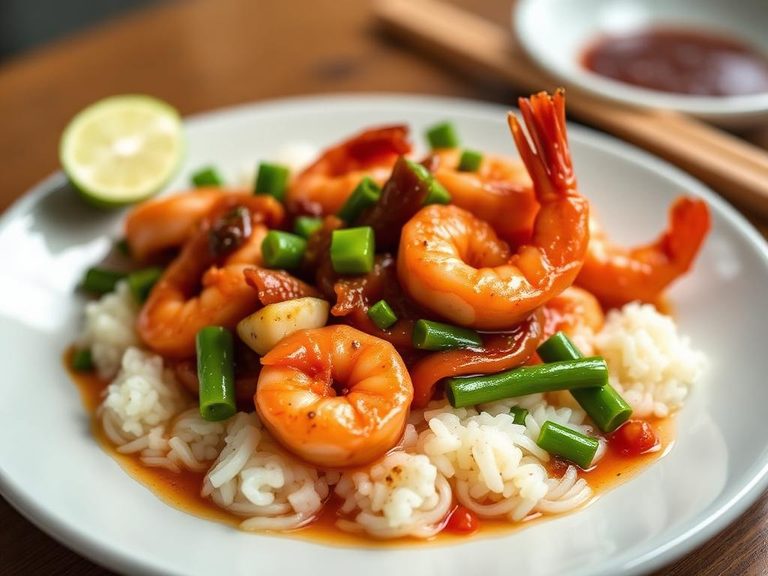
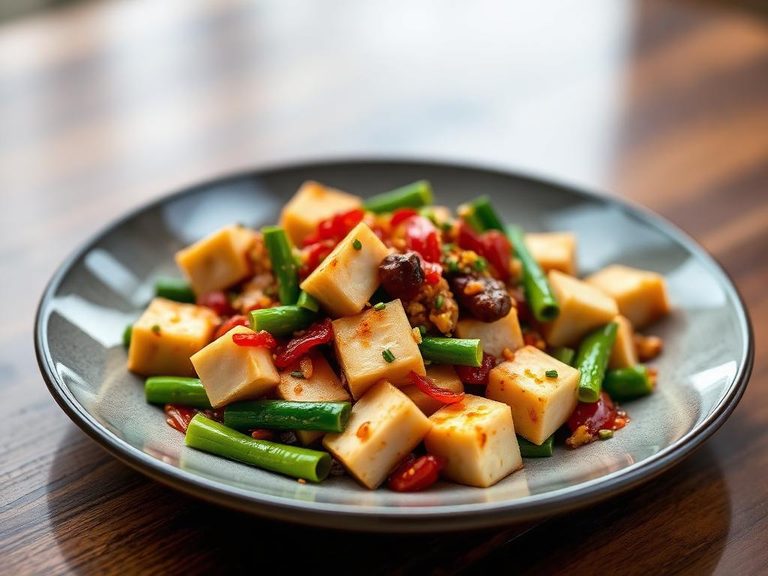
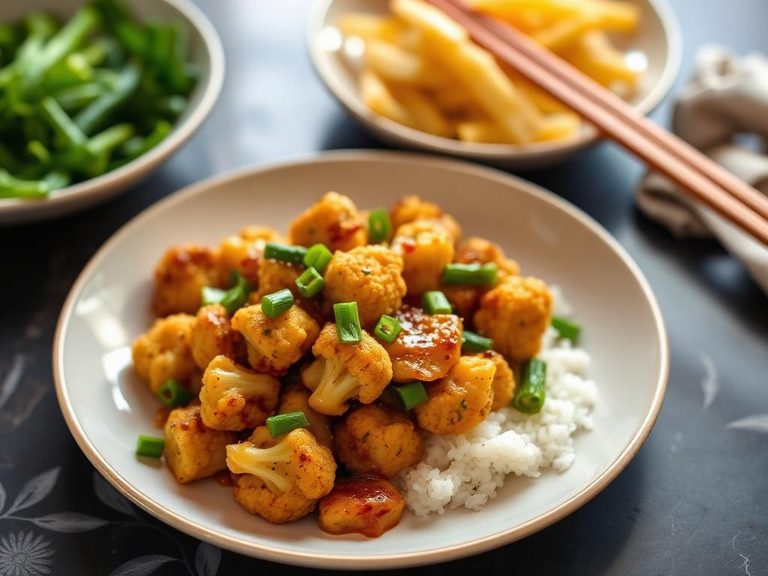
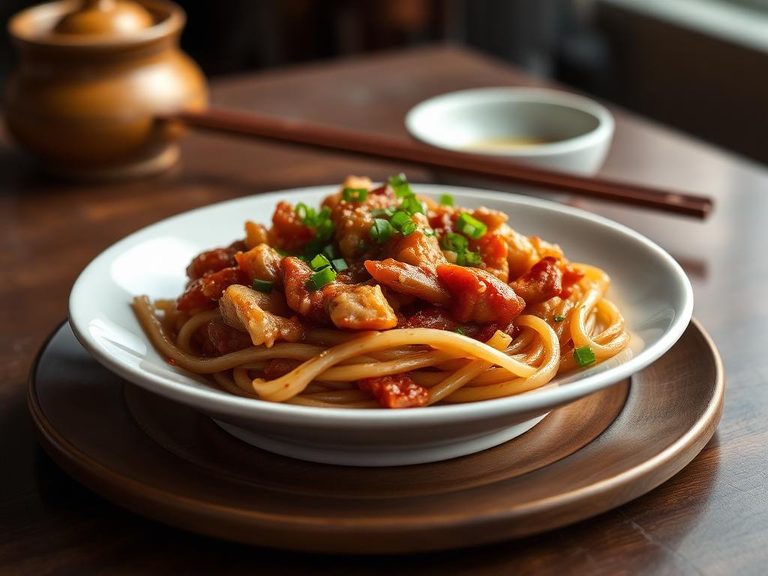
🍽️ Popular dishes
🌍 Where it's eaten
💡 Did you know?
The dish is named after Ding Baozhen, a late Qing dynasty official whose title was 'Gong Bao' (Palace Guardian).
Full nutrition (USDA data · scales with serving)
| Water | 74.8 g |
| Energy | 129 kcal |
| Protein | 9.8 g |
| Total lipid (fat) | 7.0 g |
| Carbohydrate, by difference | 6.9 g |
| Fiber, total dietary | 1.5 g |
| Total Sugars | 3.0 g |
| Calcium, Ca | 20.0 mg |
| Iron, Fe | 0.76 mg |
| Magnesium, Mg | 24.0 mg |
| Phosphorus, P | 94.0 mg |
| Potassium, K | 218 mg |
| Sodium, Na | 402 mg |
| Zinc, Zn | 0.74 mg |
| Copper, Cu | 0.07 mg |
| Selenium, Se | 8.1 ug |
| Vitamin C, total ascorbic acid | 7.1 mg |
| Thiamin | 0.03 mg |
| Riboflavin | 0.06 mg |
| Niacin | 2.8 mg |
| Vitamin B-6 | 0.24 mg |
| Folate, total | 16.0 ug |
| Folic acid | 0.00 ug |
| Folate, food | 16.0 ug |
| Folate, DFE | 16.0 ug |
| Choline, total | 37.4 mg |
| Vitamin B-12 | 0.11 ug |
| Vitamin B-12, added | 0.00 ug |
| Vitamin A, RAE | 65.0 ug |
| Retinol | 0.00 ug |
| Carotene, beta | 601 ug |
| Carotene, alpha | 341 ug |
| Cryptoxanthin, beta | 16.0 ug |
| Lycopene | 0.00 ug |
| Lutein + zeaxanthin | 226 ug |
| Vitamin E (alpha-tocopherol) | 1.0 mg |
| Vitamin E, added | 0.00 mg |
| Vitamin D (D2 + D3) | 0.00 ug |
| Vitamin K (phylloquinone) | 13.6 ug |
| Alcohol, ethyl | 0.00 g |
| Caffeine | 0.00 mg |
| Theobromine | 0.00 mg |
Fat & fatty acid profile (per 100g)
| Fatty acids, total saturated | 1.4 g |
| SFA 4:0 | 0.00 g |
| SFA 6:0 | 0.00 g |
| SFA 8:0 | 0.00 g |
| SFA 10:0 | 0.00 g |
| SFA 12:0 | 0.00 g |
| SFA 14:0 | 0.01 g |
| SFA 16:0 | 0.90 g |
| SFA 18:0 | 0.29 g |
| Fatty acids, total monounsaturated | 2.2 g |
| MUFA 16:1 | 0.08 g |
| MUFA 18:1 | 2.0 g |
| MUFA 20:1 | 0.04 g |
| MUFA 22:1 | 0.00 g |
| Fatty acids, total polyunsaturated | 3.0 g |
| PUFA 18:2 | 2.7 g |
| PUFA 18:3 | 0.25 g |
| PUFA 18:4 | 0.00 g |
| PUFA 20:4 | 0.03 g |
| PUFA 20:5 n-3 (EPA) | 0.00 g |
| PUFA 22:5 n-3 (DPA) | 0.00 g |
| PUFA 22:6 n-3 (DHA) | 0.00 g |
| Cholesterol | 26.0 mg |
Amino acid profile (per 100g)
Estimated from Restaurant, Chinese, kung pao chicken — USDA does not publish this profile for Kung pao chicken.
| Tryptophan | 0.12 g |
| Threonine | 0.41 g |
| Isoleucine | 0.43 g |
| Leucine | 0.78 g |
| Lysine | 0.45 g |
| Methionine | 0.24 g |
| Cystine | 0.10 g |
| Phenylalanine | 0.40 g |
| Tyrosine | 0.35 g |
| Valine | 0.47 g |
| Arginine | 0.64 g |
| Histidine | 0.27 g |
| Alanine | 0.57 g |
| Aspartic acid | 0.97 g |
| Glutamic acid | 1.8 g |
| Glycine | 0.40 g |
| Proline | 0.34 g |
| Serine | 0.40 g |
FAQ
Is kung pao chicken spicy?
Yes, it's traditionally spicy from dried chilies and numbing from Sichuan peppercorns. The heat level can vary widely from restaurant to restaurant.
Can I make kung pao chicken without peanuts?
Absolutely. You can omit peanuts or substitute them with toasted cashews, sunflower seeds, or even diced water chestnuts for crunch.
What makes the chicken tender in kung pao chicken?
The chicken is typically marinated in a mixture of soy sauce, rice wine, and cornstarch before stir-frying, a technique called 'velveting' that locks in moisture.
Nutrient density (calculated · NRF9.3)
Nutrient Rich Foods index: beneficial nutrients (protein, fiber, vitamins, minerals) minus saturated fat, added sugar & sodium, per 100 kcal.
NRF9.3 index — Fulgoni, Keast & Drewnowski, 2009. Computed from USDA nutrients.
Weight-loss friendliness (composite index)
Energy density 1.29 kcal/g · 30% calories from protein · 1.5 g fiber · 3.0 g sugar per 100 g.
Composite of energy density (Rolls et al., 1999), protein & fiber satiety, minus sugar. A calculated heuristic — ranks satiety-per-calorie, not a clinical measure.
Dietary load (calculated from USDA values)
Potential renal acid load. Positive = acid-forming, negative = alkaline-forming.
Sodium-to-potassium ratio: 1.84 (lower is better — aim for ≤ 1)
Sodium:potassium per WHO potassium guidance. Computed from USDA nutrients.