

Kale, NS as to form, cooked
Common food

Photo: Wikipedia
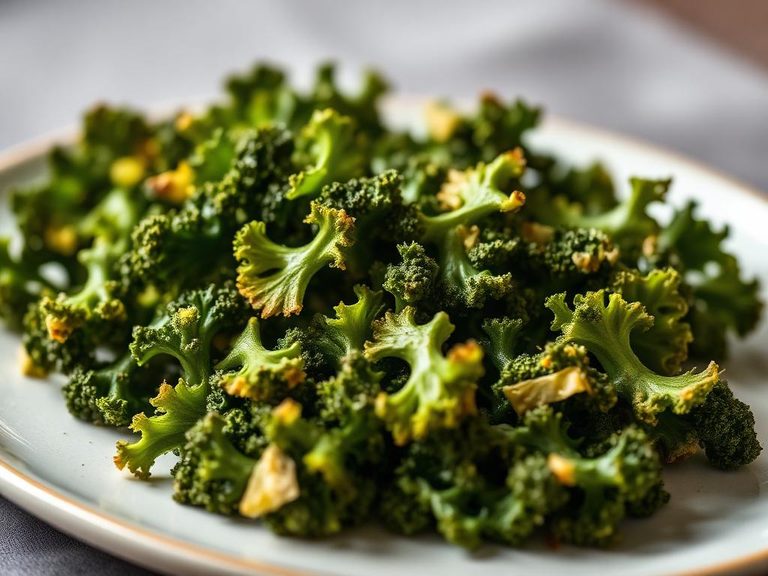
Kale, cooked, is a dark, leafy green that transforms from tough and fibrous to tender and silky with a deep, earthy, slightly sweet flavor. Its robust texture holds up well to various cooking methods, making it a versatile base for many dishes. Nutritionally, it's a powerhouse, delivering a significant amount of protein and fiber for very few calories.
Calorie split: 18% protein · 27% carbs · 56% fat
↓ Full nutrition💚 Why it's loved
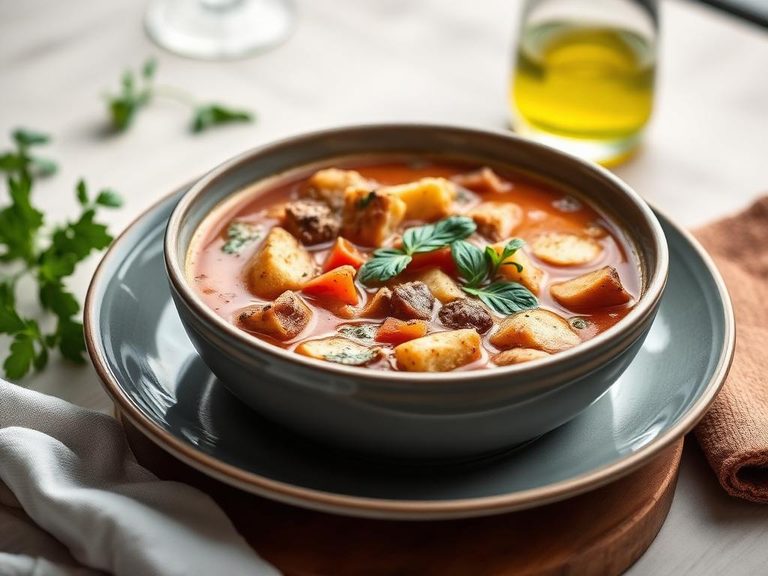
People love cooked kale for its hearty, satisfying texture and its ability to absorb flavors from garlic, lemon, or broth. It's a beloved staple in health-focused cooking and a key ingredient in comforting, rustic dishes from various cuisines.
⚠️ Watch-outs & how to enjoy it better
Kale contains oxalates, which can contribute to kidney stone formation in susceptible individuals. To mitigate this, cook it (as in this prepared form) and avoid pairing with very high-calcium foods at the same meal. Some may find its flavor bitter; balancing with acid (lemon) or fat (olive oil) helps.
Key benefits
- Excellent source of dietary fiber for digestive health.
- High in protein for a leafy green vegetable.
- Very low in sugar, making it suitable for low-glycemic diets.
- Rich in vitamins and minerals like Vitamin K, A, and C.
- Provides healthy fats, including omega-3 fatty acids.
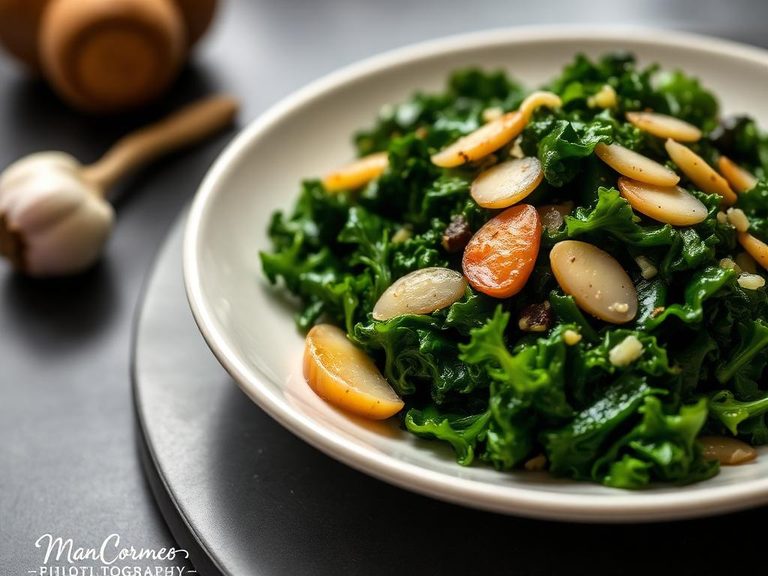
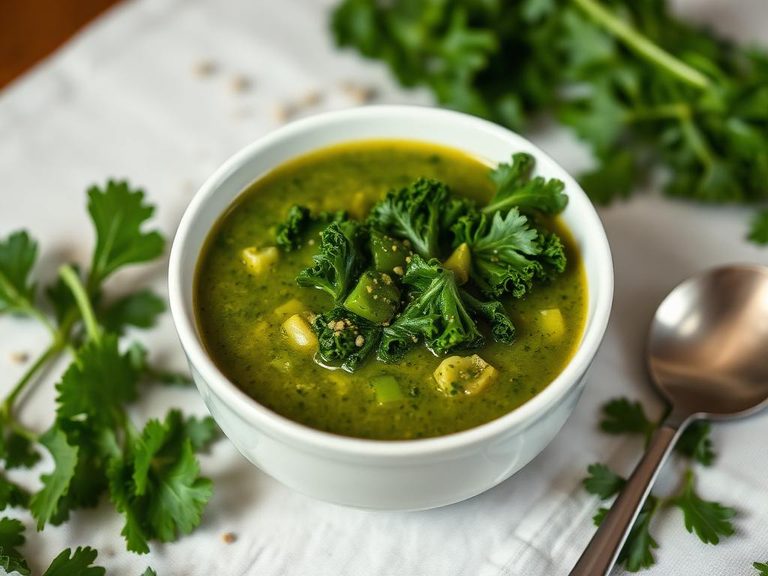
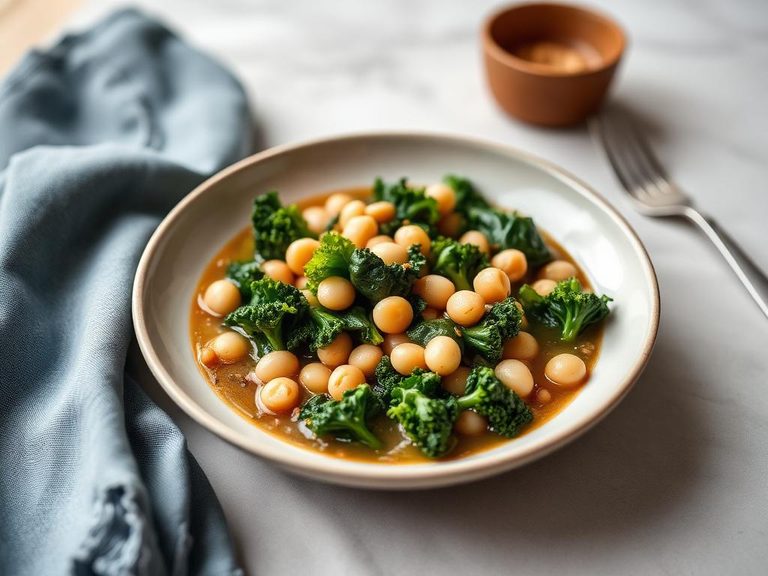
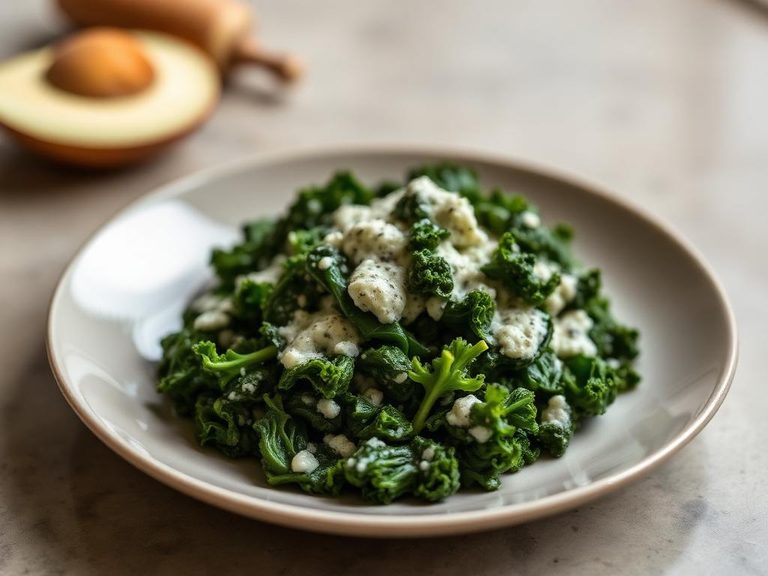
🍽️ Popular dishes
🌍 Where it's eaten
💡 Did you know?
Kale is a cultivar of wild cabbage (Brassica oleracea) and is more closely related to Brussels sprouts and broccoli than to spinach.
Full nutrition (USDA data · scales with serving)
| Water | 86.1 g |
| Energy | 69.0 kcal |
| Protein | 3.0 g |
| Total lipid (fat) | 4.3 g |
| Carbohydrate, by difference | 4.6 g |
| Fiber, total dietary | 4.3 g |
| Total Sugars | 0.84 g |
| Calcium, Ca | 265 mg |
| Iron, Fe | 1.7 mg |
| Magnesium, Mg | 34.0 mg |
| Phosphorus, P | 58.0 mg |
| Potassium, K | 363 mg |
| Sodium, Na | 185 mg |
| Zinc, Zn | 0.41 mg |
| Copper, Cu | 0.06 mg |
| Selenium, Se | 0.90 ug |
| Vitamin C, total ascorbic acid | 68.1 mg |
| Thiamin | 0.11 mg |
| Riboflavin | 0.34 mg |
| Niacin | 1.2 mg |
| Vitamin B-6 | 0.16 mg |
| Folate, total | 48.0 ug |
| Folic acid | 0.00 ug |
| Folate, food | 48.0 ug |
| Folate, DFE | 48.0 ug |
| Choline, total | 0.80 mg |
| Vitamin B-12 | 0.00 ug |
| Vitamin B-12, added | 0.00 ug |
| Vitamin A, RAE | 251 ug |
| Retinol | 12.0 ug |
| Carotene, beta | 2843 ug |
| Carotene, alpha | 0.00 ug |
| Cryptoxanthin, beta | 27.0 ug |
| Lycopene | 0.00 ug |
| Lutein + zeaxanthin | 6190 ug |
| Vitamin E (alpha-tocopherol) | 1.1 mg |
| Vitamin E, added | 0.00 mg |
| Vitamin D (D2 + D3) | 0.00 ug |
| Vitamin K (phylloquinone) | 408 ug |
| Alcohol, ethyl | 0.00 g |
| Caffeine | 0.00 mg |
| Theobromine | 0.00 mg |
Fat & fatty acid profile (per 100g)
| Fatty acids, total saturated | 0.90 g |
| SFA 4:0 | 0.02 g |
| SFA 6:0 | 0.01 g |
| SFA 8:0 | 0.01 g |
| SFA 10:0 | 0.02 g |
| SFA 12:0 | 0.03 g |
| SFA 14:0 | 0.07 g |
| SFA 16:0 | 0.56 g |
| SFA 18:0 | 0.15 g |
| Fatty acids, total monounsaturated | 1.1 g |
| MUFA 16:1 | 0.01 g |
| MUFA 18:1 | 1.0 g |
| MUFA 20:1 | 0.01 g |
| MUFA 22:1 | 0.00 g |
| Fatty acids, total polyunsaturated | 1.5 g |
| PUFA 18:2 | 1.0 g |
| PUFA 18:3 | 0.48 g |
| PUFA 18:4 | 0.00 g |
| PUFA 20:4 | 0.00 g |
| PUFA 20:5 n-3 (EPA) | 0.00 g |
| PUFA 22:5 n-3 (DPA) | 0.00 g |
| PUFA 22:6 n-3 (DHA) | 0.00 g |
| Cholesterol | 2.0 mg |
Amino acid profile (per 100g)
Estimated from Kale, raw — USDA does not publish this profile for Kale.
| Tryptophan | 0.04 g |
| Threonine | 0.13 g |
| Isoleucine | 0.17 g |
| Leucine | 0.20 g |
| Lysine | 0.17 g |
| Methionine | 0.03 g |
| Cystine | 0.04 g |
| Phenylalanine | 0.15 g |
| Tyrosine | 0.10 g |
| Valine | 0.16 g |
| Arginine | 0.16 g |
| Histidine | 0.17 g |
| Alanine | 0.15 g |
| Aspartic acid | 0.26 g |
| Glutamic acid | 0.33 g |
| Glycine | 0.14 g |
| Proline | 0.17 g |
| Serine | 0.12 g |
FAQ
How do I cook kale to make it tender?
Sautéing, braising, or steaming are best. For sautéing, cook with a little oil or broth over medium heat for 5-10 minutes until wilted. Braising in broth or tomato sauce for 15-20 minutes yields a very soft texture.
Is the nutritional profile different from raw kale?
Yes, cooking concentrates some nutrients per weight (like protein and fiber) due to water loss, but may reduce some heat-sensitive vitamins like Vitamin C. It also makes certain nutrients more bioavailable.
Can I eat the stems?
Yes, but they are very tough. It's best to remove the tough central stem, chop it finely, and cook it longer than the leaves, or discard it entirely.
Nutrient density (calculated · NRF9.3)
Nutrient Rich Foods index: beneficial nutrients (protein, fiber, vitamins, minerals) minus saturated fat, added sugar & sodium, per 100 kcal.
NRF9.3 index — Fulgoni, Keast & Drewnowski, 2009. Computed from USDA nutrients.
Weight-loss friendliness (composite index)
Energy density 0.69 kcal/g · 18% calories from protein · 4.3 g fiber · 0.8 g sugar per 100 g.
Composite of energy density (Rolls et al., 1999), protein & fiber satiety, minus sugar. A calculated heuristic — ranks satiety-per-calorie, not a clinical measure.
Dietary load (calculated from USDA values)
Potential renal acid load. Positive = acid-forming, negative = alkaline-forming.
Sodium-to-potassium ratio: 0.51 (lower is better — aim for ≤ 1)
Sodium:potassium per WHO potassium guidance. Computed from USDA nutrients.