

Heart
Common food
Heart, most commonly beef or pork heart, is a dense, surprisingly lean muscle meat with a rich, slightly metallic flavor and a firm, steak-like texture that becomes tender when slow-cooked. It is an exceptionally nutrient-dense food, packed with high-quality protein and virtually no carbohydrates, making it a powerhouse for low-carb and carnivore diets. Its deep red color comes from high levels of myoglobin, the oxygen-carrying protein that gives it a unique, iron-rich taste.
Calorie split: 73% protein · 0% carbs · 27% fat
↓ Full nutrition💚 Why it's loved
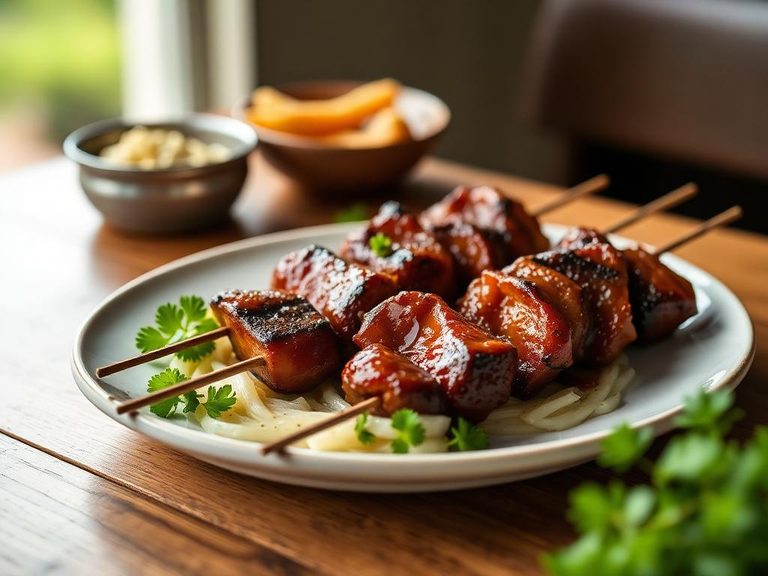
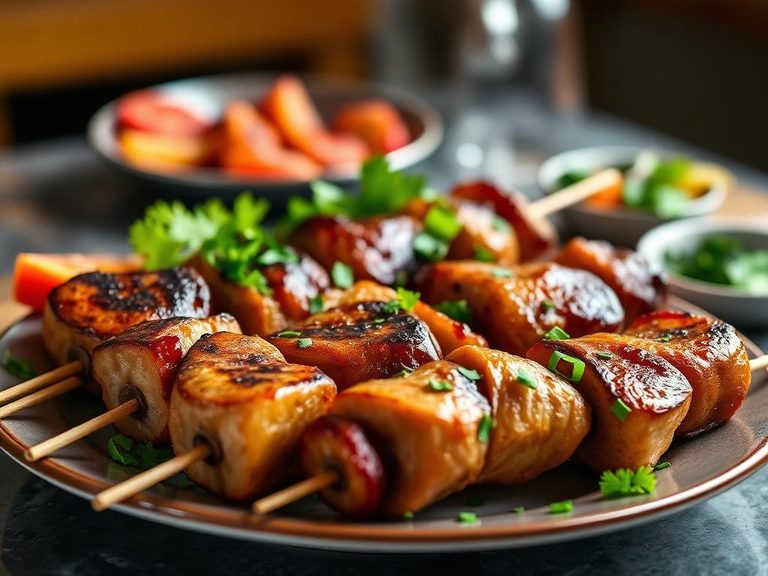
People love heart for its deep, beefy flavor and incredibly versatile, steak-like texture that can be grilled, seared, or slow-cooked. It's a favorite among nose-to-tail eaters and budget-conscious cooks for its nutritional density and ability to absorb marinades beautifully.
⚠️ Watch-outs & how to enjoy it better
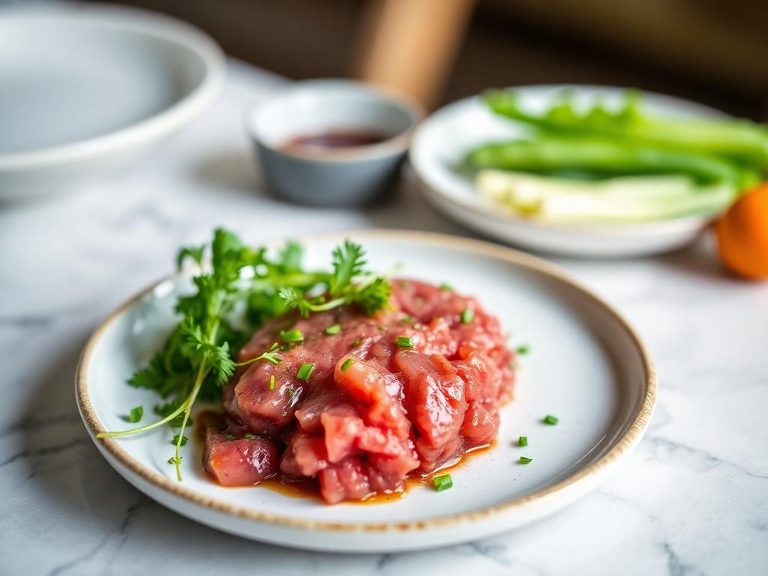
Heart has a distinct, slightly metallic or mineral taste from its high iron content, which some find off-putting, and its dense texture can be tough if overcooked. To mitigate this, slice it thinly against the grain for quick cooking or braise it slowly to break down connective tissue; pairing it with acidic marinades or citrus can also balance the mineral flavor.
Key benefits
- Extremely high in protein, with over 28 grams per 100g serving.
- Excellent source of Coenzyme Q10 (CoQ10), an antioxidant that supports heart health and energy production.
- Rich in iron, zinc, and B vitamins, particularly B12 and niacin.
- Very low in carbohydrates and contains no sugar, ideal for ketogenic diets.
- A good source of selenium, which supports thyroid function and immune health.
🍽️ Popular dishes

🌍 Where it's eaten
💡 Did you know?
The human heart beats about 100,000 times a day, and beef heart is so similar in structure that it was historically used in medical training to teach anatomy.
Full nutrition (USDA data · scales with serving)
| Water | 65.2 g |
| Energy | 164 kcal |
| Protein | 28.3 g |
| Total lipid (fat) | 4.7 g |
| Carbohydrate, by difference | 0.15 g |
| Fiber, total dietary | 0.00 g |
| Total Sugars | 0.00 g |
| Calcium, Ca | 5.0 mg |
| Iron, Fe | 6.3 mg |
| Magnesium, Mg | 21.0 mg |
| Phosphorus, P | 252 mg |
| Potassium, K | 217 mg |
| Sodium, Na | 366 mg |
| Zinc, Zn | 2.9 mg |
| Copper, Cu | 0.56 mg |
| Selenium, Se | 38.6 ug |
| Vitamin C, total ascorbic acid | 0.00 mg |
| Thiamin | 0.10 mg |
| Riboflavin | 1.2 mg |
| Niacin | 6.6 mg |
| Vitamin B-6 | 0.24 mg |
| Folate, total | 5.0 ug |
| Folic acid | 0.00 ug |
| Folate, food | 5.0 ug |
| Folate, DFE | 5.0 ug |
| Choline, total | 227 mg |
| Vitamin B-12 | 10.7 ug |
| Vitamin B-12, added | 0.00 ug |
| Vitamin A, RAE | 0.00 ug |
| Retinol | 0.00 ug |
| Carotene, beta | 0.00 ug |
| Carotene, alpha | 0.00 ug |
| Cryptoxanthin, beta | 0.00 ug |
| Lycopene | 0.00 ug |
| Lutein + zeaxanthin | 0.00 ug |
| Vitamin E (alpha-tocopherol) | 0.29 mg |
| Vitamin E, added | 0.00 mg |
| Vitamin D (D2 + D3) | 0.10 ug |
| Vitamin K (phylloquinone) | 0.50 ug |
| Alcohol, ethyl | 0.00 g |
| Caffeine | 0.00 mg |
| Theobromine | 0.00 mg |
Fat & fatty acid profile (per 100g)
| Fatty acids, total saturated | 1.4 g |
| SFA 4:0 | 0.00 g |
| SFA 6:0 | 0.00 g |
| SFA 8:0 | 0.00 g |
| SFA 10:0 | 0.00 g |
| SFA 12:0 | 0.00 g |
| SFA 14:0 | 0.05 g |
| SFA 16:0 | 0.60 g |
| SFA 18:0 | 0.66 g |
| Fatty acids, total monounsaturated | 1.0 g |
| MUFA 16:1 | 0.06 g |
| MUFA 18:1 | 0.93 g |
| MUFA 20:1 | 0.01 g |
| MUFA 22:1 | 0.00 g |
| Fatty acids, total polyunsaturated | 0.98 g |
| PUFA 18:2 | 0.73 g |
| PUFA 18:3 | 0.02 g |
| PUFA 18:4 | 0.00 g |
| PUFA 20:4 | 0.22 g |
| PUFA 20:5 n-3 (EPA) | 0.00 g |
| PUFA 22:5 n-3 (DPA) | 0.00 g |
| PUFA 22:6 n-3 (DHA) | 0.00 g |
| Cholesterol | 210 mg |
Amino acid profile (per 100g)
Estimated from Beef, New Zealand, imported, variety meats and by-products, heart, raw — USDA does not publish this profile for Heart.
| Tryptophan | 0.19 g |
| Threonine | 0.67 g |
| Isoleucine | 0.77 g |
| Leucine | 1.4 g |
| Lysine | 1.5 g |
| Methionine | 0.61 g |
| Phenylalanine | 0.72 g |
| Tyrosine | 0.62 g |
| Valine | 0.82 g |
| Arginine | 1.2 g |
| Histidine | 0.67 g |
| Alanine | 0.96 g |
| Glutamic acid | 2.6 g |
| Glycine | 1.0 g |
| Proline | 0.59 g |
| Serine | 0.65 g |
FAQ
Is heart meat safe to eat?
Yes, heart is a safe and nutritious organ meat when sourced from healthy animals and cooked to an internal temperature of at least 160°F (71°C). It is a staple in many traditional cuisines worldwide.
How does heart taste compared to regular beef?
Heart has a richer, more mineral-forward flavor than muscle meat like steak, with a denser, leaner texture. It is often described as having a slight iron or liver-like taste, but milder and more palatable to most people.
Can I eat heart if I have high cholesterol?
Heart is relatively low in fat and cholesterol compared to other organ meats, but it does contain dietary cholesterol. Consult a healthcare provider for personalized advice, especially if managing specific health conditions.
Nutrient density (calculated · NRF9.3)
Nutrient Rich Foods index: beneficial nutrients (protein, fiber, vitamins, minerals) minus saturated fat, added sugar & sodium, per 100 kcal.
NRF9.3 index — Fulgoni, Keast & Drewnowski, 2009. Computed from USDA nutrients.
Weight-loss friendliness (composite index)
Energy density 1.64 kcal/g · 69% calories from protein · 0.0 g fiber · 0.0 g sugar per 100 g.
Composite of energy density (Rolls et al., 1999), protein & fiber satiety, minus sugar. A calculated heuristic — ranks satiety-per-calorie, not a clinical measure.
Dietary load (calculated from USDA values)
Potential renal acid load. Positive = acid-forming, negative = alkaline-forming.
Sodium-to-potassium ratio: 1.69 (lower is better — aim for ≤ 1)
Sodium:potassium per WHO potassium guidance. Computed from USDA nutrients.