

Hearts of palm, canned
Whole food · Vegetables and Vegetable Products

Photo: Wikipedia
Hearts of palm are the tender, edible inner core of certain palm trees, harvested before they mature. With a delicate, slightly nutty flavor and a crisp, artichoke-like texture, they are a prized ingredient in salads and appetizers. Nutritionally, they are exceptionally low in calories and fat while providing a good source of fiber and plant-based protein.
Calorie split: 30% protein · 54% carbs · 16% fat
↓ Full nutrition💚 Why it's loved
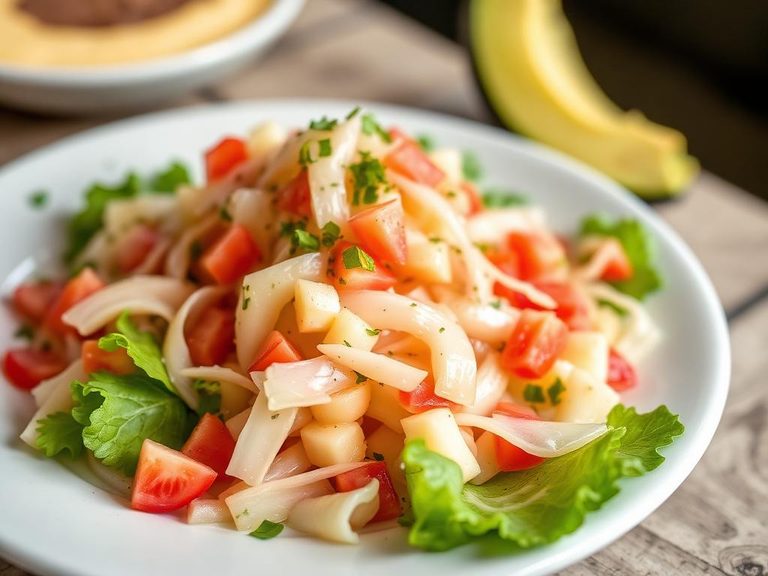
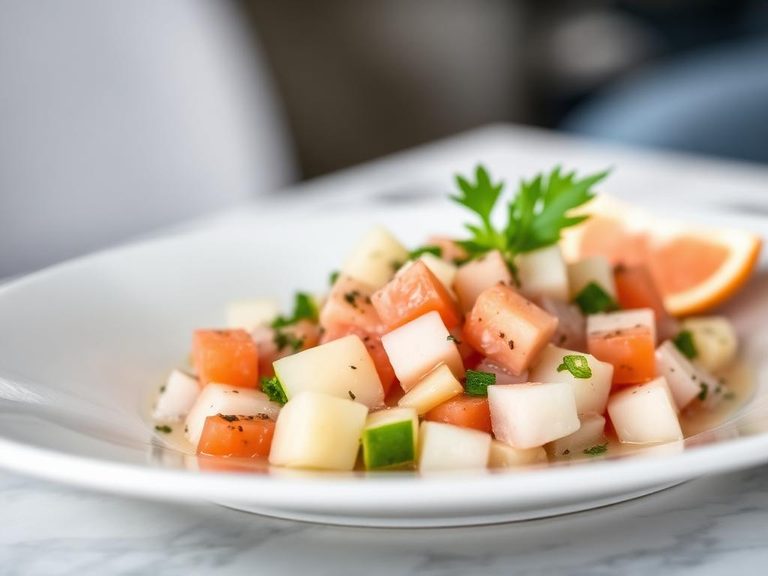
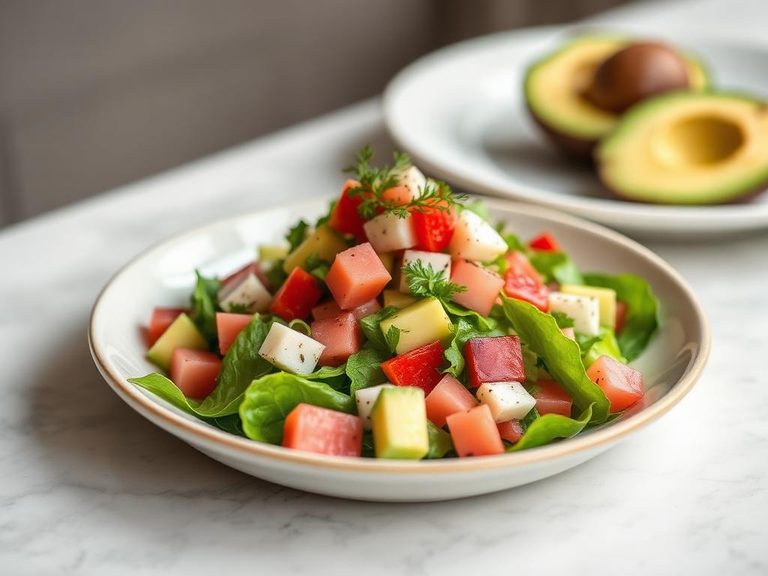
People love hearts of palm for their unique, tender-crisp texture and mild, versatile flavor that absorbs dressings and seasonings beautifully. They are a culinary staple in Latin American and Caribbean cuisines, often featured in fresh salads and ceviches.
⚠️ Watch-outs & how to enjoy it better
Canned hearts of palm can be high in sodium due to the brine, which may be a concern for those monitoring salt intake. To counteract this, rinse them thoroughly under cold water before use or choose low-sodium varieties. Their mild flavor can also be lost if overcooked, so it's best to add them late in the cooking process or use them raw.
Key benefits
- Very low in calories and fat, making it a light, filling food.
- Good source of dietary fiber (2.4g per 100g) for digestive health.
- Provides plant-based protein (2.52g per 100g) without cholesterol.
- Naturally low in sugar, making it suitable for low-sugar diets.
- Rich in minerals like potassium, iron, and manganese.
🍽️ Popular dishes


🌍 Where it's eaten
💡 Did you know?
The 'heart' is actually the growing bud of the palm tree, and harvesting it often kills the tree, which is why sustainable farming practices and the use of peach palm (which regrows) are important.
Full nutrition (USDA data · scales with serving)
| Water | 90.2 g |
| Energy | 28.0 kcal |
| Energy | 117 kj |
| Protein | 2.5 g |
| Total lipid (fat) | 0.62 g |
| Ash | 2.0 g |
| Carbohydrate, by difference | 4.6 g |
| Fiber, total dietary | 2.4 g |
| Calcium, Ca | 58.0 mg |
| Iron, Fe | 3.1 mg |
| Magnesium, Mg | 38.0 mg |
| Phosphorus, P | 65.0 mg |
| Potassium, K | 177 mg |
| Sodium, Na | 426 mg |
| Zinc, Zn | 1.1 mg |
| Copper, Cu | 0.13 mg |
| Manganese, Mn | 1.4 mg |
| Selenium, Se | 0.70 ug |
| Vitamin C, total ascorbic acid | 7.9 mg |
| Thiamin | 0.01 mg |
| Riboflavin | 0.06 mg |
| Niacin | 0.44 mg |
| Pantothenic acid | 0.13 mg |
| Vitamin B-6 | 0.02 mg |
| Folate, total | 39.0 ug |
| Folic acid | 0.00 ug |
| Folate, food | 39.0 ug |
| Folate, DFE | 39.0 ug |
| Vitamin B-12 | 0.00 ug |
| Vitamin A, RAE | 0.00 ug |
| Retinol | 0.00 ug |
| Vitamin A, IU | 0.00 iu |
| Vitamin D (D2 + D3), International Units | 0.00 iu |
| Vitamin D (D2 + D3) | 0.00 ug |
Fat & fatty acid profile (per 100g)
| Fatty acids, total saturated | 0.13 g |
| SFA 16:0 | 0.11 g |
| SFA 18:0 | 0.02 g |
| Fatty acids, total monounsaturated | 0.10 g |
| MUFA 18:1 | 0.10 g |
| Fatty acids, total polyunsaturated | 0.20 g |
| PUFA 18:2 | 0.18 g |
| PUFA 18:3 | 0.02 g |
| Fatty acids, total trans | 0.00 g |
| Cholesterol | 0.00 mg |
Amino acid profile (per 100g)
| Tryptophan | 0.02 g |
| Threonine | 0.10 g |
| Isoleucine | 0.10 g |
| Leucine | 0.17 g |
| Lysine | 0.09 g |
| Methionine | 0.04 g |
| Cystine | 0.02 g |
| Phenylalanine | 0.10 g |
| Tyrosine | 0.05 g |
| Valine | 0.11 g |
| Arginine | 0.18 g |
| Histidine | 0.06 g |
| Alanine | 0.11 g |
| Aspartic acid | 0.17 g |
| Glutamic acid | 0.30 g |
| Glycine | 0.11 g |
| Proline | 0.09 g |
| Serine | 0.08 g |
FAQ
What do hearts of palm taste like?
They have a mild, slightly nutty and sweet flavor, often compared to artichoke hearts or white asparagus, with a tender-crisp texture.
Are hearts of palm healthy?
Yes, they are low in calories and fat, high in fiber, and provide vitamins and minerals like potassium and iron, making them a nutritious addition to many diets.
How do I use canned hearts of palm?
Rinse them well to reduce sodium, then slice or chop for salads, appetizers, or as a meat substitute in tacos, stir-fries, or 'crab' cakes.
Nutrient density (calculated · NRF9.3)
Nutrient Rich Foods index: beneficial nutrients (protein, fiber, vitamins, minerals) minus saturated fat, added sugar & sodium, per 100 kcal.
NRF9.3 index — Fulgoni, Keast & Drewnowski, 2009. Computed from USDA nutrients.
Weight-loss friendliness (composite index)
Energy density 0.28 kcal/g · 36% calories from protein · 2.4 g fiber · 0.0 g sugar per 100 g.
Composite of energy density (Rolls et al., 1999), protein & fiber satiety, minus sugar. A calculated heuristic — ranks satiety-per-calorie, not a clinical measure.
Dietary load (calculated from USDA values)
Potential renal acid load. Positive = acid-forming, negative = alkaline-forming.
Sodium-to-potassium ratio: 2.41 (lower is better — aim for ≤ 1)
Sodium:potassium per WHO potassium guidance. Computed from USDA nutrients.