

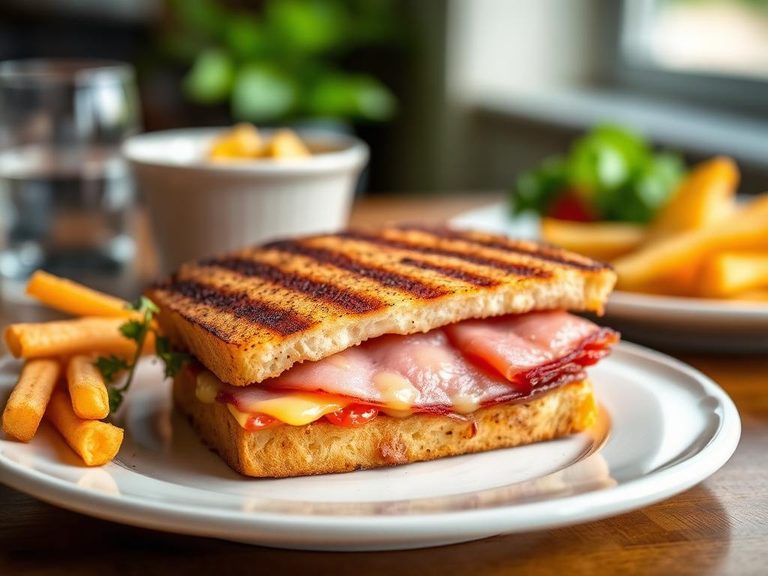
Ham sandwich or sub, restaurant
Common food
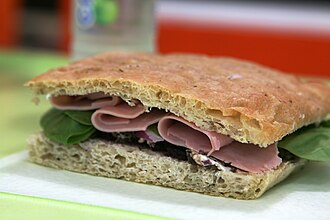
Photo: Wikipedia
A classic ham sandwich or sub is a satisfying handheld meal featuring savory, salty sliced ham layered between bread, often with a crisp, fresh texture from added vegetables. Nutritionally, it provides a solid protein boost for its calorie count, making it a more substantial option than many simple snacks. The balance of protein and carbohydrates offers a quick source of energy, though the overall profile leans towards a moderate-calorie, protein-rich choice.
Calorie split: 30% protein · 51% carbs · 19% fat
↓ Full nutrition💚 Why it's loved
People love it for its familiar, savory flavor profile and the satisfying combination of soft bread, salty ham, and optional crunchy vegetables. Its versatility allows for endless customization, from simple deli-style to gourmet creations, making it a reliable comfort food across many cultures.
⚠️ Watch-outs & how to enjoy it better
The primary downsides are potential high sodium from the cured ham and processed deli meats, which can be a concern for blood pressure, and the refined carbohydrates in white bread that may cause blood-sugar spikes. To counteract this, choose whole-grain bread for more fiber, load up on fresh vegetables like lettuce, tomato, and onion, and consider lower-sodium ham options. Pairing it with a side of fruit or a small salad can also balance the meal.
Key benefits
- Good source of protein for muscle maintenance
- Provides quick energy from carbohydrates
- Convenient and portable meal option
- Can be customized with vegetables for added nutrients
- Moderate calorie count for a complete meal
🍽️ Popular dishes

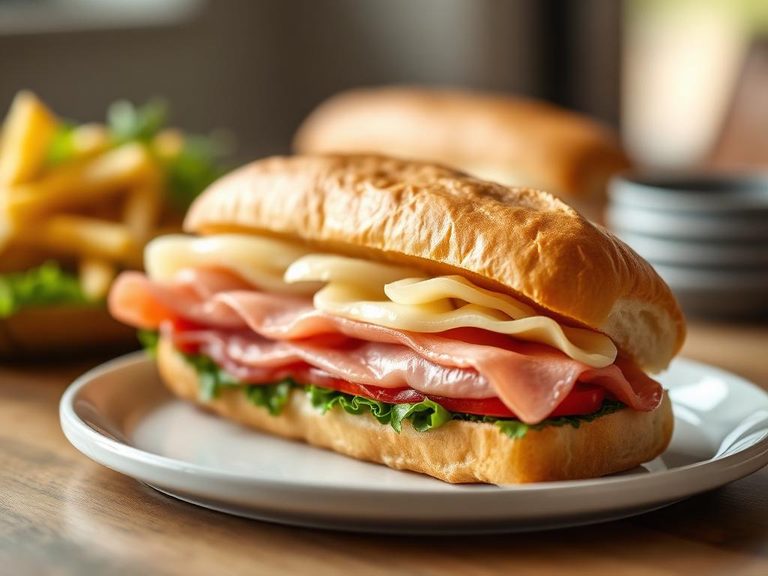
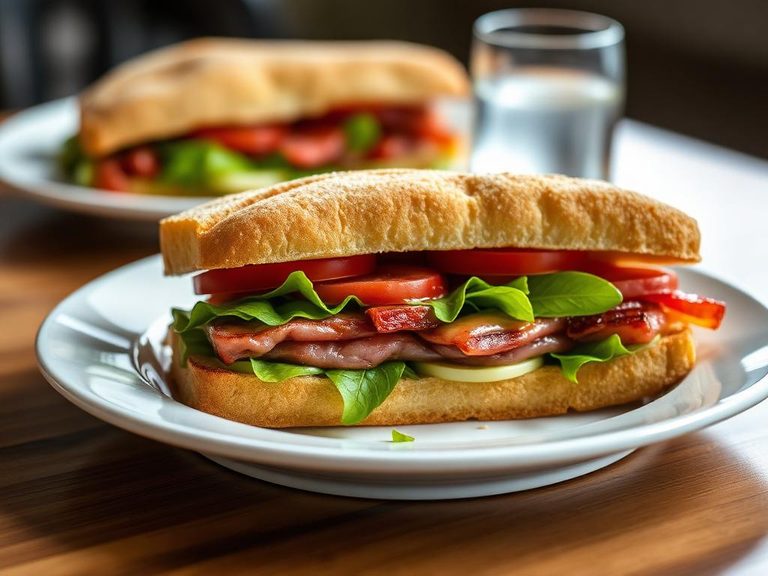
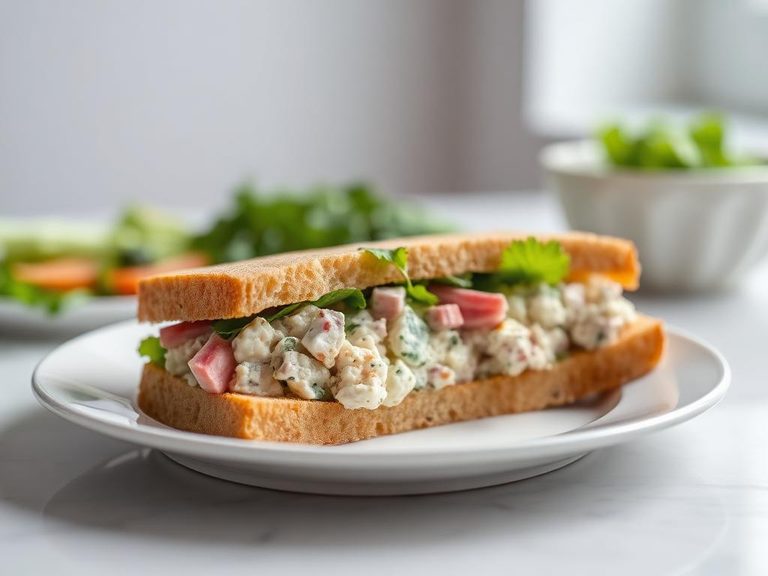

🌍 Where it's eaten
💡 Did you know?
The 'ham sandwich' is so iconic in American culture that it's the subject of a famous legal precedent: the 1928 Supreme Court case 'Hamdi v. Rumsfeld' famously involved a dissent about the government's power to detain a citizen, with Justice Scalia writing, 'The Founders would not have thought it acceptable to hold a United States citizen on the sole authority of the President... even if he were labeled an 'enemy combatant.' The government's argument... would have been unthinkable to them... A ham sandwich would have more due process.'
Full nutrition (USDA data · scales with serving)
| Water | 57.2 g |
| Energy | 178 kcal |
| Protein | 13.3 g |
| Total lipid (fat) | 3.7 g |
| Carbohydrate, by difference | 22.9 g |
| Fiber, total dietary | 1.1 g |
| Total Sugars | 2.5 g |
| Calcium, Ca | 100 mg |
| Iron, Fe | 1.9 mg |
| Magnesium, Mg | 23.0 mg |
| Phosphorus, P | 193 mg |
| Potassium, K | 283 mg |
| Sodium, Na | 687 mg |
| Zinc, Zn | 1.2 mg |
| Copper, Cu | 0.08 mg |
| Selenium, Se | 27.7 ug |
| Vitamin C, total ascorbic acid | 0.00 mg |
| Thiamin | 0.41 mg |
| Riboflavin | 0.25 mg |
| Niacin | 5.3 mg |
| Vitamin B-6 | 0.26 mg |
| Folate, total | 51.0 ug |
| Folic acid | 40.0 ug |
| Folate, food | 12.0 ug |
| Folate, DFE | 79.0 ug |
| Choline, total | 40.3 mg |
| Vitamin B-12 | 0.19 ug |
| Vitamin B-12, added | 0.00 ug |
| Vitamin A, RAE | 0.00 ug |
| Retinol | 0.00 ug |
| Carotene, beta | 0.00 ug |
| Carotene, alpha | 0.00 ug |
| Cryptoxanthin, beta | 0.00 ug |
| Lycopene | 0.00 ug |
| Lutein + zeaxanthin | 20.0 ug |
| Vitamin E (alpha-tocopherol) | 0.26 mg |
| Vitamin E, added | 0.00 mg |
| Vitamin D (D2 + D3) | 0.30 ug |
| Vitamin K (phylloquinone) | 0.10 ug |
| Alcohol, ethyl | 0.00 g |
| Caffeine | 0.00 mg |
| Theobromine | 0.00 mg |
Fat & fatty acid profile (per 100g)
| Fatty acids, total saturated | 0.98 g |
| SFA 4:0 | 0.00 g |
| SFA 6:0 | 0.00 g |
| SFA 8:0 | 0.00 g |
| SFA 10:0 | 0.00 g |
| SFA 12:0 | 0.01 g |
| SFA 14:0 | 0.03 g |
| SFA 16:0 | 0.61 g |
| SFA 18:0 | 0.30 g |
| Fatty acids, total monounsaturated | 1.1 g |
| MUFA 16:1 | 0.06 g |
| MUFA 18:1 | 1.1 g |
| MUFA 20:1 | 0.02 g |
| MUFA 22:1 | 0.00 g |
| Fatty acids, total polyunsaturated | 1.2 g |
| PUFA 18:2 | 1.0 g |
| PUFA 18:3 | 0.10 g |
| PUFA 18:4 | 0.00 g |
| PUFA 20:4 | 0.03 g |
| PUFA 20:5 n-3 (EPA) | 0.00 g |
| PUFA 22:5 n-3 (DPA) | 0.00 g |
| PUFA 22:6 n-3 (DHA) | 0.00 g |
| Cholesterol | 22.0 mg |
Amino acid profile (per 100g)
Estimated from HOT POCKETS Ham 'N Cheese Stuffed Sandwich, frozen — USDA does not publish this profile for Ham sandwich or sub.
| Tryptophan | 0.13 g |
| Threonine | 0.35 g |
| Isoleucine | 0.39 g |
| Leucine | 0.73 g |
| Lysine | 0.54 g |
| Methionine | 0.19 g |
| Cystine | 0.13 g |
| Phenylalanine | 0.41 g |
| Tyrosine | 0.26 g |
| Valine | 0.45 g |
| Arginine | 0.47 g |
| Histidine | 0.28 g |
| Alanine | 0.40 g |
| Aspartic acid | 0.65 g |
| Glutamic acid | 2.1 g |
| Glycine | 0.39 g |
| Proline | 0.76 g |
| Serine | 0.42 g |
FAQ
Is a ham sandwich a good source of protein?
Yes, it is. With about 13 grams of protein per 100g, a typical serving provides a meaningful amount to help with satiety and muscle maintenance, making it more protein-dense than many other sandwich fillings.
How can I make a ham sandwich healthier?
Use whole-grain or whole-wheat bread to increase fiber, choose lower-sodium or uncured ham, and pile on vegetables like spinach, tomatoes, cucumbers, and bell peppers. Avoid adding high-fat, high-sugar condiments like creamy dressings or sweet sauces.
What's the difference between a ham sandwich and a ham sub?
The main difference is the bread. A sandwich typically uses sliced bread, while a sub (or submarine sandwich) uses a long, cylindrical roll. Subs often hold more fillings and can be served toasted or cold, offering a different texture and eating experience.
Nutrient density (calculated · NRF9.3)
Nutrient Rich Foods index: beneficial nutrients (protein, fiber, vitamins, minerals) minus saturated fat, added sugar & sodium, per 100 kcal.
NRF9.3 index — Fulgoni, Keast & Drewnowski, 2009. Computed from USDA nutrients.
Weight-loss friendliness (composite index)
Energy density 1.78 kcal/g · 30% calories from protein · 1.1 g fiber · 2.5 g sugar per 100 g.
Composite of energy density (Rolls et al., 1999), protein & fiber satiety, minus sugar. A calculated heuristic — ranks satiety-per-calorie, not a clinical measure.
Dietary load (calculated from USDA values)
Potential renal acid load. Positive = acid-forming, negative = alkaline-forming.
Sodium-to-potassium ratio: 2.43 (lower is better — aim for ≤ 1)
Sodium:potassium per WHO potassium guidance. Computed from USDA nutrients.