

Grits, regular or quick, made with water, fat added
Common food

Photo: Wikipedia
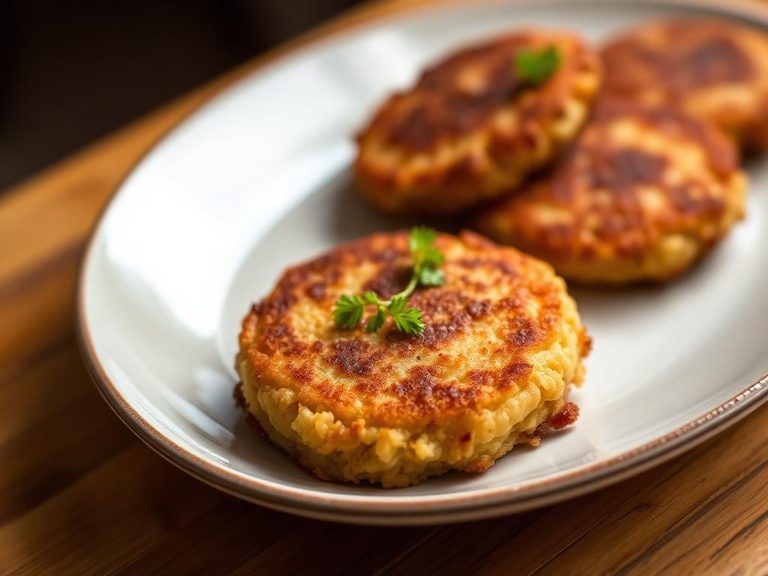
Grits are a comforting, creamy porridge made from ground corn, offering a mild, earthy flavor and a smooth, slightly grainy texture. This version, cooked with water and added fat, provides a low-calorie, energy-dense base with 71 kcal per 100g. It's a solid source of carbohydrates for quick energy, with minimal protein and fat.
Calorie split: 7% protein · 70% carbs · 24% fat
↓ Full nutrition💚 Why it's loved
People love grits for their comforting, blank-canvas nature—they absorb flavors beautifully and provide a warm, satisfying foundation for a meal. They are deeply woven into the culinary identity of the American South, representing tradition and home cooking.
⚠️ Watch-outs & how to enjoy it better
Grits are a high-glycemic food, which can lead to rapid blood-sugar spikes, making portion control important for those managing blood sugar. To counteract this, pair them with protein (like eggs or cheese) and healthy fats (like avocado or nuts) to slow digestion. Choosing stone-ground or whole-grain grits can also increase fiber content.
Key benefits
- Good source of quick-release energy from carbohydrates
- Low in calories, suitable for calorie-conscious meals
- Naturally low in sugar, supporting stable energy levels
- Provides a small amount of dietary fiber
- Versatile base for both savory and sweet dishes
🍽️ Popular dishes
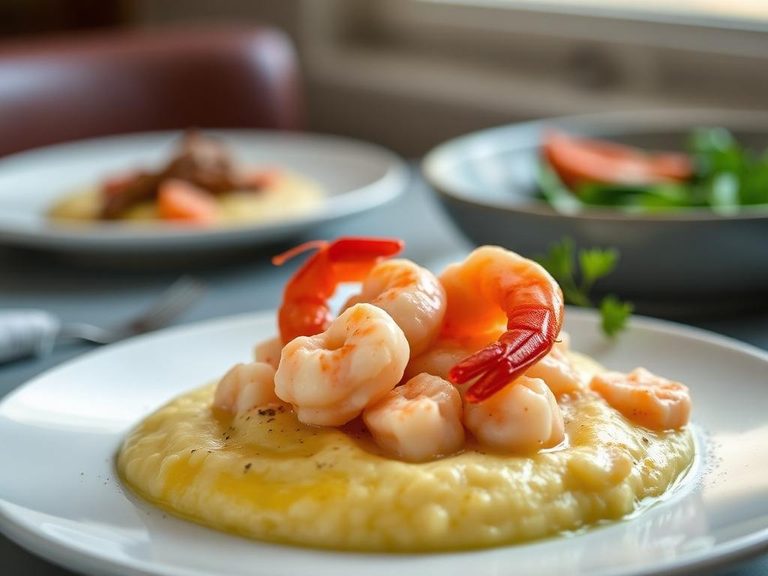
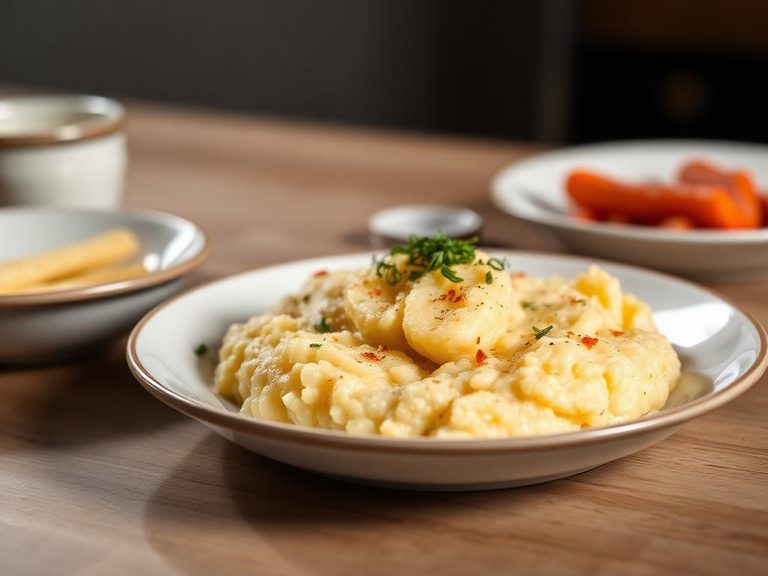
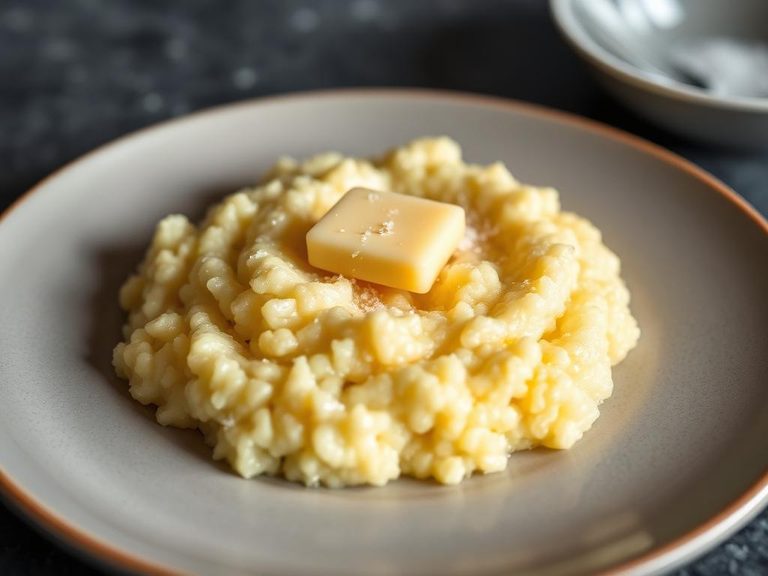
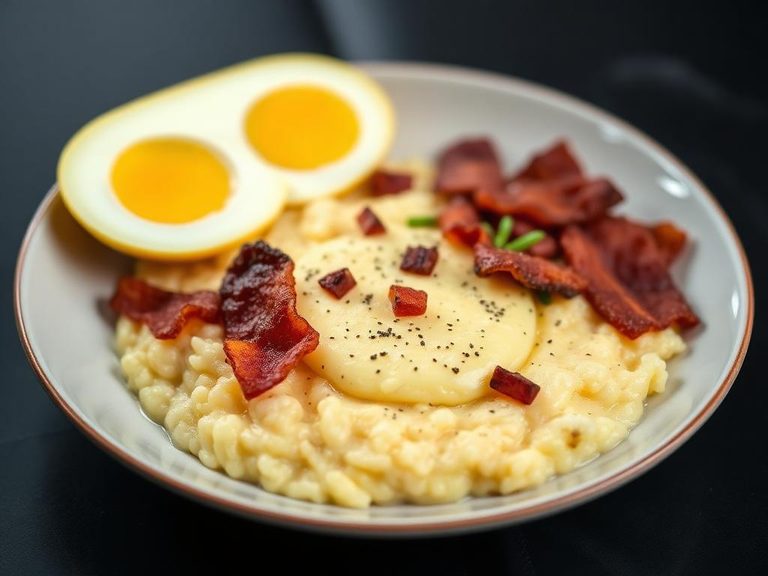
🌍 Where it's eaten
💡 Did you know?
The word 'grits' derives from the Old English 'grytt,' meaning coarse meal, and the dish has been a staple in the American South since the colonial era, often called 'the caviar of the South' for its humble yet essential role.
Full nutrition (USDA data · scales with serving)
| Water | 84.4 g |
| Energy | 71.0 kcal |
| Protein | 1.2 g |
| Total lipid (fat) | 1.8 g |
| Carbohydrate, by difference | 12.2 g |
| Fiber, total dietary | 0.70 g |
| Total Sugars | 0.10 g |
| Calcium, Ca | 4.0 mg |
| Iron, Fe | 0.45 mg |
| Magnesium, Mg | 7.0 mg |
| Phosphorus, P | 17.0 mg |
| Potassium, K | 21.0 mg |
| Sodium, Na | 81.0 mg |
| Zinc, Zn | 0.12 mg |
| Copper, Cu | 0.01 mg |
| Selenium, Se | 2.6 ug |
| Vitamin C, total ascorbic acid | 0.00 mg |
| Thiamin | 0.16 mg |
| Riboflavin | 0.05 mg |
| Niacin | 0.62 mg |
| Vitamin B-6 | 0.06 mg |
| Folate, total | 19.0 ug |
| Folic acid | 14.0 ug |
| Folate, food | 4.0 ug |
| Folate, DFE | 28.0 ug |
| Choline, total | 2.5 mg |
| Vitamin B-12 | 0.00 ug |
| Vitamin B-12, added | 0.00 ug |
| Vitamin A, RAE | 16.0 ug |
| Retinol | 16.0 ug |
| Carotene, beta | 7.0 ug |
| Carotene, alpha | 0.00 ug |
| Cryptoxanthin, beta | 0.00 ug |
| Lycopene | 0.00 ug |
| Lutein + zeaxanthin | 1.0 ug |
| Vitamin E (alpha-tocopherol) | 0.18 mg |
| Vitamin E, added | 0.00 mg |
| Vitamin D (D2 + D3) | 0.00 ug |
| Vitamin K (phylloquinone) | 0.90 ug |
| Alcohol, ethyl | 0.00 g |
| Caffeine | 0.00 mg |
| Theobromine | 0.00 mg |
Fat & fatty acid profile (per 100g)
| Fatty acids, total saturated | 0.73 g |
| SFA 4:0 | 0.03 g |
| SFA 6:0 | 0.02 g |
| SFA 8:0 | 0.01 g |
| SFA 10:0 | 0.02 g |
| SFA 12:0 | 0.03 g |
| SFA 14:0 | 0.09 g |
| SFA 16:0 | 0.37 g |
| SFA 18:0 | 0.14 g |
| Fatty acids, total monounsaturated | 0.46 g |
| MUFA 16:1 | 0.01 g |
| MUFA 18:1 | 0.44 g |
| MUFA 20:1 | 0.00 g |
| MUFA 22:1 | 0.00 g |
| Fatty acids, total polyunsaturated | 0.38 g |
| PUFA 18:2 | 0.35 g |
| PUFA 18:3 | 0.03 g |
| PUFA 18:4 | 0.00 g |
| PUFA 20:4 | 0.00 g |
| PUFA 20:5 n-3 (EPA) | 0.00 g |
| PUFA 22:5 n-3 (DPA) | 0.00 g |
| PUFA 22:6 n-3 (DHA) | 0.00 g |
| Cholesterol | 3.0 mg |
Amino acid profile (per 100g)
Estimated from Cereals, corn grits, white, regular and quick, enriched, cooked with water, without salt — USDA does not publish this profile for Grits.
| Tryptophan | 0.01 g |
| Threonine | 0.05 g |
| Isoleucine | 0.06 g |
| Leucine | 0.21 g |
| Lysine | 0.03 g |
| Methionine | 0.04 g |
| Cystine | 0.03 g |
| Phenylalanine | 0.09 g |
| Tyrosine | 0.07 g |
| Valine | 0.08 g |
| Arginine | 0.07 g |
| Histidine | 0.05 g |
| Alanine | 0.13 g |
| Aspartic acid | 0.10 g |
| Glutamic acid | 0.33 g |
| Glycine | 0.05 g |
| Proline | 0.15 g |
| Serine | 0.08 g |
FAQ
What is the difference between regular and quick grits?
Regular grits are coarser and require longer cooking (20-45 minutes), while quick grits are pre-cooked and dehydrated, cooking in 5-10 minutes. The nutritional profile is similar, but texture can vary.
Can grits be part of a gluten-free diet?
Yes, pure corn grits are naturally gluten-free. However, always check labels for potential cross-contamination if you have celiac disease or severe gluten sensitivity.
How does adding fat affect grits nutritionally?
Adding fat (like butter or oil) increases the calorie and fat content, which can enhance satiety and flavor. It also helps slow the absorption of carbohydrates, potentially moderating blood sugar response.
Nutrient density (calculated · NRF9.3)
Nutrient Rich Foods index: beneficial nutrients (protein, fiber, vitamins, minerals) minus saturated fat, added sugar & sodium, per 100 kcal.
NRF9.3 index — Fulgoni, Keast & Drewnowski, 2009. Computed from USDA nutrients.
Weight-loss friendliness (composite index)
Energy density 0.71 kcal/g · 7% calories from protein · 0.7 g fiber · 0.1 g sugar per 100 g.
Composite of energy density (Rolls et al., 1999), protein & fiber satiety, minus sugar. A calculated heuristic — ranks satiety-per-calorie, not a clinical measure.
Dietary load (calculated from USDA values)
Potential renal acid load. Positive = acid-forming, negative = alkaline-forming.
Sodium-to-potassium ratio: 3.86 (lower is better — aim for ≤ 1)
Sodium:potassium per WHO potassium guidance. Computed from USDA nutrients.