

Frozen yogurt, soft serve, vanilla
Common food
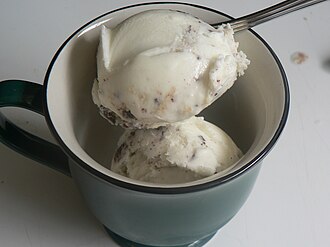
Photo: Wikipedia
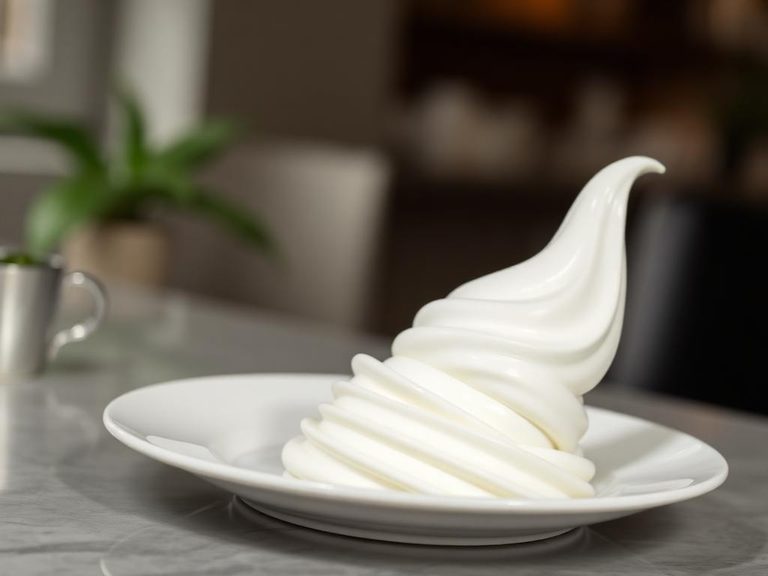
Soft-serve frozen yogurt is a smooth, aerated dairy dessert that delivers a tangy, sweet flavor with a lighter, creamier texture than traditional ice cream. At 159 kcal per 100g, it offers a moderate calorie profile with 4g of protein, but its 24g of sugar per serving is a key nutritional consideration.
Calorie split: 10% protein · 59% carbs · 31% fat
↓ Full nutrition💚 Why it's loved
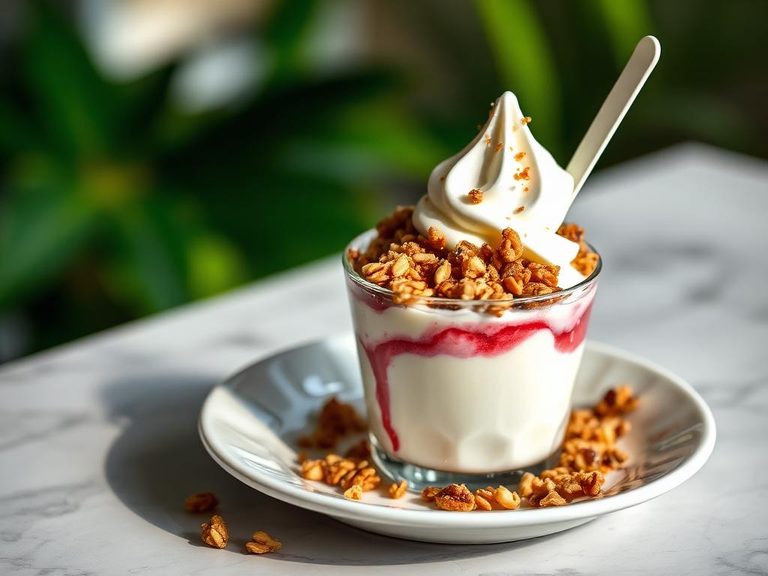
People love its signature tangy-sweet balance and the uniquely smooth, melt-in-your-mouth texture that soft-serve machines create. It's a nostalgic, versatile treat often enjoyed in cones or cups with a wide array of toppings.
⚠️ Watch-outs & how to enjoy it better
The high sugar content (24g per 100g) can cause blood-sugar spikes and may not be suitable for those monitoring their intake. To counteract this, pair it with a source of protein or healthy fat (like nuts or seeds) to slow sugar absorption, and practice strict portion control by choosing a small serving.
Key benefits
- Provides a source of calcium and protein from dairy.
- Lower in fat than many traditional ice creams.
- Contains live and active cultures in some varieties.
- A lighter, tangy alternative to rich desserts.
- Quick and convenient frozen treat.
🍽️ Popular dishes
🌍 Where it's eaten
💡 Did you know?
Soft-serve frozen yogurt's signature texture comes from being aerated with air (called 'overrun') during freezing, which can make up to 50% of its volume.
Full nutrition (USDA data · scales with serving)
| Water | 65.3 g |
| Energy | 159 kcal |
| Protein | 4.0 g |
| Total lipid (fat) | 5.6 g |
| Carbohydrate, by difference | 24.2 g |
| Fiber, total dietary | 0.00 g |
| Total Sugars | 24.0 g |
| Calcium, Ca | 143 mg |
| Iron, Fe | 0.30 mg |
| Magnesium, Mg | 14.0 mg |
| Phosphorus, P | 129 mg |
| Potassium, K | 211 mg |
| Sodium, Na | 87.0 mg |
| Zinc, Zn | 0.42 mg |
| Copper, Cu | 0.04 mg |
| Selenium, Se | 3.3 ug |
| Vitamin C, total ascorbic acid | 0.80 mg |
| Thiamin | 0.04 mg |
| Riboflavin | 0.22 mg |
| Niacin | 0.29 mg |
| Vitamin B-6 | 0.08 mg |
| Folate, total | 6.0 ug |
| Folic acid | 0.00 ug |
| Folate, food | 6.0 ug |
| Folate, DFE | 6.0 ug |
| Choline, total | 20.2 mg |
| Vitamin B-12 | 0.29 ug |
| Vitamin B-12, added | 0.00 ug |
| Vitamin A, RAE | 59.0 ug |
| Retinol | 58.0 ug |
| Carotene, beta | 11.0 ug |
| Carotene, alpha | 0.00 ug |
| Cryptoxanthin, beta | 0.00 ug |
| Lycopene | 0.00 ug |
| Lutein + zeaxanthin | 0.00 ug |
| Vitamin E (alpha-tocopherol) | 0.11 mg |
| Vitamin E, added | 0.00 mg |
| Vitamin D (D2 + D3) | 0.10 ug |
| Vitamin K (phylloquinone) | 0.30 ug |
| Alcohol, ethyl | 0.00 g |
| Caffeine | 0.00 mg |
| Theobromine | 0.00 mg |
Fat & fatty acid profile (per 100g)
| Fatty acids, total saturated | 3.4 g |
| SFA 4:0 | 0.18 g |
| SFA 6:0 | 0.10 g |
| SFA 8:0 | 0.06 g |
| SFA 10:0 | 0.14 g |
| SFA 12:0 | 0.16 g |
| SFA 14:0 | 0.57 g |
| SFA 16:0 | 1.5 g |
| SFA 18:0 | 0.68 g |
| Fatty acids, total monounsaturated | 1.6 g |
| MUFA 16:1 | 0.13 g |
| MUFA 18:1 | 1.5 g |
| MUFA 20:1 | 0.00 g |
| MUFA 22:1 | 0.00 g |
| Fatty acids, total polyunsaturated | 0.21 g |
| PUFA 18:2 | 0.13 g |
| PUFA 18:3 | 0.08 g |
| PUFA 18:4 | 0.00 g |
| PUFA 20:4 | 0.00 g |
| PUFA 20:5 n-3 (EPA) | 0.00 g |
| PUFA 22:5 n-3 (DPA) | 0.00 g |
| PUFA 22:6 n-3 (DHA) | 0.00 g |
| Cholesterol | 2.0 mg |
Amino acid profile (per 100g)
Estimated from Frozen yogurts, vanilla, soft-serve — USDA does not publish this profile for Frozen yogurt.
| Tryptophan | 0.05 g |
| Threonine | 0.17 g |
| Isoleucine | 0.23 g |
| Leucine | 0.37 g |
| Lysine | 0.30 g |
| Methionine | 0.09 g |
| Cystine | 0.04 g |
| Phenylalanine | 0.18 g |
| Tyrosine | 0.18 g |
| Valine | 0.25 g |
| Arginine | 0.14 g |
| Histidine | 0.10 g |
| Alanine | 0.13 g |
| Aspartic acid | 0.28 g |
| Glutamic acid | 0.79 g |
| Glycine | 0.08 g |
| Proline | 0.36 g |
| Serine | 0.20 g |
FAQ
Is frozen yogurt healthier than ice cream?
It often has less fat and calories than traditional ice cream, but can have similar or even higher sugar content. The healthiest choice depends on the specific product and your dietary goals.
Does frozen yogurt contain probiotics?
Some brands contain live and active cultures, but not all. Check the label for 'live and active cultures' to ensure you're getting the potential probiotic benefits.
Can people with lactose intolerance eat frozen yogurt?
It may be easier to digest than ice cream due to the fermentation process, but it still contains lactose. Those with severe intolerance should choose lactose-free versions or avoid it.
What's the difference between soft-serve and hard-scoop frozen yogurt?
Soft-serve is dispensed from a machine at a higher temperature, resulting in a smoother, creamier texture with more air. Hard-scoop is frozen solid and has a denser, firmer consistency.
Nutrient density (calculated · NRF9.3)
Nutrient Rich Foods index: beneficial nutrients (protein, fiber, vitamins, minerals) minus saturated fat, added sugar & sodium, per 100 kcal.
NRF9.3 index — Fulgoni, Keast & Drewnowski, 2009. Computed from USDA nutrients.
Weight-loss friendliness (composite index)
Energy density 1.59 kcal/g · 10% calories from protein · 0.0 g fiber · 24.0 g sugar per 100 g.
Composite of energy density (Rolls et al., 1999), protein & fiber satiety, minus sugar. A calculated heuristic — ranks satiety-per-calorie, not a clinical measure.
Dietary load (calculated from USDA values)
Potential renal acid load. Positive = acid-forming, negative = alkaline-forming.
Sodium-to-potassium ratio: 0.41 (lower is better — aim for ≤ 1)
Sodium:potassium per WHO potassium guidance. Computed from USDA nutrients.