

Frozen yogurt, NFS
Common food
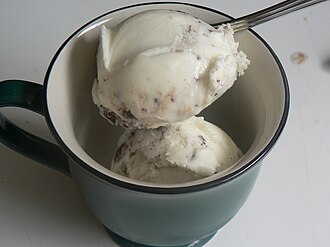
Photo: Wikipedia
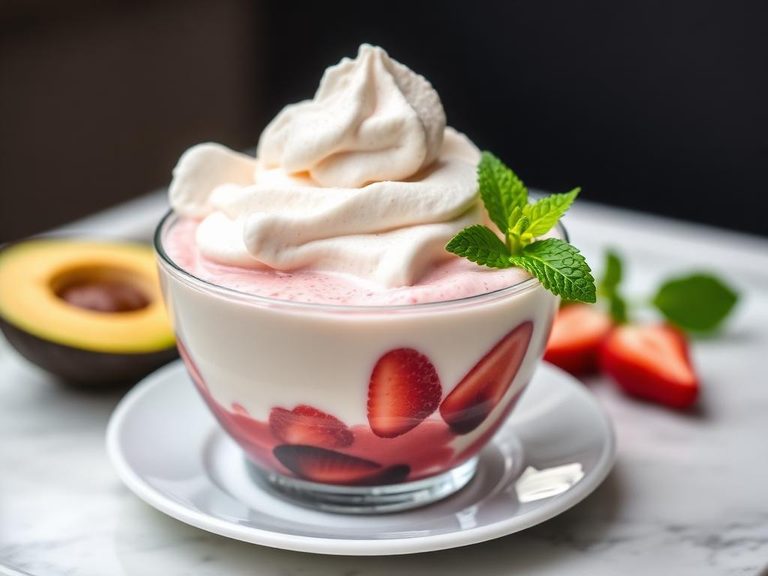
Frozen yogurt, NFS, is a tangy, creamy dessert made from fermented dairy, offering a lighter, probiotic-rich alternative to traditional ice cream. Its texture is smooth and slightly icy, with a signature tartness that balances its sweetness. Nutritionally, it's a moderate-calorie treat, providing a modest protein boost and a significant amount of sugars.
Calorie split: 9% protein · 66% carbs · 25% fat
↓ Full nutrition💚 Why it's loved
People love its refreshing, tangy-sweet balance and the perception of it being a 'healthier' frozen indulgence. Its versatility as a base for countless toppings, from fresh fruit to crunchy granola, makes it a customizable treat for all ages.
⚠️ Watch-outs & how to enjoy it better
The high sugar content can cause rapid blood-sugar spikes, making it a concern for diabetics or those monitoring glycemic response. To counteract this, pair it with a source of protein or healthy fat (like nuts or seeds) to slow sugar absorption and practice strict portion control.
Key benefits
- Contains live and active cultures (probiotics) from fermentation
- Lower in fat than most ice creams
- Provides a source of calcium and phosphorus for bone health
- Offers a lighter, tangy flavor profile for dessert
🍽️ Popular dishes

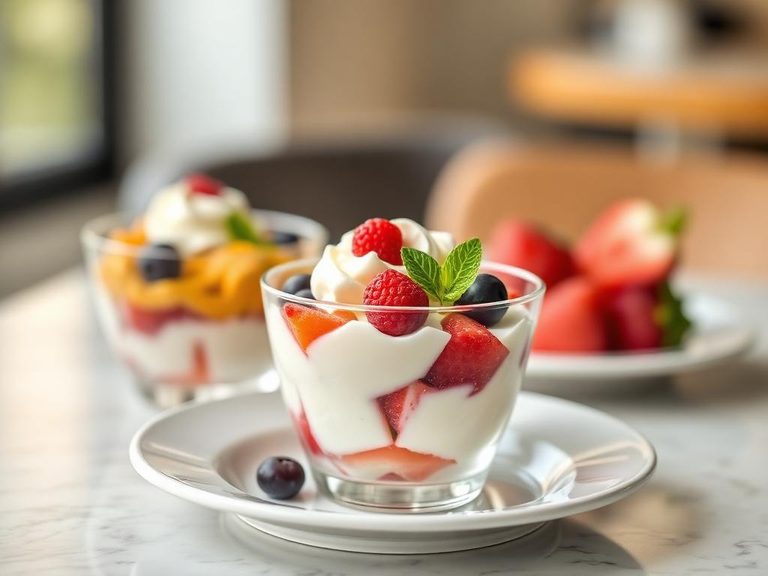
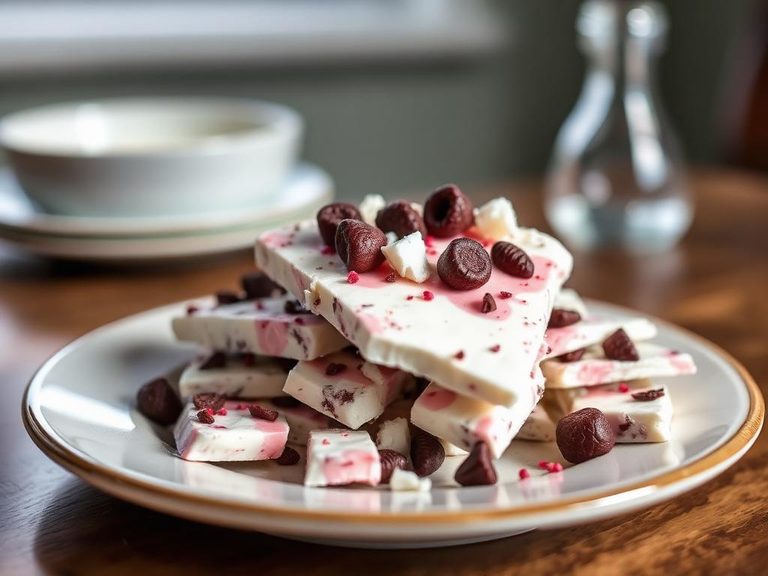
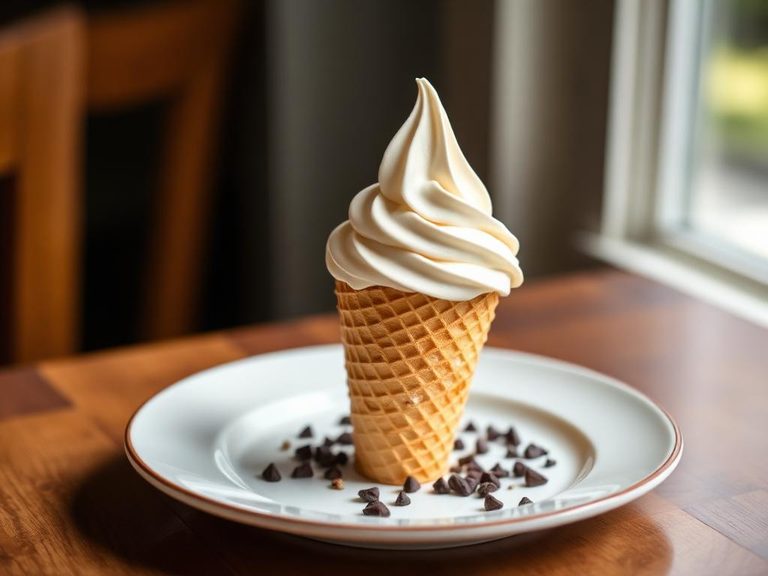
🌍 Where it's eaten
💡 Did you know?
The modern American frozen yogurt boom of the 1980s was heavily fueled by the chain TCBY, which stood for 'This Can't Be Yogurt.'
Full nutrition (USDA data · scales with serving)
| Water | 71.2 g |
| Energy | 127 kcal |
| Protein | 3.0 g |
| Total lipid (fat) | 3.6 g |
| Carbohydrate, by difference | 21.6 g |
| Fiber, total dietary | 0.00 g |
| Total Sugars | 19.9 g |
| Calcium, Ca | 100 mg |
| Iron, Fe | 0.46 mg |
| Magnesium, Mg | 10.0 mg |
| Phosphorus, P | 89.0 mg |
| Potassium, K | 156 mg |
| Sodium, Na | 63.0 mg |
| Zinc, Zn | 0.28 mg |
| Copper, Cu | 0.01 mg |
| Selenium, Se | 1.9 ug |
| Vitamin C, total ascorbic acid | 0.70 mg |
| Thiamin | 0.04 mg |
| Riboflavin | 0.18 mg |
| Niacin | 0.07 mg |
| Vitamin B-6 | 0.04 mg |
| Folate, total | 4.0 ug |
| Folic acid | 0.00 ug |
| Folate, food | 4.0 ug |
| Folate, DFE | 4.0 ug |
| Choline, total | 23.1 mg |
| Vitamin B-12 | 0.07 ug |
| Vitamin B-12, added | 0.00 ug |
| Vitamin A, RAE | 49.0 ug |
| Retinol | 48.0 ug |
| Carotene, beta | 9.0 ug |
| Carotene, alpha | 0.00 ug |
| Cryptoxanthin, beta | 0.00 ug |
| Lycopene | 0.00 ug |
| Lutein + zeaxanthin | 0.00 ug |
| Vitamin E (alpha-tocopherol) | 0.09 mg |
| Vitamin E, added | 0.00 mg |
| Vitamin D (D2 + D3) | 0.10 ug |
| Vitamin K (phylloquinone) | 0.30 ug |
| Alcohol, ethyl | 0.00 g |
| Caffeine | 0.00 mg |
| Theobromine | 0.00 mg |
Fat & fatty acid profile (per 100g)
| Fatty acids, total saturated | 2.3 g |
| SFA 4:0 | 0.11 g |
| SFA 6:0 | 0.08 g |
| SFA 8:0 | 0.04 g |
| SFA 10:0 | 0.10 g |
| SFA 12:0 | 0.12 g |
| SFA 14:0 | 0.38 g |
| SFA 16:0 | 0.99 g |
| SFA 18:0 | 0.35 g |
| Fatty acids, total monounsaturated | 0.99 g |
| MUFA 16:1 | 0.08 g |
| MUFA 18:1 | 0.82 g |
| MUFA 20:1 | 0.00 g |
| MUFA 22:1 | 0.00 g |
| Fatty acids, total polyunsaturated | 0.10 g |
| PUFA 18:2 | 0.07 g |
| PUFA 18:3 | 0.03 g |
| PUFA 18:4 | 0.00 g |
| PUFA 20:4 | 0.00 g |
| PUFA 20:5 n-3 (EPA) | 0.00 g |
| PUFA 22:5 n-3 (DPA) | 0.00 g |
| PUFA 22:6 n-3 (DHA) | 0.00 g |
| Cholesterol | 13.0 mg |
Amino acid profile (per 100g)
Estimated from Frozen yogurts, vanilla, soft-serve — USDA does not publish this profile for Frozen yogurt.
| Tryptophan | 0.05 g |
| Threonine | 0.17 g |
| Isoleucine | 0.23 g |
| Leucine | 0.37 g |
| Lysine | 0.30 g |
| Methionine | 0.09 g |
| Cystine | 0.04 g |
| Phenylalanine | 0.18 g |
| Tyrosine | 0.18 g |
| Valine | 0.25 g |
| Arginine | 0.14 g |
| Histidine | 0.10 g |
| Alanine | 0.13 g |
| Aspartic acid | 0.28 g |
| Glutamic acid | 0.79 g |
| Glycine | 0.08 g |
| Proline | 0.36 g |
| Serine | 0.20 g |
FAQ
Is frozen yogurt the same as ice cream?
No. The primary difference is that frozen yogurt is made with yogurt cultures, giving it a tangy flavor and often containing probiotics, while ice cream is made with cream and milk and has a higher fat content.
Is frozen yogurt dairy-free?
Traditional frozen yogurt is made from dairy milk. However, many brands now offer dairy-free versions made from almond, coconut, or soy milk, which will be clearly labeled.
Why is my homemade frozen yogurt icy?
This is often due to low fat or sugar content, which act as anti-freeze agents. Using full-fat dairy, adding a tablespoon of vodka or corn syrup, or ensuring your base is very cold before churning can help achieve a smoother texture.
Nutrient density (calculated · NRF9.3)
Nutrient Rich Foods index: beneficial nutrients (protein, fiber, vitamins, minerals) minus saturated fat, added sugar & sodium, per 100 kcal.
NRF9.3 index — Fulgoni, Keast & Drewnowski, 2009. Computed from USDA nutrients.
Weight-loss friendliness (composite index)
Energy density 1.27 kcal/g · 9% calories from protein · 0.0 g fiber · 19.9 g sugar per 100 g.
Composite of energy density (Rolls et al., 1999), protein & fiber satiety, minus sugar. A calculated heuristic — ranks satiety-per-calorie, not a clinical measure.
Dietary load (calculated from USDA values)
Potential renal acid load. Positive = acid-forming, negative = alkaline-forming.
Sodium-to-potassium ratio: 0.40 (lower is better — aim for ≤ 1)
Sodium:potassium per WHO potassium guidance. Computed from USDA nutrients.