

Fish, white, mixed species, fried
Common food
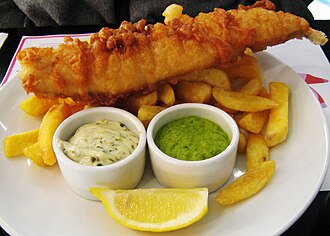
Photo: Wikipedia
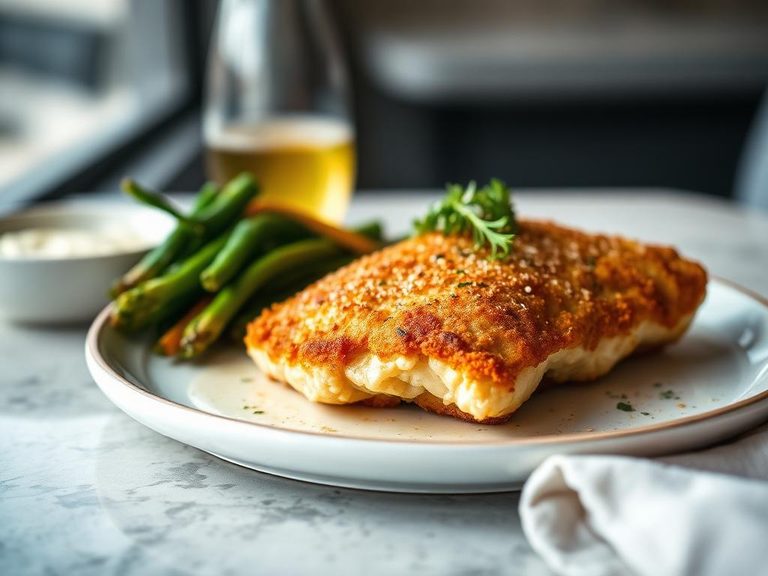
Fried white fish is a golden, crispy delight, where a tender, flaky interior meets a satisfyingly crunchy coating. The mild, clean flavor of the fish itself acts as a perfect canvas for the savory, often seasoned batter or breading. Nutritionally, it's a solid source of protein, but the frying process significantly boosts its calorie and fat content compared to its raw form.
Calorie split: 27% protein · 21% carbs · 52% fat
↓ Full nutrition💚 Why it's loved
People adore it for the universal appeal of its contrasting textures—the shatteringly crisp exterior giving way to moist, tender flesh. Its mild flavor makes it a crowd-pleaser, easily adapted to various seasonings and dipping sauces, from lemon-tartar to spicy aioli.
⚠️ Watch-outs & how to enjoy it better
The frying process adds significant calories and unhealthy fats, which can be a concern for heart health or weight management. The batter or breading can also be high in sodium and refined carbs, potentially causing blood-sugar spikes. To counteract this, pair a moderate portion with a large, vinegar-dressed salad or steamed vegetables to add fiber and balance the meal. Opt for air-frying or baking at home to drastically reduce added fat.
Key benefits
- High-quality protein source for muscle maintenance.
- Provides essential nutrients like selenium and vitamin B12.
- Quick-cooking and versatile for weeknight meals.
- The crispy texture makes it highly palatable and satisfying.
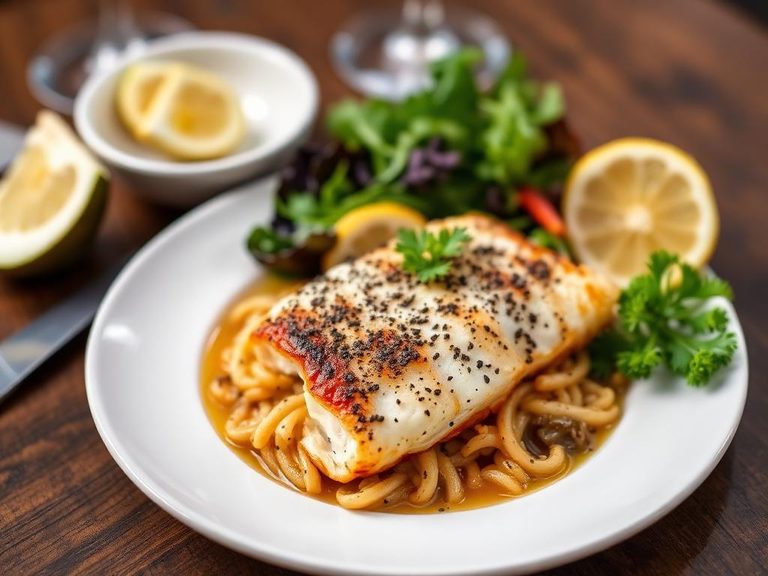
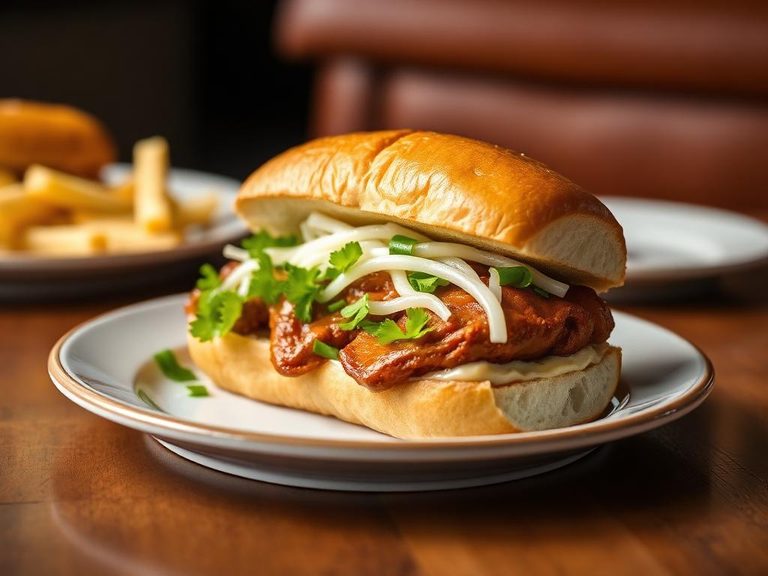
🍽️ Popular dishes
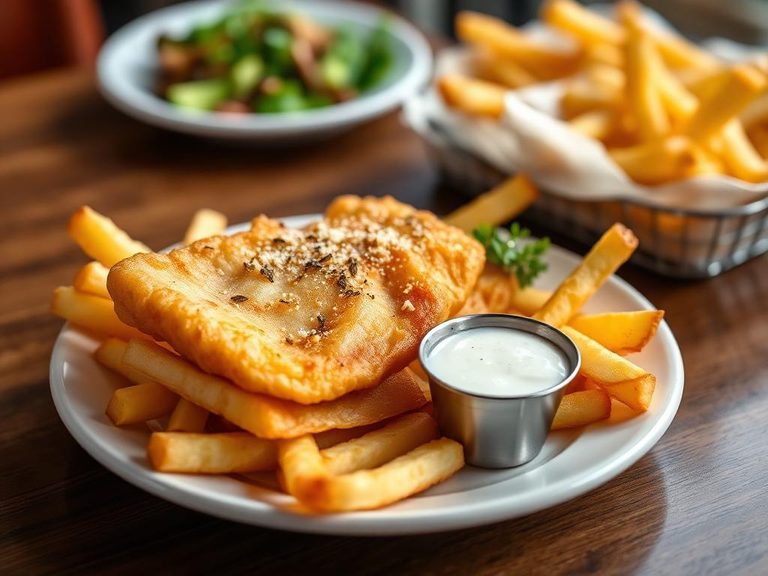
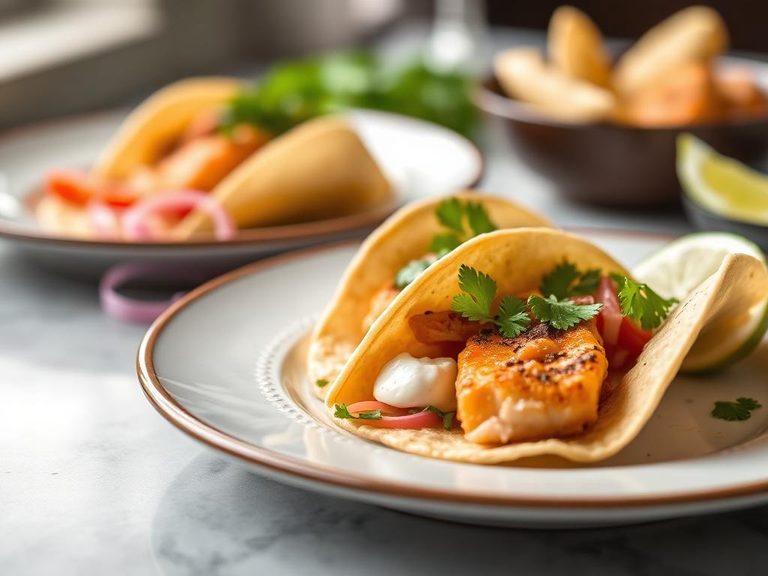
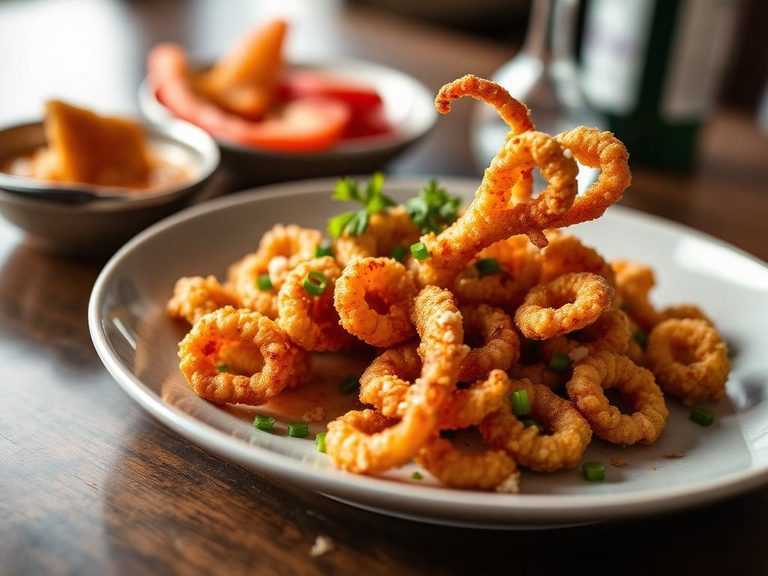
🌍 Where it's eaten
💡 Did you know?
The term 'white fish' is a culinary catch-all for mild, lean, flaky species like cod, haddock, and pollock; their low oil content is what makes them ideal for frying, as they absorb less grease than oilier fish like salmon or mackerel.
Full nutrition (USDA data · scales with serving)
| Water | 58.8 g |
| Energy | 227 kcal |
| Protein | 15.3 g |
| Total lipid (fat) | 13.0 g |
| Carbohydrate, by difference | 11.7 g |
| Fiber, total dietary | 0.50 g |
| Total Sugars | 0.20 g |
| Calcium, Ca | 21.0 mg |
| Iron, Fe | 1.2 mg |
| Magnesium, Mg | 23.0 mg |
| Phosphorus, P | 195 mg |
| Potassium, K | 228 mg |
| Sodium, Na | 405 mg |
| Zinc, Zn | 0.39 mg |
| Copper, Cu | 0.06 mg |
| Selenium, Se | 27.6 ug |
| Vitamin C, total ascorbic acid | 0.00 mg |
| Thiamin | 0.17 mg |
| Riboflavin | 0.11 mg |
| Niacin | 2.9 mg |
| Vitamin B-6 | 0.11 mg |
| Folate, total | 35.0 ug |
| Folic acid | 20.0 ug |
| Folate, food | 15.0 ug |
| Folate, DFE | 48.0 ug |
| Choline, total | 47.8 mg |
| Vitamin B-12 | 1.2 ug |
| Vitamin B-12, added | 0.00 ug |
| Vitamin A, RAE | 3.0 ug |
| Retinol | 3.0 ug |
| Carotene, beta | 0.00 ug |
| Carotene, alpha | 0.00 ug |
| Cryptoxanthin, beta | 0.00 ug |
| Lycopene | 0.00 ug |
| Lutein + zeaxanthin | 10.0 ug |
| Vitamin E (alpha-tocopherol) | 2.6 mg |
| Vitamin E, added | 0.00 mg |
| Vitamin D (D2 + D3) | 1.4 ug |
| Vitamin K (phylloquinone) | 12.5 ug |
| Alcohol, ethyl | 0.00 g |
| Caffeine | 0.00 mg |
| Theobromine | 0.00 mg |
Fat & fatty acid profile (per 100g)
| Fatty acids, total saturated | 1.9 g |
| SFA 4:0 | 0.00 g |
| SFA 6:0 | 0.00 g |
| SFA 8:0 | 0.00 g |
| SFA 10:0 | 0.00 g |
| SFA 12:0 | 0.00 g |
| SFA 14:0 | 0.03 g |
| SFA 16:0 | 1.4 g |
| SFA 18:0 | 0.41 g |
| Fatty acids, total monounsaturated | 5.3 g |
| MUFA 16:1 | 0.08 g |
| MUFA 18:1 | 5.1 g |
| MUFA 20:1 | 0.09 g |
| MUFA 22:1 | 0.00 g |
| Fatty acids, total polyunsaturated | 4.8 g |
| PUFA 18:2 | 4.2 g |
| PUFA 18:3 | 0.53 g |
| PUFA 18:4 | 0.00 g |
| PUFA 20:4 | 0.01 g |
| PUFA 20:5 n-3 (EPA) | 0.01 g |
| PUFA 22:5 n-3 (DPA) | 0.02 g |
| PUFA 22:6 n-3 (DHA) | 0.07 g |
| Cholesterol | 43.0 mg |
Amino acid profile (per 100g)
Estimated from Fish, fish sticks, frozen, prepared — USDA does not publish this profile for Fish.
| Tryptophan | 0.12 g |
| Threonine | 0.37 g |
| Isoleucine | 0.43 g |
| Leucine | 0.85 g |
| Lysine | 0.80 g |
| Methionine | 0.30 g |
| Phenylalanine | 0.47 g |
| Tyrosine | 0.29 g |
| Valine | 0.50 g |
| Arginine | 0.59 g |
| Histidine | 0.23 g |
| Alanine | 0.55 g |
| Aspartic acid | 0.82 g |
| Glutamic acid | 2.3 g |
| Glycine | 0.47 g |
| Proline | 0.78 g |
| Serine | 0.49 g |
| Hydroxyproline | 0.00 g |
FAQ
Is fried fish healthier than fried chicken?
Generally, no. While fish is leaner, the frying method adds comparable calories and fat. A baked or grilled chicken breast is typically lower in fat than a fried fish fillet of the same size.
How can I make fried fish at home healthier?
Use a light coating of whole-wheat flour or cornmeal, and pan-fry in a minimal amount of a high-smoke-point oil like avocado oil. Alternatively, use an air fryer with a light spritz of oil to achieve crispiness with far less fat.
What's the best way to reheat fried fish to keep it crispy?
Avoid the microwave. Reheat in a single layer on a wire rack over a baking sheet in a 400°F (200°C) oven for 10-15 minutes, or use an air fryer on a medium setting for a few minutes.
Nutrient density (calculated · NRF9.3)
Nutrient Rich Foods index: beneficial nutrients (protein, fiber, vitamins, minerals) minus saturated fat, added sugar & sodium, per 100 kcal.
NRF9.3 index — Fulgoni, Keast & Drewnowski, 2009. Computed from USDA nutrients.
Weight-loss friendliness (composite index)
Energy density 2.27 kcal/g · 27% calories from protein · 0.5 g fiber · 0.2 g sugar per 100 g.
Composite of energy density (Rolls et al., 1999), protein & fiber satiety, minus sugar. A calculated heuristic — ranks satiety-per-calorie, not a clinical measure.
Dietary load (calculated from USDA values)
Potential renal acid load. Positive = acid-forming, negative = alkaline-forming.
Sodium-to-potassium ratio: 1.78 (lower is better — aim for ≤ 1)
Sodium:potassium per WHO potassium guidance. Computed from USDA nutrients.