

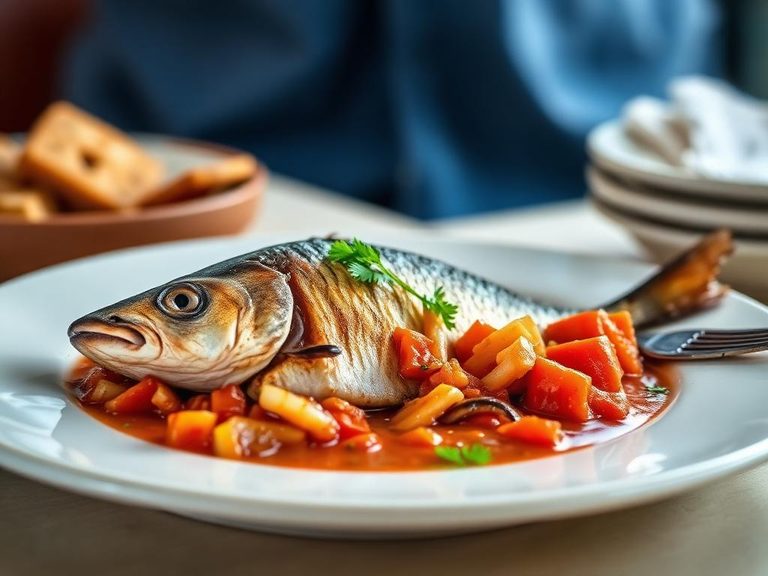
Fish, mackerel, fried
Common food

Photo: Wikipedia
Fried mackerel is a rich, oily fish with a crispy, golden exterior and a deeply savory, flaky interior. Its robust flavor stands up well to bold spices and marinades, while its high fat content creates a satisfying, almost buttery mouthfeel. Nutritionally, it is a powerhouse of protein and healthy fats, offering a substantial calorie load in a small serving.
Calorie split: 25% protein · 17% carbs · 59% fat
↓ Full nutrition💚 Why it's loved
People adore fried mackerel for its bold, umami-rich flavor and the satisfying crunch of its skin. It is a versatile staple in many cultures, often served as a quick, hearty meal or a flavorful side dish.
⚠️ Watch-outs & how to enjoy it better
The high fat content (18g per 100g) and frying method can make it heavy and calorie-dense, which may be a concern for those monitoring fat intake. To counteract this, pair it with light, fiber-rich vegetables or a simple salad to balance the meal, and consider baking or air-frying as a lighter cooking alternative.
Key benefits
- Excellent source of high-quality protein (17g per 100g)
- Rich in omega-3 fatty acids for heart and brain health
- Provides significant energy (284 kcal per 100g)
- Contains essential vitamins and minerals like B12 and selenium
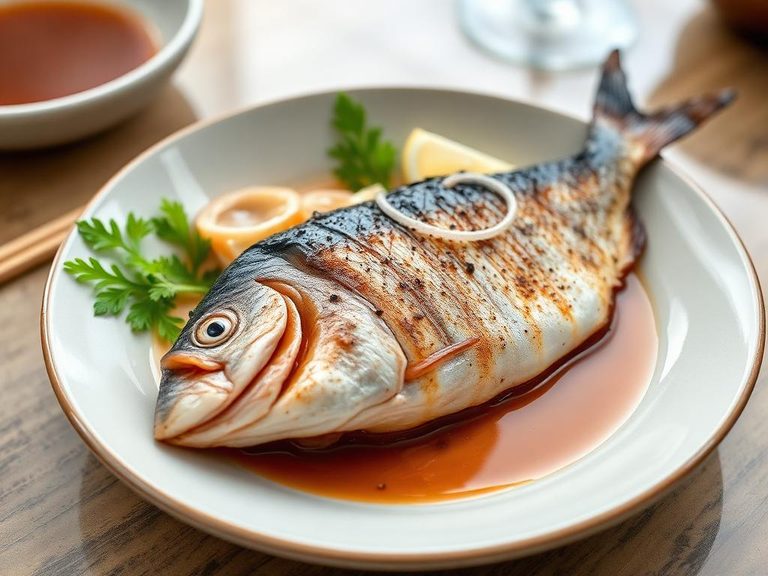
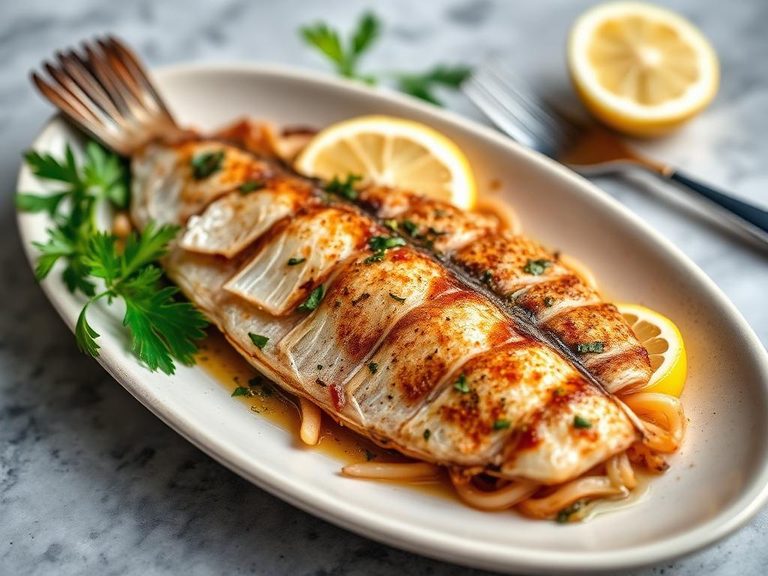
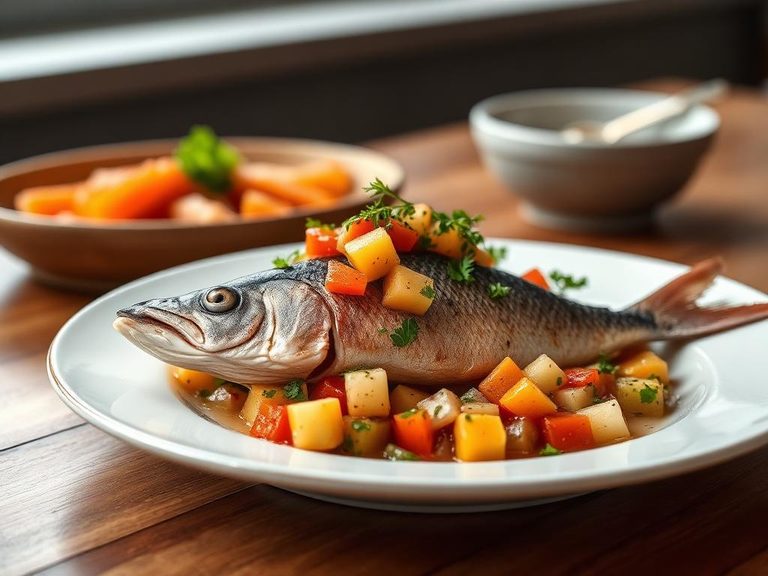
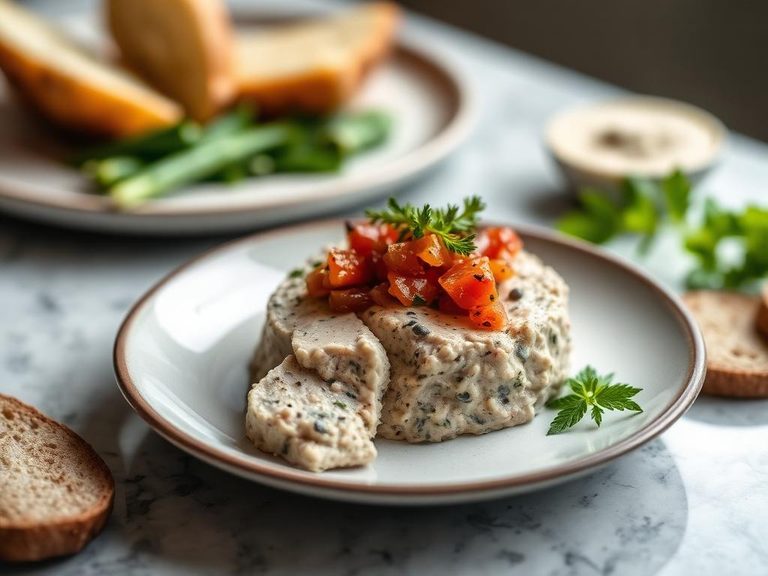
🍽️ Popular dishes
🌍 Where it's eaten
💡 Did you know?
Mackerel is one of the few fish that is often more flavorful when cooked from frozen, as the freezing process helps break down its dense muscle fibers for a more tender texture.
Full nutrition (USDA data · scales with serving)
| Water | 50.5 g |
| Energy | 284 kcal |
| Protein | 17.2 g |
| Total lipid (fat) | 18.2 g |
| Carbohydrate, by difference | 11.7 g |
| Fiber, total dietary | 0.50 g |
| Total Sugars | 0.20 g |
| Calcium, Ca | 32.0 mg |
| Iron, Fe | 1.8 mg |
| Magnesium, Mg | 26.0 mg |
| Phosphorus, P | 118 mg |
| Potassium, K | 333 mg |
| Sodium, Na | 409 mg |
| Zinc, Zn | 0.66 mg |
| Copper, Cu | 0.10 mg |
| Selenium, Se | 30.9 ug |
| Vitamin C, total ascorbic acid | 1.2 mg |
| Thiamin | 0.22 mg |
| Riboflavin | 0.38 mg |
| Niacin | 7.4 mg |
| Vitamin B-6 | 0.24 mg |
| Folate, total | 26.0 ug |
| Folic acid | 20.0 ug |
| Folate, food | 6.0 ug |
| Folate, DFE | 39.0 ug |
| Choline, total | 57.7 mg |
| Vitamin B-12 | 3.0 ug |
| Vitamin B-12, added | 0.00 ug |
| Vitamin A, RAE | 15.0 ug |
| Retinol | 15.0 ug |
| Carotene, beta | 0.00 ug |
| Carotene, alpha | 0.00 ug |
| Cryptoxanthin, beta | 0.00 ug |
| Lycopene | 0.00 ug |
| Lutein + zeaxanthin | 10.0 ug |
| Vitamin E (alpha-tocopherol) | 3.0 mg |
| Vitamin E, added | 0.00 mg |
| Vitamin D (D2 + D3) | 7.0 ug |
| Vitamin K (phylloquinone) | 12.0 ug |
| Alcohol, ethyl | 0.00 g |
| Caffeine | 0.00 mg |
| Theobromine | 0.00 mg |
Fat & fatty acid profile (per 100g)
| Fatty acids, total saturated | 3.4 g |
| SFA 4:0 | 0.00 g |
| SFA 6:0 | 0.00 g |
| SFA 8:0 | 0.00 g |
| SFA 10:0 | 0.00 g |
| SFA 12:0 | 0.01 g |
| SFA 14:0 | 0.27 g |
| SFA 16:0 | 2.2 g |
| SFA 18:0 | 0.70 g |
| Fatty acids, total monounsaturated | 7.0 g |
| MUFA 16:1 | 0.40 g |
| MUFA 18:1 | 5.9 g |
| MUFA 20:1 | 0.33 g |
| MUFA 22:1 | 0.37 g |
| Fatty acids, total polyunsaturated | 6.1 g |
| PUFA 18:2 | 4.2 g |
| PUFA 18:3 | 0.56 g |
| PUFA 18:4 | 0.10 g |
| PUFA 20:4 | 0.06 g |
| PUFA 20:5 n-3 (EPA) | 0.39 g |
| PUFA 22:5 n-3 (DPA) | 0.09 g |
| PUFA 22:6 n-3 (DHA) | 0.71 g |
| Cholesterol | 42.0 mg |
Amino acid profile (per 100g)
Estimated from Fish, fish sticks, frozen, prepared — USDA does not publish this profile for Fish.
| Tryptophan | 0.12 g |
| Threonine | 0.37 g |
| Isoleucine | 0.43 g |
| Leucine | 0.85 g |
| Lysine | 0.80 g |
| Methionine | 0.30 g |
| Phenylalanine | 0.47 g |
| Tyrosine | 0.29 g |
| Valine | 0.50 g |
| Arginine | 0.59 g |
| Histidine | 0.23 g |
| Alanine | 0.55 g |
| Aspartic acid | 0.82 g |
| Glutamic acid | 2.3 g |
| Glycine | 0.47 g |
| Proline | 0.78 g |
| Serine | 0.49 g |
| Hydroxyproline | 0.00 g |
FAQ
Is fried mackerel healthy?
Yes, it is a nutritious source of protein and omega-3 fatty acids, but the frying process adds extra calories and fat. For a healthier option, try baking or grilling.
How do I reduce the oiliness when frying mackerel?
Pat the fish dry with paper towels before cooking, use a non-stick pan with minimal oil, and avoid overcooking to prevent the fish from releasing too much fat.
Can I eat fried mackerel if I have high cholesterol?
Mackerel is high in healthy omega-3 fats, which can support heart health, but the frying method adds saturated fat. Consult a doctor and consider healthier cooking methods like baking.
Nutrient density (calculated · NRF9.3)
Nutrient Rich Foods index: beneficial nutrients (protein, fiber, vitamins, minerals) minus saturated fat, added sugar & sodium, per 100 kcal.
NRF9.3 index — Fulgoni, Keast & Drewnowski, 2009. Computed from USDA nutrients.
Weight-loss friendliness (composite index)
Energy density 2.84 kcal/g · 24% calories from protein · 0.5 g fiber · 0.2 g sugar per 100 g.
Composite of energy density (Rolls et al., 1999), protein & fiber satiety, minus sugar. A calculated heuristic — ranks satiety-per-calorie, not a clinical measure.
Dietary load (calculated from USDA values)
Potential renal acid load. Positive = acid-forming, negative = alkaline-forming.
Sodium-to-potassium ratio: 1.23 (lower is better — aim for ≤ 1)
Sodium:potassium per WHO potassium guidance. Computed from USDA nutrients.