

Egg, whole, fried with butter
Common food
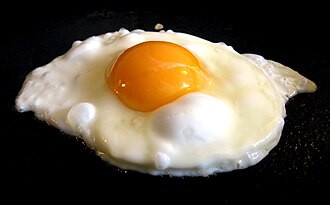
Photo: Wikipedia
A whole egg fried in butter until the edges are lacy and golden, with a rich, runny yolk and a savory, buttery aroma. The texture is a delightful contrast: crisp, slightly chewy whites and a velvety, creamy center. It's a powerhouse of protein and healthy fats, with virtually no carbohydrates.
Calorie split: 26% protein · 2% carbs · 72% fat
↓ Full nutrition💚 Why it's loved
People adore it for its comforting, savory flavor and the luxurious mouthfeel of the buttery, runny yolk. It's a versatile staple, equally at home on a breakfast plate, a salad, or a simple sandwich.
⚠️ Watch-outs & how to enjoy it better
The high saturated fat content from butter may be a concern for some diets. Those monitoring cholesterol should be mindful of frequency. Counteract by using a non-stick pan with minimal butter or a heart-healthy oil, and balance the meal with fiber-rich vegetables or whole grains.
Key benefits
- Excellent source of complete protein for muscle maintenance.
- Rich in choline, essential for brain health and function.
- Provides fat-soluble vitamins like A, D, E, and K.
- Butter adds flavor and aids absorption of these vitamins.
- High satiety from protein and fat helps control hunger.
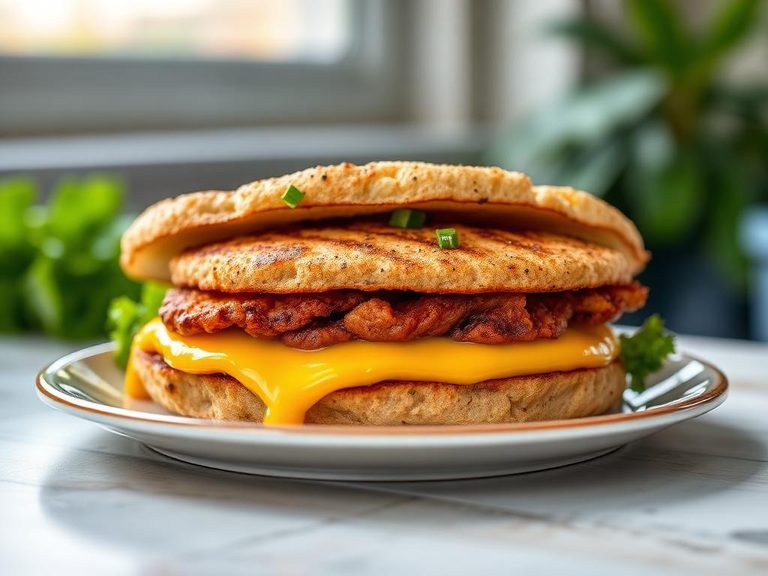
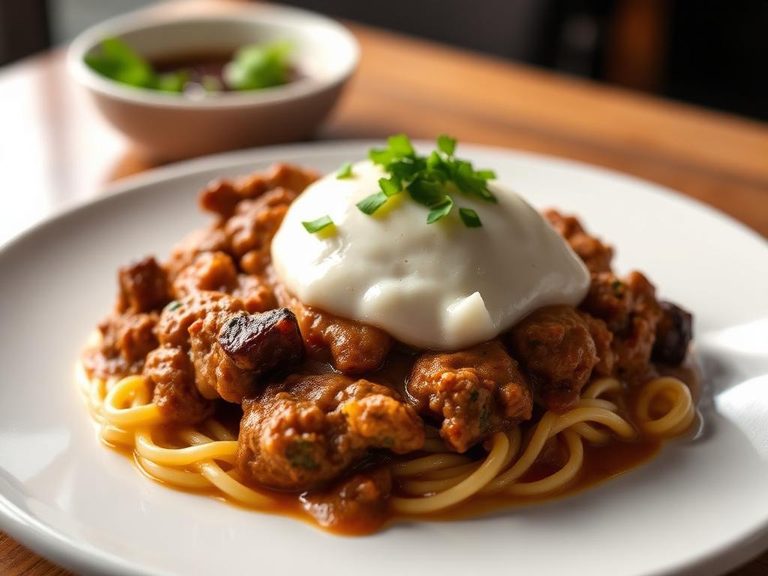
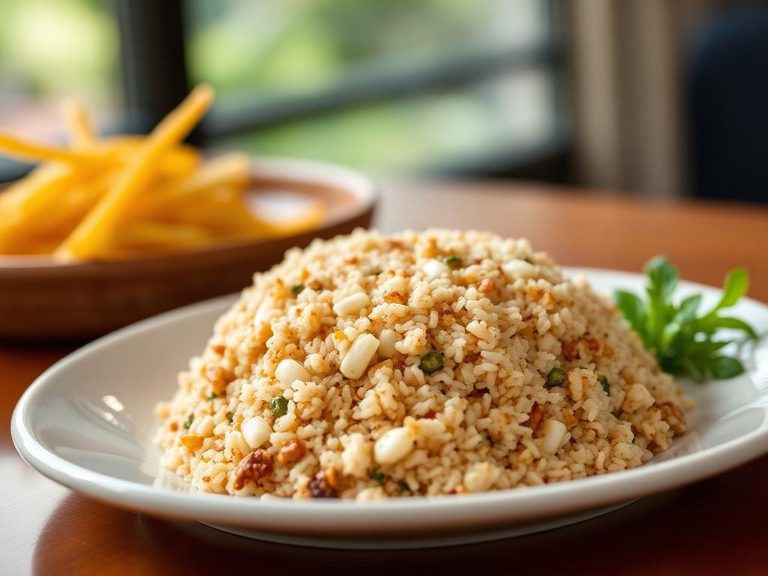
🍽️ Popular dishes


🌍 Where it's eaten
💡 Did you know?
The perfect fried egg is sometimes called a 'sunny-side up' because the yolk resembles a sun, and it's never flipped.
Full nutrition (USDA data · scales with serving)
| Water | 71.7 g |
| Energy | 182 kcal |
| Protein | 11.6 g |
| Total lipid (fat) | 14.6 g |
| Carbohydrate, by difference | 0.90 g |
| Fiber, total dietary | 0.00 g |
| Total Sugars | 0.22 g |
| Calcium, Ca | 46.0 mg |
| Iron, Fe | 1.6 mg |
| Magnesium, Mg | 10.0 mg |
| Phosphorus, P | 173 mg |
| Potassium, K | 125 mg |
| Sodium, Na | 263 mg |
| Zinc, Zn | 1.2 mg |
| Copper, Cu | 0.00 mg |
| Selenium, Se | 29.0 ug |
| Vitamin C, total ascorbic acid | 0.00 mg |
| Thiamin | 0.06 mg |
| Riboflavin | 0.37 mg |
| Niacin | 0.00 mg |
| Vitamin B-6 | 0.06 mg |
| Folate, total | 50.0 ug |
| Folic acid | 0.00 ug |
| Folate, food | 50.0 ug |
| Folate, DFE | 50.0 ug |
| Choline, total | 251 mg |
| Vitamin B-12 | 0.76 ug |
| Vitamin B-12, added | 0.00 ug |
| Vitamin A, RAE | 217 ug |
| Retinol | 215 ug |
| Carotene, beta | 11.0 ug |
| Carotene, alpha | 0.00 ug |
| Cryptoxanthin, beta | 13.0 ug |
| Lycopene | 0.00 ug |
| Lutein + zeaxanthin | 469 ug |
| Vitamin E (alpha-tocopherol) | 0.98 mg |
| Vitamin E, added | 0.00 mg |
| Vitamin D (D2 + D3) | 2.4 ug |
| Vitamin K (phylloquinone) | 0.70 ug |
| Alcohol, ethyl | 0.00 g |
| Caffeine | 0.00 mg |
| Theobromine | 0.00 mg |
Fat & fatty acid profile (per 100g)
| Fatty acids, total saturated | 6.0 g |
| SFA 4:0 | 0.13 g |
| SFA 6:0 | 0.09 g |
| SFA 8:0 | 0.06 g |
| SFA 10:0 | 0.13 g |
| SFA 12:0 | 0.14 g |
| SFA 14:0 | 0.50 g |
| SFA 16:0 | 3.5 g |
| SFA 18:0 | 1.2 g |
| Fatty acids, total monounsaturated | 4.5 g |
| MUFA 16:1 | 0.29 g |
| MUFA 18:1 | 4.1 g |
| MUFA 20:1 | 0.01 g |
| MUFA 22:1 | 0.00 g |
| Fatty acids, total polyunsaturated | 1.9 g |
| PUFA 18:2 | 1.5 g |
| PUFA 18:3 | 0.03 g |
| PUFA 18:4 | 0.00 g |
| PUFA 20:4 | 0.01 g |
| PUFA 20:5 n-3 (EPA) | 0.00 g |
| PUFA 22:5 n-3 (DPA) | 0.00 g |
| PUFA 22:6 n-3 (DHA) | 0.00 g |
| Cholesterol | 398 mg |
Amino acid profile (per 100g)
Estimated from Fish, whitefish, eggs (Alaska Native) — USDA does not publish this profile for Egg.
| Tryptophan | 0.28 g |
| Threonine | 1.0 g |
| Isoleucine | 1.1 g |
| Leucine | 1.6 g |
| Lysine | 1.6 g |
| Methionine | 0.56 g |
| Cystine | 0.23 g |
| Phenylalanine | 0.90 g |
| Tyrosine | 0.76 g |
| Valine | 1.3 g |
| Arginine | 1.1 g |
| Histidine | 0.53 g |
| Alanine | 1.6 g |
| Aspartic acid | 1.6 g |
| Glutamic acid | 2.2 g |
| Glycine | 0.50 g |
| Proline | 1.1 g |
| Serine | 1.2 g |
FAQ
How do you prevent the yolk from breaking?
Crack the egg into a small bowl first, then gently slide it into the preheated, buttered pan. Keep the heat at medium-low and avoid moving it until the whites are set.
Is the nutritional info for one egg or per 100g?
The provided data is per 100 grams. A typical large fried egg weighs about 46 grams, so its calories and macros would be roughly half those values.
Can I use oil instead of butter?
Yes, you can use oils like olive, avocado, or canola. This will change the flavor profile and nutritional balance, reducing saturated fat but altering the classic buttery taste.
Nutrient density (calculated · NRF9.3)
Nutrient Rich Foods index: beneficial nutrients (protein, fiber, vitamins, minerals) minus saturated fat, added sugar & sodium, per 100 kcal.
NRF9.3 index — Fulgoni, Keast & Drewnowski, 2009. Computed from USDA nutrients.
Weight-loss friendliness (composite index)
Energy density 1.82 kcal/g · 26% calories from protein · 0.0 g fiber · 0.2 g sugar per 100 g.
Composite of energy density (Rolls et al., 1999), protein & fiber satiety, minus sugar. A calculated heuristic — ranks satiety-per-calorie, not a clinical measure.
Dietary load (calculated from USDA values)
Potential renal acid load. Positive = acid-forming, negative = alkaline-forming.
Sodium-to-potassium ratio: 2.10 (lower is better — aim for ≤ 1)
Sodium:potassium per WHO potassium guidance. Computed from USDA nutrients.