

Cookie, peanut butter with rice cereal, no bake
Common food
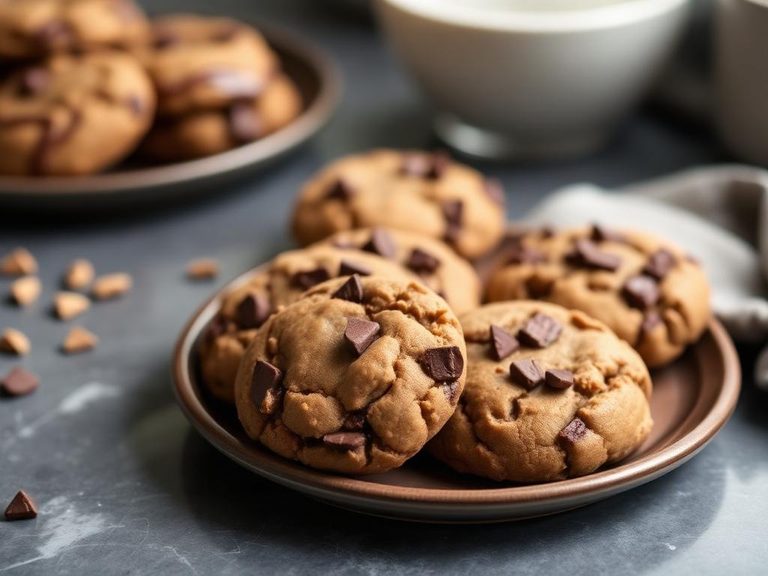
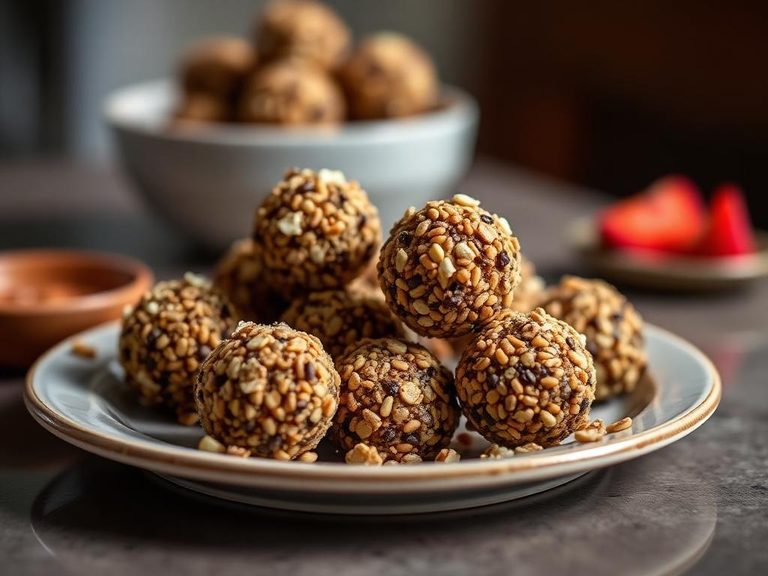
This is a classic no-bake cookie that combines the rich, salty-sweet flavor of peanut butter with the satisfying crunch of puffed rice cereal. The texture is a delightful mix of chewy and crispy, held together by a sweet, sugary binder. Nutritionally, it's a high-energy, carbohydrate-dense treat with a modest amount of protein from the peanut butter.
Calorie split: 3% protein · 77% carbs · 19% fat
↓ Full nutrition💚 Why it's loved
People love this cookie for its comforting, nostalgic taste and the fun, crunchy texture from the rice cereal. It's a beloved, easy-to-make treat often associated with home kitchens and childhood.
⚠️ Watch-outs & how to enjoy it better
This cookie is high in sugar and simple carbs, which can cause a rapid blood-sugar spike and subsequent crash. It is also a common allergen due to peanuts. To counteract this, pair a small portion with a source of protein or healthy fat (like a handful of nuts or a glass of milk) to slow sugar absorption, and practice strict portion control.
Key benefits
- Provides a quick energy boost from simple carbohydrates.
- Contains some plant-based protein from peanut butter.
- Requires no oven, making it a simple, no-bake preparation.
- Offers a satisfying combination of sweet and salty flavors.
🍽️ Popular dishes



🌍 Where it's eaten
💡 Did you know?
The no-bake cookie's popularity surged in the mid-20th century with the widespread availability of commercial peanut butter and pre-packaged cereal, making it a staple of quick, no-oven-needed home baking.
Full nutrition (USDA data · scales with serving)
| Water | 5.9 g |
| Energy | 417 kcal |
| Protein | 3.4 g |
| Total lipid (fat) | 9.0 g |
| Carbohydrate, by difference | 80.5 g |
| Fiber, total dietary | 0.00 g |
| Total Sugars | 19.4 g |
| Calcium, Ca | 3.0 mg |
| Iron, Fe | 2.2 mg |
| Magnesium, Mg | 13.0 mg |
| Phosphorus, P | 42.0 mg |
| Potassium, K | 39.0 mg |
| Sodium, Na | 351 mg |
| Zinc, Zn | 0.50 mg |
| Copper, Cu | 0.10 mg |
| Selenium, Se | 11.0 ug |
| Vitamin C, total ascorbic acid | 0.00 mg |
| Thiamin | 0.70 mg |
| Riboflavin | 0.80 mg |
| Niacin | 9.1 mg |
| Vitamin B-6 | 0.90 mg |
| Folate, total | 241 ug |
| Folic acid | 199 ug |
| Folate, food | 42.0 ug |
| Folate, DFE | 381 ug |
| Choline, total | 0.00 mg |
| Vitamin B-12 | 0.00 ug |
| Vitamin B-12, added | 0.00 ug |
| Vitamin A, RAE | 270 ug |
| Retinol | 270 ug |
| Carotene, beta | 0.00 ug |
| Carotene, alpha | 0.00 ug |
| Cryptoxanthin, beta | 0.00 ug |
| Lycopene | 0.00 ug |
| Lutein + zeaxanthin | 0.00 ug |
| Vitamin E (alpha-tocopherol) | 0.00 mg |
| Vitamin E, added | 0.00 mg |
| Vitamin D (D2 + D3) | 0.00 ug |
| Vitamin K (phylloquinone) | 0.00 ug |
| Alcohol, ethyl | 0.00 g |
| Caffeine | 0.00 mg |
| Theobromine | 0.00 mg |
Fat & fatty acid profile (per 100g)
| Fatty acids, total saturated | 1.4 g |
| SFA 4:0 | 0.00 g |
| SFA 6:0 | 0.00 g |
| SFA 8:0 | 0.00 g |
| SFA 10:0 | 0.00 g |
| SFA 12:0 | 0.00 g |
| SFA 14:0 | 0.01 g |
| SFA 16:0 | 0.88 g |
| SFA 18:0 | 0.32 g |
| Fatty acids, total monounsaturated | 2.5 g |
| MUFA 16:1 | 0.02 g |
| MUFA 18:1 | 1.9 g |
| MUFA 20:1 | 0.02 g |
| MUFA 22:1 | 0.00 g |
| Fatty acids, total polyunsaturated | 5.1 g |
| PUFA 18:2 | 4.3 g |
| PUFA 18:3 | 0.58 g |
| PUFA 18:4 | 0.00 g |
| PUFA 20:4 | 0.00 g |
| PUFA 20:5 n-3 (EPA) | 0.00 g |
| PUFA 22:5 n-3 (DPA) | 0.00 g |
| PUFA 22:6 n-3 (DHA) | 0.00 g |
| Cholesterol | 0.00 mg |
Amino acid profile (per 100g)
Estimated from Pie Crust, Cookie-type, Chocolate, Ready Crust — USDA does not publish this profile for Cookie.
| Tryptophan | 0.08 g |
| Threonine | 0.20 g |
| Isoleucine | 0.23 g |
| Leucine | 0.38 g |
| Lysine | 0.24 g |
| Methionine | 0.07 g |
| Cystine | 0.11 g |
| Phenylalanine | 0.28 g |
| Tyrosine | 0.16 g |
| Valine | 0.32 g |
| Arginine | 0.29 g |
| Histidine | 0.11 g |
| Alanine | 0.24 g |
| Aspartic acid | 0.45 g |
| Glutamic acid | 1.3 g |
| Glycine | 0.24 g |
| Proline | 0.42 g |
| Serine | 0.26 g |
FAQ
Why are they called 'no-bake'?
They are called 'no-bake' because the dough or mixture is not cooked in an oven. Instead, ingredients like sugar, butter, and milk are boiled on the stovetop, then combined with peanut butter and cereal, and left to set and firm up at room temperature or in the refrigerator.
Can I make them with other nut butters?
Yes, almond butter or sunflower seed butter can be substituted for peanut butter, though the flavor and texture will change slightly. Ensure the alternative butter has a similar consistency.
How do I store them?
Store them in an airtight container at room temperature for up to a week, or in the refrigerator for up to two weeks. They can also be frozen for longer storage.
Nutrient density (calculated · NRF9.3)
Nutrient Rich Foods index: beneficial nutrients (protein, fiber, vitamins, minerals) minus saturated fat, added sugar & sodium, per 100 kcal.
NRF9.3 index — Fulgoni, Keast & Drewnowski, 2009. Computed from USDA nutrients.
Weight-loss friendliness (composite index)
Energy density 4.17 kcal/g · 3% calories from protein · 0.0 g fiber · 19.4 g sugar per 100 g.
Composite of energy density (Rolls et al., 1999), protein & fiber satiety, minus sugar. A calculated heuristic — ranks satiety-per-calorie, not a clinical measure.
Dietary load (calculated from USDA values)
Potential renal acid load. Positive = acid-forming, negative = alkaline-forming.
Sodium-to-potassium ratio: 9.00 (lower is better — aim for ≤ 1)
Sodium:potassium per WHO potassium guidance. Computed from USDA nutrients.