

Cookie, peanut butter, with chocolate
Common food
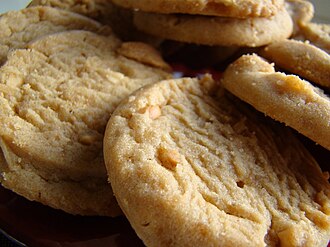
Photo: Wikipedia
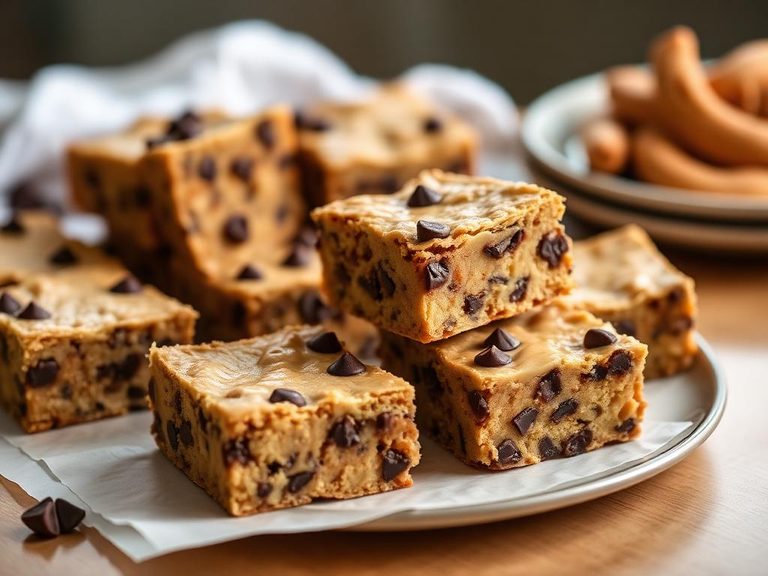
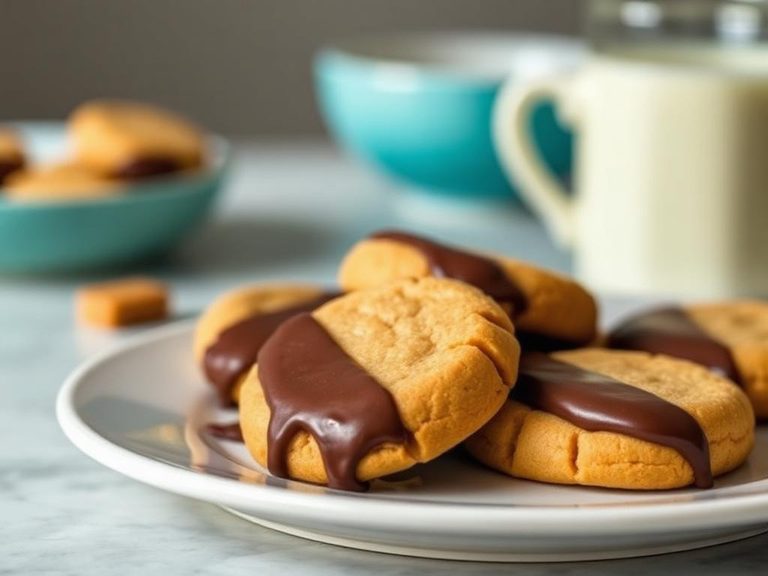
A dense, crumbly cookie where the rich, savory depth of peanut butter meets the sweet, smooth melt of chocolate chips or chunks. Its texture is a satisfying balance of chewy and crisp, with a pronounced nutty flavor. Nutritionally, it's a high-energy treat, delivering significant calories and sugar from a 100g serving.
Calorie split: 6% protein · 48% carbs · 46% fat
↓ Full nutrition💚 Why it's loved
People love it for the iconic, indulgent combination of salty-sweet peanut butter and rich chocolate, a flavor profile that feels both nostalgic and deeply satisfying. It's a versatile treat, perfect with milk, coffee, or as a quick dessert.
⚠️ Watch-outs & how to enjoy it better
It is high in added sugars and calories, which can contribute to blood sugar spikes and is a concern for weight management. As a common allergen, peanuts pose a serious risk for some. To enjoy mindfully, practice strict portion control (e.g., one cookie) and pair it with a source of protein or fiber to blunt the glycemic impact.
Key benefits
- Provides a quick energy boost from carbohydrates and fats.
- Contains plant-based protein from peanuts.
- Offers some dietary fiber.
- Peanuts supply niacin and magnesium.
- A convenient, calorie-dense snack for active individuals.
🍽️ Popular dishes
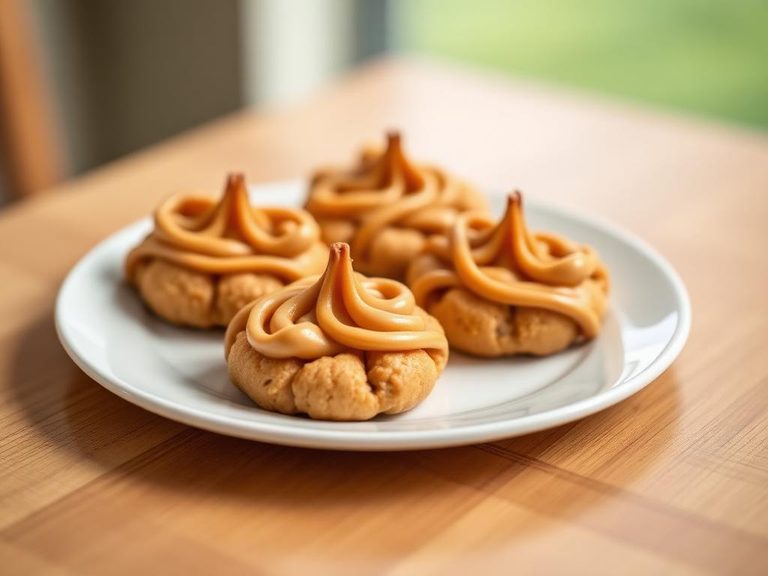
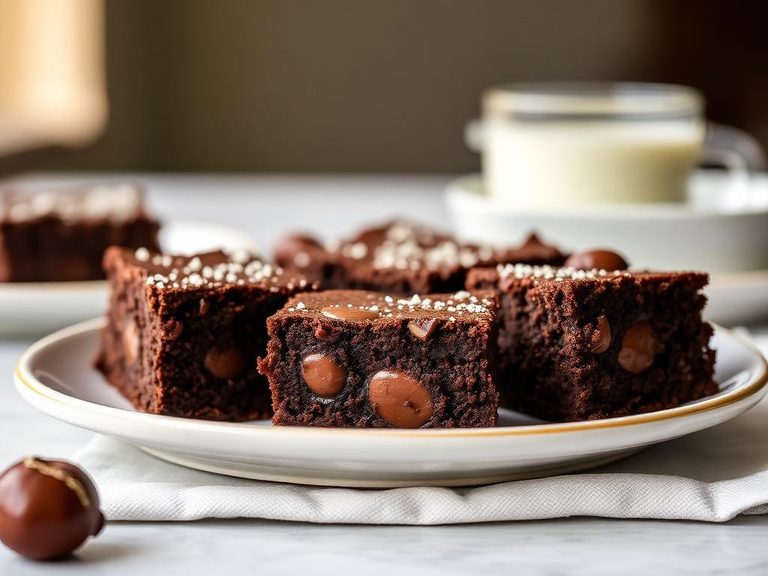
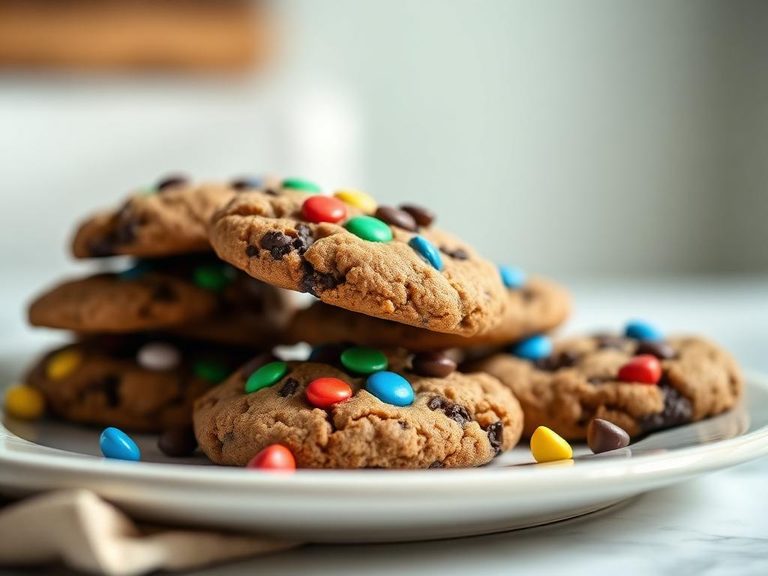
🌍 Where it's eaten
💡 Did you know?
The classic pairing of peanut butter and chocolate in a cookie is often attributed to the creation of the 'Buckeye' candy in Ohio in the 1960s, which inspired countless cookie variations.
Full nutrition (USDA data · scales with serving)
| Water | 5.7 g |
| Energy | 475 kcal |
| Protein | 7.8 g |
| Total lipid (fat) | 25.3 g |
| Carbohydrate, by difference | 59.5 g |
| Fiber, total dietary | 3.0 g |
| Total Sugars | 34.7 g |
| Calcium, Ca | 39.0 mg |
| Iron, Fe | 2.4 mg |
| Magnesium, Mg | 61.0 mg |
| Phosphorus, P | 150 mg |
| Potassium, K | 241 mg |
| Sodium, Na | 356 mg |
| Zinc, Zn | 1.0 mg |
| Copper, Cu | 0.28 mg |
| Selenium, Se | 5.8 ug |
| Vitamin C, total ascorbic acid | 0.00 mg |
| Thiamin | 0.17 mg |
| Riboflavin | 0.18 mg |
| Niacin | 3.0 mg |
| Vitamin B-6 | 0.10 mg |
| Folate, total | 47.0 ug |
| Folic acid | 23.0 ug |
| Folate, food | 24.0 ug |
| Folate, DFE | 63.0 ug |
| Choline, total | 12.8 mg |
| Vitamin B-12 | 0.03 ug |
| Vitamin B-12, added | 0.00 ug |
| Vitamin A, RAE | 7.0 ug |
| Retinol | 7.0 ug |
| Carotene, beta | 1.0 ug |
| Carotene, alpha | 0.00 ug |
| Cryptoxanthin, beta | 0.00 ug |
| Lycopene | 0.00 ug |
| Lutein + zeaxanthin | 15.0 ug |
| Vitamin E (alpha-tocopherol) | 2.8 mg |
| Vitamin E, added | 0.00 mg |
| Vitamin D (D2 + D3) | 0.00 ug |
| Vitamin K (phylloquinone) | 4.7 ug |
| Alcohol, ethyl | 0.00 g |
| Caffeine | 15.0 mg |
| Theobromine | 115 mg |
Fat & fatty acid profile (per 100g)
| Fatty acids, total saturated | 9.4 g |
| SFA 4:0 | 0.00 g |
| SFA 6:0 | 0.00 g |
| SFA 8:0 | 0.00 g |
| SFA 10:0 | 0.00 g |
| SFA 12:0 | 0.01 g |
| SFA 14:0 | 0.07 g |
| SFA 16:0 | 5.2 g |
| SFA 18:0 | 3.5 g |
| Fatty acids, total monounsaturated | 10.6 g |
| MUFA 16:1 | 0.04 g |
| MUFA 18:1 | 10.5 g |
| MUFA 20:1 | 0.10 g |
| MUFA 22:1 | 0.01 g |
| Fatty acids, total polyunsaturated | 3.0 g |
| PUFA 18:2 | 2.9 g |
| PUFA 18:3 | 0.08 g |
| PUFA 18:4 | 0.00 g |
| PUFA 20:4 | 0.01 g |
| PUFA 20:5 n-3 (EPA) | 0.00 g |
| PUFA 22:5 n-3 (DPA) | 0.00 g |
| PUFA 22:6 n-3 (DHA) | 0.00 g |
| Cholesterol | 21.0 mg |
Amino acid profile (per 100g)
Estimated from Pie Crust, Cookie-type, Chocolate, Ready Crust — USDA does not publish this profile for Cookie.
| Tryptophan | 0.08 g |
| Threonine | 0.20 g |
| Isoleucine | 0.23 g |
| Leucine | 0.38 g |
| Lysine | 0.24 g |
| Methionine | 0.07 g |
| Cystine | 0.11 g |
| Phenylalanine | 0.28 g |
| Tyrosine | 0.16 g |
| Valine | 0.32 g |
| Arginine | 0.29 g |
| Histidine | 0.11 g |
| Alanine | 0.24 g |
| Aspartic acid | 0.45 g |
| Glutamic acid | 1.3 g |
| Glycine | 0.24 g |
| Proline | 0.42 g |
| Serine | 0.26 g |
FAQ
Why does my peanut butter chocolate chip cookie spread too much?
This often happens if the butter was too soft or melted, or if the dough wasn't chilled before baking. Use softened (not melted) butter and chill the dough for at least 30 minutes to solidify the fat.
Can I use crunchy peanut butter?
Absolutely. Crunchy peanut butter will add a pleasant, nutty texture to the final cookie. The recipe ratios remain the same.
How do I store these cookies to keep them soft?
Store them in an airtight container at room temperature. Adding a slice of bread to the container can help maintain moisture, as the cookies will absorb moisture from the bread.
Nutrient density (calculated · NRF9.3)
Nutrient Rich Foods index: beneficial nutrients (protein, fiber, vitamins, minerals) minus saturated fat, added sugar & sodium, per 100 kcal.
NRF9.3 index — Fulgoni, Keast & Drewnowski, 2009. Computed from USDA nutrients.
Weight-loss friendliness (composite index)
Energy density 4.75 kcal/g · 7% calories from protein · 3.0 g fiber · 34.7 g sugar per 100 g.
Composite of energy density (Rolls et al., 1999), protein & fiber satiety, minus sugar. A calculated heuristic — ranks satiety-per-calorie, not a clinical measure.
Dietary load (calculated from USDA values)
Potential renal acid load. Positive = acid-forming, negative = alkaline-forming.
Sodium-to-potassium ratio: 1.48 (lower is better — aim for ≤ 1)
Sodium:potassium per WHO potassium guidance. Computed from USDA nutrients.