

Cookie, chocolate and vanilla sandwich
Common food

Photo: Wikipedia
A classic sandwich cookie featuring two buttery, crisp shortbread-style biscuits—one cocoa-infused, one vanilla-scented—sandwiching a smooth, sweet vanilla cream filling. The texture is a satisfying crunch giving way to a soft, creamy center, delivering a rich, sugary, and nostalgic flavor profile. Nutritionally, it is an energy-dense treat, with nearly 464 kcal per 100g coming primarily from carbohydrates (71g) and fats (19.14g), with minimal protein.
Calorie split: 4% protein · 60% carbs · 36% fat
↓ Full nutrition💚 Why it's loved
People adore it for the perfect textural contrast between the crisp cookie and smooth cream, and the harmonious blend of mild chocolate and sweet vanilla. It's a versatile staple for dunking in milk, crumbling over desserts, or enjoying as a simple, nostalgic treat.
⚠️ Watch-outs & how to enjoy it better
Its high sugar content (40.67g per 100g) can cause rapid blood-sugar spikes, making it a poor choice for those managing diabetes or insulin resistance. It is also a common allergen (contains wheat, milk, and may contain soy), and the high calorie density can contribute to weight gain if portions aren't controlled. To mitigate, pair a single cookie with a source of protein (like a handful of nuts) or healthy fat (like a piece of fruit) to slow sugar absorption, and practice strict portion control.
Key benefits
- Provides a quick source of energy from carbohydrates
- Offers a small amount of dietary fiber (2.9g per 100g)
- Contains trace minerals from the cocoa component
- Serves as a convenient, portable snack or dessert
- Can be a mood-boosting comfort food in moderation
🍽️ Popular dishes
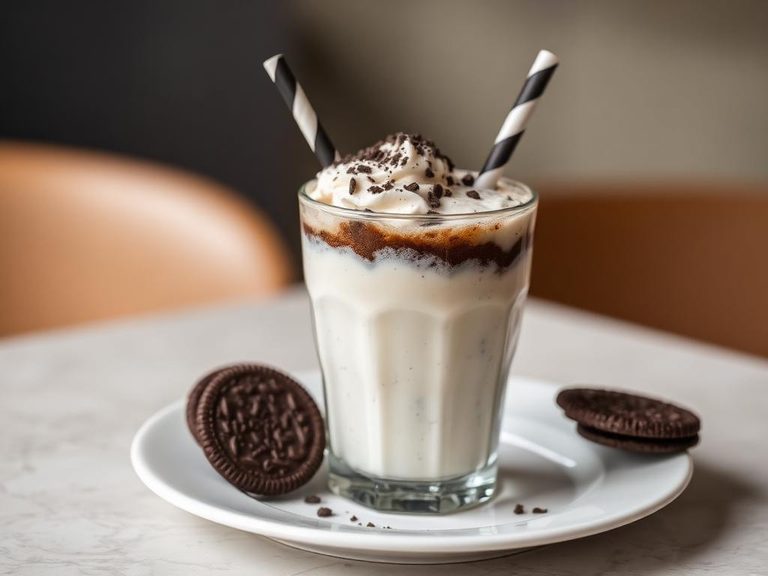
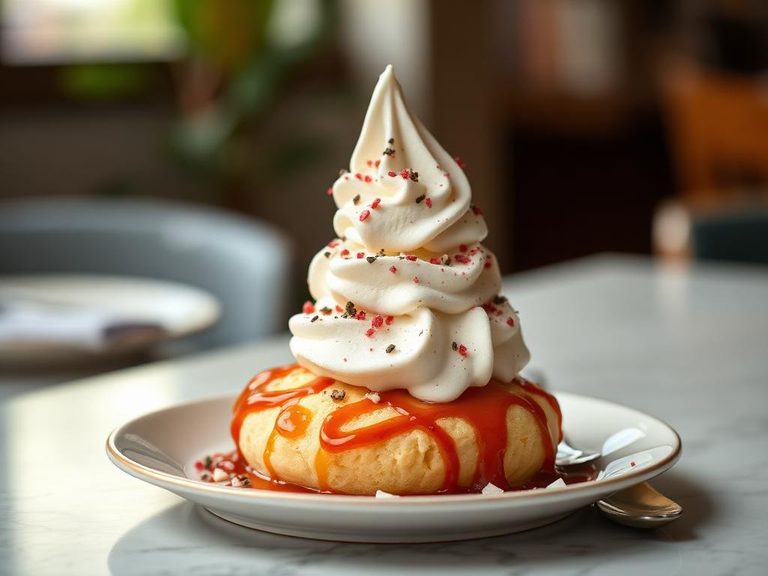
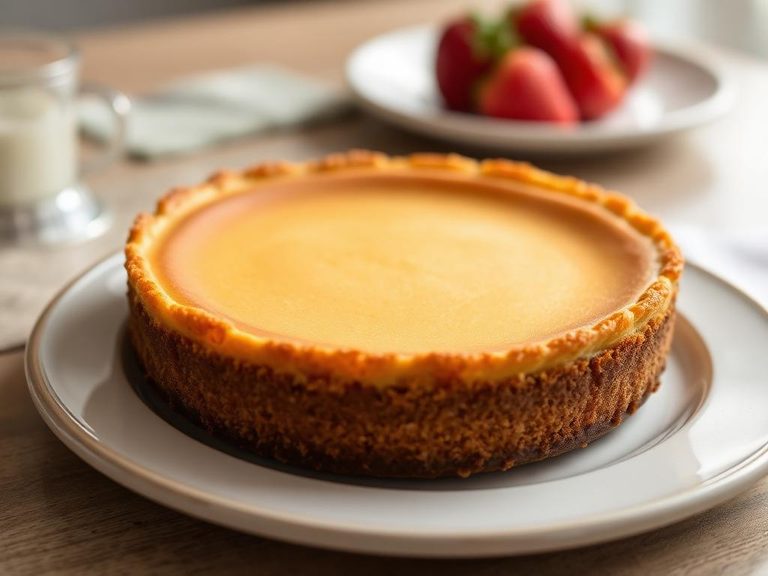
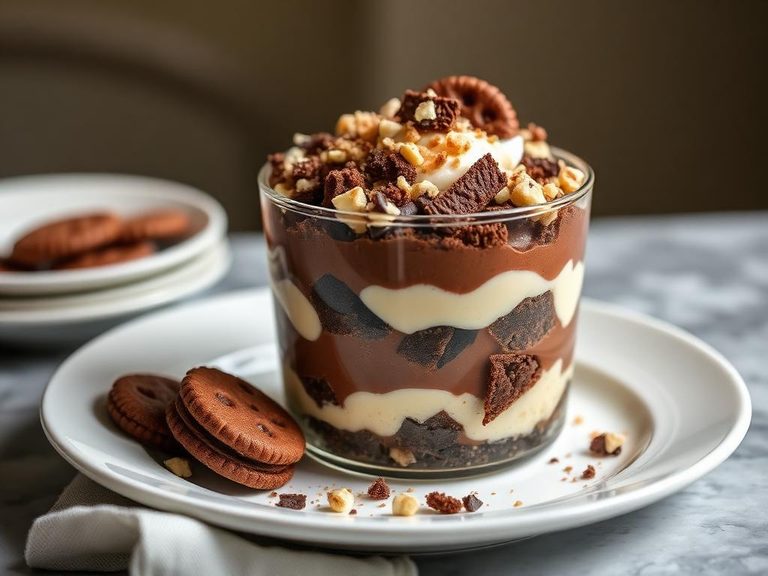
🌍 Where it's eaten
💡 Did you know?
The iconic 'sandwich' cookie design was patented in 1912 by the National Biscuit Company (Nabisco) for their Oreo, though similar concepts existed earlier.
Full nutrition (USDA data · scales with serving)
| Water | 3.1 g |
| Energy | 464 kcal |
| Protein | 5.2 g |
| Total lipid (fat) | 19.1 g |
| Carbohydrate, by difference | 71.0 g |
| Fiber, total dietary | 2.9 g |
| Total Sugars | 40.7 g |
| Calcium, Ca | 21.0 mg |
| Iron, Fe | 12.1 mg |
| Magnesium, Mg | 47.0 mg |
| Phosphorus, P | 93.0 mg |
| Potassium, K | 234 mg |
| Sodium, Na | 388 mg |
| Zinc, Zn | 0.74 mg |
| Copper, Cu | 0.33 mg |
| Selenium, Se | 5.2 ug |
| Vitamin C, total ascorbic acid | 0.00 mg |
| Thiamin | 0.20 mg |
| Riboflavin | 0.24 mg |
| Niacin | 2.6 mg |
| Vitamin B-6 | 0.02 mg |
| Folate, total | 61.0 ug |
| Folic acid | 58.0 ug |
| Folate, food | 3.0 ug |
| Folate, DFE | 102 ug |
| Choline, total | 19.2 mg |
| Vitamin B-12 | 0.00 ug |
| Vitamin B-12, added | 0.00 ug |
| Vitamin A, RAE | 1.0 ug |
| Retinol | 0.00 ug |
| Carotene, beta | 0.00 ug |
| Carotene, alpha | 0.00 ug |
| Cryptoxanthin, beta | 0.00 ug |
| Lycopene | 0.00 ug |
| Lutein + zeaxanthin | 4.0 ug |
| Vitamin E (alpha-tocopherol) | 2.5 mg |
| Vitamin E, added | 0.00 mg |
| Vitamin D (D2 + D3) | 0.00 ug |
| Vitamin K (phylloquinone) | 27.4 ug |
| Alcohol, ethyl | 0.00 g |
| Caffeine | 5.0 mg |
| Theobromine | 184 mg |
Fat & fatty acid profile (per 100g)
| Fatty acids, total saturated | 5.6 g |
| SFA 4:0 | 0.00 g |
| SFA 6:0 | 0.00 g |
| SFA 8:0 | 0.00 g |
| SFA 10:0 | 0.01 g |
| SFA 12:0 | 0.04 g |
| SFA 14:0 | 0.11 g |
| SFA 16:0 | 4.4 g |
| SFA 18:0 | 0.86 g |
| Fatty acids, total monounsaturated | 9.3 g |
| MUFA 16:1 | 0.04 g |
| MUFA 18:1 | 9.1 g |
| MUFA 20:1 | 0.12 g |
| MUFA 22:1 | 0.00 g |
| Fatty acids, total polyunsaturated | 3.6 g |
| PUFA 18:2 | 3.3 g |
| PUFA 18:3 | 0.30 g |
| PUFA 18:4 | 0.00 g |
| PUFA 20:4 | 0.00 g |
| PUFA 20:5 n-3 (EPA) | 0.00 g |
| PUFA 22:5 n-3 (DPA) | 0.00 g |
| PUFA 22:6 n-3 (DHA) | 0.00 g |
| Cholesterol | 0.00 mg |
Amino acid profile (per 100g)
Estimated from Pie Crust, Cookie-type, Chocolate, Ready Crust — USDA does not publish this profile for Cookie.
| Tryptophan | 0.08 g |
| Threonine | 0.20 g |
| Isoleucine | 0.23 g |
| Leucine | 0.38 g |
| Lysine | 0.24 g |
| Methionine | 0.07 g |
| Cystine | 0.11 g |
| Phenylalanine | 0.28 g |
| Tyrosine | 0.16 g |
| Valine | 0.32 g |
| Arginine | 0.29 g |
| Histidine | 0.11 g |
| Alanine | 0.24 g |
| Aspartic acid | 0.45 g |
| Glutamic acid | 1.3 g |
| Glycine | 0.24 g |
| Proline | 0.42 g |
| Serine | 0.26 g |
FAQ
What is the main difference between the chocolate and vanilla parts?
The chocolate component is in the cookie itself, providing a mild cocoa flavor and darker color, while the vanilla is concentrated in the sweet, creamy filling, creating the signature two-tone taste and appearance.
Is this a good post-workout snack?
Not ideal. While it provides quick carbs for energy replenishment, it lacks sufficient protein for muscle repair and has a very high sugar-to-nutrient ratio. A banana with peanut butter or a protein shake would be more effective.
Why does the cream filling sometimes seem to stick to the roof of your mouth?
The filling is primarily made of sugar and fat (like palm oil or shortening) with a thickener. Its dense, smooth texture and low moisture content can create that characteristic sticky sensation.
Nutrient density (calculated · NRF9.3)
Nutrient Rich Foods index: beneficial nutrients (protein, fiber, vitamins, minerals) minus saturated fat, added sugar & sodium, per 100 kcal.
NRF9.3 index — Fulgoni, Keast & Drewnowski, 2009. Computed from USDA nutrients.
Weight-loss friendliness (composite index)
Energy density 4.64 kcal/g · 4% calories from protein · 2.9 g fiber · 40.7 g sugar per 100 g.
Composite of energy density (Rolls et al., 1999), protein & fiber satiety, minus sugar. A calculated heuristic — ranks satiety-per-calorie, not a clinical measure.
Dietary load (calculated from USDA values)
Potential renal acid load. Positive = acid-forming, negative = alkaline-forming.
Sodium-to-potassium ratio: 1.66 (lower is better — aim for ≤ 1)
Sodium:potassium per WHO potassium guidance. Computed from USDA nutrients.