

Cookie, almond
Common food

Photo: Wikipedia
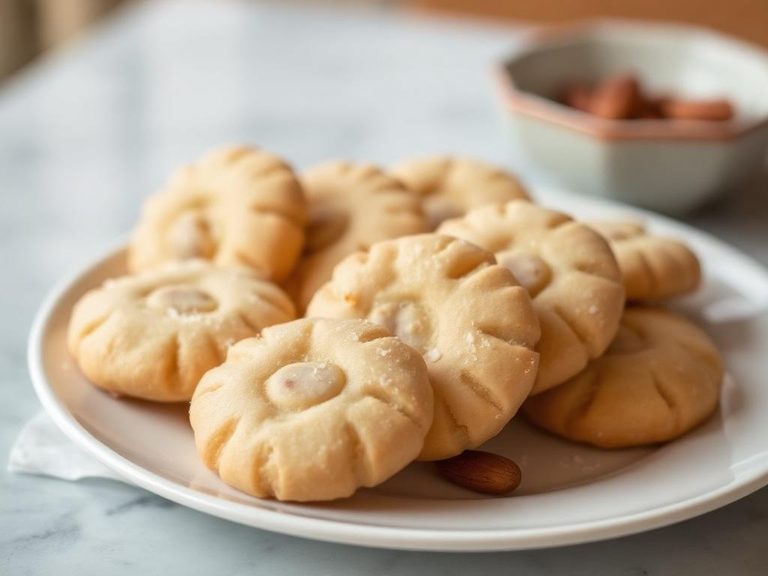
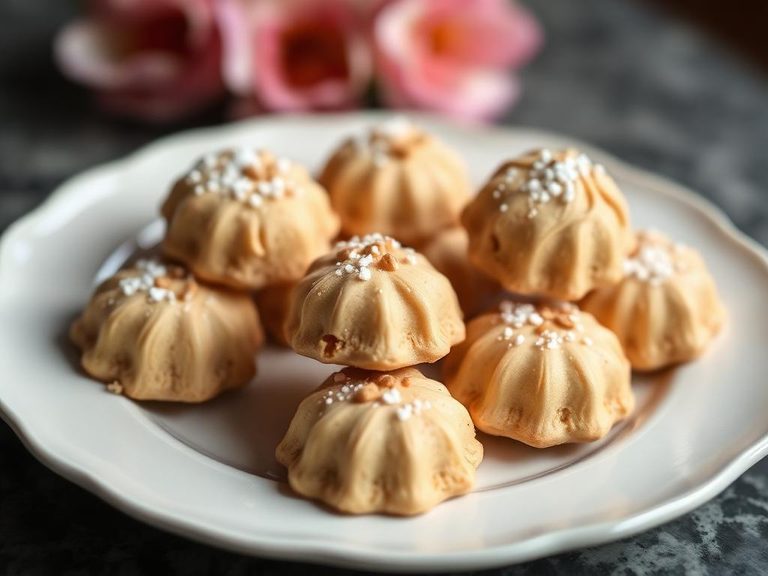
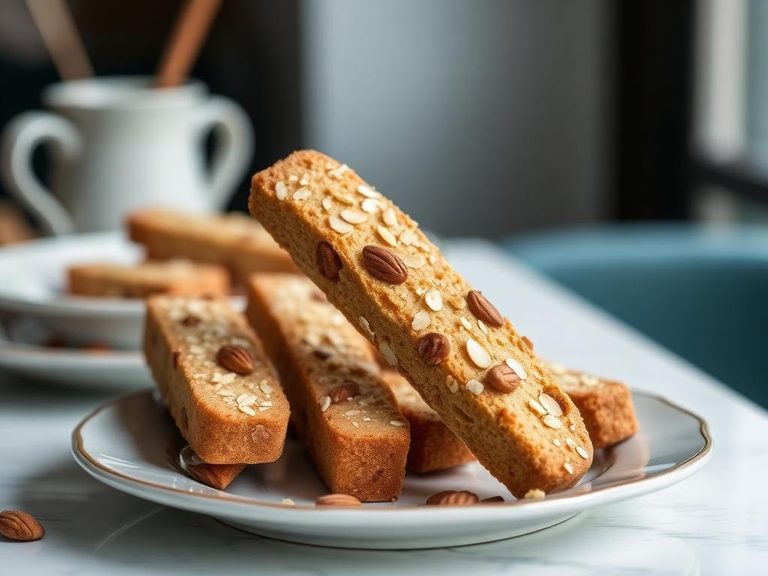
The almond cookie is a crisp, buttery, and often crumbly treat, typically studded with sliced or whole almonds that provide a satisfying nutty crunch. Its flavor profile balances sweet, buttery notes with the toasty, slightly savory depth of almonds. Nutritionally, it is a calorie-dense snack, primarily from fats and carbohydrates, with a modest protein contribution from the nuts.
Calorie split: 4% protein · 50% carbs · 46% fat
↓ Full nutrition💚 Why it's loved
People love almond cookies for their delightful textural contrast between the crisp, sandy dough and the chewy, nutty almond pieces. They are a beloved staple in holiday baking and tea-time traditions, offering a comforting and familiar flavor that pairs perfectly with coffee or milk.
⚠️ Watch-outs & how to enjoy it better
Due to their high sugar and refined carbohydrate content, they can cause rapid blood-sugar spikes, making them less ideal for those managing diabetes or insulin resistance. As they are also high in calories and a common tree nut allergen, portion control is key. To counteract blood-sugar impact, pair a small cookie with a source of protein or healthy fat, like a handful of plain nuts or a piece of cheese.
Key benefits
- Provides quick energy from carbohydrates and fats
- Almonds contribute vitamin E and magnesium
- Offers plant-based protein for satiety
- Can be a source of dietary fiber if made with whole almonds
- A convenient, portable energy-dense snack
🍽️ Popular dishes

🌍 Where it's eaten
💡 Did you know?
The classic Chinese almond cookie, often served at dim sum, typically doesn't contain any actual almonds in the dough; its signature flavor comes from almond extract, with a single almond or almond slice placed on top as a garnish.
Full nutrition (USDA data · scales with serving)
| Water | 3.6 g |
| Energy | 514 kcal |
| Protein | 5.4 g |
| Total lipid (fat) | 26.2 g |
| Carbohydrate, by difference | 63.8 g |
| Fiber, total dietary | 1.3 g |
| Total Sugars | 21.6 g |
| Calcium, Ca | 13.0 mg |
| Iron, Fe | 3.0 mg |
| Magnesium, Mg | 14.0 mg |
| Phosphorus, P | 66.0 mg |
| Potassium, K | 88.0 mg |
| Sodium, Na | 353 mg |
| Zinc, Zn | 0.49 mg |
| Copper, Cu | 0.09 mg |
| Selenium, Se | 6.2 ug |
| Vitamin C, total ascorbic acid | 0.00 mg |
| Thiamin | 0.35 mg |
| Riboflavin | 0.31 mg |
| Niacin | 3.3 mg |
| Vitamin B-6 | 0.07 mg |
| Folate, total | 81.0 ug |
| Folic acid | 61.0 ug |
| Folate, food | 20.0 ug |
| Folate, DFE | 124 ug |
| Choline, total | 0.90 mg |
| Vitamin B-12 | 0.00 ug |
| Vitamin B-12, added | 0.00 ug |
| Vitamin A, RAE | 0.00 ug |
| Retinol | 0.00 ug |
| Carotene, beta | 1.0 ug |
| Carotene, alpha | 0.00 ug |
| Cryptoxanthin, beta | 0.00 ug |
| Lycopene | 0.00 ug |
| Lutein + zeaxanthin | 29.0 ug |
| Vitamin E (alpha-tocopherol) | 2.4 mg |
| Vitamin E, added | 0.00 mg |
| Vitamin D (D2 + D3) | 0.00 ug |
| Vitamin K (phylloquinone) | 11.0 ug |
| Alcohol, ethyl | 0.00 g |
| Caffeine | 0.00 mg |
| Theobromine | 0.00 mg |
Fat & fatty acid profile (per 100g)
| Fatty acids, total saturated | 8.1 g |
| SFA 4:0 | 0.09 g |
| SFA 6:0 | 0.07 g |
| SFA 8:0 | 0.04 g |
| SFA 10:0 | 0.10 g |
| SFA 12:0 | 0.13 g |
| SFA 14:0 | 0.46 g |
| SFA 16:0 | 5.1 g |
| SFA 18:0 | 1.8 g |
| Fatty acids, total monounsaturated | 6.7 g |
| MUFA 16:1 | 0.09 g |
| MUFA 18:1 | 6.5 g |
| MUFA 20:1 | 0.05 g |
| MUFA 22:1 | 0.00 g |
| Fatty acids, total polyunsaturated | 8.3 g |
| PUFA 18:2 | 7.4 g |
| PUFA 18:3 | 0.92 g |
| PUFA 18:4 | 0.00 g |
| PUFA 20:4 | 0.02 g |
| PUFA 20:5 n-3 (EPA) | 0.00 g |
| PUFA 22:5 n-3 (DPA) | 0.00 g |
| PUFA 22:6 n-3 (DHA) | 0.00 g |
| Cholesterol | 0.00 mg |
Amino acid profile (per 100g)
Estimated from Pie Crust, Cookie-type, Chocolate, Ready Crust — USDA does not publish this profile for Cookie.
| Tryptophan | 0.08 g |
| Threonine | 0.20 g |
| Isoleucine | 0.23 g |
| Leucine | 0.38 g |
| Lysine | 0.24 g |
| Methionine | 0.07 g |
| Cystine | 0.11 g |
| Phenylalanine | 0.28 g |
| Tyrosine | 0.16 g |
| Valine | 0.32 g |
| Arginine | 0.29 g |
| Histidine | 0.11 g |
| Alanine | 0.24 g |
| Aspartic acid | 0.45 g |
| Glutamic acid | 1.3 g |
| Glycine | 0.24 g |
| Proline | 0.42 g |
| Serine | 0.26 g |
FAQ
Are almond cookies gluten-free?
Not typically. Most traditional recipes use wheat flour. However, gluten-free versions using almond flour or other nut flours are common, especially for amaretti-style cookies.
Why are my almond cookies too soft or chewy instead of crisp?
This often results from underbaking or using too much moisture (like eggs or butter). Ensure accurate measurements and bake until the edges are a light golden brown. They will firm up as they cool.
Can I reduce the sugar in almond cookie recipes?
You can often reduce the sugar by 25-30% without drastically affecting texture, though it will impact sweetness and spread. Using brown sugar or adding spices like cinnamon can enhance perceived sweetness.
Nutrient density (calculated · NRF9.3)
Nutrient Rich Foods index: beneficial nutrients (protein, fiber, vitamins, minerals) minus saturated fat, added sugar & sodium, per 100 kcal.
NRF9.3 index — Fulgoni, Keast & Drewnowski, 2009. Computed from USDA nutrients.
Weight-loss friendliness (composite index)
Energy density 5.14 kcal/g · 4% calories from protein · 1.3 g fiber · 21.6 g sugar per 100 g.
Composite of energy density (Rolls et al., 1999), protein & fiber satiety, minus sugar. A calculated heuristic — ranks satiety-per-calorie, not a clinical measure.
Dietary load (calculated from USDA values)
Potential renal acid load. Positive = acid-forming, negative = alkaline-forming.
Sodium-to-potassium ratio: 4.01 (lower is better — aim for ≤ 1)
Sodium:potassium per WHO potassium guidance. Computed from USDA nutrients.