

Chili, NFS
Common food

Photo: Wikipedia
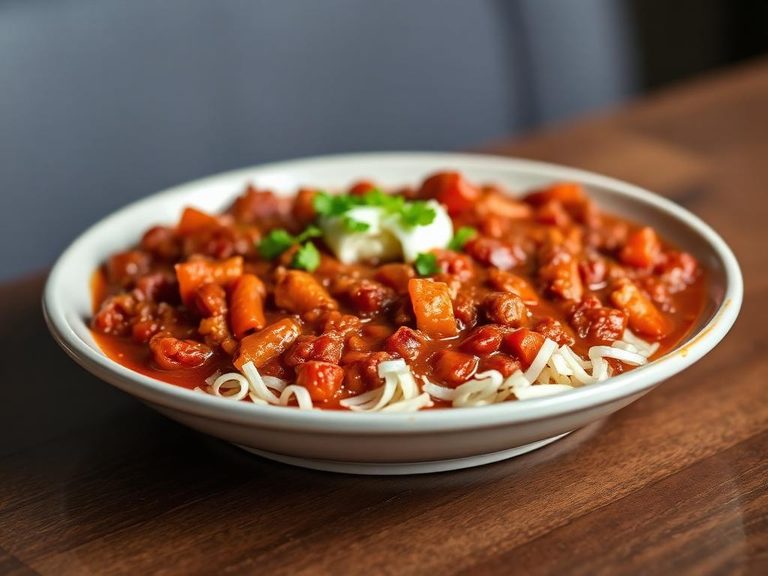
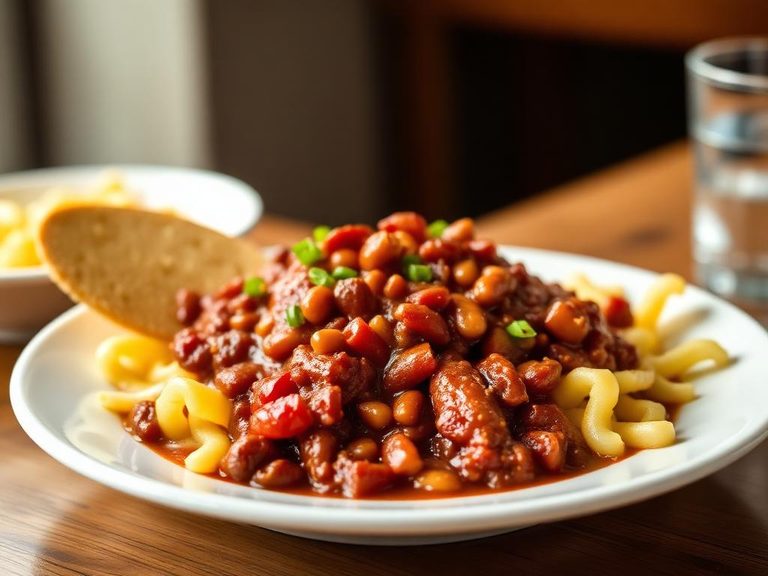
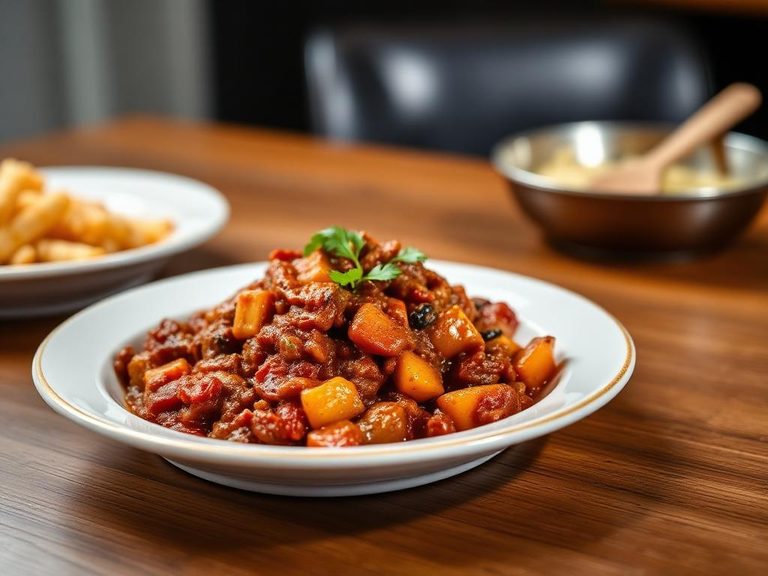
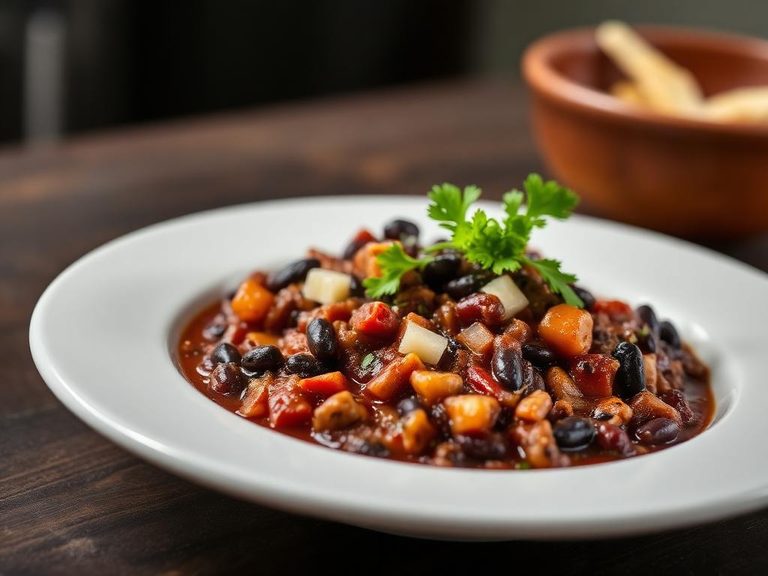
Chili, NFS (Not Further Specified) is a hearty, savory stew typically built on a base of ground meat, tomatoes, and chili peppers, delivering a robust, often spicy flavor with a thick, chunky texture. Nutritionally, it's a protein-rich option that provides a good source of fiber, making it a satisfying and filling meal component.
Calorie split: 33% protein · 34% carbs · 33% fat
↓ Full nutrition💚 Why it's loved
People adore chili for its deep, complex flavor profile that balances heat, savory meat, and tangy tomatoes, often improved by slow cooking. It's a cultural staple for communal gatherings, from Texas cook-offs to family dinners, symbolizing comfort and warmth.
⚠️ Watch-outs & how to enjoy it better
The high sodium content from canned tomatoes and seasoning can be a concern for blood pressure management. Those sensitive to spice or with gastrointestinal issues like acid reflux may find it aggravating. To counteract sodium, use low-sodium canned goods and rinse beans; for spice, reduce chili powder or add a dollop of Greek yogurt to cool the heat.
Key benefits
- High-quality protein source for muscle maintenance
- Good dietary fiber content for digestive health
- Rich in vitamins like vitamin C and A from tomatoes and peppers
- Contains capsaicin, which may support metabolism
- Versatile base for numerous ingredient additions
🍽️ Popular dishes
🌍 Where it's eaten
💡 Did you know?
The International Chili Cook-Off in Terlingua, Texas, has been held since 1967 and famously ended in a tie the first year, with no official winner declared.
Full nutrition (USDA data · scales with serving)
| Water | 74.1 g |
| Energy | 118 kcal |
| Protein | 9.8 g |
| Total lipid (fat) | 4.3 g |
| Carbohydrate, by difference | 10.3 g |
| Fiber, total dietary | 3.0 g |
| Total Sugars | 1.5 g |
| Calcium, Ca | 21.0 mg |
| Iron, Fe | 1.9 mg |
| Magnesium, Mg | 25.0 mg |
| Phosphorus, P | 107 mg |
| Potassium, K | 285 mg |
| Sodium, Na | 340 mg |
| Zinc, Zn | 2.0 mg |
| Copper, Cu | 0.14 mg |
| Selenium, Se | 6.6 ug |
| Vitamin C, total ascorbic acid | 6.3 mg |
| Thiamin | 0.08 mg |
| Riboflavin | 0.09 mg |
| Niacin | 1.8 mg |
| Vitamin B-6 | 0.18 mg |
| Folate, total | 50.0 ug |
| Folic acid | 0.00 ug |
| Folate, food | 50.0 ug |
| Folate, DFE | 50.0 ug |
| Choline, total | 34.3 mg |
| Vitamin B-12 | 0.63 ug |
| Vitamin B-12, added | 0.00 ug |
| Vitamin A, RAE | 12.0 ug |
| Retinol | 1.0 ug |
| Carotene, beta | 114 ug |
| Carotene, alpha | 11.0 ug |
| Cryptoxanthin, beta | 17.0 ug |
| Lycopene | 2137 ug |
| Lutein + zeaxanthin | 19.0 ug |
| Vitamin E (alpha-tocopherol) | 0.46 mg |
| Vitamin E, added | 0.00 mg |
| Vitamin D (D2 + D3) | 0.00 ug |
| Vitamin K (phylloquinone) | 4.6 ug |
| Alcohol, ethyl | 0.00 g |
| Caffeine | 0.00 mg |
| Theobromine | 0.00 mg |
Fat & fatty acid profile (per 100g)
| Fatty acids, total saturated | 1.6 g |
| SFA 4:0 | 0.00 g |
| SFA 6:0 | 0.00 g |
| SFA 8:0 | 0.00 g |
| SFA 10:0 | 0.00 g |
| SFA 12:0 | 0.00 g |
| SFA 14:0 | 0.12 g |
| SFA 16:0 | 0.93 g |
| SFA 18:0 | 0.50 g |
| Fatty acids, total monounsaturated | 1.8 g |
| MUFA 16:1 | 0.15 g |
| MUFA 18:1 | 1.6 g |
| MUFA 20:1 | 0.01 g |
| MUFA 22:1 | 0.00 g |
| Fatty acids, total polyunsaturated | 0.28 g |
| PUFA 18:2 | 0.19 g |
| PUFA 18:3 | 0.08 g |
| PUFA 18:4 | 0.00 g |
| PUFA 20:4 | 0.01 g |
| PUFA 20:5 n-3 (EPA) | 0.00 g |
| PUFA 22:5 n-3 (DPA) | 0.00 g |
| PUFA 22:6 n-3 (DHA) | 0.00 g |
| Cholesterol | 22.0 mg |
Amino acid profile (per 100g)
Estimated from APPLEBEE'S, chili — USDA does not publish this profile for Chili.
| Tryptophan | 0.14 g |
| Threonine | 0.40 g |
| Isoleucine | 0.56 g |
| Leucine | 0.93 g |
| Lysine | 0.84 g |
| Methionine | 0.28 g |
| Cystine | 0.12 g |
| Phenylalanine | 0.47 g |
| Tyrosine | 0.34 g |
| Valine | 0.64 g |
| Arginine | 0.77 g |
| Histidine | 0.37 g |
| Alanine | 0.79 g |
| Aspartic acid | 1.2 g |
| Glutamic acid | 2.1 g |
| Glycine | 0.83 g |
| Proline | 0.85 g |
| Serine | 0.37 g |
| Hydroxyproline | 0.24 g |
FAQ
Is chili considered a healthy meal?
When made with lean meat and loaded with vegetables, chili can be a nutritious, balanced meal high in protein and fiber. However, versions heavy on fatty meat or high in sodium should be consumed in moderation.
What's the difference between chili and chili con carne?
Traditionally, 'chili con carne' means 'chili with meat' and is the classic version. 'Chili' is often used as a broader term that can include vegetarian or bean-heavy variations.
How can I reduce the heat in my chili?
You can balance spiciness by adding ingredients like diced potatoes, a spoonful of sugar, a splash of vinegar, or serving it with cooling sides like sour cream, cheese, or cornbread.
Nutrient density (calculated · NRF9.3)
Nutrient Rich Foods index: beneficial nutrients (protein, fiber, vitamins, minerals) minus saturated fat, added sugar & sodium, per 100 kcal.
NRF9.3 index — Fulgoni, Keast & Drewnowski, 2009. Computed from USDA nutrients.
Weight-loss friendliness (composite index)
Energy density 1.18 kcal/g · 33% calories from protein · 3.0 g fiber · 1.5 g sugar per 100 g.
Composite of energy density (Rolls et al., 1999), protein & fiber satiety, minus sugar. A calculated heuristic — ranks satiety-per-calorie, not a clinical measure.
Dietary load (calculated from USDA values)
Potential renal acid load. Positive = acid-forming, negative = alkaline-forming.
Sodium-to-potassium ratio: 1.19 (lower is better — aim for ≤ 1)
Sodium:potassium per WHO potassium guidance. Computed from USDA nutrients.