

Cheesecake, chocolate
Common food

Photo: Wikipedia
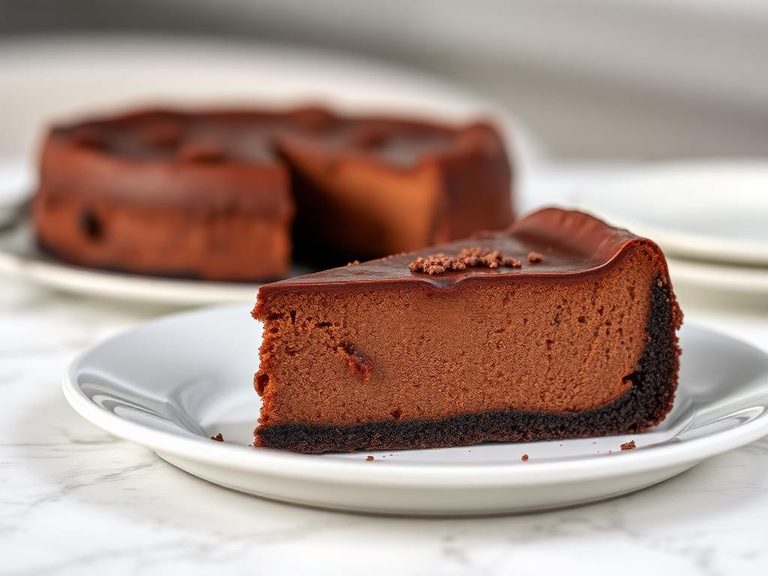
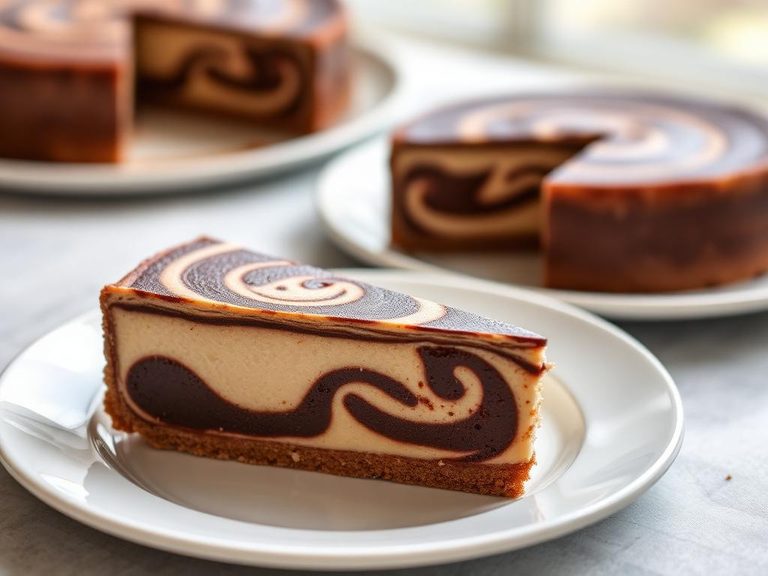
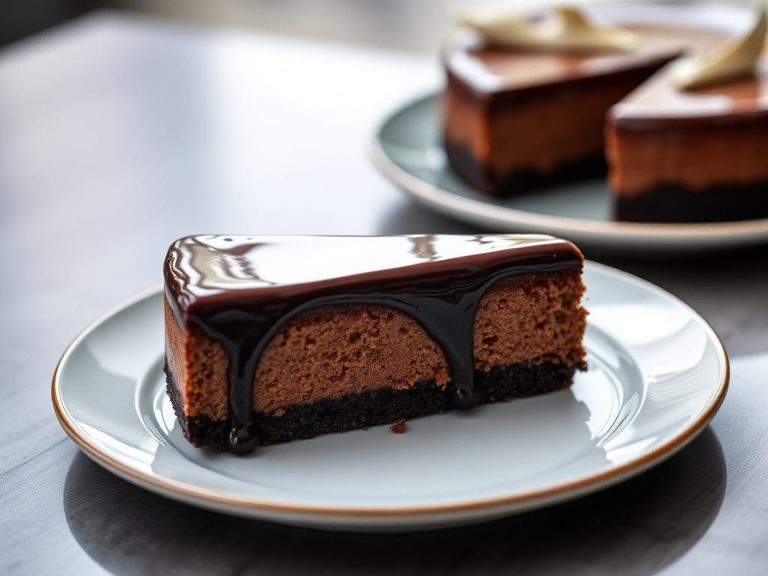
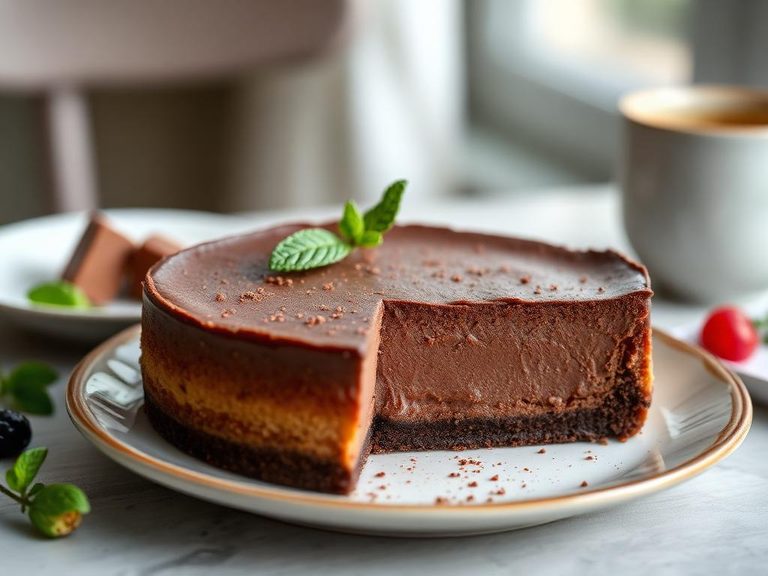
A rich, dense dessert featuring a creamy cheese-based filling on a crumbly biscuit base, all enveloped in a smooth, glossy chocolate coating or swirl. Its texture is a luxurious contrast between the velvety, tangy cheese layer and the firm, sweet chocolate. Nutritionally, it's a calorie-dense treat, with over 26g of fat and nearly 26g of sugar per 100g serving.
Calorie split: 6% protein · 36% carbs · 59% fat
↓ Full nutrition💚 Why it's loved
People love it for the decadent harmony of tangy, creamy cheese and deep, sweet chocolate—a classic flavor combination that feels both indulgent and familiar. It's a celebratory centerpiece, often marking special occasions and offering a sense of comfort and luxury.
⚠️ Watch-outs & how to enjoy it better
Its high sugar and fat content can lead to blood sugar spikes and is not suitable for low-calorie diets. For those with lactose intolerance or dairy allergies, it can cause digestive discomfort. Tip: Enjoy a modest slice (about 100g) and pair it with a source of protein or fiber, like a handful of nuts or a side of berries, to help slow sugar absorption and increase satiety.
Key benefits
- Provides a quick source of energy from fats and carbohydrates
- Contains some protein from the cheese and biscuit base
- Can satisfy intense sweet cravings effectively
- Offers a small amount of calcium from the cheese component
🍽️ Popular dishes
🌍 Where it's eaten
💡 Did you know?
The modern cheesecake's foundation is believed to have been served to athletes during the first Olympic Games in ancient Greece as a source of energy.
Full nutrition (USDA data · scales with serving)
| Water | 31.3 g |
| Energy | 394 kcal |
| Protein | 5.7 g |
| Total lipid (fat) | 26.1 g |
| Carbohydrate, by difference | 35.5 g |
| Fiber, total dietary | 1.6 g |
| Total Sugars | 25.9 g |
| Calcium, Ca | 69.0 mg |
| Iron, Fe | 1.1 mg |
| Magnesium, Mg | 26.0 mg |
| Phosphorus, P | 122 mg |
| Potassium, K | 147 mg |
| Sodium, Na | 269 mg |
| Zinc, Zn | 0.76 mg |
| Copper, Cu | 0.14 mg |
| Selenium, Se | 8.8 ug |
| Vitamin C, total ascorbic acid | 0.00 mg |
| Thiamin | 0.06 mg |
| Riboflavin | 0.21 mg |
| Niacin | 0.68 mg |
| Vitamin B-6 | 0.04 mg |
| Folate, total | 21.0 ug |
| Folic acid | 7.0 ug |
| Folate, food | 14.0 ug |
| Folate, DFE | 26.0 ug |
| Choline, total | 46.8 mg |
| Vitamin B-12 | 0.10 ug |
| Vitamin B-12, added | 0.00 ug |
| Vitamin A, RAE | 215 ug |
| Retinol | 213 ug |
| Carotene, beta | 14.0 ug |
| Carotene, alpha | 0.00 ug |
| Cryptoxanthin, beta | 2.0 ug |
| Lycopene | 0.00 ug |
| Lutein + zeaxanthin | 66.0 ug |
| Vitamin E (alpha-tocopherol) | 0.75 mg |
| Vitamin E, added | 0.00 mg |
| Vitamin D (D2 + D3) | 0.30 ug |
| Vitamin K (phylloquinone) | 3.8 ug |
| Alcohol, ethyl | 0.00 g |
| Caffeine | 7.0 mg |
| Theobromine | 62.0 mg |
Fat & fatty acid profile (per 100g)
| Fatty acids, total saturated | 14.2 g |
| SFA 4:0 | 0.52 g |
| SFA 6:0 | 0.41 g |
| SFA 8:0 | 0.25 g |
| SFA 10:0 | 0.58 g |
| SFA 12:0 | 0.68 g |
| SFA 14:0 | 2.2 g |
| SFA 16:0 | 6.7 g |
| SFA 18:0 | 2.4 g |
| Fatty acids, total monounsaturated | 5.6 g |
| MUFA 16:1 | 0.43 g |
| MUFA 18:1 | 5.9 g |
| MUFA 20:1 | 0.05 g |
| MUFA 22:1 | 0.00 g |
| Fatty acids, total polyunsaturated | 1.9 g |
| PUFA 18:2 | 1.4 g |
| PUFA 18:3 | 0.18 g |
| PUFA 18:4 | 0.00 g |
| PUFA 20:4 | 0.04 g |
| PUFA 20:5 n-3 (EPA) | 0.01 g |
| PUFA 22:5 n-3 (DPA) | 0.01 g |
| PUFA 22:6 n-3 (DHA) | 0.00 g |
| Cholesterol | 111 mg |
Amino acid profile (per 100g)
Estimated from Cake, cheesecake, commercially prepared — USDA does not publish this profile for Cheesecake.
| Tryptophan | 0.06 g |
| Threonine | 0.22 g |
| Isoleucine | 0.28 g |
| Leucine | 0.46 g |
| Lysine | 0.37 g |
| Methionine | 0.14 g |
| Cystine | 0.07 g |
| Phenylalanine | 0.26 g |
| Tyrosine | 0.22 g |
| Valine | 0.31 g |
| Arginine | 0.25 g |
| Histidine | 0.13 g |
| Alanine | 0.25 g |
| Aspartic acid | 0.41 g |
| Glutamic acid | 1.0 g |
| Glycine | 0.22 g |
| Proline | 0.48 g |
| Serine | 0.31 g |
FAQ
Is chocolate cheesecake gluten-free?
Not by default. The biscuit base typically contains wheat flour. Gluten-free versions use alternative flours or pre-made gluten-free crusts.
How is it different from a regular cheesecake?
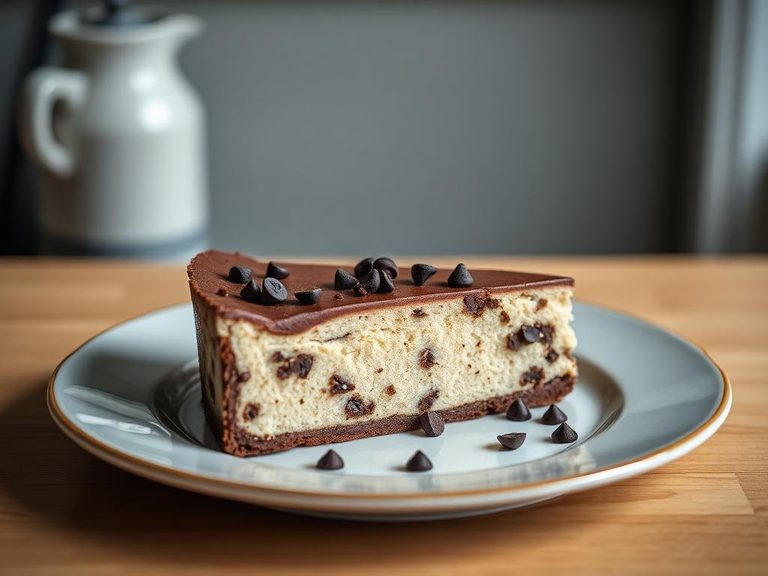
The primary difference is the incorporation of chocolate, either in the filling, as a swirl, or as a topping, adding a distinct flavor profile and often increasing the sugar and fat content.
Can I freeze chocolate cheesecake?
Yes, it freezes very well. Wrap individual slices tightly in plastic wrap and foil, or store the whole cake in an airtight container. Thaw in the refrigerator overnight for best texture.
Nutrient density (calculated · NRF9.3)
Nutrient Rich Foods index: beneficial nutrients (protein, fiber, vitamins, minerals) minus saturated fat, added sugar & sodium, per 100 kcal.
NRF9.3 index — Fulgoni, Keast & Drewnowski, 2009. Computed from USDA nutrients.
Weight-loss friendliness (composite index)
Energy density 3.94 kcal/g · 6% calories from protein · 1.6 g fiber · 25.9 g sugar per 100 g.
Composite of energy density (Rolls et al., 1999), protein & fiber satiety, minus sugar. A calculated heuristic — ranks satiety-per-calorie, not a clinical measure.
Dietary load (calculated from USDA values)
Potential renal acid load. Positive = acid-forming, negative = alkaline-forming.
Sodium-to-potassium ratio: 1.83 (lower is better — aim for ≤ 1)
Sodium:potassium per WHO potassium guidance. Computed from USDA nutrients.