

Cake, cheesecake, prepared from mix, no-bake type
Whole food · Baked Products

Photo: Wikipedia
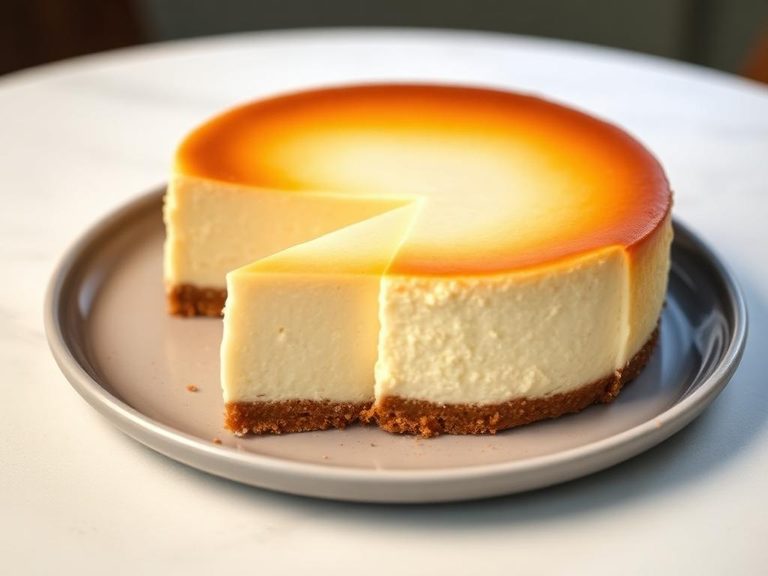
This is a creamy, ready-to-eat cheesecake made from a prepared mix, offering a smooth, dense texture and a sweet, tangy flavor without any baking required. It's a convenient dessert that delivers a rich mouthfeel from its fat content while providing a modest amount of protein. Nutritionally, it's a calorie-dense treat with a significant carbohydrate load per serving.
Calorie split: 8% protein · 51% carbs · 41% fat
↓ Full nutrition💚 Why it's loved
People love it for its classic, creamy cheesecake flavor and velvety texture, which can be enjoyed straight from the fridge. It's a beloved, accessible dessert for celebrations and casual indulgence, often evoking nostalgic comfort.
⚠️ Watch-outs & how to enjoy it better
The high carbohydrate and fat content can contribute to blood-sugar spikes and may not suit low-carb diets. To counteract this, practice portion control and pair a slice with a source of protein or fiber, like a handful of nuts or a side of berries, to help moderate the glycemic impact.
Key benefits
- No-bake convenience saves time and oven energy.
- Provides a quick source of energy from carbohydrates.
- Offers a small amount of protein from dairy ingredients.
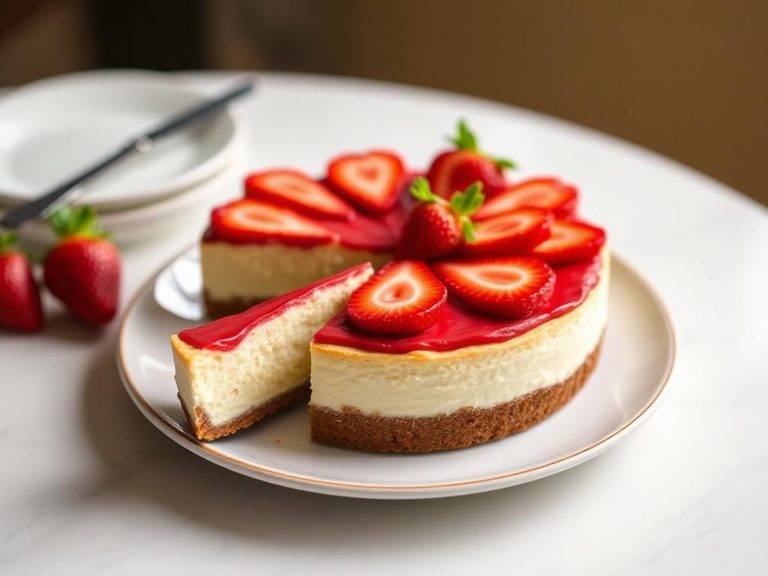
- Can be a base for creative toppings like fresh fruit or sauces.
🍽️ Popular dishes
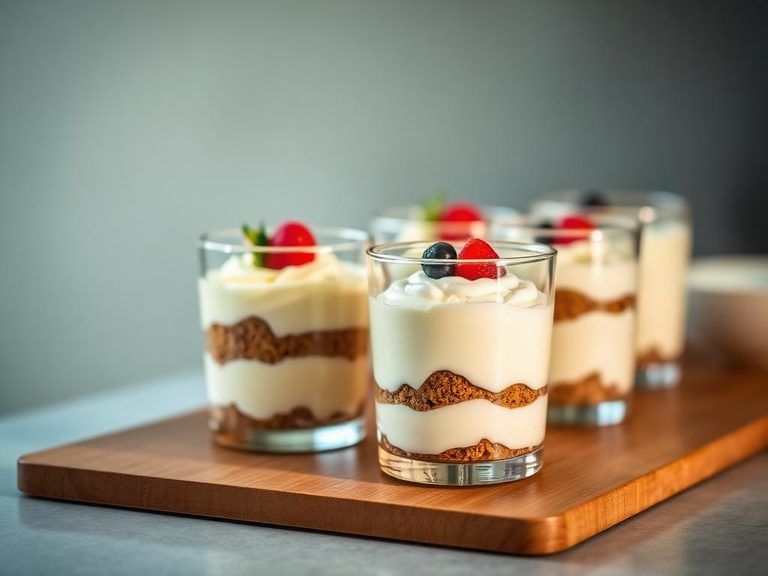
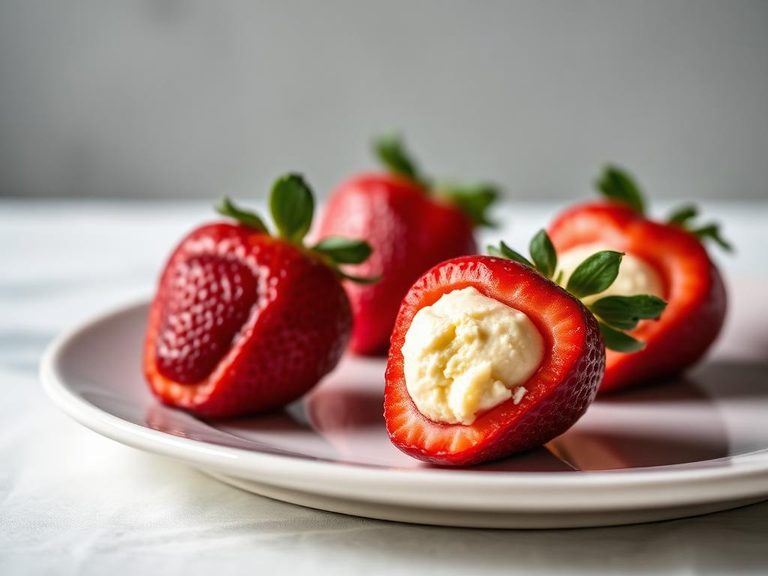
🌍 Where it's eaten
💡 Did you know?
The 'no-bake' method became widely popular in the mid-20th century with the commercialization of gelatin and prepared mixes, making the traditionally oven-intensive dessert accessible to home cooks without specialized equipment.
Full nutrition (USDA data · scales with serving)
| Water | 44.2 g |
| Energy | 274 kcal |
| Energy | 1146 kj |
| Protein | 5.5 g |
| Total lipid (fat) | 12.7 g |
| Ash | 2.0 g |
| Carbohydrate, by difference | 35.5 g |
| Fiber, total dietary | 1.9 g |
| Calcium, Ca | 172 mg |
| Iron, Fe | 0.47 mg |
| Magnesium, Mg | 19.0 mg |
| Phosphorus, P | 234 mg |
| Potassium, K | 211 mg |
| Sodium, Na | 380 mg |
| Zinc, Zn | 0.46 mg |
| Copper, Cu | 0.03 mg |
| Manganese, Mn | 0.12 mg |
| Selenium, Se | 4.7 ug |
| Vitamin C, total ascorbic acid | 0.50 mg |
| Thiamin | 0.12 mg |
| Riboflavin | 0.26 mg |
| Niacin | 0.49 mg |
| Pantothenic acid | 0.61 mg |
| Vitamin B-6 | 0.05 mg |
| Folate, total | 30.0 ug |
| Folic acid | 12.0 ug |
| Folate, food | 18.0 ug |
| Folate, DFE | 38.0 ug |
| Vitamin B-12 | 0.31 ug |
| Vitamin A, RAE | 96.0 ug |
| Retinol | 92.0 ug |
| Vitamin A, IU | 366 iu |
Fat & fatty acid profile (per 100g)
| Fatty acids, total saturated | 6.7 g |
| SFA 4:0 | 0.28 g |
| SFA 6:0 | 0.12 g |
| SFA 8:0 | 0.10 g |
| SFA 10:0 | 0.20 g |
| SFA 12:0 | 0.18 g |
| SFA 14:0 | 0.97 g |
| SFA 16:0 | 3.1 g |
| SFA 18:0 | 1.5 g |
| Fatty acids, total monounsaturated | 4.5 g |
| MUFA 16:1 | 0.24 g |
| MUFA 18:1 | 4.1 g |
| MUFA 20:1 | 0.00 g |
| MUFA 22:1 | 0.00 g |
| Fatty acids, total polyunsaturated | 0.81 g |
| PUFA 18:2 | 0.65 g |
| PUFA 18:3 | 0.16 g |
| PUFA 18:4 | 0.00 g |
| PUFA 20:4 | 0.00 g |
| PUFA 20:5 n-3 (EPA) | 0.00 g |
| PUFA 22:5 n-3 (DPA) | 0.00 g |
| PUFA 22:6 n-3 (DHA) | 0.00 g |
| Cholesterol | 29.0 mg |
Amino acid profile (per 100g)
| Tryptophan | 0.07 g |
| Threonine | 0.21 g |
| Isoleucine | 0.27 g |
| Leucine | 0.47 g |
| Lysine | 0.36 g |
| Methionine | 0.12 g |
| Cystine | 0.07 g |
| Phenylalanine | 0.26 g |
| Tyrosine | 0.22 g |
| Valine | 0.30 g |
| Arginine | 0.20 g |
| Histidine | 0.15 g |
| Alanine | 0.17 g |
| Aspartic acid | 0.34 g |
| Glutamic acid | 1.3 g |
| Glycine | 0.13 g |
| Proline | 0.52 g |
| Serine | 0.28 g |
FAQ
How is no-bake cheesecake different from baked cheesecake?
No-bake cheesecake sets in the refrigerator using gelatin or the chilling of fats, resulting in a lighter, mousse-like texture. Baked cheesecake uses eggs and gentle oven heat, creating a denser, richer, and often more custard-like consistency.
Can I freeze no-bake cheesecake?
Yes, it freezes well. Wrap slices tightly in plastic wrap and foil. Thaw in the refrigerator for several hours before serving; the texture may become slightly softer.
Why is my no-bake cheesecake not setting properly?
Common reasons include insufficient chilling time, not enough gelatin (if used), or over-mixing which can incorporate too much air. Ensure it chills for the full recommended time, usually 4-6 hours or overnight.
Nutrient density (calculated · NRF9.3)
Nutrient Rich Foods index: beneficial nutrients (protein, fiber, vitamins, minerals) minus saturated fat, added sugar & sodium, per 100 kcal.
NRF9.3 index — Fulgoni, Keast & Drewnowski, 2009. Computed from USDA nutrients.
Weight-loss friendliness (composite index)
Energy density 2.74 kcal/g · 8% calories from protein · 1.9 g fiber · 0.0 g sugar per 100 g.
Composite of energy density (Rolls et al., 1999), protein & fiber satiety, minus sugar. A calculated heuristic — ranks satiety-per-calorie, not a clinical measure.
Dietary load (calculated from USDA values)
Potential renal acid load. Positive = acid-forming, negative = alkaline-forming.
Sodium-to-potassium ratio: 1.80 (lower is better — aim for ≤ 1)
Sodium:potassium per WHO potassium guidance. Computed from USDA nutrients.