

Cheese sauce, for use with vegetables
Common food

Photo: Wikipedia
This is a smooth, pourable cheese sauce, typically a blend of melted cheese, milk, and a thickener like flour or cornstarch, designed to coat steamed or boiled vegetables. It has a rich, savory, umami flavor with a velvety texture that clings to broccoli, cauliflower, and carrots. Nutritionally, it's a moderate source of protein and fat, providing about 120 calories per 100g.
Calorie split: 16% protein · 32% carbs · 52% fat
↓ Full nutrition💚 Why it's loved
People love it for its comforting, savory flavor that transforms simple vegetables into a satisfying dish. Its versatility allows it to be used as a dip, a topping, or a base for other sauces.
⚠️ Watch-outs & how to enjoy it better
Commercial versions can be high in sodium and may contain additives. Those monitoring saturated fat intake or with lactose intolerance should check labels. To mitigate, look for low-sodium varieties, use it in moderation, or pair it with a large portion of non-starchy vegetables to balance the meal.
Key benefits
- Adds palatability to plain vegetables, encouraging consumption.
- Provides a source of calcium and protein from dairy.
- Offers a quick, flavorful way to prepare a vegetable side dish.
- Can be made with reduced-fat cheese or milk for a lighter version.
🍽️ Popular dishes
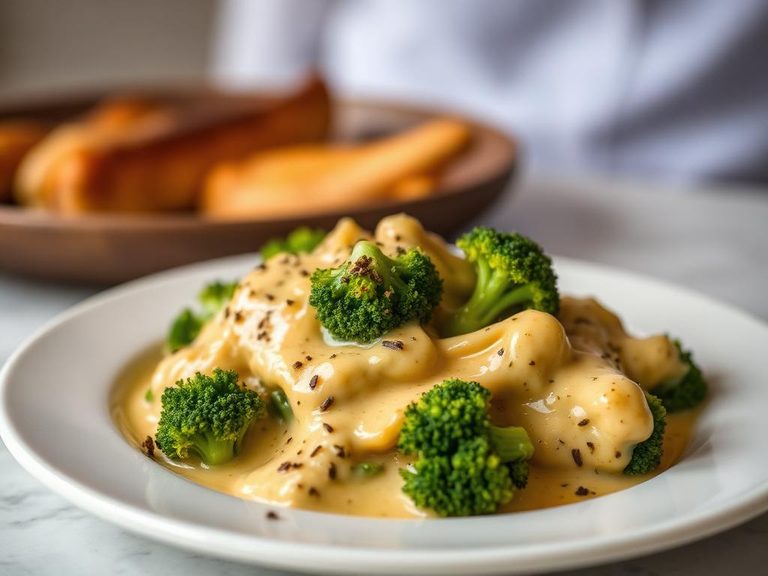
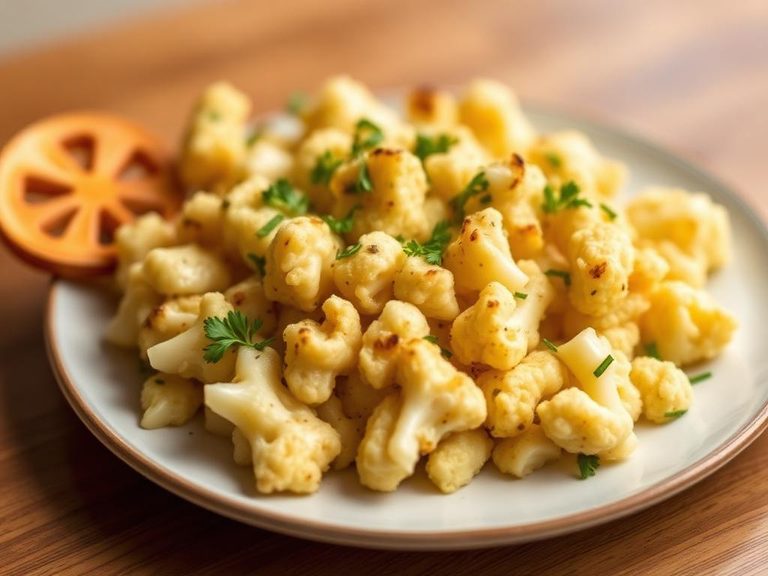
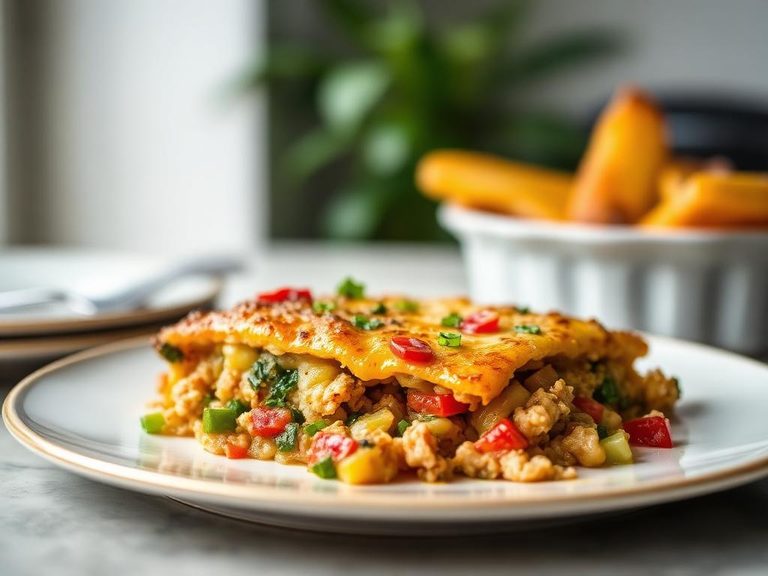

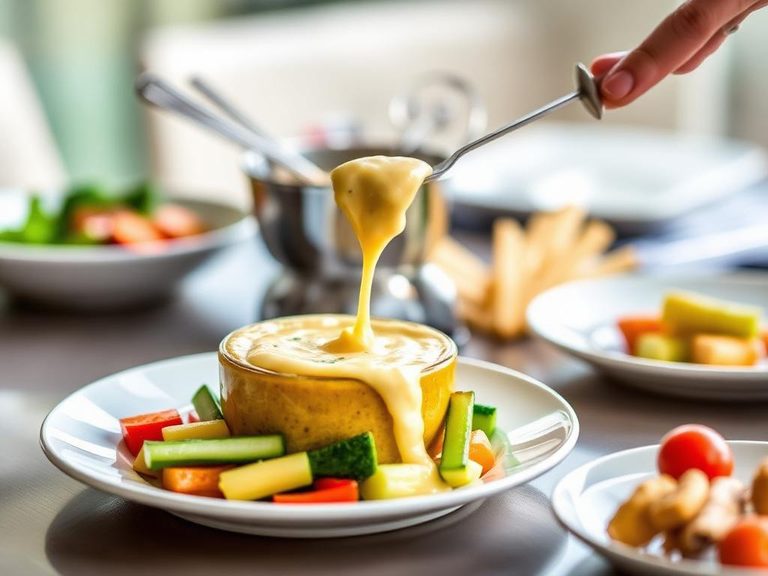
🌍 Where it's eaten
💡 Did you know?
The classic French 'Mornay sauce' is essentially a Béchamel sauce with cheese added, and it's the direct ancestor of many modern cheese sauces used for vegetables.
Full nutrition (USDA data · scales with serving)
| Water | 76.1 g |
| Energy | 120 kcal |
| Protein | 4.7 g |
| Total lipid (fat) | 6.8 g |
| Carbohydrate, by difference | 9.6 g |
| Fiber, total dietary | 0.10 g |
| Total Sugars | 0.07 g |
| Calcium, Ca | 145 mg |
| Iron, Fe | 0.08 mg |
| Magnesium, Mg | 6.0 mg |
| Phosphorus, P | 93.0 mg |
| Potassium, K | 16.0 mg |
| Sodium, Na | 908 mg |
| Zinc, Zn | 0.74 mg |
| Copper, Cu | 0.02 mg |
| Selenium, Se | 5.9 ug |
| Vitamin C, total ascorbic acid | 0.00 mg |
| Thiamin | 0.01 mg |
| Riboflavin | 0.09 mg |
| Niacin | 0.01 mg |
| Vitamin B-6 | 0.01 mg |
| Folate, total | 4.0 ug |
| Folic acid | 0.00 ug |
| Folate, food | 4.0 ug |
| Folate, DFE | 4.0 ug |
| Choline, total | 3.2 mg |
| Vitamin B-12 | 0.20 ug |
| Vitamin B-12, added | 0.00 ug |
| Vitamin A, RAE | 63.0 ug |
| Retinol | 63.0 ug |
| Carotene, beta | 0.00 ug |
| Carotene, alpha | 0.00 ug |
| Cryptoxanthin, beta | 0.00 ug |
| Lycopene | 0.00 ug |
| Lutein + zeaxanthin | 0.00 ug |
| Vitamin E (alpha-tocopherol) | 0.15 mg |
| Vitamin E, added | 0.00 mg |
| Vitamin D (D2 + D3) | 0.10 ug |
| Vitamin K (phylloquinone) | 0.50 ug |
| Alcohol, ethyl | 0.00 g |
| Caffeine | 0.00 mg |
| Theobromine | 0.00 mg |
Fat & fatty acid profile (per 100g)
| Fatty acids, total saturated | 3.8 g |
| SFA 4:0 | 0.13 g |
| SFA 6:0 | 0.11 g |
| SFA 8:0 | 0.07 g |
| SFA 10:0 | 0.17 g |
| SFA 12:0 | 0.19 g |
| SFA 14:0 | 0.62 g |
| SFA 16:0 | 1.8 g |
| SFA 18:0 | 0.68 g |
| Fatty acids, total monounsaturated | 1.5 g |
| MUFA 16:1 | 0.10 g |
| MUFA 18:1 | 1.5 g |
| MUFA 20:1 | 0.01 g |
| MUFA 22:1 | 0.00 g |
| Fatty acids, total polyunsaturated | 0.24 g |
| PUFA 18:2 | 0.23 g |
| PUFA 18:3 | 0.02 g |
| PUFA 18:4 | 0.00 g |
| PUFA 20:4 | 0.01 g |
| PUFA 20:5 n-3 (EPA) | 0.00 g |
| PUFA 22:5 n-3 (DPA) | 0.00 g |
| PUFA 22:6 n-3 (DHA) | 0.00 g |
| Cholesterol | 20.0 mg |
Amino acid profile (per 100g)
Estimated from Macaroni and cheese, box mix with cheese sauce, unprepared — USDA does not publish this profile for Cheese sauce.
| Tryptophan | 0.15 g |
| Threonine | 0.40 g |
| Isoleucine | 0.47 g |
| Leucine | 0.86 g |
| Lysine | 0.42 g |
| Methionine | 0.16 g |
| Cystine | 0.17 g |
| Phenylalanine | 0.52 g |
| Tyrosine | 0.29 g |
| Valine | 0.54 g |
| Arginine | 0.38 g |
| Histidine | 0.25 g |
| Alanine | 0.35 g |
| Aspartic acid | 0.59 g |
| Glutamic acid | 3.2 g |
| Glycine | 0.31 g |
| Proline | 1.2 g |
| Serine | 0.52 g |
| Hydroxyproline | 0.00 g |
FAQ
Can I make this sauce without dairy?
Yes, you can create a vegan version using nutritional yeast for cheesy flavor, plant-based milk, and a starch thickener like arrowroot or cornstarch.
How do I prevent the sauce from becoming grainy?
Melt the cheese over low, indirect heat and avoid boiling after adding it. Using a processed cheese like American can also help ensure smoothness due to its emulsifying salts.
What's the best way to store leftovers?
Cool the sauce quickly, store in an airtight container in the refrigerator for up to 3 days, and reheat gently with a splash of milk to restore consistency.
Nutrient density (calculated · NRF9.3)
Nutrient Rich Foods index: beneficial nutrients (protein, fiber, vitamins, minerals) minus saturated fat, added sugar & sodium, per 100 kcal.
NRF9.3 index — Fulgoni, Keast & Drewnowski, 2009. Computed from USDA nutrients.
Weight-loss friendliness (composite index)
Energy density 1.20 kcal/g · 16% calories from protein · 0.1 g fiber · 0.1 g sugar per 100 g.
Composite of energy density (Rolls et al., 1999), protein & fiber satiety, minus sugar. A calculated heuristic — ranks satiety-per-calorie, not a clinical measure.
Dietary load (calculated from USDA values)
Potential renal acid load. Positive = acid-forming, negative = alkaline-forming.
Sodium-to-potassium ratio: 56.75 (lower is better — aim for ≤ 1)
Sodium:potassium per WHO potassium guidance. Computed from USDA nutrients.