

Cereal or granola bar (Kashi Chewy)
Common food

Photo: Wikipedia
A Kashi Chewy Granola Bar is a dense, chewy, oat-based snack bar, often studded with nuts, seeds, and a touch of honey or syrup for binding. It delivers a satisfying, hearty texture with a balanced sweet flavor profile. Nutritionally, it's a notable source of plant-based protein and dietary fiber, making it more substantial than many snack bars.
Calorie split: 17% protein · 65% carbs · 18% fat
↓ Full nutrition💚 Why it's loved
People love its satisfying chew and the way it combines wholesome, toasted oat flavor with just enough sweetness. It's a go-to for a quick breakfast on the run, a pre-workout boost, or a desk drawer snack that feels both convenient and reasonably nutritious.
⚠️ Watch-outs & how to enjoy it better
The high sugar content (42.31g per 100g) can lead to a rapid blood-sugar spike, especially if eaten alone. To counteract this, pair it with a source of protein or fat (like a handful of almonds or a dollop of nut butter) to slow absorption, or choose a smaller portion and eat it with a meal.
Key benefits
- Provides a good source of plant-based protein (16.67g per 100g).
- High in dietary fiber (7.7g per 100g) for digestive health.
- Contains whole grains like oats as a primary ingredient.
- Offers a convenient, portable source of sustained energy.
- Often includes nuts and seeds for added nutrients and healthy fats.
🍽️ Popular dishes
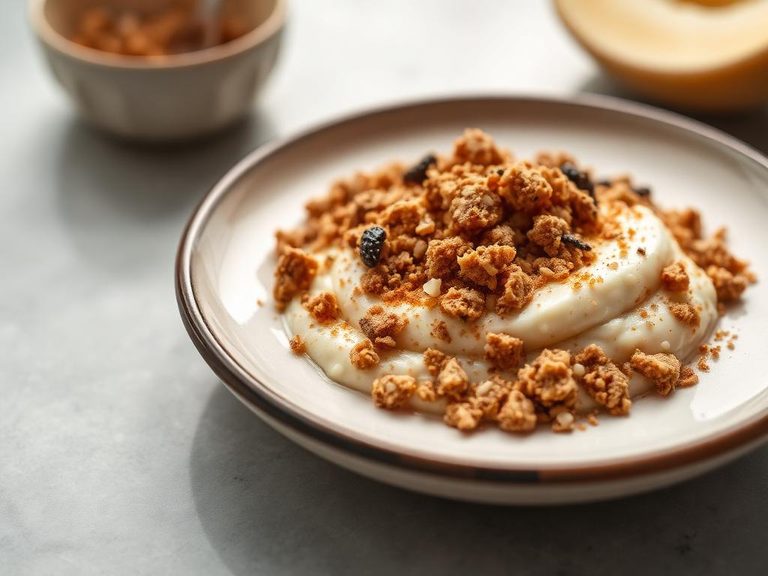
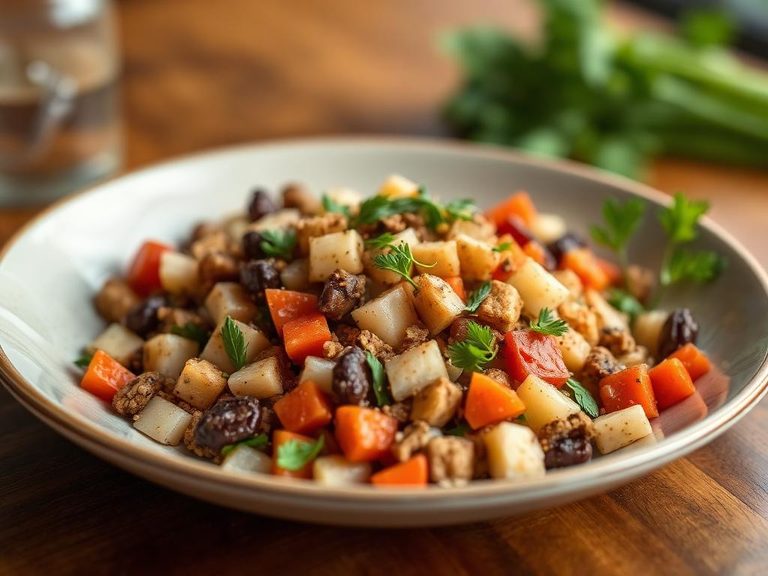
🌍 Where it's eaten
💡 Did you know?
The 'Kashi' name is derived from the founders' seven whole grains, a blend inspired by the concept of 'kashi' meaning 'food' or 'cereal' in some Eastern languages.
Full nutrition (USDA data · scales with serving)
| Water | 9.2 g |
| Energy | 390 kcal |
| Protein | 16.7 g |
| Total lipid (fat) | 7.7 g |
| Carbohydrate, by difference | 63.4 g |
| Fiber, total dietary | 7.7 g |
| Total Sugars | 42.3 g |
| Calcium, Ca | 103 mg |
| Iron, Fe | 1.6 mg |
| Magnesium, Mg | 321 mg |
| Phosphorus, P | 255 mg |
| Potassium, K | 429 mg |
| Sodium, Na | 321 mg |
| Zinc, Zn | 1.4 mg |
| Copper, Cu | 0.38 mg |
| Selenium, Se | 11.3 ug |
| Vitamin C, total ascorbic acid | 0.40 mg |
| Thiamin | 0.14 mg |
| Riboflavin | 0.15 mg |
| Niacin | 0.68 mg |
| Vitamin B-6 | 0.10 mg |
| Folate, total | 39.0 ug |
| Folic acid | 1.0 ug |
| Folate, food | 38.0 ug |
| Folate, DFE | 39.0 ug |
| Choline, total | 48.4 mg |
| Vitamin B-12 | 0.16 ug |
| Vitamin B-12, added | 0.00 ug |
| Vitamin A, RAE | 17.0 ug |
| Retinol | 16.0 ug |
| Carotene, beta | 5.0 ug |
| Carotene, alpha | 0.00 ug |
| Cryptoxanthin, beta | 1.0 ug |
| Lycopene | 0.00 ug |
| Lutein + zeaxanthin | 43.0 ug |
| Vitamin E (alpha-tocopherol) | 0.81 mg |
| Vitamin E, added | 0.00 mg |
| Vitamin D (D2 + D3) | 0.20 ug |
| Vitamin K (phylloquinone) | 3.6 ug |
| Alcohol, ethyl | 0.00 g |
| Caffeine | 3.0 mg |
| Theobromine | 31.0 mg |
Fat & fatty acid profile (per 100g)
| Fatty acids, total saturated | 3.2 g |
| SFA 4:0 | 0.07 g |
| SFA 6:0 | 0.04 g |
| SFA 8:0 | 0.09 g |
| SFA 10:0 | 0.13 g |
| SFA 12:0 | 1.0 g |
| SFA 14:0 | 0.51 g |
| SFA 16:0 | 0.96 g |
| SFA 18:0 | 0.40 g |
| Fatty acids, total monounsaturated | 2.6 g |
| MUFA 16:1 | 0.05 g |
| MUFA 18:1 | 2.5 g |
| MUFA 20:1 | 0.03 g |
| MUFA 22:1 | 0.01 g |
| Fatty acids, total polyunsaturated | 1.2 g |
| PUFA 18:2 | 1.0 g |
| PUFA 18:3 | 0.20 g |
| PUFA 18:4 | 0.00 g |
| PUFA 20:4 | 0.00 g |
| PUFA 20:5 n-3 (EPA) | 0.00 g |
| PUFA 22:5 n-3 (DPA) | 0.00 g |
| PUFA 22:6 n-3 (DHA) | 0.00 g |
| Cholesterol | 6.0 mg |
Amino acid profile (per 100g)
Estimated from Cereals ready-to-eat, granola, homemade — USDA does not publish this profile for Cereal or granola bar (Kashi Chewy).
| Tryptophan | 0.19 g |
| Threonine | 0.48 g |
| Isoleucine | 0.55 g |
| Leucine | 0.98 g |
| Lysine | 0.63 g |
| Methionine | 0.23 g |
| Cystine | 0.30 g |
| Phenylalanine | 0.67 g |
| Tyrosine | 0.38 g |
| Valine | 0.70 g |
| Arginine | 1.3 g |
| Histidine | 0.35 g |
| Alanine | 0.69 g |
| Aspartic acid | 1.4 g |
| Glutamic acid | 3.1 g |
| Glycine | 0.81 g |
| Proline | 0.66 g |
| Serine | 0.67 g |
| Hydroxyproline | 0.00 g |
FAQ
Is a Kashi Chewy bar a good meal replacement?
While it provides protein and fiber, it is calorie-dense and high in sugar. It's best used as a substantial snack or part of a meal, not a full replacement for a balanced meal with varied nutrients.
How does it compare to a candy bar nutritionally?
Compared to a typical candy bar, a Kashi bar generally offers more protein, fiber, and whole grains, and less saturated fat. However, its total sugar content can be similar, so it should still be treated as an occasional treat.
Are there common allergens in these bars?
Yes, they often contain common allergens like soy, nuts (almonds, peanuts), and sometimes milk or wheat. Always check the specific ingredient list for your allergen needs.
Nutrient density (calculated · NRF9.3)
Nutrient Rich Foods index: beneficial nutrients (protein, fiber, vitamins, minerals) minus saturated fat, added sugar & sodium, per 100 kcal.
NRF9.3 index — Fulgoni, Keast & Drewnowski, 2009. Computed from USDA nutrients.
Weight-loss friendliness (composite index)
Energy density 3.90 kcal/g · 17% calories from protein · 7.7 g fiber · 42.3 g sugar per 100 g.
Composite of energy density (Rolls et al., 1999), protein & fiber satiety, minus sugar. A calculated heuristic — ranks satiety-per-calorie, not a clinical measure.
Dietary load (calculated from USDA values)
Potential renal acid load. Positive = acid-forming, negative = alkaline-forming.
Sodium-to-potassium ratio: 0.75 (lower is better — aim for ≤ 1)
Sodium:potassium per WHO potassium guidance. Computed from USDA nutrients.