

Cereal, oat bunches
Common food

Photo: Wikipedia
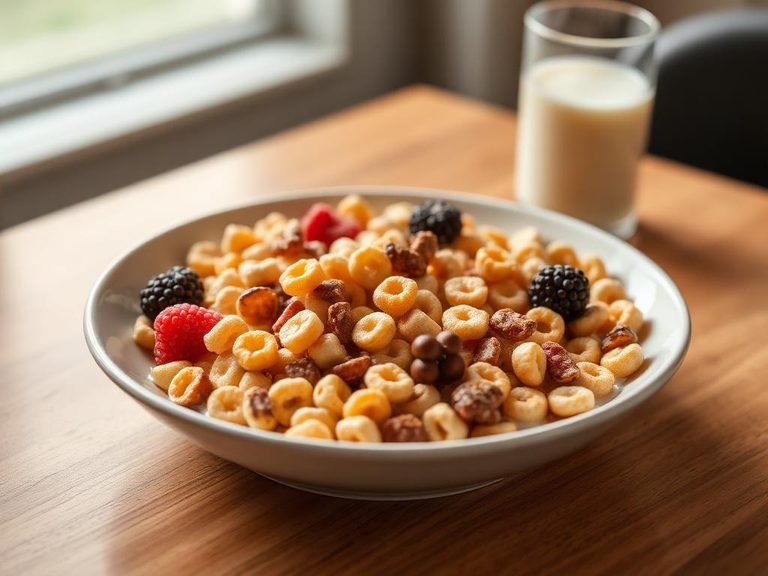
Oat bunches are a classic breakfast cereal made from whole rolled oats formed into dense, crunchy clusters. They offer a hearty, nutty flavor with a satisfyingly chewy texture that softens in milk, releasing a subtle, toasty sweetness. Nutritionally, they are a carbohydrate-rich energy source with a notable fiber content.
Calorie split: 8% protein · 78% carbs · 14% fat
↓ Full nutrition💚 Why it's loved
People love oat bunches for their comforting, malty flavor and the pleasant contrast between the crunchy clusters and creamy milk. They are a nostalgic, versatile staple, perfect for a quick bowl, topping yogurt, or snacking straight from the box.
⚠️ Watch-outs & how to enjoy it better
The high carbohydrate and sugar content can lead to a rapid blood-sugar spike, especially for those managing diabetes or insulin sensitivity. To counteract this, pair a smaller portion with a source of protein (like Greek yogurt or nuts) and healthy fat (like chia seeds or nut butter) to slow digestion. Choose brands with lower added sugar or look for those sweetened with fruit juice.
Key benefits
- Provides sustained energy from complex carbohydrates.
- Contains soluble fiber (beta-glucan) from oats.
- Offers a modest amount of plant-based protein.
- Serves as a quick, no-cook breakfast option.
- Can be a source of iron and B vitamins if fortified.
🍽️ Popular dishes
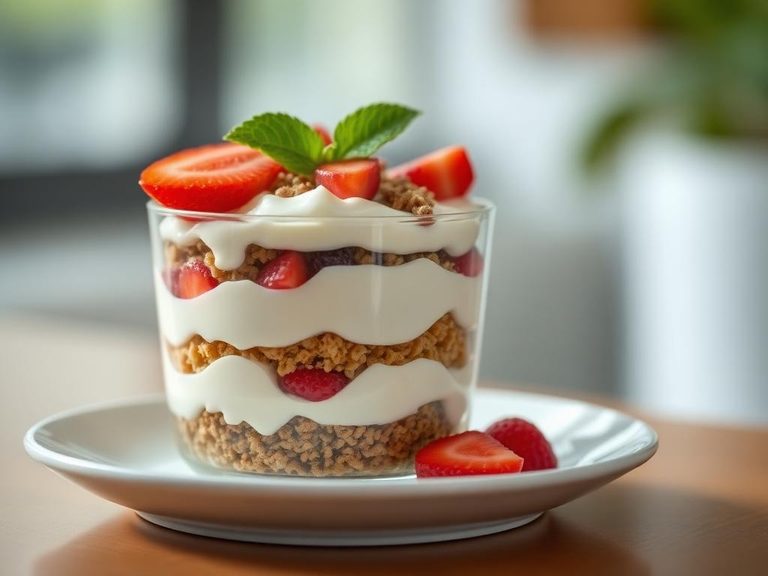
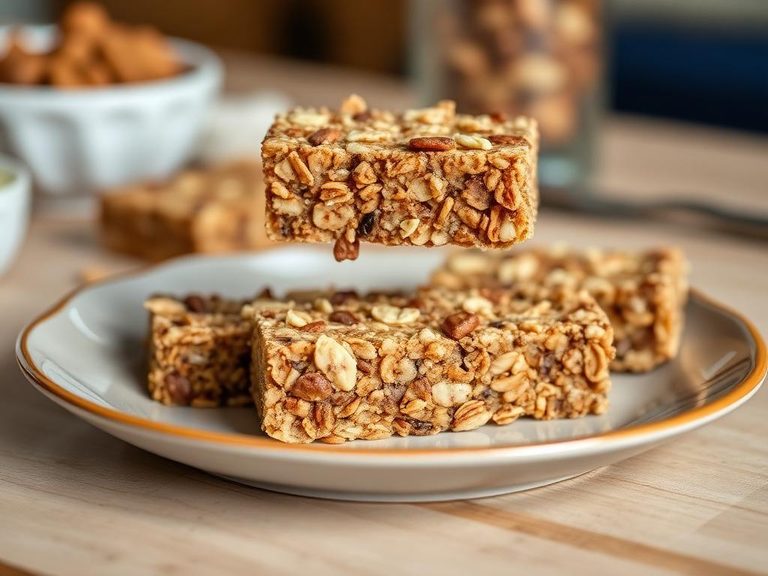
🌍 Where it's eaten
💡 Did you know?
The concept of 'bunched' or clustered oat cereal was popularized in the 1960s as a convenient, ready-to-eat alternative to hot porridge.
Full nutrition (USDA data · scales with serving)
| Water | 8.3 g |
| Energy | 392 kcal |
| Protein | 7.4 g |
| Total lipid (fat) | 6.1 g |
| Carbohydrate, by difference | 76.3 g |
| Fiber, total dietary | 4.6 g |
| Total Sugars | 20.7 g |
| Calcium, Ca | 15.0 mg |
| Iron, Fe | 28.2 mg |
| Magnesium, Mg | 41.0 mg |
| Phosphorus, P | 129 mg |
| Potassium, K | 141 mg |
| Sodium, Na | 428 mg |
| Zinc, Zn | 1.1 mg |
| Copper, Cu | 0.14 mg |
| Selenium, Se | 13.1 ug |
| Vitamin C, total ascorbic acid | 0.00 mg |
| Thiamin | 1.1 mg |
| Riboflavin | 1.0 mg |
| Niacin | 12.9 mg |
| Vitamin B-6 | 1.4 mg |
| Folate, total | 609 ug |
| Folic acid | 588 ug |
| Folate, food | 21.0 ug |
| Folate, DFE | 1020 ug |
| Choline, total | 11.6 mg |
| Vitamin B-12 | 1.8 ug |
| Vitamin B-12, added | 1.8 ug |
| Vitamin A, RAE | 4.0 ug |
| Retinol | 0.00 ug |
| Carotene, beta | 34.0 ug |
| Carotene, alpha | 22.0 ug |
| Cryptoxanthin, beta | 0.00 ug |
| Lycopene | 0.00 ug |
| Lutein + zeaxanthin | 599 ug |
| Vitamin E (alpha-tocopherol) | 0.81 mg |
| Vitamin E, added | 0.00 mg |
| Vitamin D (D2 + D3) | 5.0 ug |
| Vitamin K (phylloquinone) | 3.2 ug |
| Alcohol, ethyl | 0.00 g |
| Caffeine | 0.00 mg |
| Theobromine | 0.00 mg |
Fat & fatty acid profile (per 100g)
| Fatty acids, total saturated | 0.55 g |
| SFA 4:0 | 0.00 g |
| SFA 6:0 | 0.00 g |
| SFA 8:0 | 0.00 g |
| SFA 10:0 | 0.00 g |
| SFA 12:0 | 0.00 g |
| SFA 14:0 | 0.00 g |
| SFA 16:0 | 0.39 g |
| SFA 18:0 | 0.09 g |
| Fatty acids, total monounsaturated | 2.9 g |
| MUFA 16:1 | 0.01 g |
| MUFA 18:1 | 2.9 g |
| MUFA 20:1 | 0.07 g |
| MUFA 22:1 | 0.00 g |
| Fatty acids, total polyunsaturated | 1.7 g |
| PUFA 18:2 | 1.4 g |
| PUFA 18:3 | 0.32 g |
| PUFA 18:4 | 0.00 g |
| PUFA 20:4 | 0.00 g |
| PUFA 20:5 n-3 (EPA) | 0.00 g |
| PUFA 22:5 n-3 (DPA) | 0.00 g |
| PUFA 22:6 n-3 (DHA) | 0.00 g |
| Cholesterol | 0.00 mg |
Amino acid profile (per 100g)
Estimated from Cereals ready-to-eat, POST, HONEY BUNCHES OF OATS, honey roasted — USDA does not publish this profile for Cereal.
| Tryptophan | 0.09 g |
| Threonine | 0.24 g |
| Isoleucine | 0.26 g |
| Leucine | 0.80 g |
| Lysine | 0.12 g |
| Methionine | 0.10 g |
| Cystine | 0.11 g |
| Phenylalanine | 0.39 g |
| Tyrosine | 0.21 g |
| Valine | 0.34 g |
| Arginine | 0.24 g |
| Histidine | 0.18 g |
| Alanine | 0.46 g |
| Aspartic acid | 0.48 g |
| Glutamic acid | 1.9 g |
| Glycine | 0.27 g |
| Proline | 0.49 g |
| Serine | 0.38 g |
FAQ
How is this different from granola?
Oat bunches are typically baked with less oil and sweetener than granola, resulting in a lighter, less clumpy texture. Granola is often more heavily coated and toasted, making it richer and crunchier.
Is it a good post-workout food?
It can be, as it provides quick carbs to replenish glycogen. However, for optimal recovery, pair it with a dedicated protein source like a protein shake or eggs, as its own protein content is moderate.
Can I eat it on a gluten-free diet?
Oats are naturally gluten-free, but they are often processed in facilities that handle wheat. For celiac disease, you must choose a certified gluten-free brand to avoid cross-contamination.
Nutrient density (calculated · NRF9.3)
Nutrient Rich Foods index: beneficial nutrients (protein, fiber, vitamins, minerals) minus saturated fat, added sugar & sodium, per 100 kcal.
NRF9.3 index — Fulgoni, Keast & Drewnowski, 2009. Computed from USDA nutrients.
Weight-loss friendliness (composite index)
Energy density 3.92 kcal/g · 8% calories from protein · 4.6 g fiber · 20.7 g sugar per 100 g.
Composite of energy density (Rolls et al., 1999), protein & fiber satiety, minus sugar. A calculated heuristic — ranks satiety-per-calorie, not a clinical measure.
Dietary load (calculated from USDA values)
Potential renal acid load. Positive = acid-forming, negative = alkaline-forming.
Sodium-to-potassium ratio: 3.04 (lower is better — aim for ≤ 1)
Sodium:potassium per WHO potassium guidance. Computed from USDA nutrients.