

Cereals ready-to-eat, POST, HONEY BUNCHES OF OATS with vanilla bunches
Whole food · Breakfast Cereals

Photo: Wikipedia
This is a classic American ready-to-eat cereal featuring crunchy, toasted oat clusters and flakes, sweetened with honey and accented by distinct, creamy vanilla-flavored bunches. It offers a satisfying textural contrast between the crisp flakes and the slightly softer, flavor-packed clusters. Nutritionally, it provides a notable amount of dietary fiber (7.8g) per 100g, contributing to its satisfying quality.
Calorie split: 8% protein · 81% carbs · 11% fat
↓ Full nutrition💚 Why it's loved
People love it for the perfect balance of honey-sweetened crunch and the distinct, creamy vanilla flavor in the special bunches, making each spoonful interesting. It's a nostalgic staple that pairs perfectly with cold milk or a splash of cream, offering a quick, comforting, and familiar start to the day.
⚠️ Watch-outs & how to enjoy it better
The relatively high sugar content (20.7g per 100g) can lead to a rapid blood-sugar spike if eaten alone, which is a concern for those managing blood glucose levels. To counteract this, pair it with a source of protein and fat, like Greek yogurt or a handful of nuts, or stick to a measured portion (about 3/4 cup) to moderate the glycemic impact.
Key benefits
- Good source of dietary fiber (7.8g per 100g)
- Provides plant-based protein (7.9g per 100g)
- Fortified with essential vitamins and minerals
- Convenient, no-cook breakfast option
- Contains whole grain oats as a primary ingredient
🍽️ Popular dishes
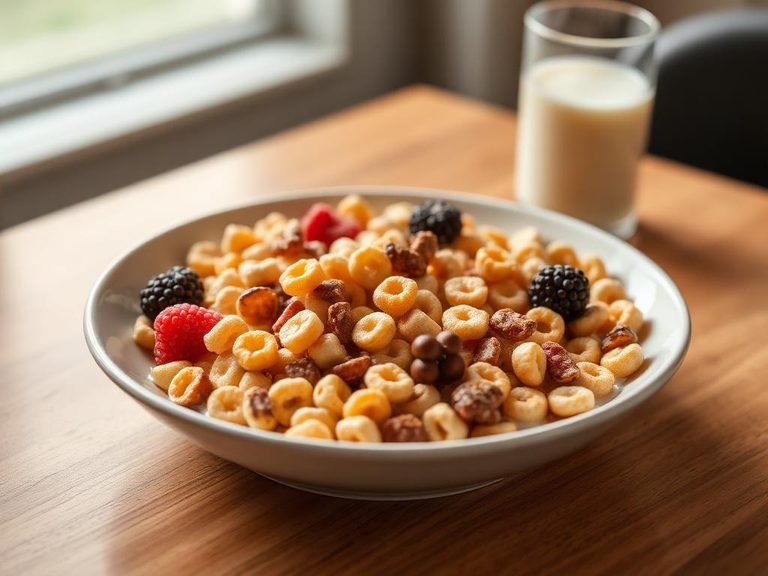
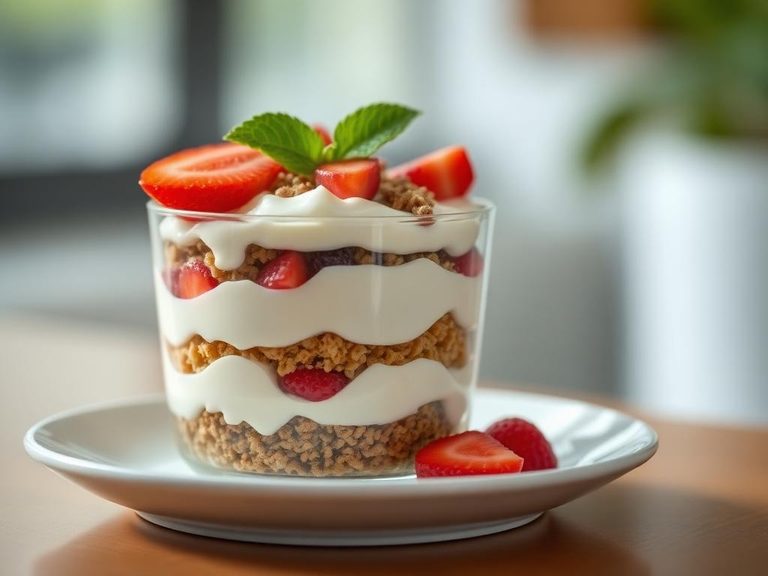
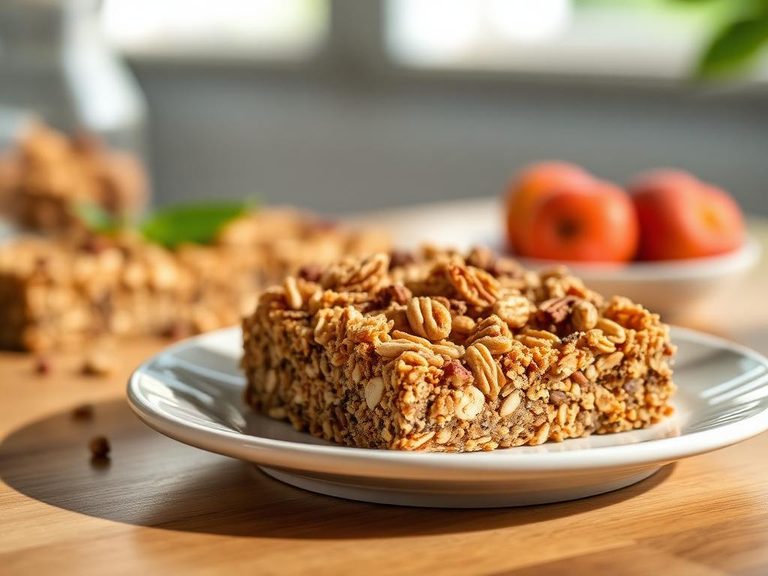

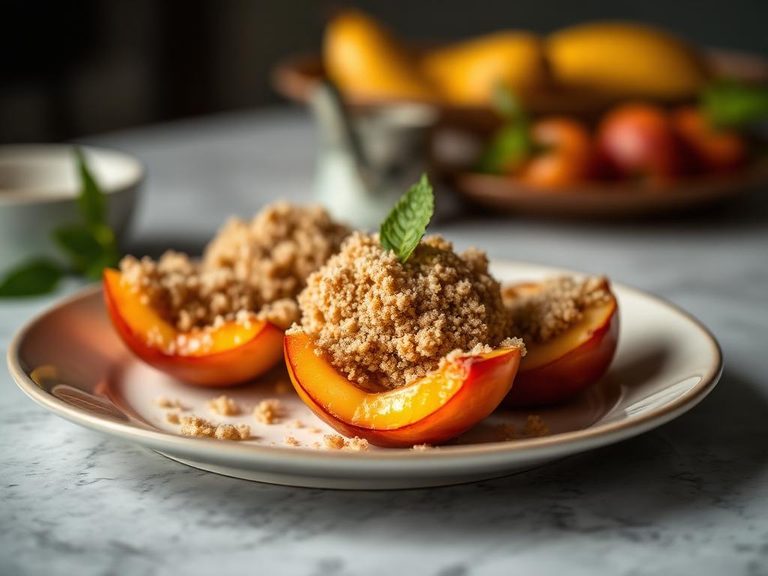
🌍 Where it's eaten
💡 Did you know?
The 'vanilla bunches' are a distinct, patented component of the cereal, designed to provide concentrated flavor bursts that contrast with the standard oat flakes and clusters.
Full nutrition (USDA data · scales with serving)
| Water | 3.0 g |
| Energy | 394 kcal |
| Energy | 1650 kj |
| Protein | 7.9 g |
| Total lipid (fat) | 5.1 g |
| Ash | 2.1 g |
| Carbohydrate, by difference | 81.8 g |
| Fiber, total dietary | 7.8 g |
| Total Sugars | 20.7 g |
| Calcium, Ca | 33.0 mg |
| Iron, Fe | 28.9 mg |
| Magnesium, Mg | 75.0 mg |
| Phosphorus, P | 232 mg |
| Potassium, K | 262 mg |
| Sodium, Na | 267 mg |
| Zinc, Zn | 6.7 mg |
| Copper, Cu | 0.30 mg |
| Selenium, Se | 7.3 ug |
| Vitamin C, total ascorbic acid | 0.00 mg |
| Thiamin | 0.70 mg |
| Riboflavin | 0.80 mg |
| Niacin | 8.9 mg |
| Vitamin B-6 | 0.90 mg |
| Folate, total | 357 ug |
| Folic acid | 338 ug |
| Folate, food | 19.0 ug |
| Folate, DFE | 594 ug |
| Choline, total | 22.9 mg |
| Vitamin B-12 | 2.7 ug |
| Vitamin B-12, added | 2.7 ug |
| Vitamin A, RAE | 527 ug |
| Retinol | 525 ug |
| Carotene, beta | 11.0 ug |
| Carotene, alpha | 2.0 ug |
| Cryptoxanthin, beta | 18.0 ug |
| Vitamin A, IU | 1786 iu |
| Lycopene | 0.00 ug |
| Lutein + zeaxanthin | 141 ug |
| Vitamin E (alpha-tocopherol) | 0.94 mg |
| Vitamin E, added | 0.00 mg |
| Vitamin D (D2 + D3), International Units | 107 iu |
| Vitamin D (D2 + D3) | 2.7 ug |
| Vitamin D3 (cholecalciferol) | 2.7 ug |
| Vitamin K (phylloquinone) | 3.3 ug |
| Alcohol, ethyl | 0.00 g |
| Caffeine | 0.00 mg |
| Theobromine | 0.00 mg |
Fat & fatty acid profile (per 100g)
| Fatty acids, total saturated | 0.60 g |
| SFA 4:0 | 0.00 g |
| SFA 6:0 | 0.00 g |
| SFA 8:0 | 0.00 g |
| SFA 10:0 | 0.00 g |
| SFA 12:0 | 0.00 g |
| SFA 14:0 | 0.00 g |
| SFA 16:0 | 0.48 g |
| SFA 18:0 | 0.08 g |
| Fatty acids, total monounsaturated | 2.5 g |
| MUFA 16:1 | 0.01 g |
| MUFA 18:1 | 2.5 g |
| MUFA 20:1 | 0.03 g |
| MUFA 22:1 | 0.00 g |
| Fatty acids, total polyunsaturated | 1.7 g |
| PUFA 18:2 | 1.6 g |
| PUFA 18:3 | 0.15 g |
| PUFA 18:4 | 0.00 g |
| PUFA 20:2 n-6 c,c | 0.00 g |
| PUFA 20:3 | 0.00 g |
| PUFA 20:4 | 0.00 g |
| PUFA 20:5 n-3 (EPA) | 0.00 g |
| PUFA 22:5 n-3 (DPA) | 0.00 g |
| PUFA 22:6 n-3 (DHA) | 0.00 g |
| Fatty acids, total trans | 0.00 g |
| Cholesterol | 0.00 mg |
FAQ
Is this cereal a good source of fiber?
Yes, it provides 7.8 grams of dietary fiber per 100g, which is a significant amount for a breakfast cereal and contributes to digestive health and satiety.
Can I eat this if I'm lactose intolerant?
The cereal itself is typically dairy-free, but it is often consumed with milk. You can enjoy it with lactose-free milk, plant-based alternatives like almond or oat milk, or simply on its own.
Why is the sugar content listed as 20.7g?
This includes both added sugars (like honey and sugar) and naturally occurring sugars from ingredients like oats. It's a sweetened cereal, so portion control is key if you're monitoring sugar intake.
Nutrient density (calculated · NRF9.3)
Nutrient Rich Foods index: beneficial nutrients (protein, fiber, vitamins, minerals) minus saturated fat, added sugar & sodium, per 100 kcal.
NRF9.3 index — Fulgoni, Keast & Drewnowski, 2009. Computed from USDA nutrients.
Weight-loss friendliness (composite index)
Energy density 3.94 kcal/g · 8% calories from protein · 7.8 g fiber · 20.7 g sugar per 100 g.
Composite of energy density (Rolls et al., 1999), protein & fiber satiety, minus sugar. A calculated heuristic — ranks satiety-per-calorie, not a clinical measure.
Dietary load (calculated from USDA values)
Potential renal acid load. Positive = acid-forming, negative = alkaline-forming.
Sodium-to-potassium ratio: 1.02 (lower is better — aim for ≤ 1)
Sodium:potassium per WHO potassium guidance. Computed from USDA nutrients.