

Cereal, granola
Common food
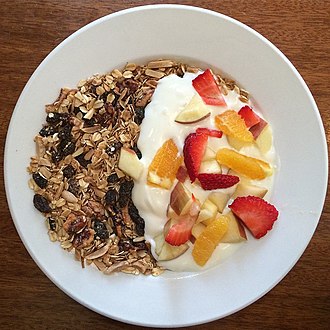
Photo: Wikipedia
Granola is a hearty, oven-baked mixture of rolled oats, nuts, seeds, and sweeteners, often bound with oil and honey or maple syrup. Its texture is a delightful contrast of crunchy clusters and chewy bits, with a toasty, nutty flavor that can be sweet, savory, or spiced. Nutritionally, it's a calorie-dense energy source, providing a solid boost of carbohydrates and fiber, though its sugar content is a key consideration.
Calorie split: 9% protein · 63% carbs · 28% fat
↓ Full nutrition💚 Why it's loved
People love granola for its satisfying crunch and customizable sweetness, making it a beloved breakfast staple and snack. Its versatility allows it to be paired with yogurt, milk, fruit, or eaten by the handful, fitting into busy lifestyles and diverse culinary traditions.
⚠️ Watch-outs & how to enjoy it better
Granola can be high in added sugars and calories, potentially causing blood-sugar spikes if consumed in large portions. To counteract this, pair it with protein-rich Greek yogurt or nuts, practice portion control (stick to a 1/2 cup serving), and choose low-sugar varieties or make your own with minimal sweeteners.
Key benefits
- Provides sustained energy from complex carbs and fiber
- Good source of plant-based protein from oats and nuts
- Contains healthy fats from nuts, seeds, and oils
- High in dietary fiber, supporting digestive health
- Versatile base for breakfast or snacks
🍽️ Popular dishes
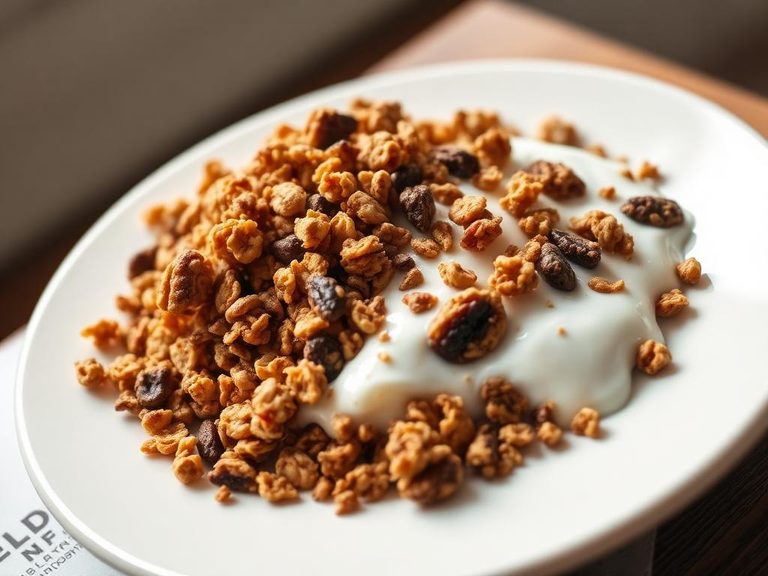
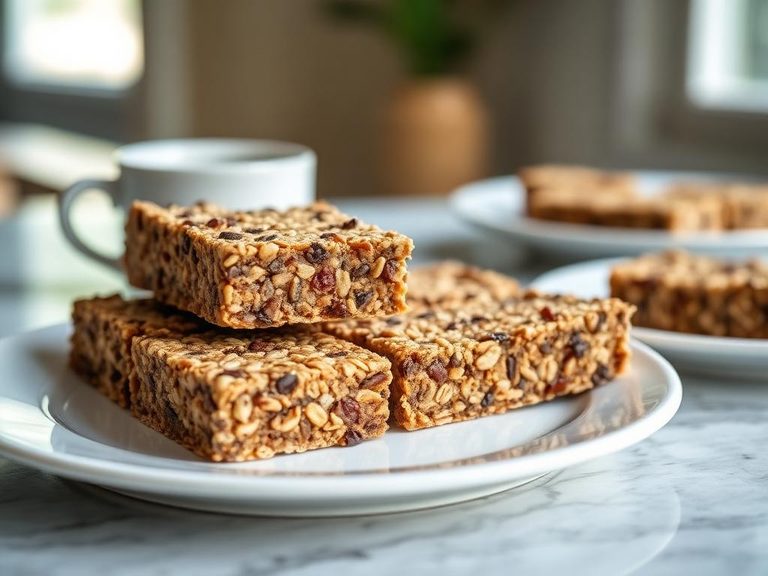
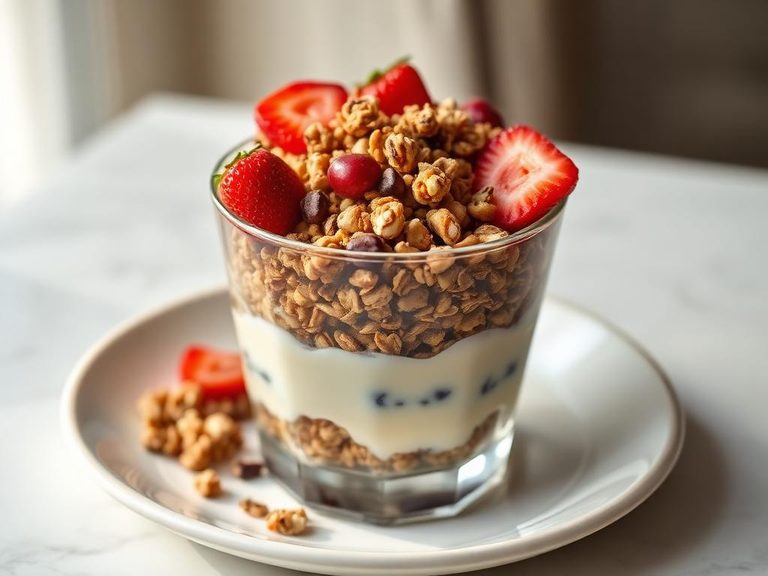
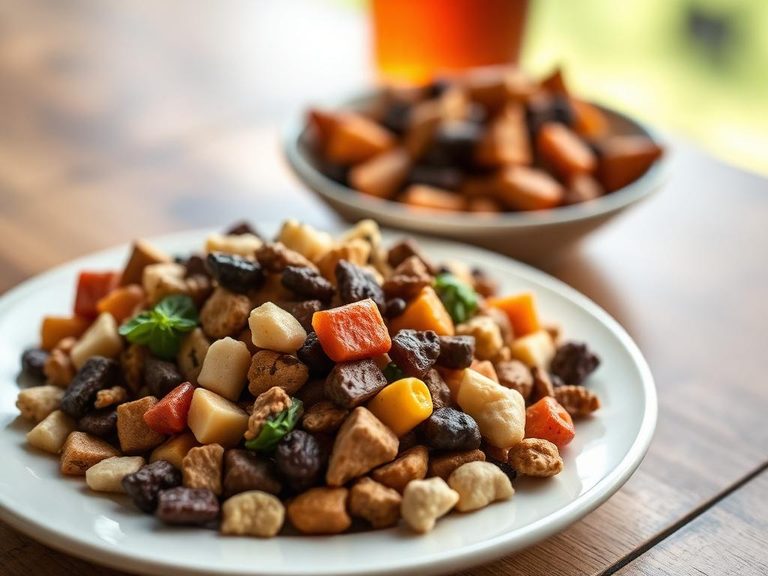
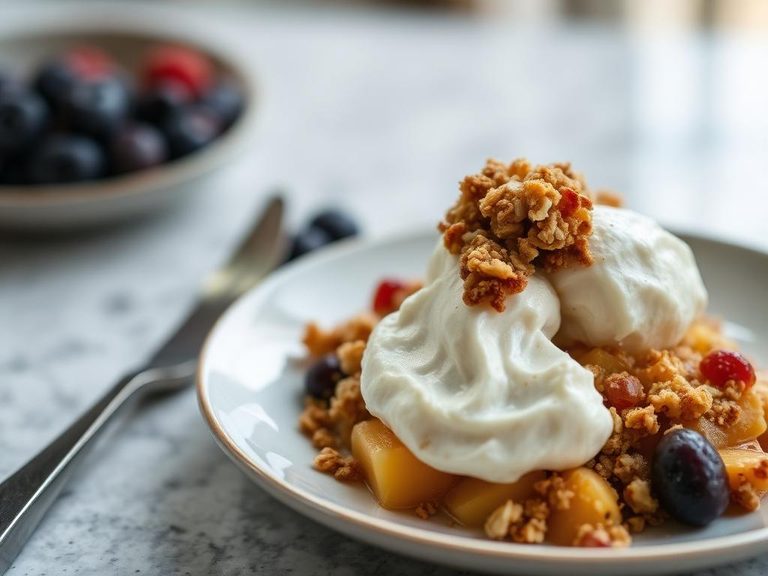
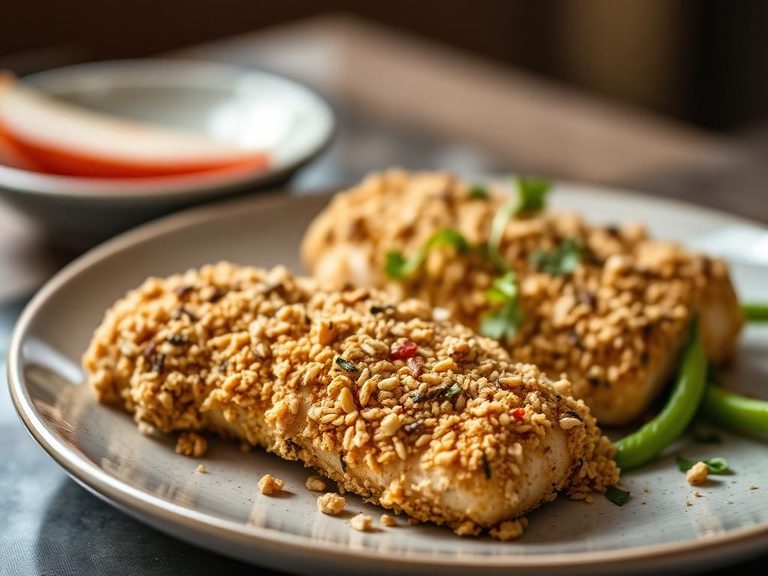
🌍 Where it's eaten
💡 Did you know?
The word 'granola' was trademarked in 1886 by Dr. John Harvey Kellogg for his breakfast cereal, but the concept of baked grain mixtures dates back to the 19th-century health food movement.
Full nutrition (USDA data · scales with serving)
| Water | 8.0 g |
| Energy | 420 kcal |
| Protein | 9.8 g |
| Total lipid (fat) | 13.0 g |
| Carbohydrate, by difference | 67.3 g |
| Fiber, total dietary | 7.4 g |
| Total Sugars | 22.2 g |
| Calcium, Ca | 51.0 mg |
| Iron, Fe | 3.1 mg |
| Magnesium, Mg | 106 mg |
| Phosphorus, P | 297 mg |
| Potassium, K | 310 mg |
| Sodium, Na | 161 mg |
| Zinc, Zn | 2.6 mg |
| Copper, Cu | 0.33 mg |
| Selenium, Se | 19.1 ug |
| Vitamin C, total ascorbic acid | 0.10 mg |
| Thiamin | 0.31 mg |
| Riboflavin | 0.17 mg |
| Niacin | 0.96 mg |
| Vitamin B-6 | 0.08 mg |
| Folate, total | 24.0 ug |
| Folic acid | 0.00 ug |
| Folate, food | 24.0 ug |
| Folate, DFE | 24.0 ug |
| Choline, total | 29.6 mg |
| Vitamin B-12 | 0.00 ug |
| Vitamin B-12, added | 0.00 ug |
| Vitamin A, RAE | 0.00 ug |
| Retinol | 0.00 ug |
| Carotene, beta | 0.00 ug |
| Carotene, alpha | 0.00 ug |
| Cryptoxanthin, beta | 0.00 ug |
| Lycopene | 0.00 ug |
| Lutein + zeaxanthin | 118 ug |
| Vitamin E (alpha-tocopherol) | 2.5 mg |
| Vitamin E, added | 0.00 mg |
| Vitamin D (D2 + D3) | 0.00 ug |
| Vitamin K (phylloquinone) | 5.8 ug |
| Alcohol, ethyl | 0.00 g |
| Caffeine | 0.00 mg |
| Theobromine | 0.00 mg |
Fat & fatty acid profile (per 100g)
| Fatty acids, total saturated | 1.3 g |
| SFA 4:0 | 0.00 g |
| SFA 6:0 | 0.00 g |
| SFA 8:0 | 0.00 g |
| SFA 10:0 | 0.00 g |
| SFA 12:0 | 0.01 g |
| SFA 14:0 | 0.01 g |
| SFA 16:0 | 1.0 g |
| SFA 18:0 | 0.18 g |
| Fatty acids, total monounsaturated | 6.7 g |
| MUFA 16:1 | 0.03 g |
| MUFA 18:1 | 6.6 g |
| MUFA 20:1 | 0.11 g |
| MUFA 22:1 | 0.00 g |
| Fatty acids, total polyunsaturated | 3.7 g |
| PUFA 18:2 | 3.2 g |
| PUFA 18:3 | 0.52 g |
| PUFA 18:4 | 0.00 g |
| PUFA 20:4 | 0.00 g |
| PUFA 20:5 n-3 (EPA) | 0.00 g |
| PUFA 22:5 n-3 (DPA) | 0.00 g |
| PUFA 22:6 n-3 (DHA) | 0.00 g |
| Cholesterol | 0.00 mg |
Amino acid profile (per 100g)
Estimated from Cereals ready-to-eat, POST, HONEY BUNCHES OF OATS, honey roasted — USDA does not publish this profile for Cereal.
| Tryptophan | 0.09 g |
| Threonine | 0.24 g |
| Isoleucine | 0.26 g |
| Leucine | 0.80 g |
| Lysine | 0.12 g |
| Methionine | 0.10 g |
| Cystine | 0.11 g |
| Phenylalanine | 0.39 g |
| Tyrosine | 0.21 g |
| Valine | 0.34 g |
| Arginine | 0.24 g |
| Histidine | 0.18 g |
| Alanine | 0.46 g |
| Aspartic acid | 0.48 g |
| Glutamic acid | 1.9 g |
| Glycine | 0.27 g |
| Proline | 0.49 g |
| Serine | 0.38 g |
FAQ
Is granola healthy?
Granola can be healthy when chosen or made with minimal added sugars, healthy fats, and whole ingredients. It provides fiber, protein, and energy, but portion control is key due to its calorie density.
How should I store granola?
Store granola in an airtight container in a cool, dry place to maintain its crunch. It can last for several weeks, but avoid moisture to prevent sogginess.
Can granola be part of a weight-loss diet?
Yes, but in moderation. Due to its high calorie and sugar content, stick to small portions (e.g., 1/4 cup) and pair it with protein and fiber-rich foods like Greek yogurt or fruit to enhance satiety.
Nutrient density (calculated · NRF9.3)
Nutrient Rich Foods index: beneficial nutrients (protein, fiber, vitamins, minerals) minus saturated fat, added sugar & sodium, per 100 kcal.
NRF9.3 index — Fulgoni, Keast & Drewnowski, 2009. Computed from USDA nutrients.
Weight-loss friendliness (composite index)
Energy density 4.20 kcal/g · 9% calories from protein · 7.4 g fiber · 22.2 g sugar per 100 g.
Composite of energy density (Rolls et al., 1999), protein & fiber satiety, minus sugar. A calculated heuristic — ranks satiety-per-calorie, not a clinical measure.
Dietary load (calculated from USDA values)
Potential renal acid load. Positive = acid-forming, negative = alkaline-forming.
Sodium-to-potassium ratio: 0.52 (lower is better — aim for ≤ 1)
Sodium:potassium per WHO potassium guidance. Computed from USDA nutrients.