

Carrots, fresh, cooked with butter or margarine
Common food

Photo: Wikipedia
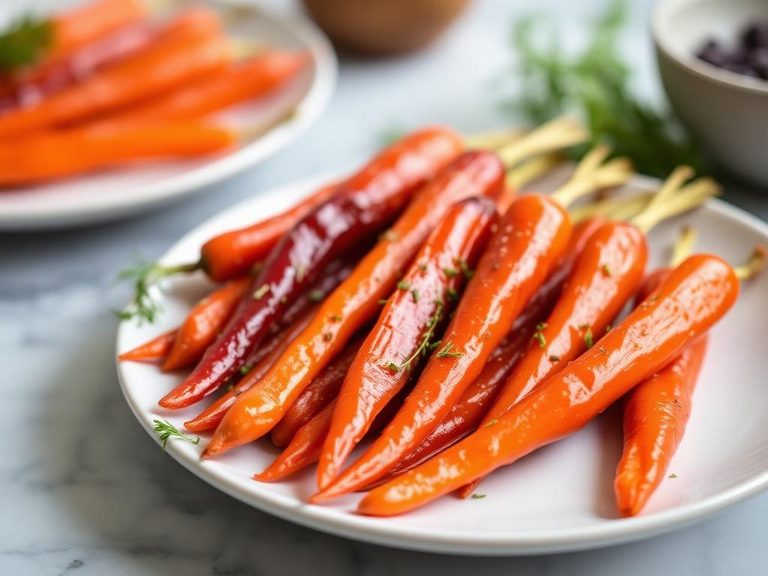
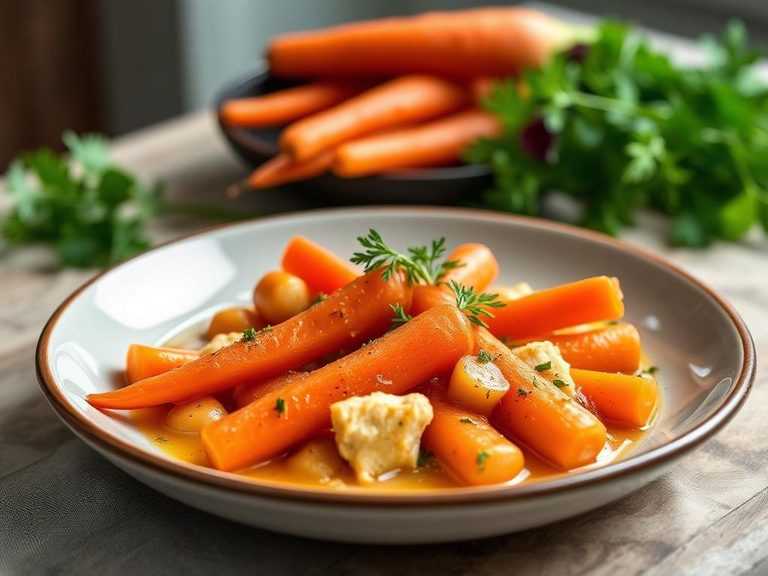
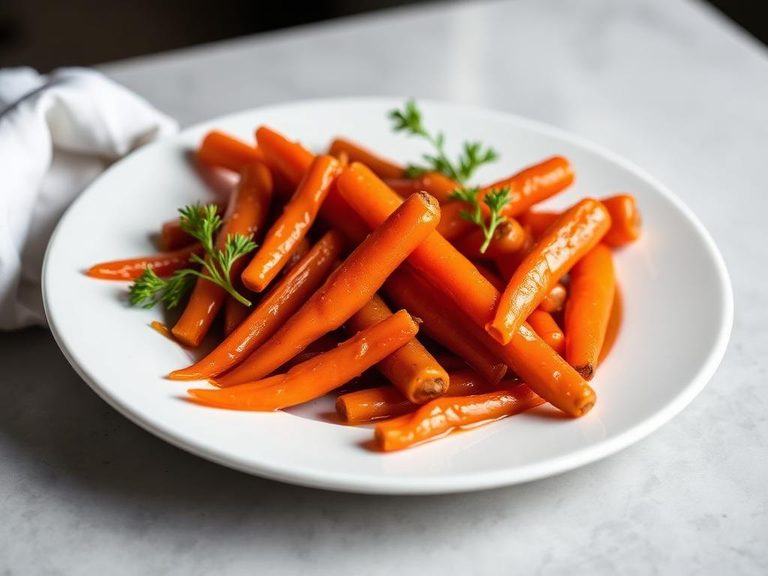
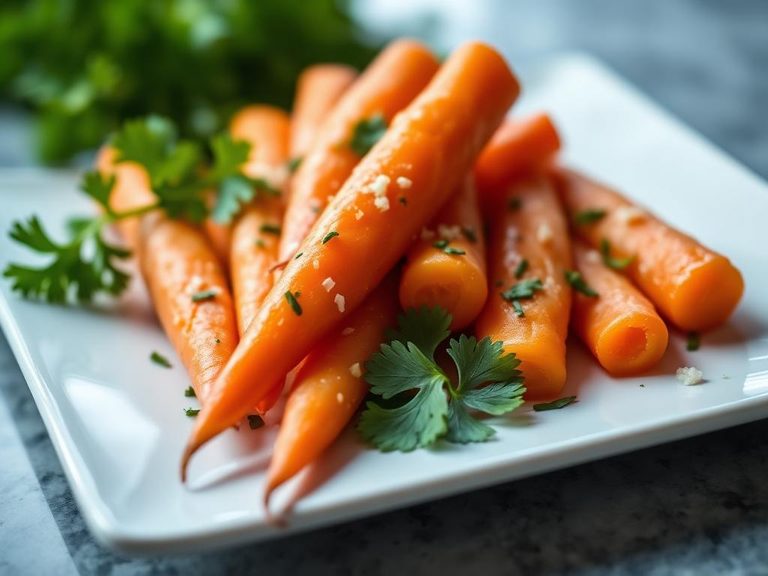
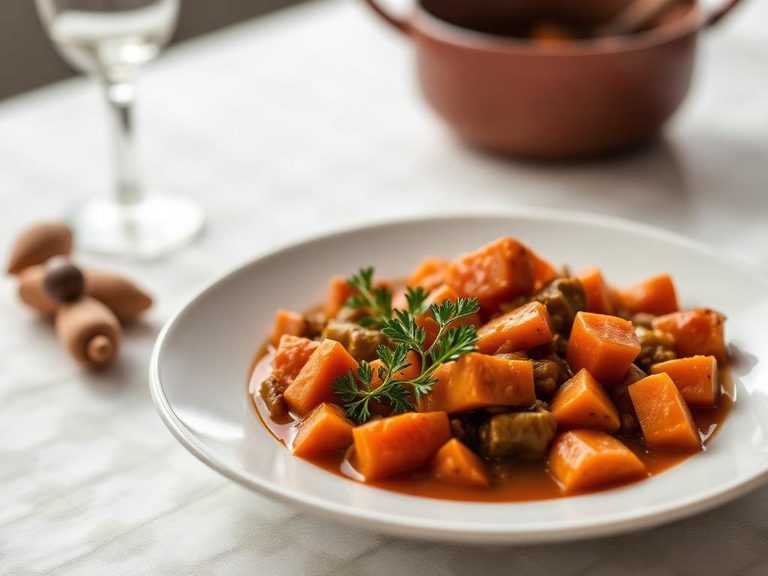
This is the classic comfort side: tender carrot batons or coins, glazed in butter until they glisten with a sweet, earthy aroma. The cooking process softens their fibrous bite into a velvety texture while the butter adds a rich, savory finish that amplifies their natural sweetness. Nutritionally, it's a standout for delivering a massive dose of beta-carotene (vitamin A precursor) and fiber for just 69 calories per 100g.
Calorie split: 6% protein · 60% carbs · 34% fat
↓ Full nutrition💚 Why it's loved
People love it for its perfect balance of sweet and savory, where the butter's richness transforms a simple vegetable into a decadent treat. It's a nostalgic, versatile staple that pairs beautifully with everything from roasted chicken to holiday roasts.
⚠️ Watch-outs & how to enjoy it better
The added butter increases saturated fat and calories, which may concern those monitoring heart health or weight. The natural sugars, while healthy, can cause a moderate blood-sugar rise if eaten in large portions alone. Tip: Pair with a lean protein (like chicken or fish) and keep portions to about 1 cup to blunt the glycemic impact. For a lighter version, use a small amount of olive oil or broth.
Key benefits
- Excellent source of beta-carotene, converted to vitamin A for vision and immune health.
- Provides soluble fiber (pectin) to support healthy cholesterol and blood sugar levels.
- Contains antioxidants like lutein and lycopene that support cellular health.
- The fat from butter significantly increases absorption of fat-soluble vitamins A and K.
- A low-calorie, nutrient-dense side that adds volume and satisfaction to meals.
🍽️ Popular dishes
🌍 Where it's eaten
💡 Did you know?
Cooking carrots actually makes their beta-carotene more bioavailable to your body than eating them raw, as the heat breaks down tough cell walls.
Full nutrition (USDA data · scales with serving)
| Water | 85.0 g |
| Energy | 69.0 kcal |
| Protein | 0.96 g |
| Total lipid (fat) | 2.6 g |
| Carbohydrate, by difference | 10.4 g |
| Fiber, total dietary | 3.1 g |
| Total Sugars | 4.8 g |
| Calcium, Ca | 31.0 mg |
| Iron, Fe | 0.15 mg |
| Magnesium, Mg | 12.0 mg |
| Phosphorus, P | 41.0 mg |
| Potassium, K | 283 mg |
| Sodium, Na | 223 mg |
| Zinc, Zn | 0.24 mg |
| Copper, Cu | 0.06 mg |
| Selenium, Se | 0.00 ug |
| Vitamin C, total ascorbic acid | 5.1 mg |
| Thiamin | 0.06 mg |
| Riboflavin | 0.09 mg |
| Niacin | 1.3 mg |
| Vitamin B-6 | 0.17 mg |
| Folate, total | 32.0 ug |
| Folic acid | 0.00 ug |
| Folate, food | 32.0 ug |
| Folate, DFE | 32.0 ug |
| Choline, total | 9.3 mg |
| Vitamin B-12 | 0.00 ug |
| Vitamin B-12, added | 0.00 ug |
| Vitamin A, RAE | 824 ug |
| Retinol | 23.0 ug |
| Carotene, beta | 7947 ug |
| Carotene, alpha | 3331 ug |
| Cryptoxanthin, beta | 0.00 ug |
| Lycopene | 1.0 ug |
| Lutein + zeaxanthin | 245 ug |
| Vitamin E (alpha-tocopherol) | 0.88 mg |
| Vitamin E, added | 0.00 mg |
| Vitamin D (D2 + D3) | 0.10 ug |
| Vitamin K (phylloquinone) | 14.6 ug |
| Alcohol, ethyl | 0.00 g |
| Caffeine | 0.00 mg |
| Theobromine | 0.00 mg |
Fat & fatty acid profile (per 100g)
| Fatty acids, total saturated | 1.0 g |
| SFA 4:0 | 0.04 g |
| SFA 6:0 | 0.03 g |
| SFA 8:0 | 0.01 g |
| SFA 10:0 | 0.04 g |
| SFA 12:0 | 0.04 g |
| SFA 14:0 | 0.13 g |
| SFA 16:0 | 0.50 g |
| SFA 18:0 | 0.20 g |
| Fatty acids, total monounsaturated | 0.61 g |
| MUFA 16:1 | 0.02 g |
| MUFA 18:1 | 0.57 g |
| MUFA 20:1 | 0.00 g |
| MUFA 22:1 | 0.00 g |
| Fatty acids, total polyunsaturated | 0.46 g |
| PUFA 18:2 | 0.42 g |
| PUFA 18:3 | 0.04 g |
| PUFA 18:4 | 0.00 g |
| PUFA 20:4 | 0.00 g |
| PUFA 20:5 n-3 (EPA) | 0.00 g |
| PUFA 22:5 n-3 (DPA) | 0.00 g |
| PUFA 22:6 n-3 (DHA) | 0.00 g |
| Cholesterol | 4.0 mg |
Amino acid profile (per 100g)
Estimated from Carrots, canned, no salt added, drained solids — USDA does not publish this profile for Carrots.
| Tryptophan | 0.01 g |
| Threonine | 0.02 g |
| Isoleucine | 0.03 g |
| Leucine | 0.03 g |
| Lysine | 0.03 g |
| Methionine | 0.00 g |
| Cystine | 0.01 g |
| Phenylalanine | 0.02 g |
| Tyrosine | 0.01 g |
| Valine | 0.03 g |
| Arginine | 0.03 g |
| Histidine | 0.01 g |
| Alanine | 0.04 g |
| Aspartic acid | 0.08 g |
| Glutamic acid | 0.12 g |
| Glycine | 0.02 g |
| Proline | 0.02 g |
| Serine | 0.02 g |
FAQ
Is this healthier than raw carrots?
It's a trade-off. Cooking increases the availability of some nutrients like beta-carotene, but the added butter increases calories and fat. Raw carrots retain more heat-sensitive vitamin C. Both are healthy choices depending on your dietary goals.
Can I use margarine instead of butter?
Yes, margarine will work for the glaze, but check the label. Some margarines contain trans fats (partially hydrogenated oils), which are less healthy than butter's saturated fat. A plant-based spread or a mix of butter and olive oil can be a good compromise.
How do I prevent them from getting mushy?
Cut carrots into uniform pieces for even cooking. Add them to a pan with the butter over medium heat, not boiling water. Cook just until fork-tender (usually 8-12 minutes), not beyond. They should have a slight bite, not be soft.
Nutrient density (calculated · NRF9.3)
Nutrient Rich Foods index: beneficial nutrients (protein, fiber, vitamins, minerals) minus saturated fat, added sugar & sodium, per 100 kcal.
NRF9.3 index — Fulgoni, Keast & Drewnowski, 2009. Computed from USDA nutrients.
Weight-loss friendliness (composite index)
Energy density 0.69 kcal/g · 6% calories from protein · 3.1 g fiber · 4.8 g sugar per 100 g.
Composite of energy density (Rolls et al., 1999), protein & fiber satiety, minus sugar. A calculated heuristic — ranks satiety-per-calorie, not a clinical measure.
Dietary load (calculated from USDA values)
Potential renal acid load. Positive = acid-forming, negative = alkaline-forming.
Sodium-to-potassium ratio: 0.79 (lower is better — aim for ≤ 1)
Sodium:potassium per WHO potassium guidance. Computed from USDA nutrients.