

Candy, fruit snacks
Common food
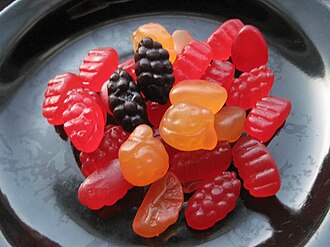
Photo: Wikipedia
These are brightly colored, chewy, fruit-flavored confections, often shaped like miniature fruits or animals. They deliver an intense, sweet burst of flavor with a satisfyingly soft and gummy texture. Nutritionally, they are a concentrated source of quick energy, composed almost entirely of simple carbohydrates and sugars.
Calorie split: 0% protein · 93% carbs · 7% fat
↓ Full nutrition💚 Why it's loved
People love them for their playful, nostalgic appeal and the immediate, satisfying burst of concentrated fruit flavor. Their soft, chewy texture and variety of fun shapes make them a versatile treat for lunchboxes, movie snacks, or quick energy on the go.
⚠️ Watch-outs & how to enjoy it better
The extremely high sugar content (nearly 50g per 100g) can cause rapid blood-sugar spikes and crashes, offering little satiety. For those monitoring sugar intake or managing diabetes, they should be consumed sparingly. To counteract this, pair a small portion with a source of protein or healthy fat (like a handful of nuts) to slow sugar absorption and increase fullness.
Key benefits
- Provides a rapid source of energy for quick fuel.
- Offers a convenient, portable, and shelf-stable snack.
- Can serve as a quick morale booster or treat.
- Popular with children for their fun shapes and flavors.
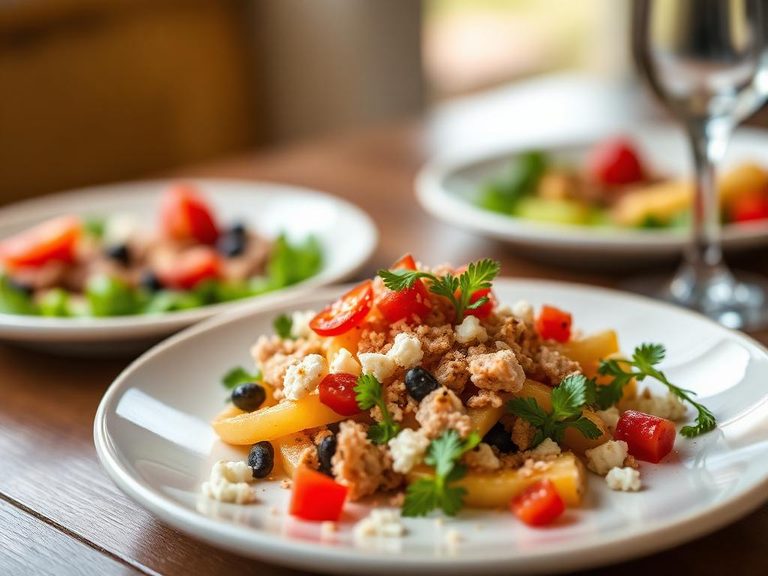
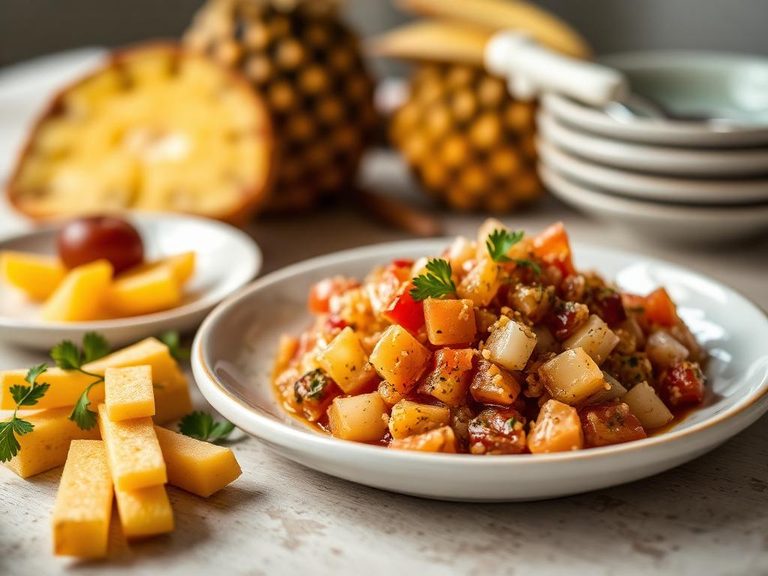
🍽️ Popular dishes
🌍 Where it's eaten
💡 Did you know?
The first commercially successful fruit snack, Jell-O brand gelatin dessert, was marketed in 1897, but the modern chewy fruit snack was popularized by General Mills' Betty Crocker brand in the 1980s as a 'fruit roll-up'.
Full nutrition (USDA data · scales with serving)
| Water | 10.2 g |
| Energy | 371 kcal |
| Protein | 0.10 g |
| Total lipid (fat) | 3.0 g |
| Carbohydrate, by difference | 85.8 g |
| Fiber, total dietary | 0.00 g |
| Total Sugars | 49.2 g |
| Calcium, Ca | 32.0 mg |
| Iron, Fe | 1.0 mg |
| Magnesium, Mg | 20.0 mg |
| Phosphorus, P | 31.0 mg |
| Potassium, K | 294 mg |
| Sodium, Na | 317 mg |
| Zinc, Zn | 0.19 mg |
| Copper, Cu | 0.17 mg |
| Selenium, Se | 0.40 ug |
| Vitamin C, total ascorbic acid | 120 mg |
| Thiamin | 0.08 mg |
| Riboflavin | 0.02 mg |
| Niacin | 0.10 mg |
| Vitamin B-6 | 0.30 mg |
| Folate, total | 2.0 ug |
| Folic acid | 0.00 ug |
| Folate, food | 2.0 ug |
| Folate, DFE | 2.0 ug |
| Choline, total | 13.2 mg |
| Vitamin B-12 | 0.00 ug |
| Vitamin B-12, added | 0.00 ug |
| Vitamin A, RAE | 6.0 ug |
| Retinol | 0.00 ug |
| Carotene, beta | 34.0 ug |
| Carotene, alpha | 1.0 ug |
| Cryptoxanthin, beta | 0.00 ug |
| Lycopene | 0.00 ug |
| Lutein + zeaxanthin | 41.0 ug |
| Vitamin E (alpha-tocopherol) | 0.56 mg |
| Vitamin E, added | 0.00 mg |
| Vitamin D (D2 + D3) | 0.00 ug |
| Vitamin K (phylloquinone) | 18.2 ug |
| Alcohol, ethyl | 0.00 g |
| Caffeine | 0.00 mg |
| Theobromine | 0.00 mg |
Fat & fatty acid profile (per 100g)
| Fatty acids, total saturated | 0.67 g |
| SFA 4:0 | 0.00 g |
| SFA 6:0 | 0.00 g |
| SFA 8:0 | 0.00 g |
| SFA 10:0 | 0.00 g |
| SFA 12:0 | 0.00 g |
| SFA 14:0 | 0.01 g |
| SFA 16:0 | 0.34 g |
| SFA 18:0 | 0.30 g |
| Fatty acids, total monounsaturated | 1.5 g |
| MUFA 16:1 | 0.00 g |
| MUFA 18:1 | 1.5 g |
| MUFA 20:1 | 0.00 g |
| MUFA 22:1 | 0.00 g |
| Fatty acids, total polyunsaturated | 0.55 g |
| PUFA 18:2 | 0.43 g |
| PUFA 18:3 | 0.12 g |
| PUFA 18:4 | 0.00 g |
| PUFA 20:4 | 0.00 g |
| PUFA 20:5 n-3 (EPA) | 0.00 g |
| PUFA 22:5 n-3 (DPA) | 0.00 g |
| PUFA 22:6 n-3 (DHA) | 0.00 g |
| Cholesterol | 0.00 mg |
Amino acid profile (per 100g)
Estimated from Oil, industrial, coconut, principal uses candy coatings, oil sprays, roasting nuts — USDA does not publish this profile for Candy.
| Tryptophan | 0.00 g |
| Threonine | 0.00 g |
| Isoleucine | 0.00 g |
| Leucine | 0.00 g |
| Lysine | 0.00 g |
| Methionine | 0.00 g |
| Cystine | 0.00 g |
| Phenylalanine | 0.00 g |
| Tyrosine | 0.00 g |
| Valine | 0.00 g |
| Arginine | 0.00 g |
| Histidine | 0.00 g |
| Alanine | 0.00 g |
| Aspartic acid | 0.00 g |
| Glutamic acid | 0.00 g |
| Glycine | 0.00 g |
| Proline | 0.00 g |
| Serine | 0.00 g |
FAQ
Are fruit snacks a good source of vitamins?
Some brands are fortified with vitamins like Vitamin C, but they should not be considered a primary source. The nutritional benefit is minimal compared to the high sugar content.
Can fruit snacks be part of a healthy diet?
They can be enjoyed occasionally as a treat, but due to their low nutrient density and high sugar, they are best limited and not a daily staple.
What is the main ingredient in fruit snacks?
The primary ingredients are typically fruit juice concentrate or puree, followed by sweeteners like corn syrup or sugar, and gelling agents like pectin or gelatin.
Nutrient density (calculated · NRF9.3)
Nutrient Rich Foods index: beneficial nutrients (protein, fiber, vitamins, minerals) minus saturated fat, added sugar & sodium, per 100 kcal.
NRF9.3 index — Fulgoni, Keast & Drewnowski, 2009. Computed from USDA nutrients.
Weight-loss friendliness (composite index)
Energy density 3.71 kcal/g · 0% calories from protein · 0.0 g fiber · 49.2 g sugar per 100 g.
Composite of energy density (Rolls et al., 1999), protein & fiber satiety, minus sugar. A calculated heuristic — ranks satiety-per-calorie, not a clinical measure.
Dietary load (calculated from USDA values)
Potential renal acid load. Positive = acid-forming, negative = alkaline-forming.
Sodium-to-potassium ratio: 1.08 (lower is better — aim for ≤ 1)
Sodium:potassium per WHO potassium guidance. Computed from USDA nutrients.