

Cabbage, red, pickled
Common food
Red pickled cabbage, often called sauerkraut or kiseli kupus, is shredded red cabbage fermented in a salt brine, transforming it into a vibrant, tangy, and crisp condiment. Its striking magenta color comes from anthocyanin pigments, which are preserved during fermentation. Nutritionally, it's a low-calorie, high-fiber food that provides a good dose of vitamin C and beneficial probiotics.
Calorie split: 9% protein · 88% carbs · 4% fat
↓ Full nutrition💚 Why it's loved
People adore it for its sharp, acidic crunch that cuts through rich, fatty foods like sausages or pork, providing a perfect flavor balance. It's a beloved staple in Central and Eastern European cuisine, symbolizing comfort and tradition, especially during winter months.
⚠️ Watch-outs & how to enjoy it better
The high sodium content from the brining process can be a concern for those monitoring blood pressure. The fermentation produces natural sugars and acids, which might cause digestive discomfort for some individuals. To manage sodium, you can rinse a portion before serving or look for low-sodium varieties. Pairing it with protein and fat (like in a Reuben sandwich) helps slow sugar absorption.
Key benefits
- Excellent source of gut-healthy probiotics from fermentation.
- Rich in vitamin C, an antioxidant that supports immune function.
- High in dietary fiber, aiding digestion and promoting fullness.
- Contains anthocyanins, antioxidants linked to reduced inflammation.
- Very low in fat and calories, making it a light, nutritious addition to meals.
🍽️ Popular dishes
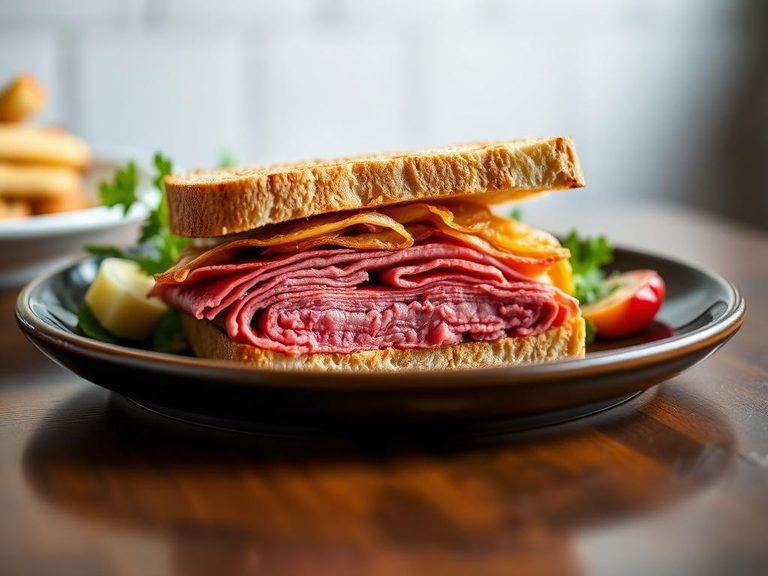
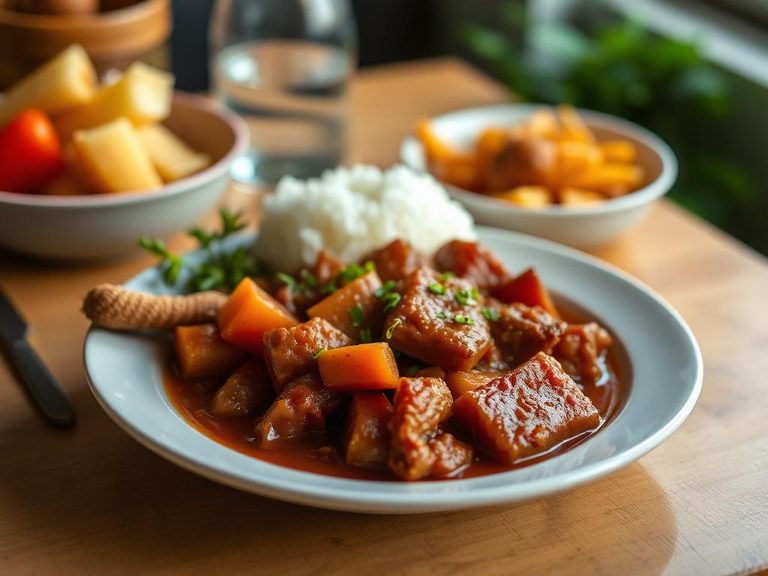

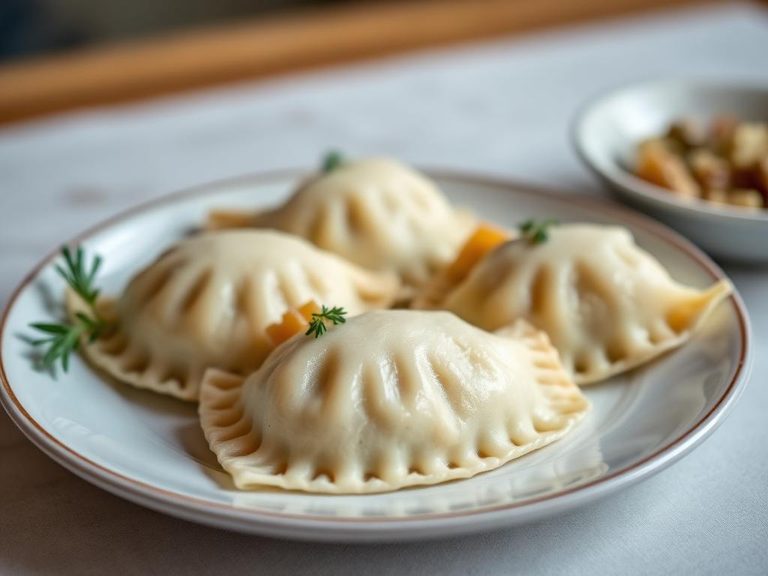
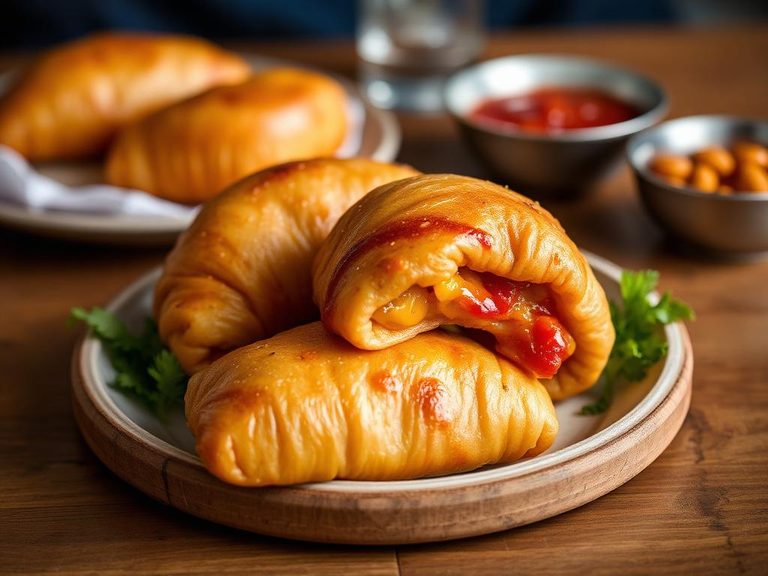
🌍 Where it's eaten
💡 Did you know?
The vibrant purple-red color of red cabbage can turn blue or green if the brine's pH becomes too alkaline; a splash of vinegar or acidic fruit juice is often added to preserve its beautiful hue.
Full nutrition (USDA data · scales with serving)
| Water | 85.1 g |
| Energy | 49.0 kcal |
| Protein | 1.0 g |
| Total lipid (fat) | 0.19 g |
| Carbohydrate, by difference | 10.5 g |
| Fiber, total dietary | 1.7 g |
| Total Sugars | 8.1 g |
| Calcium, Ca | 27.0 mg |
| Iron, Fe | 0.00 mg |
| Magnesium, Mg | 11.0 mg |
| Phosphorus, P | 30.0 mg |
| Potassium, K | 223 mg |
| Sodium, Na | 954 mg |
| Zinc, Zn | 0.20 mg |
| Copper, Cu | 0.00 mg |
| Selenium, Se | 0.60 ug |
| Vitamin C, total ascorbic acid | 38.0 mg |
| Thiamin | 0.05 mg |
| Riboflavin | 0.06 mg |
| Niacin | 0.33 mg |
| Vitamin B-6 | 0.13 mg |
| Folate, total | 13.0 ug |
| Folic acid | 0.00 ug |
| Folate, food | 13.0 ug |
| Folate, DFE | 13.0 ug |
| Choline, total | 14.2 mg |
| Vitamin B-12 | 0.00 ug |
| Vitamin B-12, added | 0.00 ug |
| Vitamin A, RAE | 44.0 ug |
| Retinol | 0.00 ug |
| Carotene, beta | 528 ug |
| Carotene, alpha | 0.00 ug |
| Cryptoxanthin, beta | 0.00 ug |
| Lycopene | 16.0 ug |
| Lutein + zeaxanthin | 259 ug |
| Vitamin E (alpha-tocopherol) | 0.09 mg |
| Vitamin E, added | 0.00 mg |
| Vitamin D (D2 + D3) | 0.00 ug |
| Vitamin K (phylloquinone) | 26.8 ug |
| Alcohol, ethyl | 0.00 g |
| Caffeine | 0.00 mg |
| Theobromine | 0.00 mg |
Fat & fatty acid profile (per 100g)
| Fatty acids, total saturated | 0.02 g |
| SFA 4:0 | 0.00 g |
| SFA 6:0 | 0.00 g |
| SFA 8:0 | 0.00 g |
| SFA 10:0 | 0.00 g |
| SFA 12:0 | 0.00 g |
| SFA 14:0 | 0.00 g |
| SFA 16:0 | 0.02 g |
| SFA 18:0 | 0.00 g |
| Fatty acids, total monounsaturated | 0.01 g |
| MUFA 16:1 | 0.00 g |
| MUFA 18:1 | 0.01 g |
| MUFA 20:1 | 0.00 g |
| MUFA 22:1 | 0.00 g |
| Fatty acids, total polyunsaturated | 0.07 g |
| PUFA 18:2 | 0.03 g |
| PUFA 18:3 | 0.04 g |
| PUFA 18:4 | 0.00 g |
| PUFA 20:4 | 0.00 g |
| PUFA 20:5 n-3 (EPA) | 0.00 g |
| PUFA 22:5 n-3 (DPA) | 0.00 g |
| PUFA 22:6 n-3 (DHA) | 0.00 g |
| Cholesterol | 0.00 mg |
Amino acid profile (per 100g)
Estimated from Cabbage, red, cooked, boiled, drained, with salt — USDA does not publish this profile for Cabbage.
| Tryptophan | 0.01 g |
| Threonine | 0.04 g |
| Isoleucine | 0.04 g |
| Leucine | 0.05 g |
| Lysine | 0.05 g |
| Methionine | 0.01 g |
| Cystine | 0.01 g |
| Phenylalanine | 0.04 g |
| Tyrosine | 0.02 g |
| Valine | 0.05 g |
| Arginine | 0.09 g |
| Histidine | 0.03 g |
| Alanine | 0.05 g |
| Aspartic acid | 0.14 g |
| Glutamic acid | 0.35 g |
| Glycine | 0.04 g |
| Proline | 0.06 g |
| Serine | 0.06 g |
FAQ
Is red pickled cabbage the same as sauerkraut?
Yes, 'sauerkraut' is the German term for fermented cabbage, and while most commonly made with green cabbage, using red cabbage creates this colorful variant. The process is identical.
How long does it last after opening?
Once opened, it should be kept submerged in its brine in a sealed container in the refrigerator. It will maintain good quality for several weeks to a few months, with the flavor becoming more sour over time.
Can I eat it straight from the jar?
Absolutely! It's ready to eat as a tangy condiment, side dish, or topping. No cooking is required, though some recipes call for heating it.
Nutrient density (calculated · NRF9.3)
Nutrient Rich Foods index: beneficial nutrients (protein, fiber, vitamins, minerals) minus saturated fat, added sugar & sodium, per 100 kcal.
NRF9.3 index — Fulgoni, Keast & Drewnowski, 2009. Computed from USDA nutrients.
Weight-loss friendliness (composite index)
Energy density 0.49 kcal/g · 8% calories from protein · 1.7 g fiber · 8.1 g sugar per 100 g.
Composite of energy density (Rolls et al., 1999), protein & fiber satiety, minus sugar. A calculated heuristic — ranks satiety-per-calorie, not a clinical measure.
Dietary load (calculated from USDA values)
Potential renal acid load. Positive = acid-forming, negative = alkaline-forming.
Sodium-to-potassium ratio: 4.28 (lower is better — aim for ≤ 1)
Sodium:potassium per WHO potassium guidance. Computed from USDA nutrients.