

Bread, pumpkin
Common food

Photo: Wikipedia
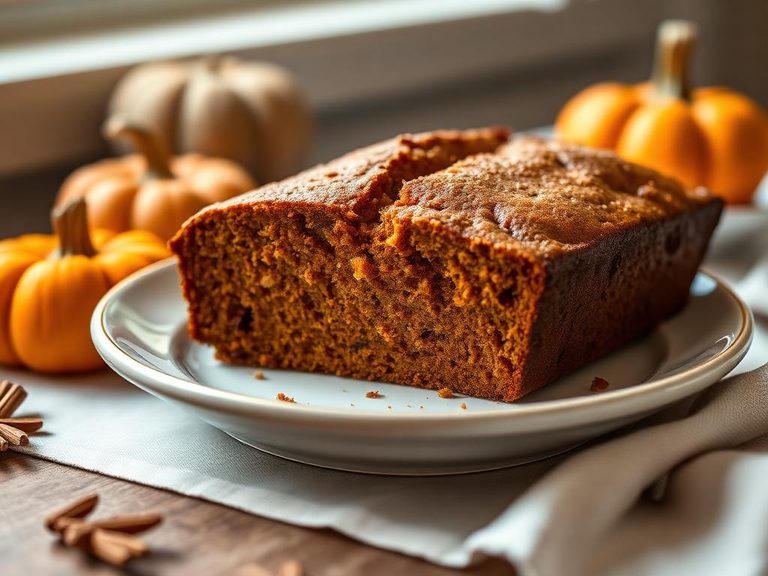
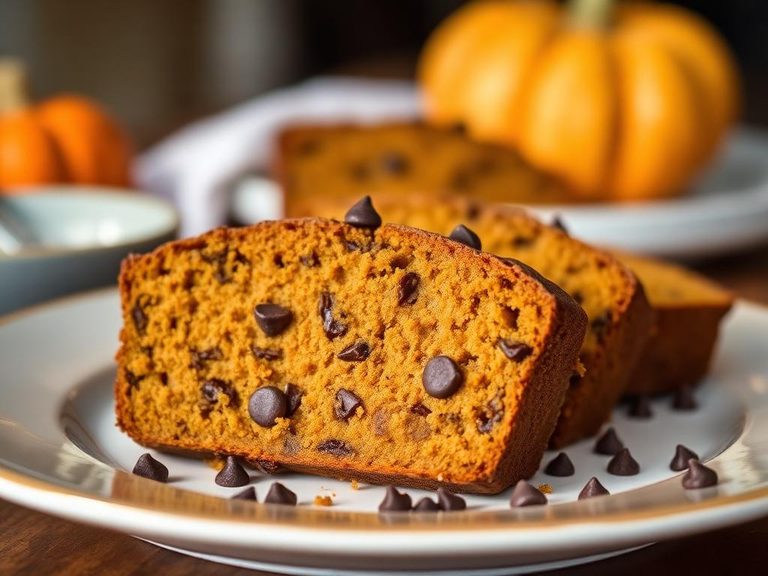
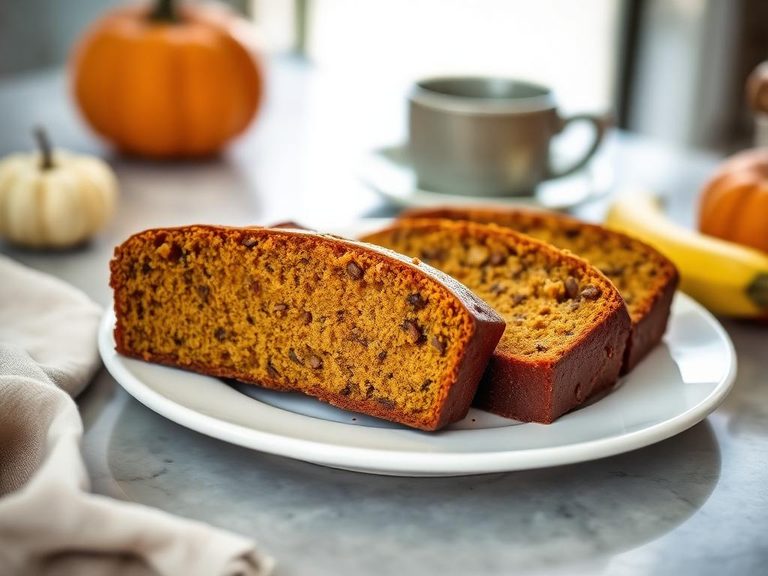
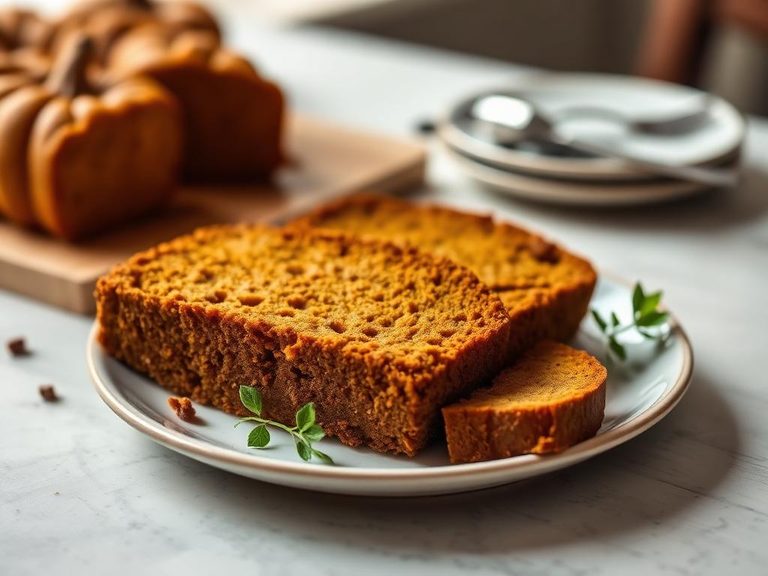
Pumpkin bread is a moist, dense quick bread that showcases the sweet, earthy flavor and vibrant orange color of pumpkin purée. Its texture is typically tender and cake-like, often with a subtle spice profile from cinnamon, nutmeg, or cloves. Nutritionally, it's a carbohydrate-rich treat, providing a notable amount of sugar and a moderate calorie count per serving.
Calorie split: 6% protein · 56% carbs · 38% fat
↓ Full nutrition💚 Why it's loved
People love pumpkin bread for its comforting, nostalgic flavor that perfectly captures the essence of autumn. It's incredibly versatile, enjoyed as a breakfast item, snack, or dessert, and is a staple of holiday baking traditions in many households.
⚠️ Watch-outs & how to enjoy it better
Due to its high carbohydrate and sugar content (22.59g per 100g), it can cause rapid blood-sugar spikes, making it a concern for those managing diabetes or watching glycemic load. It is also often made with wheat flour, a common allergen. To counteract this, pair a slice with a source of protein or healthy fat (like Greek yogurt or nuts) to slow sugar absorption, and practice strict portion control.
Key benefits
- Good source of beta-carotene, which the body converts to vitamin A
- Provides a quick source of energy from carbohydrates
- Contains some dietary fiber, especially if made with whole wheat flour
- Can be a vehicle for added spices like cinnamon, which have antioxidant properties
- Offers a way to incorporate pumpkin into a sweet, palatable format
🍽️ Popular dishes
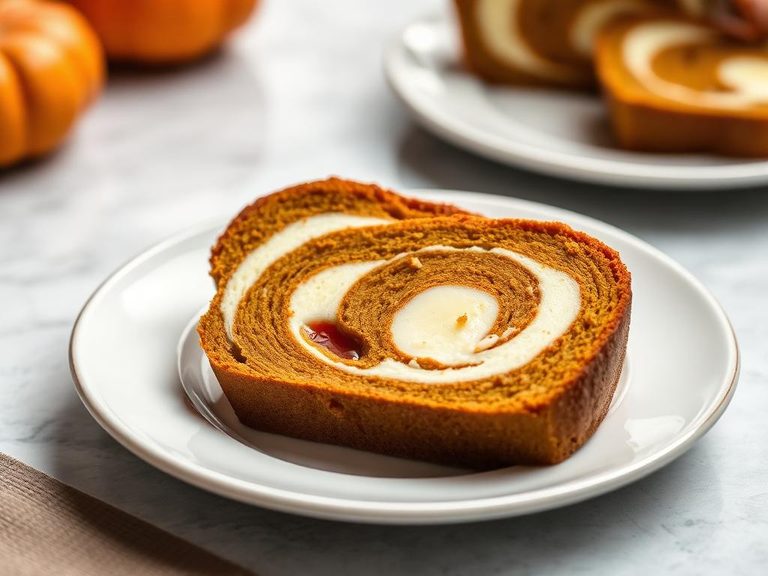
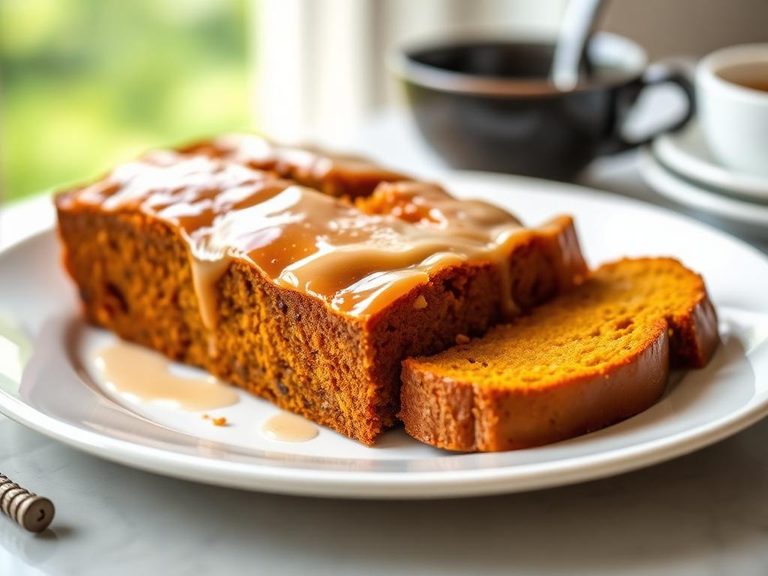
🌍 Where it's eaten
💡 Did you know?
Pumpkin bread is technically a 'quick bread' because it uses chemical leaveners like baking soda or powder instead of yeast, allowing it to be mixed and baked in under an hour.
Full nutrition (USDA data · scales with serving)
| Water | 37.1 g |
| Energy | 305 kcal |
| Protein | 5.0 g |
| Total lipid (fat) | 12.9 g |
| Carbohydrate, by difference | 43.2 g |
| Fiber, total dietary | 1.4 g |
| Total Sugars | 22.6 g |
| Calcium, Ca | 137 mg |
| Iron, Fe | 2.1 mg |
| Magnesium, Mg | 18.0 mg |
| Phosphorus, P | 108 mg |
| Potassium, K | 153 mg |
| Sodium, Na | 285 mg |
| Zinc, Zn | 0.45 mg |
| Copper, Cu | 0.07 mg |
| Selenium, Se | 7.7 ug |
| Vitamin C, total ascorbic acid | 0.80 mg |
| Thiamin | 0.21 mg |
| Riboflavin | 0.18 mg |
| Niacin | 1.6 mg |
| Vitamin B-6 | 0.05 mg |
| Folate, total | 35.0 ug |
| Folic acid | 24.0 ug |
| Folate, food | 12.0 ug |
| Folate, DFE | 52.0 ug |
| Choline, total | 34.6 mg |
| Vitamin B-12 | 0.15 ug |
| Vitamin B-12, added | 0.00 ug |
| Vitamin A, RAE | 209 ug |
| Retinol | 31.0 ug |
| Carotene, beta | 1585 ug |
| Carotene, alpha | 1095 ug |
| Cryptoxanthin, beta | 1.0 ug |
| Lycopene | 0.00 ug |
| Lutein + zeaxanthin | 53.0 ug |
| Vitamin E (alpha-tocopherol) | 2.5 mg |
| Vitamin E, added | 0.00 mg |
| Vitamin D (D2 + D3) | 0.50 ug |
| Vitamin K (phylloquinone) | 15.0 ug |
| Alcohol, ethyl | 0.00 g |
| Caffeine | 0.00 mg |
| Theobromine | 0.00 mg |
Fat & fatty acid profile (per 100g)
| Fatty acids, total saturated | 2.2 g |
| SFA 4:0 | 0.01 g |
| SFA 6:0 | 0.01 g |
| SFA 8:0 | 0.01 g |
| SFA 10:0 | 0.01 g |
| SFA 12:0 | 0.02 g |
| SFA 14:0 | 0.06 g |
| SFA 16:0 | 1.5 g |
| SFA 18:0 | 0.45 g |
| Fatty acids, total monounsaturated | 5.2 g |
| MUFA 16:1 | 0.07 g |
| MUFA 18:1 | 5.0 g |
| MUFA 20:1 | 0.07 g |
| MUFA 22:1 | 0.00 g |
| Fatty acids, total polyunsaturated | 4.5 g |
| PUFA 18:2 | 4.0 g |
| PUFA 18:3 | 0.49 g |
| PUFA 18:4 | 0.00 g |
| PUFA 20:4 | 0.00 g |
| PUFA 20:5 n-3 (EPA) | 0.00 g |
| PUFA 22:5 n-3 (DPA) | 0.00 g |
| PUFA 22:6 n-3 (DHA) | 0.00 g |
| Cholesterol | 42.0 mg |
Amino acid profile (per 100g)
Estimated from Bread, salvadoran sweet cheese (quesadilla salvadorena) — USDA does not publish this profile for Bread.
| Tryptophan | 0.07 g |
| Threonine | 0.21 g |
| Isoleucine | 0.30 g |
| Leucine | 0.65 g |
| Lysine | 0.50 g |
| Methionine | 0.28 g |
| Cystine | 0.06 g |
| Phenylalanine | 0.37 g |
| Tyrosine | 0.23 g |
| Valine | 0.43 g |
| Arginine | 0.25 g |
| Histidine | 0.15 g |
| Alanine | 0.36 g |
| Aspartic acid | 0.59 g |
| Glutamic acid | 1.3 g |
| Glycine | 0.20 g |
| Proline | 0.83 g |
| Serine | 0.45 g |
| Hydroxyproline | 0.00 g |
FAQ
Is pumpkin bread healthy?
It's a treat, not a health food. While it contains beneficial nutrients from pumpkin like beta-carotene, it is also dense in calories, carbs, and sugar. Enjoy it in moderation as part of a balanced diet.
Can I use fresh pumpkin instead of canned?
Yes, but you must roast and purée it first. Fresh pumpkin purée is often more watery than canned, which may require draining or adjusting other liquid ingredients in your recipe to avoid a soggy loaf.
Why did my pumpkin bread sink in the middle?
This is usually caused by underbaking, too much leavener (baking soda/powder), or overmixing the batter. Ensure your oven is properly calibrated, measure leaveners carefully, and mix just until the dry ingredients are incorporated.
Nutrient density (calculated · NRF9.3)
Nutrient Rich Foods index: beneficial nutrients (protein, fiber, vitamins, minerals) minus saturated fat, added sugar & sodium, per 100 kcal.
NRF9.3 index — Fulgoni, Keast & Drewnowski, 2009. Computed from USDA nutrients.
Weight-loss friendliness (composite index)
Energy density 3.05 kcal/g · 7% calories from protein · 1.4 g fiber · 22.6 g sugar per 100 g.
Composite of energy density (Rolls et al., 1999), protein & fiber satiety, minus sugar. A calculated heuristic — ranks satiety-per-calorie, not a clinical measure.
Dietary load (calculated from USDA values)
Potential renal acid load. Positive = acid-forming, negative = alkaline-forming.
Sodium-to-potassium ratio: 1.86 (lower is better — aim for ≤ 1)
Sodium:potassium per WHO potassium guidance. Computed from USDA nutrients.