

Brains
Common food

Photo: Wikipedia
Brains, typically from calf, lamb, or pig, are a delicacy prized for their uniquely soft, custard-like texture and a mild, subtly sweet, mineral-rich flavor that absorbs seasonings beautifully. Nutritionally, they are a standout source of high-quality protein and healthy fats, including essential omega-3 fatty acids, while being virtually carb-free. They are also exceptionally rich in choline, a crucial nutrient for brain health.
Calorie split: 32% protein · 4% carbs · 64% fat
↓ Full nutrition💚 Why it's loved
People cherish brains for their luxurious, meltingly tender texture that becomes creamy when cooked properly. They are a culinary canvas, celebrated in many cultures for their ability to take on the flavors of rich sauces, herbs, and spices.
⚠️ Watch-outs & how to enjoy it better
The primary caution is the presence of cholesterol and potential saturated fat, so those managing heart health should practice portion control. Additionally, proper preparation is non-negotiable; brains must be soaked in cold water or a milk/water solution for several hours to remove blood and impurities, then cooked thoroughly to ensure safety. They are also a common allergen for some.
Key benefits
- Excellent source of complete, high-quality protein.
- Rich in omega-3 fatty acids (DHA and EPA) for brain and heart health.
- One of the best dietary sources of choline, essential for cognitive function.
- Provides important minerals like selenium and phosphorus.
🍽️ Popular dishes
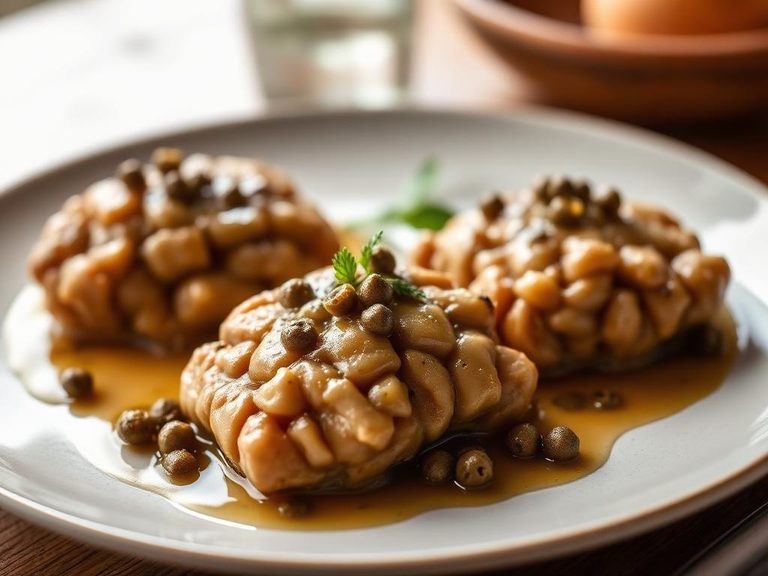
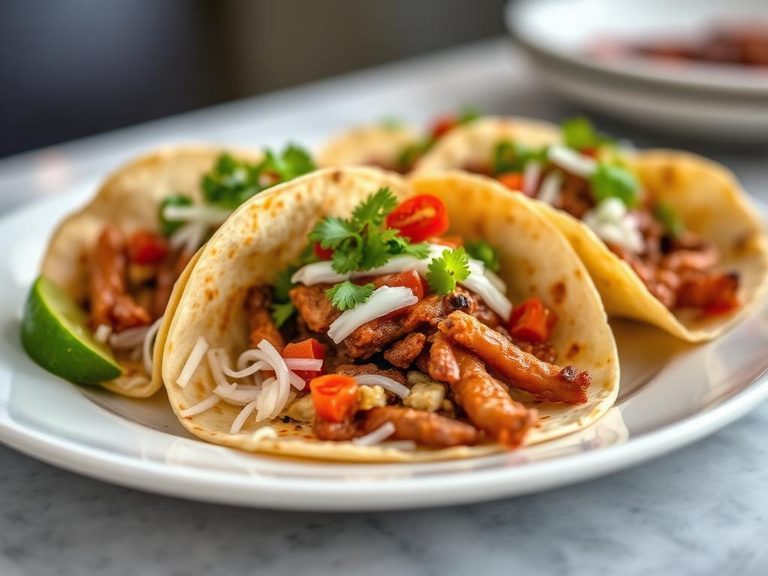
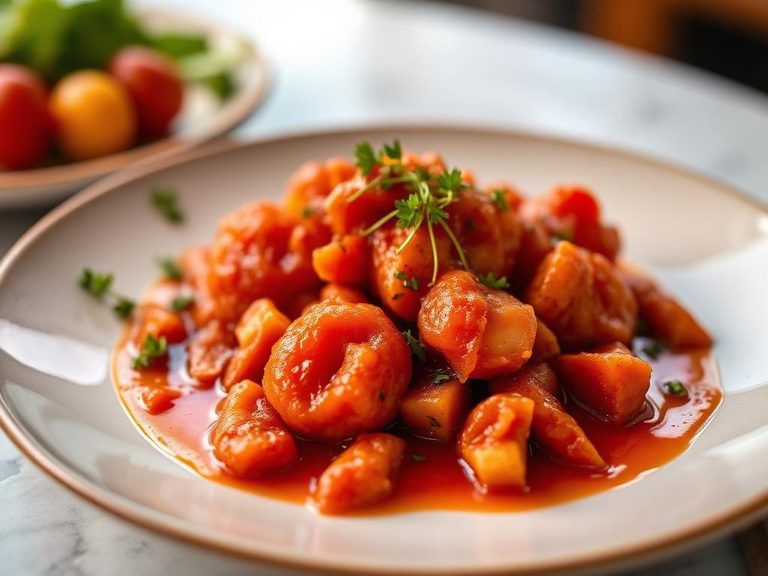
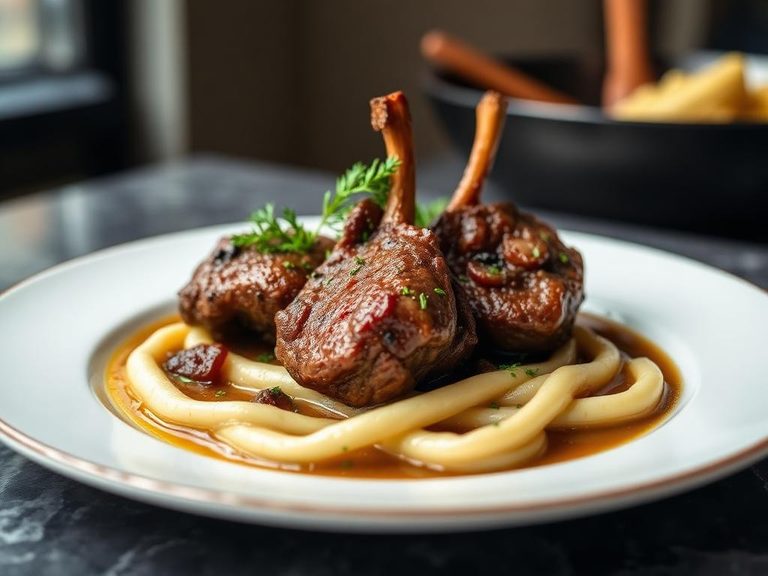
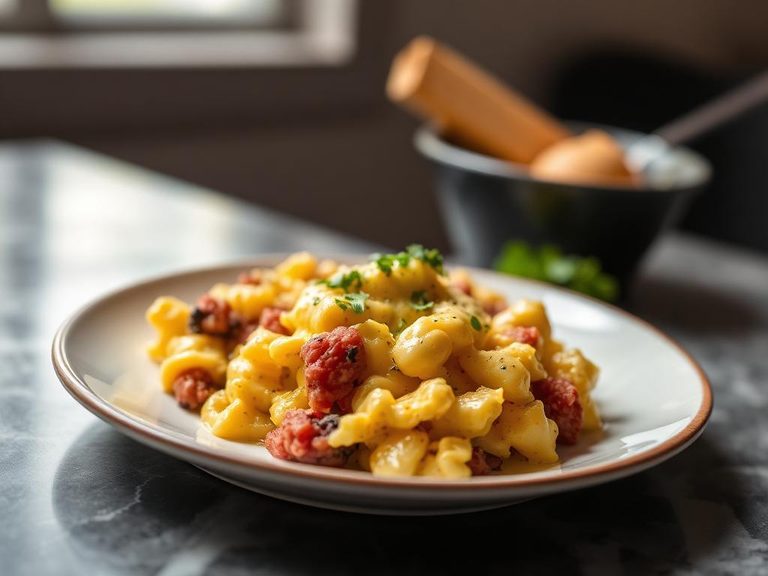
🌍 Where it's eaten
💡 Did you know?
Calf's brain is often described as the most 'neutral' tasting, making it the preferred choice for chefs who want to highlight a specific sauce or preparation method.
Full nutrition (USDA data · scales with serving)
| Water | 74.3 g |
| Energy | 150 kcal |
| Protein | 11.6 g |
| Total lipid (fat) | 10.4 g |
| Carbohydrate, by difference | 1.5 g |
| Fiber, total dietary | 0.00 g |
| Total Sugars | 0.00 g |
| Calcium, Ca | 9.0 mg |
| Iron, Fe | 2.3 mg |
| Magnesium, Mg | 12.0 mg |
| Phosphorus, P | 332 mg |
| Potassium, K | 242 mg |
| Sodium, Na | 414 mg |
| Zinc, Zn | 1.1 mg |
| Copper, Cu | 0.23 mg |
| Selenium, Se | 21.6 ug |
| Vitamin C, total ascorbic acid | 10.4 mg |
| Thiamin | 0.07 mg |
| Riboflavin | 0.21 mg |
| Niacin | 3.6 mg |
| Vitamin B-6 | 0.14 mg |
| Folate, total | 5.0 ug |
| Folic acid | 0.00 ug |
| Folate, food | 5.0 ug |
| Folate, DFE | 5.0 ug |
| Choline, total | 487 mg |
| Vitamin B-12 | 10.0 ug |
| Vitamin B-12, added | 0.00 ug |
| Vitamin A, RAE | 6.0 ug |
| Retinol | 0.00 ug |
| Carotene, beta | 69.0 ug |
| Carotene, alpha | 0.00 ug |
| Cryptoxanthin, beta | 0.00 ug |
| Lycopene | 0.00 ug |
| Lutein + zeaxanthin | 0.00 ug |
| Vitamin E (alpha-tocopherol) | 1.7 mg |
| Vitamin E, added | 0.00 mg |
| Vitamin D (D2 + D3) | 0.00 ug |
| Vitamin K (phylloquinone) | 0.10 ug |
| Alcohol, ethyl | 0.00 g |
| Caffeine | 0.00 mg |
| Theobromine | 0.00 mg |
Fat & fatty acid profile (per 100g)
| Fatty acids, total saturated | 2.4 g |
| SFA 4:0 | 0.00 g |
| SFA 6:0 | 0.00 g |
| SFA 8:0 | 0.00 g |
| SFA 10:0 | 0.00 g |
| SFA 12:0 | 0.00 g |
| SFA 14:0 | 0.03 g |
| SFA 16:0 | 0.97 g |
| SFA 18:0 | 1.3 g |
| Fatty acids, total monounsaturated | 1.9 g |
| MUFA 16:1 | 0.02 g |
| MUFA 18:1 | 1.7 g |
| MUFA 20:1 | 0.19 g |
| MUFA 22:1 | 0.00 g |
| Fatty acids, total polyunsaturated | 1.6 g |
| PUFA 18:2 | 0.04 g |
| PUFA 18:3 | 0.00 g |
| PUFA 18:4 | 0.00 g |
| PUFA 20:4 | 0.35 g |
| PUFA 20:5 n-3 (EPA) | 0.00 g |
| PUFA 22:5 n-3 (DPA) | 0.38 g |
| PUFA 22:6 n-3 (DHA) | 0.85 g |
| Cholesterol | 3075 mg |
Amino acid profile (per 100g)
Estimated from Lamb, New Zealand, imported, brains, cooked, soaked and fried — USDA does not publish this profile for Brains.
| Tryptophan | 0.15 g |
| Threonine | 0.67 g |
| Isoleucine | 0.63 g |
| Leucine | 1.1 g |
| Lysine | 1.2 g |
| Methionine | 0.46 g |
| Cystine | 0.18 g |
| Phenylalanine | 0.55 g |
| Tyrosine | 0.49 g |
| Valine | 0.71 g |
| Arginine | 0.94 g |
| Histidine | 0.30 g |
| Alanine | 0.70 g |
| Glutamic acid | 2.0 g |
| Glycine | 0.60 g |
| Proline | 0.45 g |
| Serine | 0.48 g |
FAQ
Do you really eat the whole brain?
Yes, the entire organ is consumed after careful cleaning and preparation. The delicate membrane (meninges) is typically removed during the soaking process.
Is it safe to eat brain?
When sourced from a reputable butcher, properly soaked to remove impurities, and cooked thoroughly to an internal temperature of at least 160°F (71°C), it is safe to consume. It's crucial to avoid brains from animals showing signs of neurological disease.
What does it taste like?
The flavor is mild, slightly sweet, and mineral-rich, often compared to a very delicate, creamy sweetbread or a rich, fatty liver. The texture is its hallmark—soft, custardy, and tender.
Nutrient density (calculated · NRF9.3)
Nutrient Rich Foods index: beneficial nutrients (protein, fiber, vitamins, minerals) minus saturated fat, added sugar & sodium, per 100 kcal.
NRF9.3 index — Fulgoni, Keast & Drewnowski, 2009. Computed from USDA nutrients.
Weight-loss friendliness (composite index)
Energy density 1.50 kcal/g · 31% calories from protein · 0.0 g fiber · 0.0 g sugar per 100 g.
Composite of energy density (Rolls et al., 1999), protein & fiber satiety, minus sugar. A calculated heuristic — ranks satiety-per-calorie, not a clinical measure.
Dietary load (calculated from USDA values)
Potential renal acid load. Positive = acid-forming, negative = alkaline-forming.
Sodium-to-potassium ratio: 1.71 (lower is better — aim for ≤ 1)
Sodium:potassium per WHO potassium guidance. Computed from USDA nutrients.