

Beef dinner, NFS, frozen meal
Common food

Photo: Wikipedia
This is a pre-portioned, frozen beef dinner, typically featuring tender beef strips or chunks in a savory gravy, often accompanied by vegetables like peas, carrots, or corn. The texture is soft and cohesive, with the beef providing a mild chew against the smooth sauce. Nutritionally, it's a moderate-energy meal, offering a balanced mix of protein and fats, but with a relatively low fiber content.
Calorie split: 19% protein · 30% carbs · 52% fat
↓ Full nutrition💚 Why it's loved
People appreciate the comforting, familiar savory flavor and the sheer convenience of having a hot, complete meal ready in minutes. It's a staple for quick lunches or dinners, offering a taste of home-style cooking without the preparation.
⚠️ Watch-outs & how to enjoy it better
These meals can be high in sodium to enhance flavor and preserve texture, which is a concern for those monitoring blood pressure. The sauce may contain added sugars or thickeners, and the overall fiber content is low. To counteract, pair it with a side of fresh, leafy greens or a simple salad to boost fiber and volume, and be mindful of portion size.
Key benefits
- Provides a convenient, ready-to-eat source of protein.
- Offers a balanced mix of macronutrients for a quick meal.
- Contains iron from the beef component.
- Serves as a practical meal solution for busy schedules.
🍽️ Popular dishes
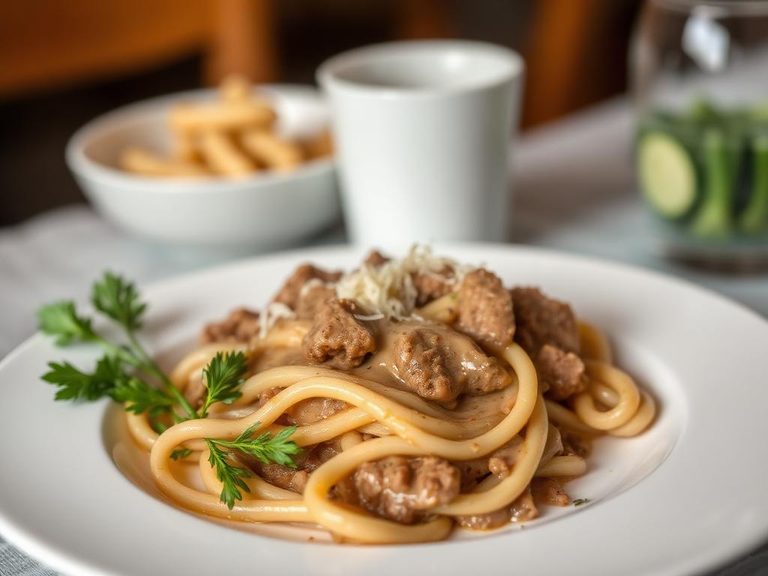
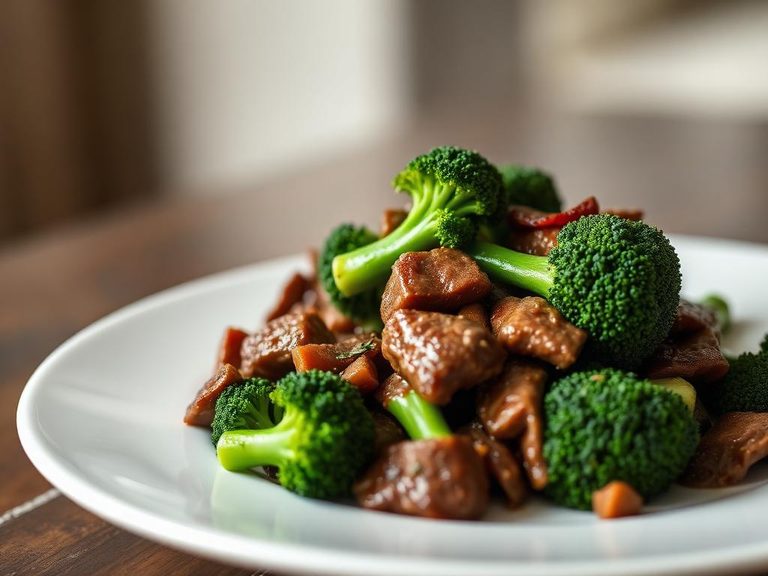
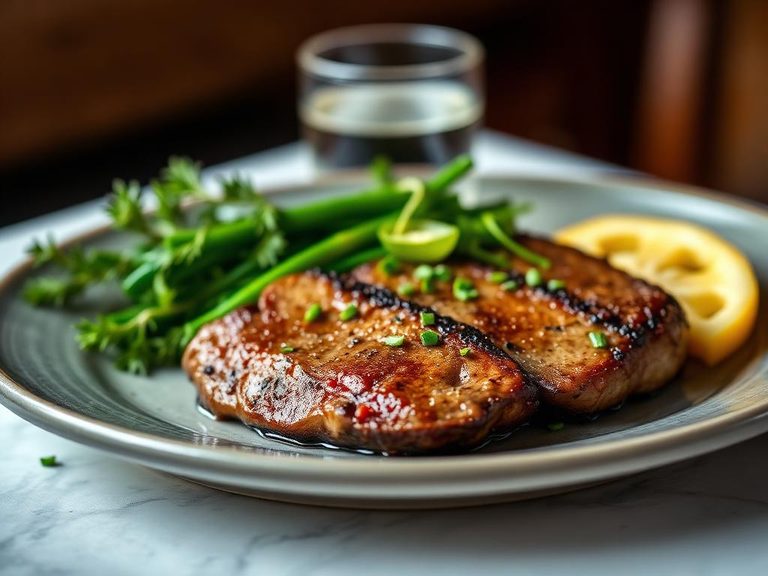
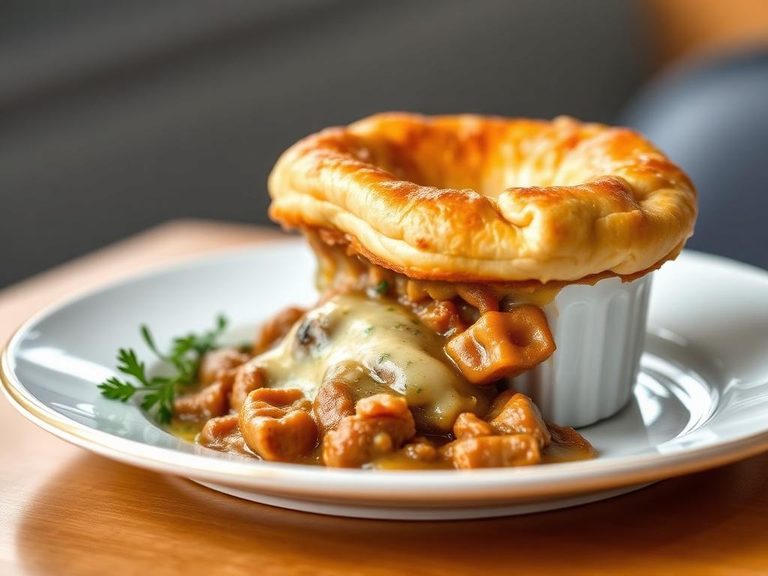

🌍 Where it's eaten
💡 Did you know?
The 'NFS' on the label stands for 'Not Further Specified,' meaning the exact cut of beef used in the meal isn't defined, allowing manufacturers flexibility based on supply and cost.
Full nutrition (USDA data · scales with serving)
| Water | 72.8 g |
| Energy | 146 kcal |
| Protein | 6.8 g |
| Total lipid (fat) | 8.4 g |
| Carbohydrate, by difference | 10.9 g |
| Fiber, total dietary | 1.2 g |
| Total Sugars | 1.4 g |
| Calcium, Ca | 15.0 mg |
| Iron, Fe | 0.84 mg |
| Magnesium, Mg | 15.0 mg |
| Phosphorus, P | 72.0 mg |
| Potassium, K | 179 mg |
| Sodium, Na | 268 mg |
| Zinc, Zn | 1.5 mg |
| Copper, Cu | 0.08 mg |
| Selenium, Se | 5.7 ug |
| Vitamin C, total ascorbic acid | 5.3 mg |
| Thiamin | 0.07 mg |
| Riboflavin | 0.07 mg |
| Niacin | 1.6 mg |
| Vitamin B-6 | 0.16 mg |
| Folate, total | 16.0 ug |
| Folic acid | 0.00 ug |
| Folate, food | 16.0 ug |
| Folate, DFE | 16.0 ug |
| Choline, total | 34.5 mg |
| Vitamin B-12 | 0.60 ug |
| Vitamin B-12, added | 0.00 ug |
| Vitamin A, RAE | 56.0 ug |
| Retinol | 43.0 ug |
| Carotene, beta | 148 ug |
| Carotene, alpha | 5.0 ug |
| Cryptoxanthin, beta | 13.0 ug |
| Lycopene | 0.00 ug |
| Lutein + zeaxanthin | 336 ug |
| Vitamin E (alpha-tocopherol) | 0.08 mg |
| Vitamin E, added | 0.00 mg |
| Vitamin D (D2 + D3) | 0.10 ug |
| Vitamin K (phylloquinone) | 4.0 ug |
| Alcohol, ethyl | 0.00 g |
| Caffeine | 0.00 mg |
| Theobromine | 0.00 mg |
Fat & fatty acid profile (per 100g)
| Fatty acids, total saturated | 3.9 g |
| SFA 4:0 | 0.10 g |
| SFA 6:0 | 0.07 g |
| SFA 8:0 | 0.04 g |
| SFA 10:0 | 0.10 g |
| SFA 12:0 | 0.12 g |
| SFA 14:0 | 0.47 g |
| SFA 16:0 | 2.0 g |
| SFA 18:0 | 0.83 g |
| Fatty acids, total monounsaturated | 2.7 g |
| MUFA 16:1 | 0.20 g |
| MUFA 18:1 | 2.4 g |
| MUFA 20:1 | 0.02 g |
| MUFA 22:1 | 0.00 g |
| Fatty acids, total polyunsaturated | 0.34 g |
| PUFA 18:2 | 0.29 g |
| PUFA 18:3 | 0.04 g |
| PUFA 18:4 | 0.00 g |
| PUFA 20:4 | 0.02 g |
| PUFA 20:5 n-3 (EPA) | 0.00 g |
| PUFA 22:5 n-3 (DPA) | 0.00 g |
| PUFA 22:6 n-3 (DHA) | 0.00 g |
| Cholesterol | 41.0 mg |
Amino acid profile (per 100g)
Estimated from Babyfood, dinner, beef and rice, toddler — USDA does not publish this profile for Beef dinner.
| Tryptophan | 0.05 g |
| Threonine | 0.20 g |
| Isoleucine | 0.24 g |
| Leucine | 0.39 g |
| Lysine | 0.38 g |
| Methionine | 0.12 g |
| Cystine | 0.05 g |
| Phenylalanine | 0.20 g |
| Tyrosine | 0.16 g |
| Valine | 0.28 g |
| Arginine | 0.34 g |
| Histidine | 0.13 g |
| Alanine | 0.34 g |
| Aspartic acid | 0.46 g |
| Glutamic acid | 0.87 g |
| Glycine | 0.36 g |
| Proline | 0.31 g |
| Serine | 0.18 g |
FAQ
What does 'NFS' mean on a frozen meal label?
NFS stands for 'Not Further Specified.' It indicates that the specific cut or type of beef used in the meal isn't detailed, which is common in processed foods to allow for ingredient flexibility.
Is this a good source of protein?
Yes, at 6.82g per 100g, it provides a moderate amount of protein, making it a reasonable contributor to your daily protein intake, especially for a convenience meal.
How can I make this frozen meal healthier?
You can enhance its nutritional profile by adding a side of steamed vegetables or a fresh salad to increase fiber and micronutrients. Also, be mindful of the sodium content if you're on a low-salt diet.
Nutrient density (calculated · NRF9.3)
Nutrient Rich Foods index: beneficial nutrients (protein, fiber, vitamins, minerals) minus saturated fat, added sugar & sodium, per 100 kcal.
NRF9.3 index — Fulgoni, Keast & Drewnowski, 2009. Computed from USDA nutrients.
Weight-loss friendliness (composite index)
Energy density 1.46 kcal/g · 19% calories from protein · 1.2 g fiber · 1.4 g sugar per 100 g.
Composite of energy density (Rolls et al., 1999), protein & fiber satiety, minus sugar. A calculated heuristic — ranks satiety-per-calorie, not a clinical measure.
Dietary load (calculated from USDA values)
Potential renal acid load. Positive = acid-forming, negative = alkaline-forming.
Sodium-to-potassium ratio: 1.50 (lower is better — aim for ≤ 1)
Sodium:potassium per WHO potassium guidance. Computed from USDA nutrients.