

Frozen dinner, NFS
Common food
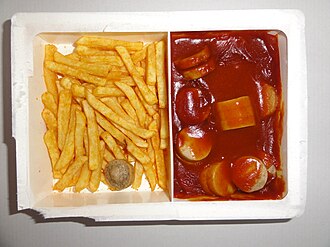
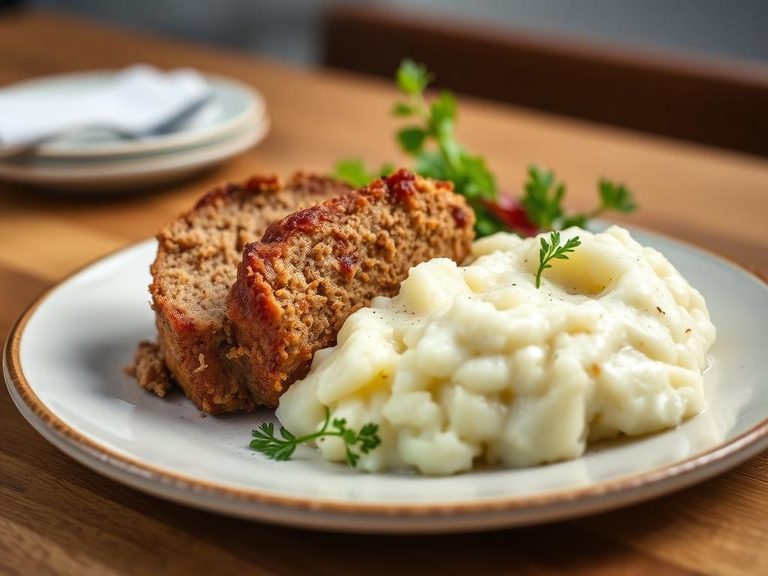
Photo: Wikipedia
A generic term for pre-packaged, single-serving meals designed for quick heating, often featuring a protein like chicken or beef alongside starchy sides. The taste and texture vary wildly by brand, but they typically offer a soft, steamed, or reheated consistency with a savory, often salty, flavor profile. Nutritionally, it's a moderate-calorie option that provides a quick protein boost but can be high in sodium and refined carbs.
Calorie split: 19% protein · 30% carbs · 52% fat
↓ Full nutrition💚 Why it's loved
People love frozen dinners for their ultimate convenience and role as a reliable, no-fuss meal solution for busy schedules. They offer predictable flavors and portion control, fitting into a culture of time-saving and single-serving living.
⚠️ Watch-outs & how to enjoy it better
These meals are often criticized for high sodium content, which can contribute to water retention and elevated blood pressure, and for containing highly processed ingredients and refined carbohydrates that may cause blood-sugar spikes. To counteract this, pair the meal with a side of fresh, fibrous vegetables to slow sugar absorption and choose low-sodium varieties when available.
Key benefits
- Provides a quick, convenient meal solution
- Offers a controlled portion size for calorie management
- Delivers a moderate protein content (6.82g per 100g)
- Requires minimal preparation time and cleanup
- Shelf-stable or freezer-stable for long-term storage
🍽️ Popular dishes

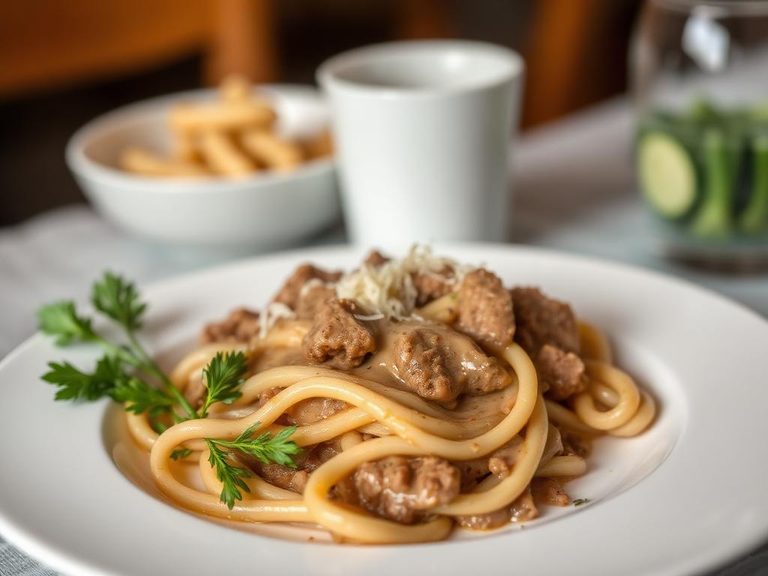
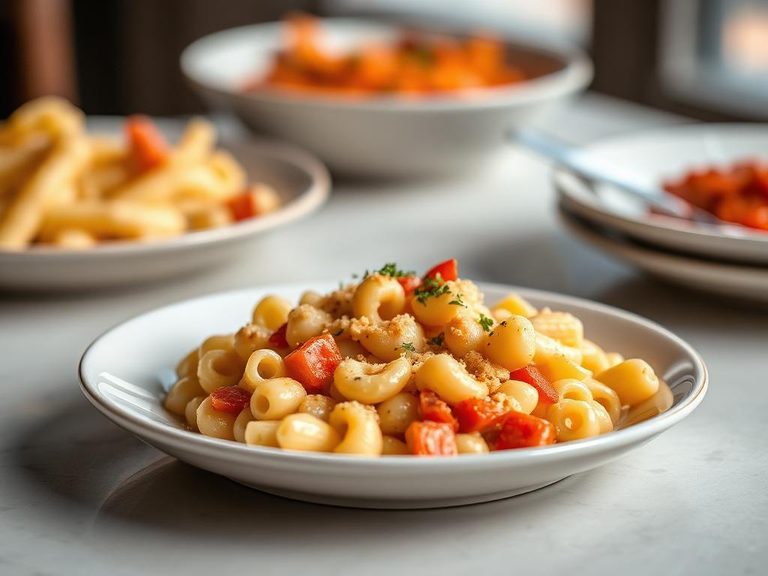
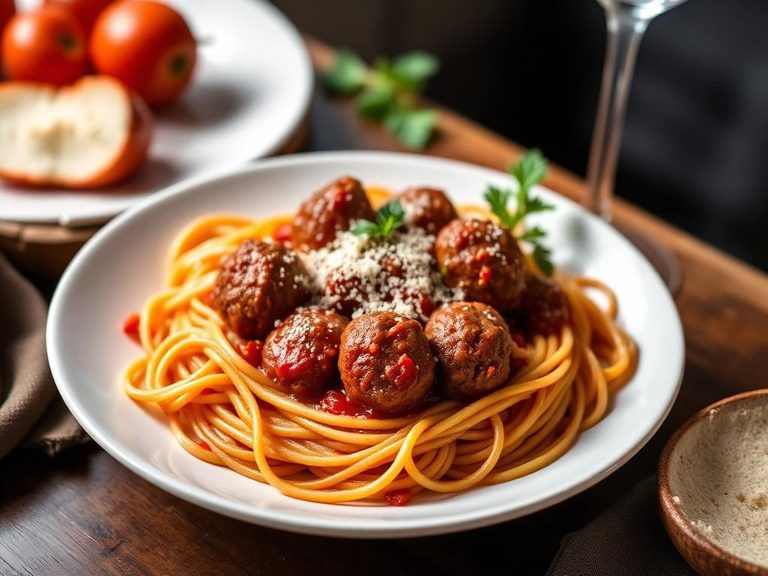
🌍 Where it's eaten
💡 Did you know?
The first commercially successful TV dinner was introduced by Swanson in 1954, was packaged in an aluminum tray resembling a TV set, and famously contained turkey with cornbread dressing, gravy, buttered peas, and sweet potatoes.
Full nutrition (USDA data · scales with serving)
| Water | 72.8 g |
| Energy | 146 kcal |
| Protein | 6.8 g |
| Total lipid (fat) | 8.4 g |
| Carbohydrate, by difference | 10.9 g |
| Fiber, total dietary | 1.2 g |
| Total Sugars | 1.4 g |
| Calcium, Ca | 15.0 mg |
| Iron, Fe | 0.84 mg |
| Magnesium, Mg | 15.0 mg |
| Phosphorus, P | 72.0 mg |
| Potassium, K | 179 mg |
| Sodium, Na | 268 mg |
| Zinc, Zn | 1.5 mg |
| Copper, Cu | 0.08 mg |
| Selenium, Se | 5.7 ug |
| Vitamin C, total ascorbic acid | 5.3 mg |
| Thiamin | 0.07 mg |
| Riboflavin | 0.07 mg |
| Niacin | 1.6 mg |
| Vitamin B-6 | 0.16 mg |
| Folate, total | 16.0 ug |
| Folic acid | 0.00 ug |
| Folate, food | 16.0 ug |
| Folate, DFE | 16.0 ug |
| Choline, total | 34.5 mg |
| Vitamin B-12 | 0.60 ug |
| Vitamin B-12, added | 0.00 ug |
| Vitamin A, RAE | 56.0 ug |
| Retinol | 43.0 ug |
| Carotene, beta | 148 ug |
| Carotene, alpha | 5.0 ug |
| Cryptoxanthin, beta | 13.0 ug |
| Lycopene | 0.00 ug |
| Lutein + zeaxanthin | 336 ug |
| Vitamin E (alpha-tocopherol) | 0.08 mg |
| Vitamin E, added | 0.00 mg |
| Vitamin D (D2 + D3) | 0.10 ug |
| Vitamin K (phylloquinone) | 4.0 ug |
| Alcohol, ethyl | 0.00 g |
| Caffeine | 0.00 mg |
| Theobromine | 0.00 mg |
Fat & fatty acid profile (per 100g)
| Fatty acids, total saturated | 3.9 g |
| SFA 4:0 | 0.10 g |
| SFA 6:0 | 0.07 g |
| SFA 8:0 | 0.04 g |
| SFA 10:0 | 0.10 g |
| SFA 12:0 | 0.12 g |
| SFA 14:0 | 0.47 g |
| SFA 16:0 | 2.0 g |
| SFA 18:0 | 0.83 g |
| Fatty acids, total monounsaturated | 2.7 g |
| MUFA 16:1 | 0.20 g |
| MUFA 18:1 | 2.4 g |
| MUFA 20:1 | 0.02 g |
| MUFA 22:1 | 0.00 g |
| Fatty acids, total polyunsaturated | 0.34 g |
| PUFA 18:2 | 0.29 g |
| PUFA 18:3 | 0.04 g |
| PUFA 18:4 | 0.00 g |
| PUFA 20:4 | 0.02 g |
| PUFA 20:5 n-3 (EPA) | 0.00 g |
| PUFA 22:5 n-3 (DPA) | 0.00 g |
| PUFA 22:6 n-3 (DHA) | 0.00 g |
| Cholesterol | 41.0 mg |
Amino acid profile (per 100g)
Estimated from Babyfood, dinner, beef lasagna, toddler — USDA does not publish this profile for Frozen dinner.
| Tryptophan | 0.05 g |
| Threonine | 0.16 g |
| Isoleucine | 0.21 g |
| Leucine | 0.32 g |
| Lysine | 0.30 g |
| Methionine | 0.08 g |
| Cystine | 0.05 g |
| Phenylalanine | 0.18 g |
| Tyrosine | 0.13 g |
| Valine | 0.23 g |
| Arginine | 0.25 g |
| Histidine | 0.10 g |
| Alanine | 0.27 g |
| Aspartic acid | 0.35 g |
| Glutamic acid | 0.89 g |
| Glycine | 0.28 g |
| Proline | 0.33 g |
| Serine | 0.12 g |
FAQ
Are frozen dinners nutritionally worse than homemade meals?
Not necessarily, but they often differ. They can be higher in sodium, preservatives, and refined carbs for shelf stability and flavor. However, they offer precise portion control, which can aid calorie management, and some modern options focus on balanced macros and whole ingredients.
How can I make a frozen dinner healthier?
Add a large side of steamed or raw vegetables to increase fiber and volume, which helps with satiety and slows carbohydrate absorption. You can also reduce sodium by rinsing any saucy components under water before heating, though this may affect flavor.
What does 'NFS' mean on a nutrition label?
NFS stands for 'Not Further Specified.' It indicates the nutrition data is for a generic or composite version of the food, not a specific branded product. The values represent an average for that category of food.
Nutrient density (calculated · NRF9.3)
Nutrient Rich Foods index: beneficial nutrients (protein, fiber, vitamins, minerals) minus saturated fat, added sugar & sodium, per 100 kcal.
NRF9.3 index — Fulgoni, Keast & Drewnowski, 2009. Computed from USDA nutrients.
Weight-loss friendliness (composite index)
Energy density 1.46 kcal/g · 19% calories from protein · 1.2 g fiber · 1.4 g sugar per 100 g.
Composite of energy density (Rolls et al., 1999), protein & fiber satiety, minus sugar. A calculated heuristic — ranks satiety-per-calorie, not a clinical measure.
Dietary load (calculated from USDA values)
Potential renal acid load. Positive = acid-forming, negative = alkaline-forming.
Sodium-to-potassium ratio: 1.50 (lower is better — aim for ≤ 1)
Sodium:potassium per WHO potassium guidance. Computed from USDA nutrients.