

Beef, Australian, imported, Wagyu, rib, small end rib steak/roast, boneless, separable lean only, Aust. marble score 4/5, raw
Whole food · Beef Products

Photo: Wikipedia
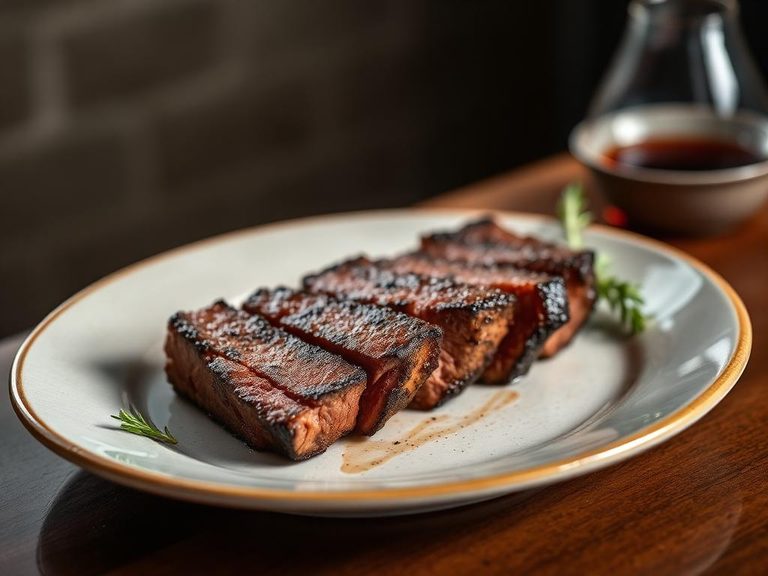
This is a premium cut of Australian Wagyu beef from the small end of the rib, prized for its fine, web-like marbling that melts during cooking. The lean-only portion offers a remarkably tender, buttery texture and a rich, beefy flavor without excessive chew. Nutritionally, it's a high-protein, zero-carb food with a significant portion of its calories coming from fat.
Calorie split: 35% protein · 0% carbs · 65% fat
↓ Full nutrition💚 Why it's loved
People adore it for the luxurious, melt-in-your-mouth sensation created by its intricate marbling, which imparts a deep, savory umami flavor. Its versatility allows it to shine in simple preparations like searing or grilling, where the quality of the meat is the star.
⚠️ Watch-outs & how to enjoy it better
The high fat content makes it a calorie-dense choice, which may not align with low-fat dietary goals. To enjoy it mindfully, practice portion control by pairing a modest steak (118g) with large servings of non-starchy vegetables like asparagus or broccoli to add volume and fiber. Opt for dry-heat cooking methods like grilling or pan-searing to allow excess fat to render off.
Key benefits
- Excellent source of complete, high-quality protein.
- Rich in monounsaturated fats, including oleic acid.
- Provides essential minerals like iron, zinc, and selenium.
- Contains B vitamins, particularly B12 for nerve function.
- Zero carbohydrates, making it suitable for ketogenic diets.
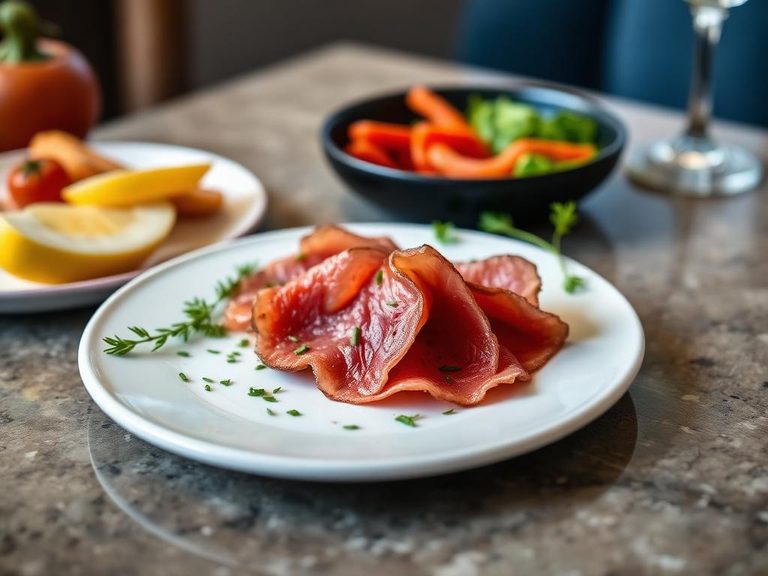
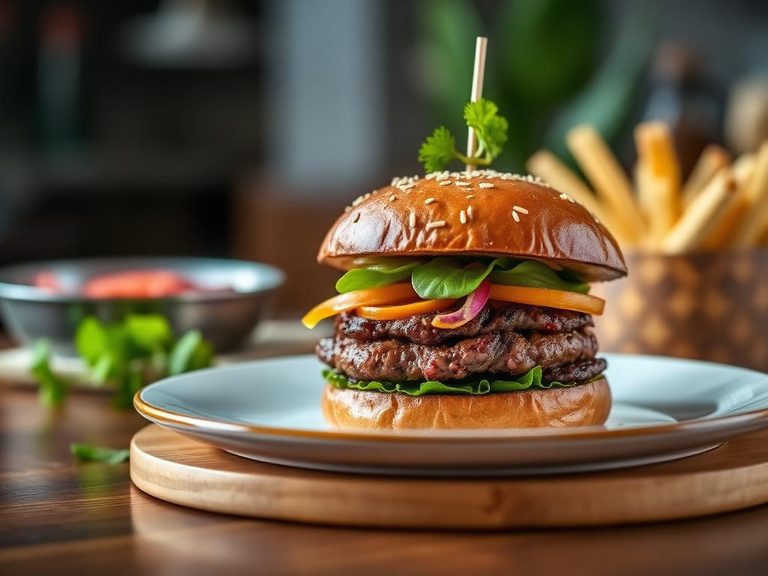
🍽️ Popular dishes
🌍 Where it's eaten
💡 Did you know?
The Australian marble score of 4/5 is part of the AUS-MEAT system, where 4 indicates 'good' marbling, making it a high-quality but more accessible tier than the ultra-premium A5 grade.
Full nutrition (USDA data · scales with serving)
| Water | 61.9 g |
| Energy | 234 kcal |
| Energy | 978 kj |
| Protein | 20.4 g |
| Total lipid (fat) | 16.9 g |
| Ash | 0.91 g |
| Carbohydrate, by difference | 0.00 g |
| Fiber, total dietary | 0.00 g |
| Total Sugars | 0.00 g |
| Calcium, Ca | 4.0 mg |
| Iron, Fe | 1.9 mg |
| Sodium, Na | 58.0 mg |
| Vitamin C, total ascorbic acid | 0.00 mg |
| Vitamin A, RAE | 0.00 ug |
| Carotene, beta | 0.00 ug |
| Carotene, alpha | 0.00 ug |
| Cryptoxanthin, beta | 0.00 ug |
| Vitamin A, IU | 0.00 iu |
| Lycopene | 0.00 ug |
| Lutein + zeaxanthin | 0.00 ug |
| Vitamin E (alpha-tocopherol) | 0.00 mg |
| Vitamin E, added | 0.00 mg |
| Alcohol, ethyl | 0.00 g |
| Caffeine | 0.00 mg |
| Theobromine | 0.00 mg |
Fat & fatty acid profile (per 100g)
| Fatty acids, total saturated | 6.5 g |
| SFA 4:0 | 0.00 g |
| SFA 6:0 | 0.00 g |
| SFA 8:0 | 0.00 g |
| SFA 10:0 | 0.01 g |
| SFA 12:0 | 0.01 g |
| SFA 14:0 | 0.47 g |
| SFA 15:0 | 0.07 g |
| SFA 16:0 | 4.0 g |
| SFA 17:0 | 0.19 g |
| SFA 18:0 | 1.8 g |
| SFA 20:0 | 0.01 g |
| SFA 22:0 | 0.01 g |
| Fatty acids, total monounsaturated | 8.5 g |
| MUFA 14:1 | 0.14 g |
| MUFA 16:1 | 0.67 g |
| MUFA 18:1 | 7.6 g |
| MUFA 18:1 c | 6.9 g |
| MUFA 20:1 | 0.04 g |
| Fatty acids, total polyunsaturated | 0.52 g |
| PUFA 18:2 | 0.43 g |
| PUFA 18:2 n-6 c,c | 0.35 g |
| PUFA 18:3 | 0.03 g |
| PUFA 18:3 n-3 c,c,c (ALA) | 0.02 g |
| PUFA 18:3i | 0.02 g |
| PUFA 18:4 | 0.00 g |
| PUFA 20:2 n-6 c,c | 0.01 g |
| PUFA 20:4 | 0.04 g |
| PUFA 20:5 n-3 (EPA) | 0.01 g |
| PUFA 22:5 n-3 (DPA) | 0.01 g |
| Fatty acids, total trans | 0.76 g |
| Fatty acids, total trans-monoenoic | 0.66 g |
| TFA 18:1 t | 0.66 g |
| TFA 18:2 t not further defined | 0.09 g |
| Fatty acids, total trans-polyenoic | 0.10 g |
| Cholesterol | 72.0 mg |
Amino acid profile (per 100g)
| Tryptophan | 0.23 g |
| Threonine | 0.92 g |
| Isoleucine | 0.89 g |
| Leucine | 1.7 g |
| Lysine | 1.8 g |
| Methionine | 0.59 g |
| Cystine | 0.22 g |
| Phenylalanine | 0.79 g |
| Tyrosine | 0.72 g |
| Valine | 0.94 g |
| Arginine | 1.4 g |
| Histidine | 0.67 g |
| Alanine | 1.2 g |
| Aspartic acid | 1.9 g |
| Glutamic acid | 3.3 g |
| Glycine | 0.91 g |
| Proline | 0.84 g |
| Serine | 0.80 g |
| Hydroxyproline | 0.10 g |
FAQ
How does Australian Wagyu differ from Japanese Wagyu?
Australian Wagyu is typically a crossbreed (e.g., Wagyu x Angus) raised in Australia, offering a balance of intense marbling and a firmer, beefier flavor. Japanese Wagyu is purebred, raised in specific regions, and often has even more extreme, delicate marbling with a richer, sweeter taste.
What does 'separable lean only' mean?
This indicates the nutritional data applies to the lean muscle meat after all visible external and intermuscular fat (fat you can separate by hand or knife) has been removed. The actual steak you cook will have more fat.
Is this cut suitable for slow cooking?
While possible, it's not the ideal use for this premium, tender cut. Slow cooking is best for tougher, collagen-rich cuts. This steak is best enjoyed with quick, high-heat methods like grilling, pan-searing, or broiling to preserve its delicate texture and marbling.
Nutrient density (calculated · NRF9.3)
Nutrient Rich Foods index: beneficial nutrients (protein, fiber, vitamins, minerals) minus saturated fat, added sugar & sodium, per 100 kcal.
NRF9.3 index — Fulgoni, Keast & Drewnowski, 2009. Computed from USDA nutrients.
Weight-loss friendliness (composite index)
Energy density 2.34 kcal/g · 35% calories from protein · 0.0 g fiber · 0.0 g sugar per 100 g.
Composite of energy density (Rolls et al., 1999), protein & fiber satiety, minus sugar. A calculated heuristic — ranks satiety-per-calorie, not a clinical measure.