

Beef, Australian, imported, Wagyu, loin, tenderloin steak/roast, boneless, separable lean only, Aust. marble score 9, raw
Whole food · Beef Products

Photo: Wikipedia
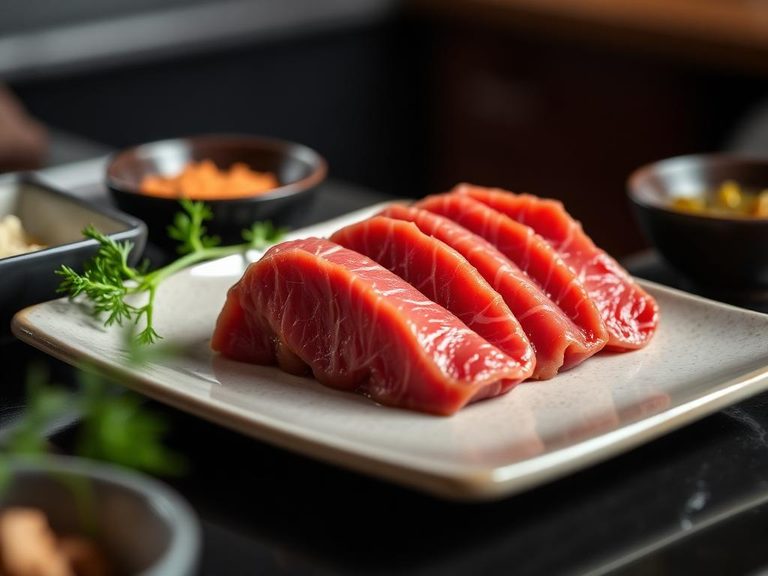
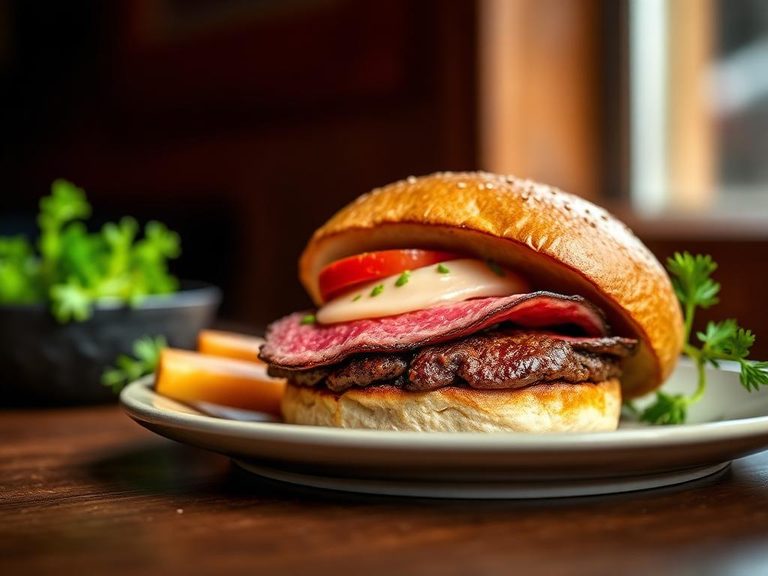
This is the pinnacle of beef: a boneless, raw Wagyu tenderloin from Australia with an extraordinary marble score of 9, meaning its fat is intricately woven through the lean muscle like fine lace. The texture is famously buttery and almost melt-in-the-mouth, with a rich, beefy flavor that is deeply savory and slightly sweet from the high-quality intramuscular fat. Nutritionally, it's a powerhouse of protein (18.87g per 100g) and provides a significant amount of energy (237 kcal) from its premium fat content, with virtually no carbohydrates or sugar.
Calorie split: 32% protein · 1% carbs · 67% fat
↓ Full nutrition💚 Why it's loved
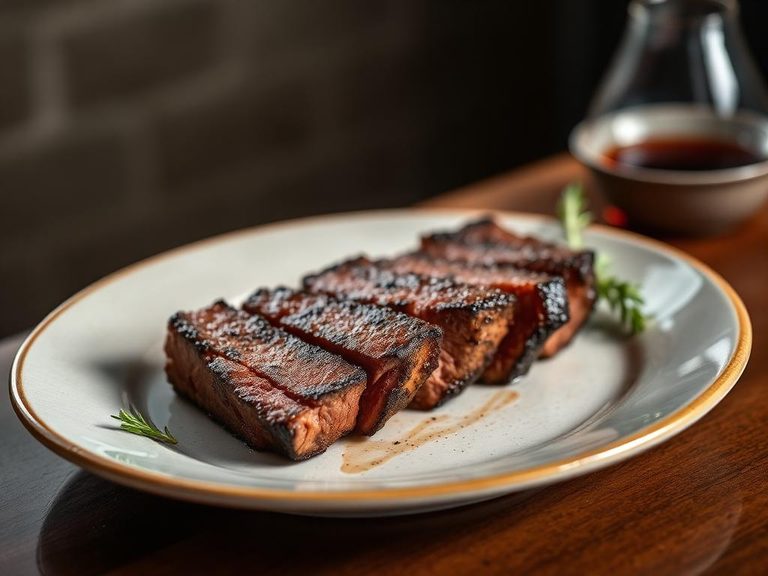
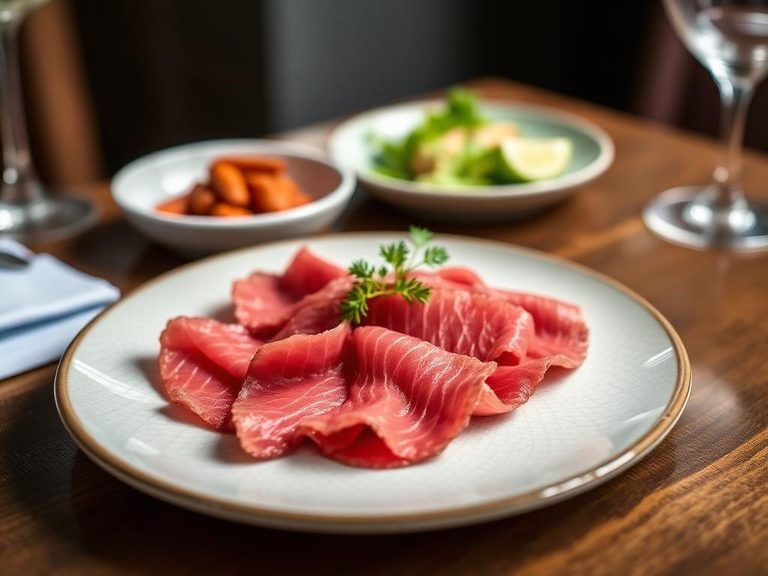
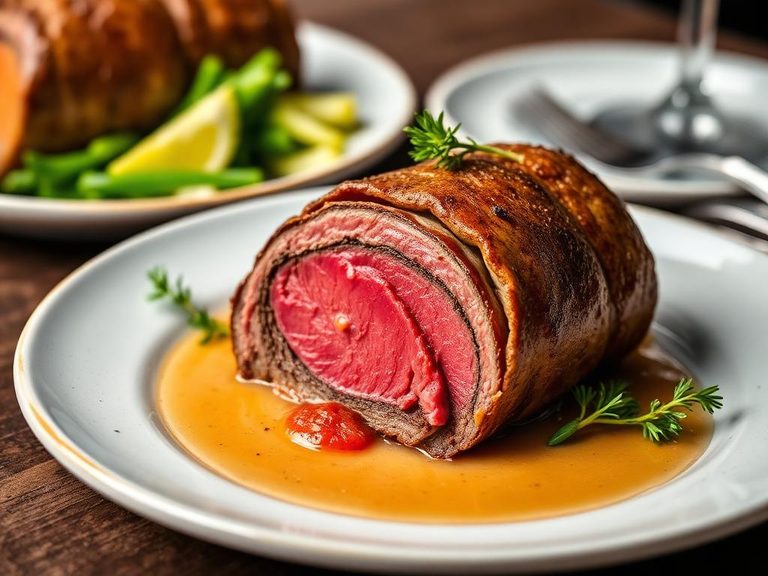
People adore it for its unparalleled, buttery richness and luxurious mouthfeel that transforms any meal into a gourmet experience. It's celebrated for its versatility, capable of being the star of a simple, perfectly seared steak or the foundation of an opulent roast, embodying both culinary tradition and modern indulgence.
⚠️ Watch-outs & how to enjoy it better
Its high fat content, while flavorful, makes it a very calorie-dense choice, which may be a concern for those managing weight or specific dietary goals. To counteract this, practice strict portion control (e.g., a 118g serving) and pair it with large portions of non-starchy vegetables like roasted asparagus or a fresh salad to add fiber and volume without excess calories. The richness can also be balanced by a simple, acidic sauce or a side of pickled vegetables.
Key benefits
- Exceptionally high in complete protein for muscle maintenance and satiety.
- Rich in monounsaturated fats (oleic acid), which can support heart health.
- Provides essential minerals like iron, zinc, and B vitamins (especially B12).
- The high intramuscular fat content ensures exceptional tenderness and juiciness.
- A highly nutrient-dense food with minimal processing.
🍽️ Popular dishes
🌍 Where it's eaten
💡 Did you know?
A marble score of 9 is near the top of the Japanese BMS (Beef Marbling Standard) scale, meaning this specific cut has more intramuscular fat than many other premium Wagyu grades, making it exceptionally rare and prized.
Full nutrition (USDA data · scales with serving)
| Water | 61.9 g |
| Energy | 237 kcal |
| Energy | 993 kj |
| Protein | 18.9 g |
| Total lipid (fat) | 17.7 g |
| Ash | 0.93 g |
| Carbohydrate, by difference | 0.57 g |
| Fiber, total dietary | 0.00 g |
| Total Sugars | 0.00 g |
| Calcium, Ca | 4.0 mg |
| Iron, Fe | 2.4 mg |
| Sodium, Na | 62.0 mg |
| Vitamin C, total ascorbic acid | 0.00 mg |
| Vitamin A, RAE | 0.00 ug |
| Carotene, beta | 0.00 ug |
| Carotene, alpha | 0.00 ug |
| Cryptoxanthin, beta | 0.00 ug |
| Vitamin A, IU | 0.00 iu |
| Lycopene | 0.00 ug |
| Lutein + zeaxanthin | 0.00 ug |
| Alcohol, ethyl | 0.00 g |
| Caffeine | 0.00 mg |
| Theobromine | 0.00 mg |
Fat & fatty acid profile (per 100g)
| Fatty acids, total saturated | 7.4 g |
| SFA 4:0 | 0.00 g |
| SFA 6:0 | 0.00 g |
| SFA 8:0 | 0.00 g |
| SFA 10:0 | 0.01 g |
| SFA 12:0 | 0.01 g |
| SFA 14:0 | 0.47 g |
| SFA 15:0 | 0.07 g |
| SFA 16:0 | 4.4 g |
| SFA 17:0 | 0.21 g |
| SFA 18:0 | 2.2 g |
| SFA 20:0 | 0.01 g |
| SFA 22:0 | 0.01 g |
| Fatty acids, total monounsaturated | 8.2 g |
| MUFA 14:1 | 0.09 g |
| MUFA 16:1 | 0.54 g |
| MUFA 18:1 | 7.5 g |
| MUFA 18:1 c | 7.0 g |
| MUFA 20:1 | 0.03 g |
| Fatty acids, total polyunsaturated | 0.70 g |
| PUFA 18:2 | 0.57 g |
| PUFA 18:2 n-6 c,c | 0.49 g |
| PUFA 18:3 | 0.04 g |
| PUFA 18:3 n-3 c,c,c (ALA) | 0.02 g |
| PUFA 18:3i | 0.02 g |
| PUFA 18:4 | 0.00 g |
| PUFA 20:2 n-6 c,c | 0.01 g |
| PUFA 20:4 | 0.07 g |
| PUFA 20:5 n-3 (EPA) | 0.01 g |
| PUFA 22:5 n-3 (DPA) | 0.01 g |
| Fatty acids, total trans | 0.65 g |
| Fatty acids, total trans-monoenoic | 0.55 g |
| TFA 18:1 t | 0.55 g |
| TFA 18:2 t not further defined | 0.08 g |
| Fatty acids, total trans-polyenoic | 0.10 g |
| Cholesterol | 74.0 mg |
Amino acid profile (per 100g)
| Tryptophan | 0.22 g |
| Threonine | 0.85 g |
| Isoleucine | 0.83 g |
| Leucine | 1.6 g |
| Lysine | 1.7 g |
| Methionine | 0.55 g |
| Cystine | 0.20 g |
| Phenylalanine | 0.74 g |
| Tyrosine | 0.67 g |
| Valine | 0.87 g |
| Arginine | 1.3 g |
| Histidine | 0.62 g |
| Alanine | 1.1 g |
| Aspartic acid | 1.7 g |
| Glutamic acid | 3.1 g |
| Glycine | 0.84 g |
| Proline | 0.78 g |
| Serine | 0.74 g |
| Hydroxyproline | 0.10 g |
FAQ
What does a 'marble score 9' mean?
It refers to the Beef Marbling Standard (BMS), a scale from 1 to 12 that measures the amount and distribution of intramuscular fat. A score of 9 indicates extremely high, fine, and evenly distributed marbling, which is a key indicator of quality, tenderness, and flavor in Wagyu beef.
How is Australian Wagyu different from Japanese Wagyu?
Australian Wagyu is typically a crossbreed of Japanese Wagyu cattle (like Black Wagyu) and Australian cattle breeds (like Angus). This often results in a slightly leaner, but still highly marbled, beef with a robust beefy flavor that combines Japanese marbling with Australian beef characteristics.
Is this cut suitable for a low-carb or keto diet?
Yes, it is an excellent choice for low-carb and ketogenic diets. It is virtually carbohydrate-free (0.57g per 100g) and very high in both protein and fat, which are the primary macronutrients in these dietary approaches.
Nutrient density (calculated · NRF9.3)
Nutrient Rich Foods index: beneficial nutrients (protein, fiber, vitamins, minerals) minus saturated fat, added sugar & sodium, per 100 kcal.
NRF9.3 index — Fulgoni, Keast & Drewnowski, 2009. Computed from USDA nutrients.
Weight-loss friendliness (composite index)
Energy density 2.37 kcal/g · 32% calories from protein · 0.0 g fiber · 0.0 g sugar per 100 g.
Composite of energy density (Rolls et al., 1999), protein & fiber satiety, minus sugar. A calculated heuristic — ranks satiety-per-calorie, not a clinical measure.