

Beans, snap, yellow, canned, no salt added, solids and liquids
Whole food · Vegetables and Vegetable Products

Photo: Wikipedia
These are tender, vibrant yellow snap beans, canned in their own liquid without added salt. They offer a mild, slightly sweet flavor with a soft, yet pleasantly firm texture that holds up well in dishes. Nutritionally, they are a low-calorie, high-fiber choice, providing a good source of plant-based protein relative to their energy content.
Calorie split: 18% protein · 77% carbs · 5% fat
↓ Full nutrition💚 Why it's loved
People love them for their convenience and mild, versatile flavor that readily absorbs seasonings and sauces. They are a beloved staple in Southern U.S. cuisine, often served as a simple, comforting side dish.
⚠️ Watch-outs & how to enjoy it better
The canning process can give them a softer texture than fresh beans, which some may find less appealing. Those monitoring sodium intake should check labels, as 'no salt added' versions are best, but regular canned varieties can be high. To counteract the softer texture, briefly sauté them in a pan with a little oil or garlic to add crispness and flavor.
Key benefits
- Very low in calories, ideal for volume eating.
- High in dietary fiber, supporting digestive health.
- Good source of plant-based protein.
- Naturally fat-free and cholesterol-free.
- Provides essential vitamins like vitamin K and folate.
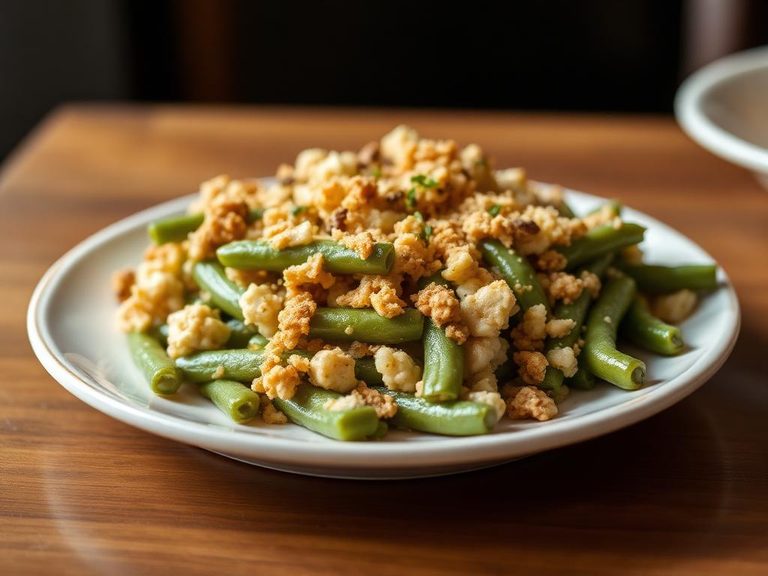
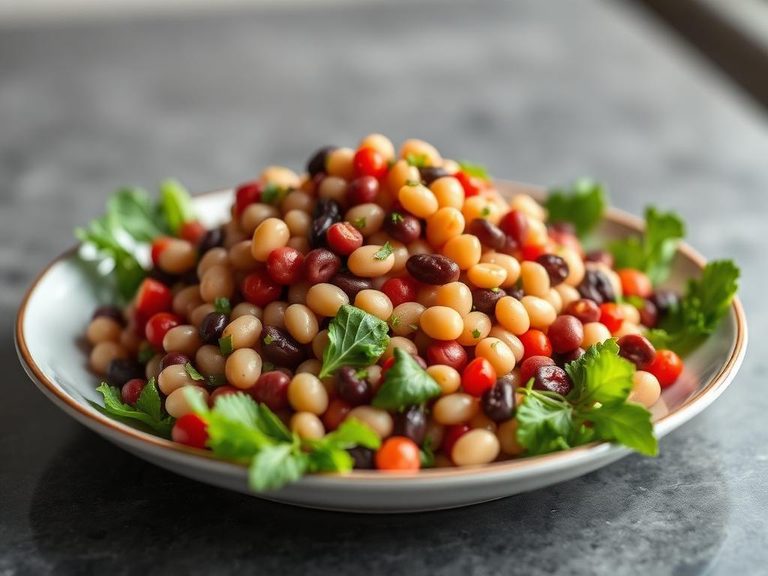
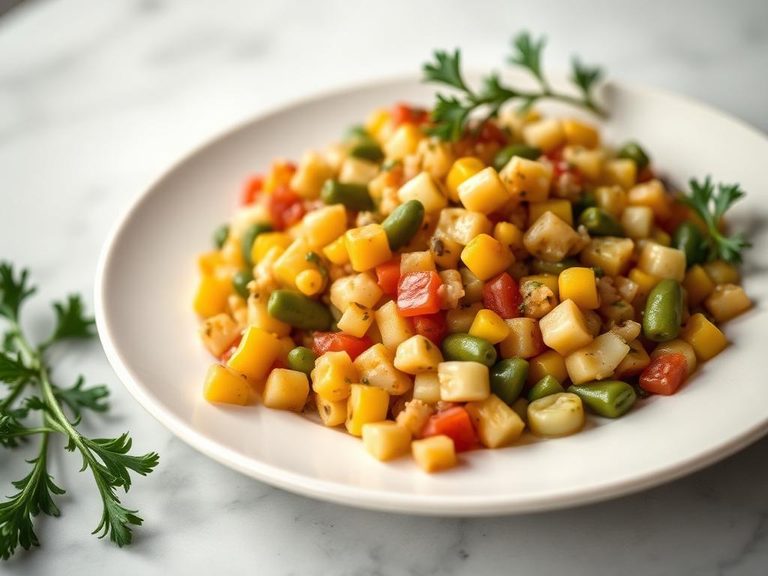
🍽️ Popular dishes
🌍 Where it's eaten
💡 Did you know?
Yellow wax beans, which these are, are actually a cultivar of the common green bean (Phaseolus vulgaris) that was bred to lack chlorophyll, giving them their sunny color.
Full nutrition (USDA data · scales with serving)
| Water | 94.7 g |
| Energy | 15.0 kcal |
| Energy | 63.0 kj |
| Protein | 0.80 g |
| Total lipid (fat) | 0.10 g |
| Ash | 0.92 g |
| Carbohydrate, by difference | 3.5 g |
| Fiber, total dietary | 1.5 g |
| Total Sugars | 0.62 g |
| Calcium, Ca | 24.0 mg |
| Iron, Fe | 0.90 mg |
| Magnesium, Mg | 13.0 mg |
| Phosphorus, P | 19.0 mg |
| Potassium, K | 98.0 mg |
| Sodium, Na | 14.0 mg |
| Zinc, Zn | 0.20 mg |
| Copper, Cu | 0.07 mg |
| Manganese, Mn | 0.34 mg |
| Selenium, Se | 0.20 ug |
| Vitamin C, total ascorbic acid | 4.0 mg |
| Thiamin | 0.03 mg |
| Riboflavin | 0.05 mg |
| Niacin | 0.20 mg |
| Pantothenic acid | 0.11 mg |
| Vitamin B-6 | 0.03 mg |
| Folate, total | 18.0 ug |
| Folic acid | 0.00 ug |
| Folate, food | 18.0 ug |
| Folate, DFE | 18.0 ug |
| Choline, total | 8.3 mg |
| Vitamin B-12 | 0.00 ug |
| Vitamin B-12, added | 0.00 ug |
| Vitamin A, RAE | 4.0 ug |
| Retinol | 0.00 ug |
| Carotene, beta | 50.0 ug |
| Carotene, alpha | 0.00 ug |
| Cryptoxanthin, beta | 0.00 ug |
| Vitamin A, IU | 83.0 iu |
| Lycopene | 0.00 ug |
| Lutein + zeaxanthin | 363 ug |
| Vitamin E (alpha-tocopherol) | 0.23 mg |
| Vitamin E, added | 0.00 mg |
| Vitamin D (D2 + D3), International Units | 0.00 iu |
| Vitamin D (D2 + D3) | 0.00 ug |
| Vitamin K (phylloquinone) | 31.2 ug |
| Alcohol, ethyl | 0.00 g |
| Caffeine | 0.00 mg |
| Theobromine | 0.00 mg |
Fat & fatty acid profile (per 100g)
| Fatty acids, total saturated | 0.02 g |
| SFA 14:0 | 0.00 g |
| SFA 16:0 | 0.02 g |
| SFA 18:0 | 0.00 g |
| Fatty acids, total monounsaturated | 0.00 g |
| MUFA 16:1 | 0.00 g |
| MUFA 18:1 | 0.00 g |
| Fatty acids, total polyunsaturated | 0.05 g |
| PUFA 18:2 | 0.02 g |
| PUFA 18:3 | 0.03 g |
| Fatty acids, total trans | 0.00 g |
| Cholesterol | 0.00 mg |
Amino acid profile (per 100g)
| Tryptophan | 0.01 g |
| Threonine | 0.04 g |
| Isoleucine | 0.03 g |
| Leucine | 0.05 g |
| Lysine | 0.04 g |
| Methionine | 0.01 g |
| Cystine | 0.01 g |
| Phenylalanine | 0.03 g |
| Tyrosine | 0.02 g |
| Valine | 0.04 g |
| Arginine | 0.03 g |
| Histidine | 0.01 g |
| Alanine | 0.04 g |
| Aspartic acid | 0.11 g |
| Glutamic acid | 0.08 g |
| Glycine | 0.03 g |
| Proline | 0.03 g |
| Serine | 0.04 g |
FAQ
What's the difference between yellow snap beans and green beans?
They are the same species (Phaseolus vulgaris). Yellow wax beans are a variety bred to lack the green pigment chlorophyll, resulting in their color and a very slightly milder, sweeter flavor.
Are canned beans as nutritious as fresh?
Yes, they retain most of their fiber, protein, and minerals. Some heat-sensitive vitamins like vitamin C may be reduced, but they remain a highly nutritious and convenient option.
How can I improve the texture of canned yellow beans?
Drain and rinse them, then quickly sauté in a hot pan with a little olive oil, garlic, or onions for 2-3 minutes. This adds a bit of caramelization and firmer bite.
Nutrient density (calculated · NRF9.3)
Nutrient Rich Foods index: beneficial nutrients (protein, fiber, vitamins, minerals) minus saturated fat, added sugar & sodium, per 100 kcal.
NRF9.3 index — Fulgoni, Keast & Drewnowski, 2009. Computed from USDA nutrients.
Weight-loss friendliness (composite index)
Energy density 0.15 kcal/g · 21% calories from protein · 1.5 g fiber · 0.6 g sugar per 100 g.
Composite of energy density (Rolls et al., 1999), protein & fiber satiety, minus sugar. A calculated heuristic — ranks satiety-per-calorie, not a clinical measure.
Dietary load (calculated from USDA values)
Potential renal acid load. Positive = acid-forming, negative = alkaline-forming.
Sodium-to-potassium ratio: 0.14 (lower is better — aim for ≤ 1)
Sodium:potassium per WHO potassium guidance. Computed from USDA nutrients.