

Barbecue pork, no sauce
Common food
Photo: Wikipedia
Barbecue pork, served without sauce, is lean, smoky meat where the natural pork flavor and wood smoke take center stage. The texture is typically tender with a satisfying chew, often featuring a caramelized, seasoned crust. Nutritionally, it's a powerhouse of high-quality protein with virtually no carbohydrates.
Calorie split: 41% protein · 0% carbs · 59% fat
↓ Full nutrition💚 Why it's loved
People love it for its pure, smoky pork flavor and the satisfying, hearty texture that comes from slow cooking. Its versatility makes it a perfect standalone dish or a protein-packed addition to salads, tacos, and bowls.
⚠️ Watch-outs & how to enjoy it better
Without sauce, the meat can be perceived as dry or lacking in flavor complexity by some. The high fat content, while flavorful, may be a concern for those monitoring saturated fat intake. To counteract dryness, ensure proper cooking technique (like using a water pan or wrapping) and consider a brief rest after cooking to redistribute juices.
Key benefits
- Excellent source of complete protein for muscle maintenance.
- Virtually zero carbohydrates, suitable for low-carb diets.
- Provides essential B vitamins like thiamine and niacin.
- Rich in minerals such as zinc and selenium.
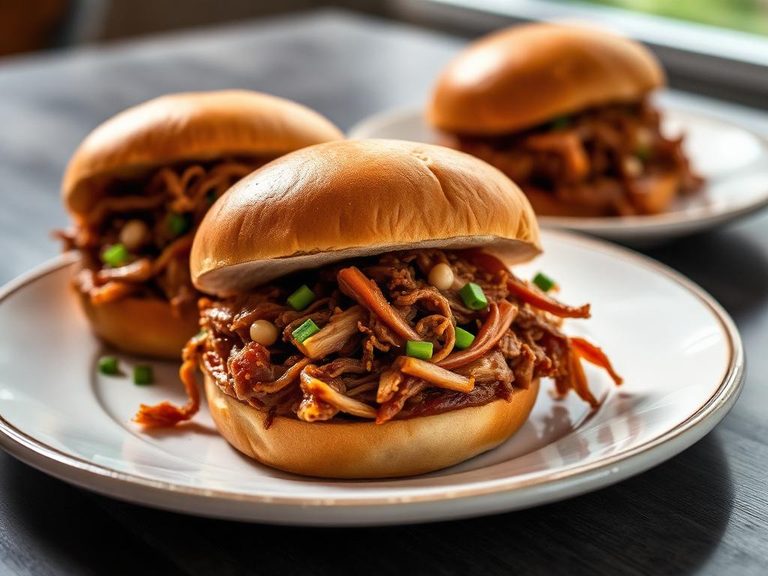
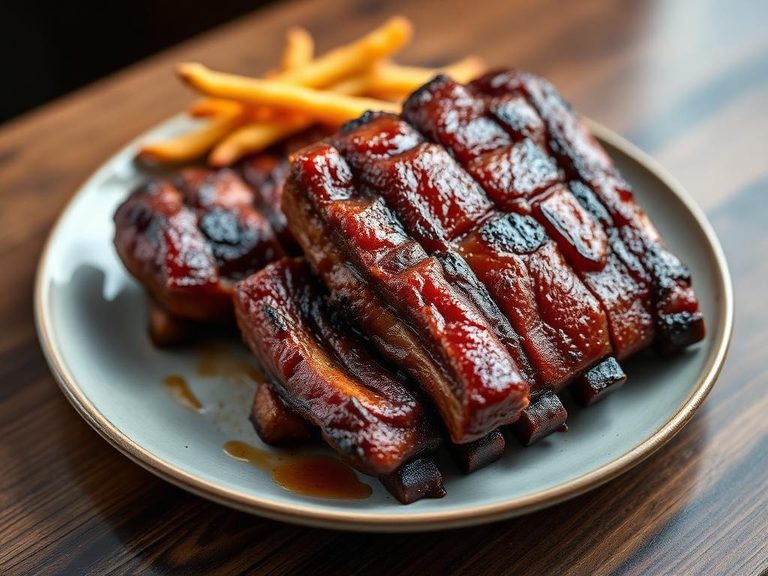
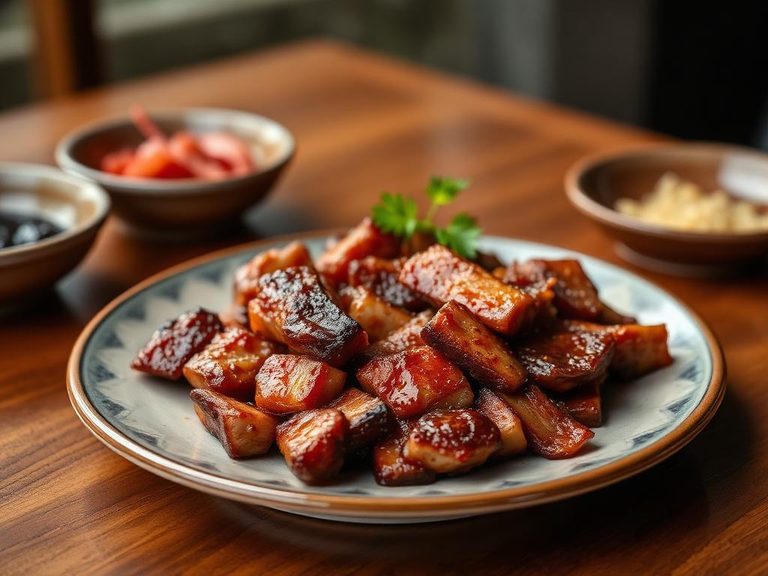
🍽️ Popular dishes
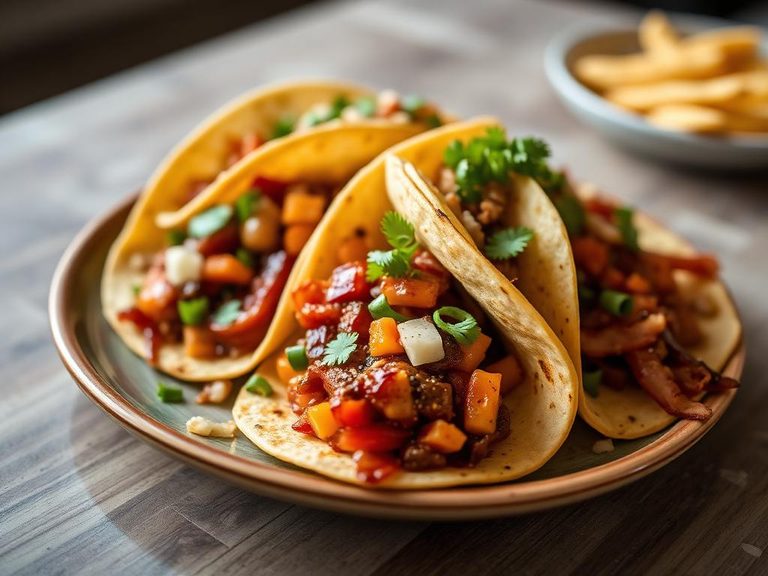
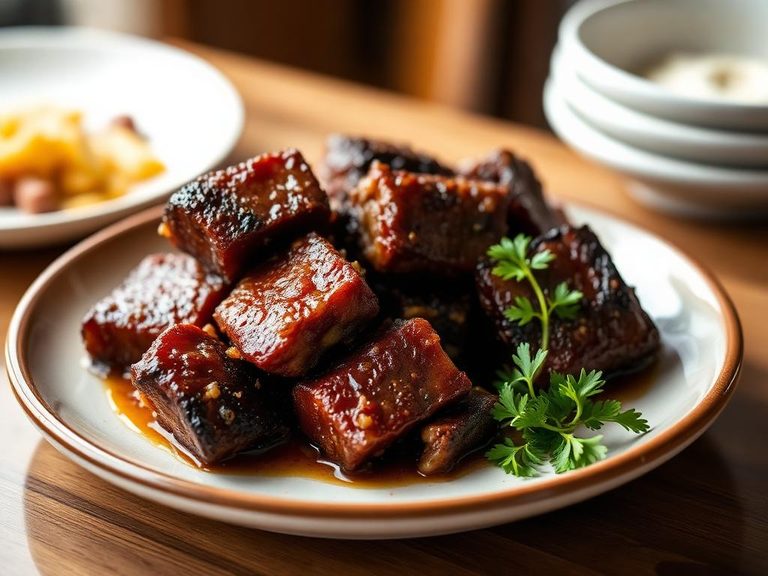

🌍 Where it's eaten
💡 Did you know?
The 'smoke ring'—a pinkish layer beneath the crust of well-smoked barbecue pork—is caused by a chemical reaction between nitrogen dioxide in wood smoke and myoglobin in the meat, not by undercooking.
Full nutrition (USDA data · scales with serving)
| Water | 57.0 g |
| Energy | 249 kcal |
| Protein | 24.8 g |
| Total lipid (fat) | 15.9 g |
| Carbohydrate, by difference | 0.00 g |
| Fiber, total dietary | 0.00 g |
| Total Sugars | 0.00 g |
| Calcium, Ca | 21.0 mg |
| Iron, Fe | 1.3 mg |
| Magnesium, Mg | 22.0 mg |
| Phosphorus, P | 222 mg |
| Potassium, K | 328 mg |
| Sodium, Na | 422 mg |
| Zinc, Zn | 3.9 mg |
| Copper, Cu | 0.12 mg |
| Selenium, Se | 35.6 ug |
| Vitamin C, total ascorbic acid | 0.00 mg |
| Thiamin | 0.47 mg |
| Riboflavin | 0.34 mg |
| Niacin | 4.5 mg |
| Vitamin B-6 | 0.39 mg |
| Folate, total | 2.0 ug |
| Folic acid | 0.00 ug |
| Folate, food | 2.0 ug |
| Folate, DFE | 2.0 ug |
| Choline, total | 102 mg |
| Vitamin B-12 | 0.83 ug |
| Vitamin B-12, added | 0.00 ug |
| Vitamin A, RAE | 3.0 ug |
| Retinol | 3.0 ug |
| Carotene, beta | 0.00 ug |
| Carotene, alpha | 0.00 ug |
| Cryptoxanthin, beta | 0.00 ug |
| Lycopene | 0.00 ug |
| Lutein + zeaxanthin | 0.00 ug |
| Vitamin E (alpha-tocopherol) | 0.19 mg |
| Vitamin E, added | 0.00 mg |
| Vitamin D (D2 + D3) | 1.1 ug |
| Vitamin K (phylloquinone) | 0.00 ug |
| Alcohol, ethyl | 0.00 g |
| Caffeine | 0.00 mg |
| Theobromine | 0.00 mg |
Fat & fatty acid profile (per 100g)
| Fatty acids, total saturated | 5.7 g |
| SFA 4:0 | 0.00 g |
| SFA 6:0 | 0.00 g |
| SFA 8:0 | 0.00 g |
| SFA 10:0 | 0.01 g |
| SFA 12:0 | 0.01 g |
| SFA 14:0 | 0.20 g |
| SFA 16:0 | 3.5 g |
| SFA 18:0 | 1.9 g |
| Fatty acids, total monounsaturated | 7.0 g |
| MUFA 16:1 | 0.35 g |
| MUFA 18:1 | 6.5 g |
| MUFA 20:1 | 0.11 g |
| MUFA 22:1 | 0.00 g |
| Fatty acids, total polyunsaturated | 2.4 g |
| PUFA 18:2 | 2.1 g |
| PUFA 18:3 | 0.09 g |
| PUFA 18:4 | 0.00 g |
| PUFA 20:4 | 0.10 g |
| PUFA 20:5 n-3 (EPA) | 0.00 g |
| PUFA 22:5 n-3 (DPA) | 0.01 g |
| PUFA 22:6 n-3 (DHA) | 0.00 g |
| Cholesterol | 91.0 mg |
Amino acid profile (per 100g)
Estimated from Snacks, pork skins, barbecue-flavor — USDA does not publish this profile for Barbecue pork.
| Tryptophan | 0.13 g |
| Threonine | 1.8 g |
| Isoleucine | 1.4 g |
| Leucine | 3.2 g |
| Lysine | 2.7 g |
| Methionine | 0.48 g |
| Cystine | 0.51 g |
| Phenylalanine | 1.9 g |
| Tyrosine | 1.2 g |
| Valine | 2.3 g |
| Arginine | 4.5 g |
| Histidine | 0.72 g |
| Alanine | 5.5 g |
| Aspartic acid | 4.3 g |
| Glutamic acid | 7.3 g |
| Glycine | 11.0 g |
| Proline | 6.8 g |
| Serine | 2.5 g |
FAQ
Is barbecue pork without sauce high in sodium?
It can be, depending on the dry rub or brine used. A typical dry rub contains salt. To control sodium, look for low-sodium rub recipes or use salt-free spice blends.
How do I keep it from drying out?
Low-and-slow cooking is key. Maintain a consistent smoker temperature (225-250°F / 107-121°C), use a water pan for humidity, and consider wrapping in foil or butcher paper during the final stage of cooking (the 'Texas crutch').
What's the best wood for smoking?
Fruit woods like apple or cherry provide a mild, sweet smoke. Hickory and oak offer a stronger, classic barbecue flavor. Mesquite is very intense and can become bitter if overused.
Nutrient density (calculated · NRF9.3)
Nutrient Rich Foods index: beneficial nutrients (protein, fiber, vitamins, minerals) minus saturated fat, added sugar & sodium, per 100 kcal.
NRF9.3 index — Fulgoni, Keast & Drewnowski, 2009. Computed from USDA nutrients.
Weight-loss friendliness (composite index)
Energy density 2.49 kcal/g · 40% calories from protein · 0.0 g fiber · 0.0 g sugar per 100 g.
Composite of energy density (Rolls et al., 1999), protein & fiber satiety, minus sugar. A calculated heuristic — ranks satiety-per-calorie, not a clinical measure.
Dietary load (calculated from USDA values)
Potential renal acid load. Positive = acid-forming, negative = alkaline-forming.
Sodium-to-potassium ratio: 1.29 (lower is better — aim for ≤ 1)
Sodium:potassium per WHO potassium guidance. Computed from USDA nutrients.