

Barbecue pork, with sauce
Common food
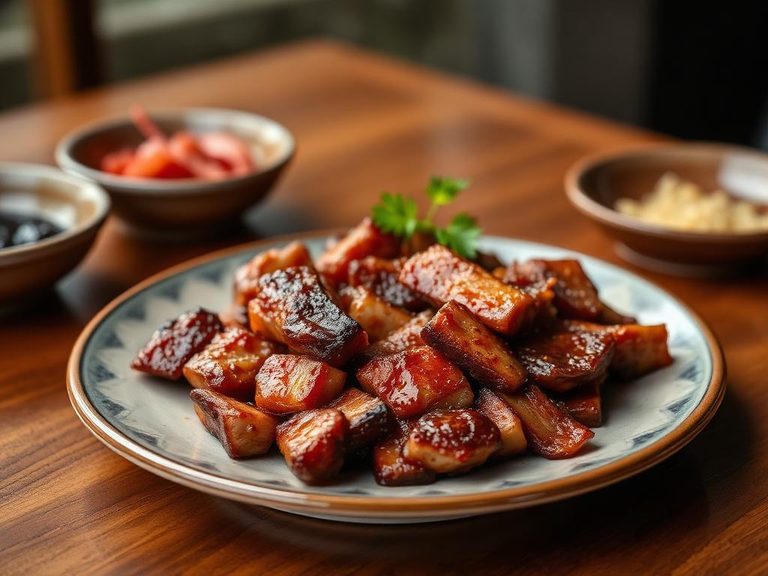
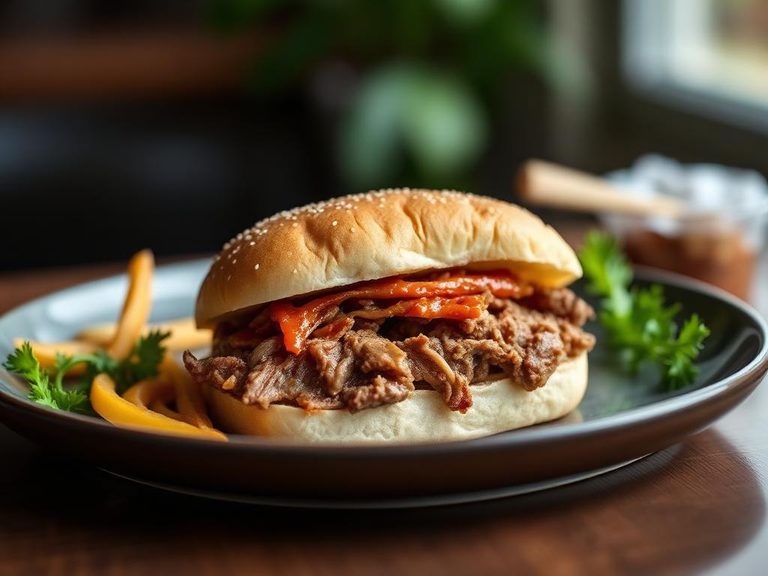
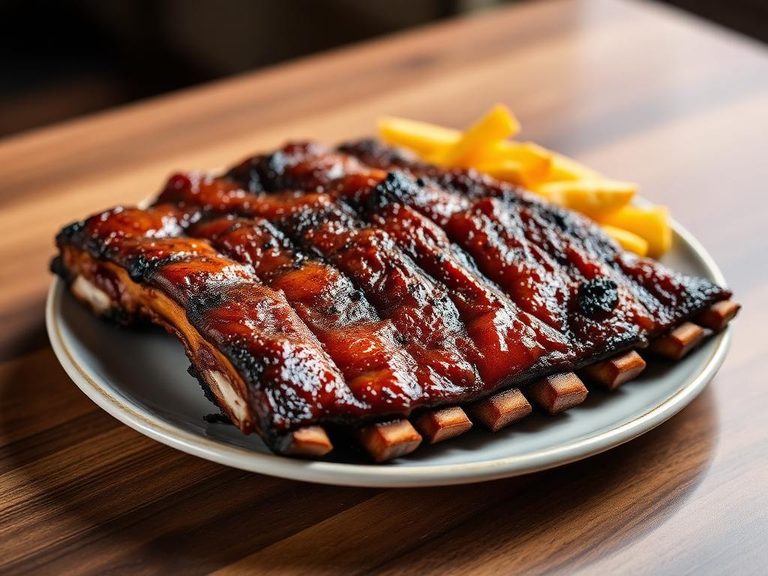
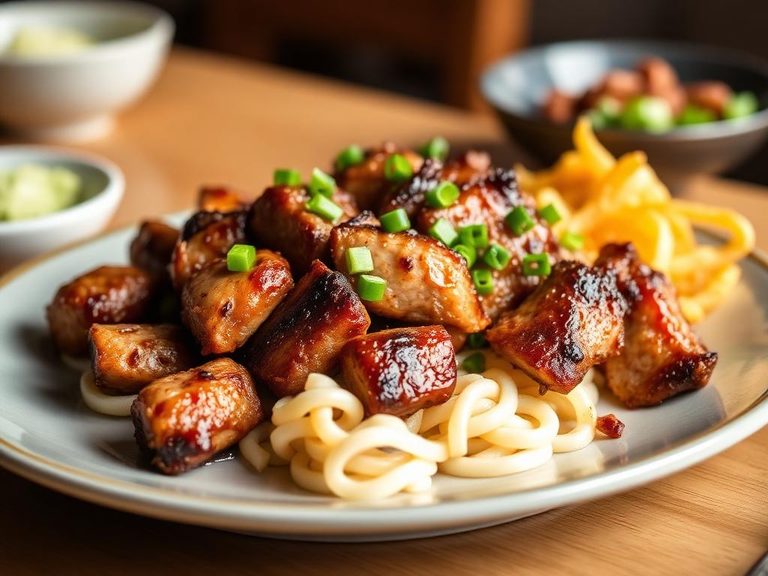
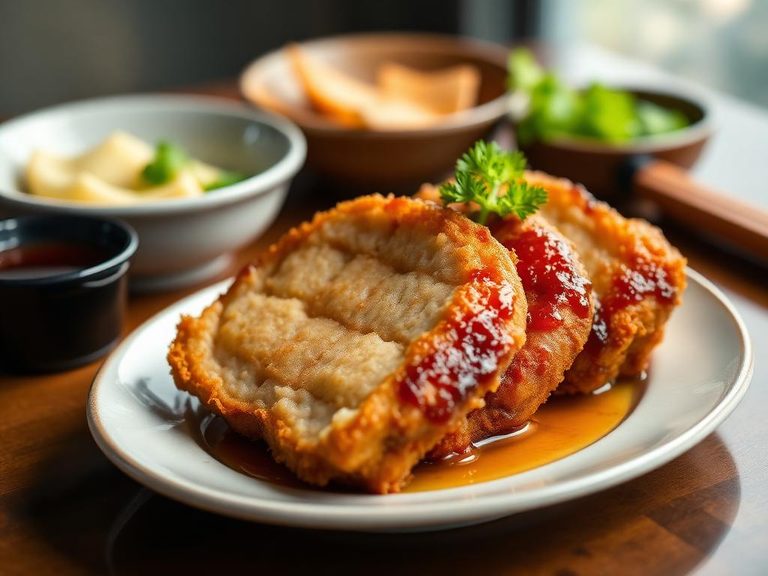
Barbecue pork with sauce is tender, smoky meat coated in a glossy, sweet-tangy glaze, often with a caramelized crust from grilling or roasting. Each 100g serving packs a solid 17.57g of protein, making it a satisfying, energy-dense choice. The 11.3g of fat and 9.97g of sugar come primarily from the rich, flavorful sauce.
Calorie split: 32% protein · 22% carbs · 46% fat
↓ Full nutrition💚 Why it's loved
People adore the irresistible combination of smoky, savory meat and the sticky, sweet, and tangy sauce that defines classic barbecue. It's a cultural staple for gatherings, evoking comfort and celebration across many cuisines.
⚠️ Watch-outs & how to enjoy it better
The sweet, sugary sauce can cause rapid blood-sugar spikes, and commercial versions are often high in sodium. To counteract this, pair it with high-fiber vegetables like coleslaw or a leafy salad, and practice portion control. Choose low-sugar, homemade sauces when possible.
Key benefits
- Excellent source of high-quality protein for muscle maintenance.
- Provides energy from a balanced mix of protein, fat, and carbs.
- Contains essential B vitamins, particularly B12 and niacin, from pork.
- A versatile centerpiece for meals, easily paired with vegetables.
🍽️ Popular dishes
🌍 Where it's eaten
💡 Did you know?
The sticky, red sheen of Chinese Char Siu (叉烧) barbecue pork traditionally comes from fermented red bean curd and honey, not food coloring.
Full nutrition (USDA data · scales with serving)
| Water | 56.3 g |
| Energy | 226 kcal |
| Protein | 17.6 g |
| Total lipid (fat) | 11.3 g |
| Carbohydrate, by difference | 12.2 g |
| Fiber, total dietary | 0.30 g |
| Total Sugars | 10.0 g |
| Calcium, Ca | 25.0 mg |
| Iron, Fe | 1.1 mg |
| Magnesium, Mg | 20.0 mg |
| Phosphorus, P | 161 mg |
| Potassium, K | 299 mg |
| Sodium, Na | 603 mg |
| Zinc, Zn | 2.8 mg |
| Copper, Cu | 0.10 mg |
| Selenium, Se | 25.3 ug |
| Vitamin C, total ascorbic acid | 0.20 mg |
| Thiamin | 0.33 mg |
| Riboflavin | 0.26 mg |
| Niacin | 3.4 mg |
| Vitamin B-6 | 0.30 mg |
| Folate, total | 2.0 ug |
| Folic acid | 0.00 ug |
| Folate, food | 2.0 ug |
| Folate, DFE | 2.0 ug |
| Choline, total | 73.5 mg |
| Vitamin B-12 | 0.58 ug |
| Vitamin B-12, added | 0.00 ug |
| Vitamin A, RAE | 5.0 ug |
| Retinol | 2.0 ug |
| Carotene, beta | 40.0 ug |
| Carotene, alpha | 0.00 ug |
| Cryptoxanthin, beta | 1.0 ug |
| Lycopene | 1365 ug |
| Lutein + zeaxanthin | 26.0 ug |
| Vitamin E (alpha-tocopherol) | 0.37 mg |
| Vitamin E, added | 0.00 mg |
| Vitamin D (D2 + D3) | 0.80 ug |
| Vitamin K (phylloquinone) | 0.50 ug |
| Alcohol, ethyl | 0.00 g |
| Caffeine | 0.00 mg |
| Theobromine | 0.00 mg |
Fat & fatty acid profile (per 100g)
| Fatty acids, total saturated | 4.0 g |
| SFA 4:0 | 0.00 g |
| SFA 6:0 | 0.00 g |
| SFA 8:0 | 0.00 g |
| SFA 10:0 | 0.01 g |
| SFA 12:0 | 0.01 g |
| SFA 14:0 | 0.14 g |
| SFA 16:0 | 2.4 g |
| SFA 18:0 | 1.3 g |
| Fatty acids, total monounsaturated | 4.9 g |
| MUFA 16:1 | 0.25 g |
| MUFA 18:1 | 4.6 g |
| MUFA 20:1 | 0.08 g |
| MUFA 22:1 | 0.01 g |
| Fatty acids, total polyunsaturated | 1.7 g |
| PUFA 18:2 | 1.5 g |
| PUFA 18:3 | 0.07 g |
| PUFA 18:4 | 0.00 g |
| PUFA 20:4 | 0.07 g |
| PUFA 20:5 n-3 (EPA) | 0.00 g |
| PUFA 22:5 n-3 (DPA) | 0.01 g |
| PUFA 22:6 n-3 (DHA) | 0.00 g |
| Cholesterol | 64.0 mg |
Amino acid profile (per 100g)
Estimated from Snacks, pork skins, barbecue-flavor — USDA does not publish this profile for Barbecue pork.
| Tryptophan | 0.13 g |
| Threonine | 1.8 g |
| Isoleucine | 1.4 g |
| Leucine | 3.2 g |
| Lysine | 2.7 g |
| Methionine | 0.48 g |
| Cystine | 0.51 g |
| Phenylalanine | 1.9 g |
| Tyrosine | 1.2 g |
| Valine | 2.3 g |
| Arginine | 4.5 g |
| Histidine | 0.72 g |
| Alanine | 5.5 g |
| Aspartic acid | 4.3 g |
| Glutamic acid | 7.3 g |
| Glycine | 11.0 g |
| Proline | 6.8 g |
| Serine | 2.5 g |
FAQ
Is barbecue pork a good source of protein?
Yes, it is an excellent source. A 100g serving provides about 17.57g of protein, which is roughly a third of the daily value for an average adult.
Why is the sauce so high in sugar?
Traditional barbecue sauces use sugar, honey, or molasses to balance tangy (vinegar, tomato) and savory elements, and to help create a caramelized glaze when cooked.
Can I make a healthier version at home?
Absolutely. You can control sugar and sodium by making your own sauce using tomato paste, vinegar, spices, and a moderate amount of sweetener like apple juice or a small amount of honey.
Nutrient density (calculated · NRF9.3)
Nutrient Rich Foods index: beneficial nutrients (protein, fiber, vitamins, minerals) minus saturated fat, added sugar & sodium, per 100 kcal.
NRF9.3 index — Fulgoni, Keast & Drewnowski, 2009. Computed from USDA nutrients.
Weight-loss friendliness (composite index)
Energy density 2.26 kcal/g · 31% calories from protein · 0.3 g fiber · 10.0 g sugar per 100 g.
Composite of energy density (Rolls et al., 1999), protein & fiber satiety, minus sugar. A calculated heuristic — ranks satiety-per-calorie, not a clinical measure.
Dietary load (calculated from USDA values)
Potential renal acid load. Positive = acid-forming, negative = alkaline-forming.
Sodium-to-potassium ratio: 2.02 (lower is better — aim for ≤ 1)
Sodium:potassium per WHO potassium guidance. Computed from USDA nutrients.