

Baby Toddler cereal, multigrain with fruit, dry
Common food

Photo: Wikipedia
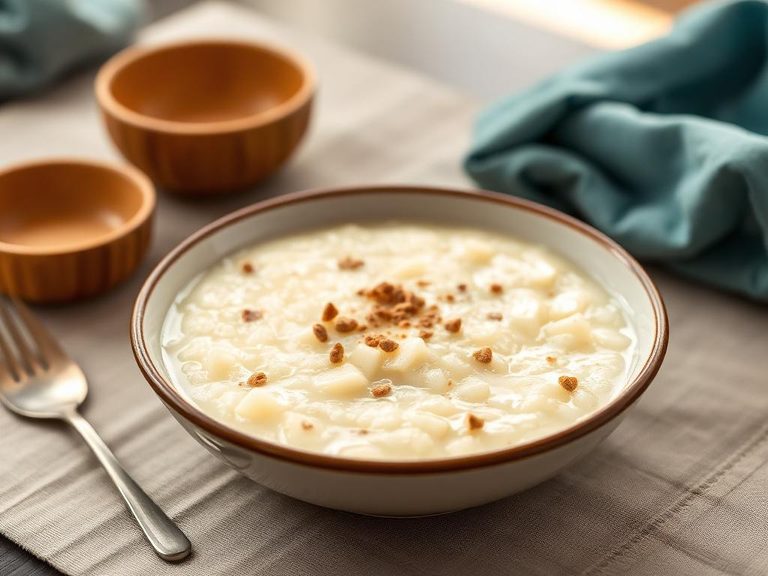
This is a finely milled, dry blend of grains like oats, wheat, and rice, mixed with fruit powders for a naturally sweet, mild flavor. The texture is powdery and light, designed to quickly absorb liquid into a smooth, easily digestible porridge. Nutritionally, it's a carbohydrate-rich energy source with a notable amount of added sugar.
Calorie split: 6% protein · 79% carbs · 14% fat
↓ Full nutrition💚 Why it's loved
Parents appreciate it as a reliable, iron-fortified first food that babies often accept readily due to its mild, slightly sweet taste. Its versatility allows it to be mixed with breast milk, formula, or water to achieve the perfect consistency.
⚠️ Watch-outs & how to enjoy it better
The high sugar content (over 27g per 100g) can contribute to a preference for sweet flavors and may cause blood-sugar spikes if not balanced. To counteract this, mix it with a source of protein or healthy fat like breast milk, formula, mashed avocado, or nut butter, and control portion sizes.
Key benefits
- Fortified with iron and B vitamins for infant development
- Provides quick, accessible energy from complex carbs
- Contains dietary fiber from whole grains and fruit
- Smooth texture aids in early feeding transitions
- Convenient, shelf-stable base for homemade baby food
🍽️ Popular dishes
🌍 Where it's eaten
💡 Did you know?
The iron in many infant cereals is added in a form called 'electrolytic iron,' which is a fine metallic powder that is highly bioavailable but can sometimes give the porridge a slightly grayish tint.
Full nutrition (USDA data · scales with serving)
| Water | 4.5 g |
| Energy | 404 kcal |
| Protein | 6.5 g |
| Total lipid (fat) | 6.4 g |
| Carbohydrate, by difference | 80.5 g |
| Fiber, total dietary | 6.9 g |
| Total Sugars | 27.7 g |
| Calcium, Ca | 761 mg |
| Iron, Fe | 28.6 mg |
| Magnesium, Mg | 96.0 mg |
| Phosphorus, P | 320 mg |
| Potassium, K | 518 mg |
| Sodium, Na | 32.0 mg |
| Zinc, Zn | 10.2 mg |
| Copper, Cu | 0.23 mg |
| Selenium, Se | 30.3 ug |
| Vitamin C, total ascorbic acid | 55.7 mg |
| Thiamin | 1.1 mg |
| Riboflavin | 1.3 mg |
| Niacin | 14.4 mg |
| Vitamin B-6 | 1.1 mg |
| Folate, total | 159 ug |
| Folic acid | 132 ug |
| Folate, food | 26.0 ug |
| Folate, DFE | 252 ug |
| Choline, total | 26.7 mg |
| Vitamin B-12 | 0.76 ug |
| Vitamin B-12, added | 0.76 ug |
| Vitamin A, RAE | 1.0 ug |
| Retinol | 0.00 ug |
| Carotene, beta | 5.0 ug |
| Carotene, alpha | 5.0 ug |
| Cryptoxanthin, beta | 0.00 ug |
| Lycopene | 0.00 ug |
| Lutein + zeaxanthin | 65.0 ug |
| Vitamin E (alpha-tocopherol) | 4.0 mg |
| Vitamin E, added | 3.4 mg |
| Vitamin D (D2 + D3) | 0.00 ug |
| Vitamin K (phylloquinone) | 6.8 ug |
| Alcohol, ethyl | 0.00 g |
| Caffeine | 0.00 mg |
| Theobromine | 0.00 mg |
Fat & fatty acid profile (per 100g)
| Fatty acids, total saturated | 1.0 g |
| SFA 4:0 | 0.00 g |
| SFA 6:0 | 0.00 g |
| SFA 8:0 | 0.00 g |
| SFA 10:0 | 0.00 g |
| SFA 12:0 | 0.01 g |
| SFA 14:0 | 0.01 g |
| SFA 16:0 | 0.89 g |
| SFA 18:0 | 0.12 g |
| Fatty acids, total monounsaturated | 1.2 g |
| MUFA 16:1 | 0.02 g |
| MUFA 18:1 | 1.2 g |
| MUFA 20:1 | 0.00 g |
| MUFA 22:1 | 0.00 g |
| Fatty acids, total polyunsaturated | 2.5 g |
| PUFA 18:2 | 2.3 g |
| PUFA 18:3 | 0.23 g |
| PUFA 18:4 | 0.00 g |
| PUFA 20:4 | 0.00 g |
| PUFA 20:5 n-3 (EPA) | 0.00 g |
| PUFA 22:5 n-3 (DPA) | 0.00 g |
| PUFA 22:6 n-3 (DHA) | 0.00 g |
| Cholesterol | 0.00 mg |
Amino acid profile (per 100g)
Estimated from Babyfood, dinner, chicken stew, toddler — USDA does not publish this profile for Baby Toddler cereal.
| Tryptophan | 0.06 g |
| Threonine | 0.22 g |
| Isoleucine | 0.26 g |
| Leucine | 0.41 g |
| Lysine | 0.41 g |
| Methionine | 0.11 g |
| Cystine | 0.05 g |
| Phenylalanine | 0.21 g |
| Tyrosine | 0.17 g |
| Valine | 0.29 g |
| Arginine | 0.33 g |
| Histidine | 0.13 g |
| Alanine | 0.30 g |
| Aspartic acid | 0.47 g |
| Glutamic acid | 0.90 g |
| Glycine | 0.29 g |
| Proline | 0.35 g |
| Serine | 0.21 g |
FAQ
Why is there so much sugar in baby cereal?
The sugar listed is primarily naturally occurring from the added fruit powders (like apple or pear) and the grains themselves, not necessarily added table sugar. However, it still contributes to the overall sweetness and carbohydrate load.
Can I make this cereal at home?
Yes, you can blend plain oats, rice, and a small amount of dried fruit into a fine powder. However, homemade versions won't be fortified with the key nutrients like iron and zinc that commercial cereals provide.
At what age can I start introducing this cereal?
It's typically introduced around 6 months, when a baby shows signs of readiness for solids, such as good head control and interest in food. Always consult with a pediatrician first.
Nutrient density (calculated · NRF9.3)
Nutrient Rich Foods index: beneficial nutrients (protein, fiber, vitamins, minerals) minus saturated fat, added sugar & sodium, per 100 kcal.
NRF9.3 index — Fulgoni, Keast & Drewnowski, 2009. Computed from USDA nutrients.
Weight-loss friendliness (composite index)
Energy density 4.04 kcal/g · 6% calories from protein · 6.9 g fiber · 27.7 g sugar per 100 g.
Composite of energy density (Rolls et al., 1999), protein & fiber satiety, minus sugar. A calculated heuristic — ranks satiety-per-calorie, not a clinical measure.
Dietary load (calculated from USDA values)
Potential renal acid load. Positive = acid-forming, negative = alkaline-forming.
Sodium-to-potassium ratio: 0.06 (lower is better — aim for ≤ 1)
Sodium:potassium per WHO potassium guidance. Computed from USDA nutrients.